⚜ Avvisi
Day 18 - Writing and walking
Campagnano di Roma → La Storta (23 km)
If you missed the other days, you can access them here.
Or should it be walking and writing? And where does the photography go? What comes first? I’ve learnt that I need to have my priorities straight. What is the primary reason for walking for 20 days to Rome? I feel I’ve had to go through this first walk to understand that if one wants to get a creative project out of a walk and apply rigour, how we spend time needs to be intentional. Otherwise, there’s a risk of half-assing both. That’s my first lesson on how writing and walking have interacted in the past weeks. Below are a few more.
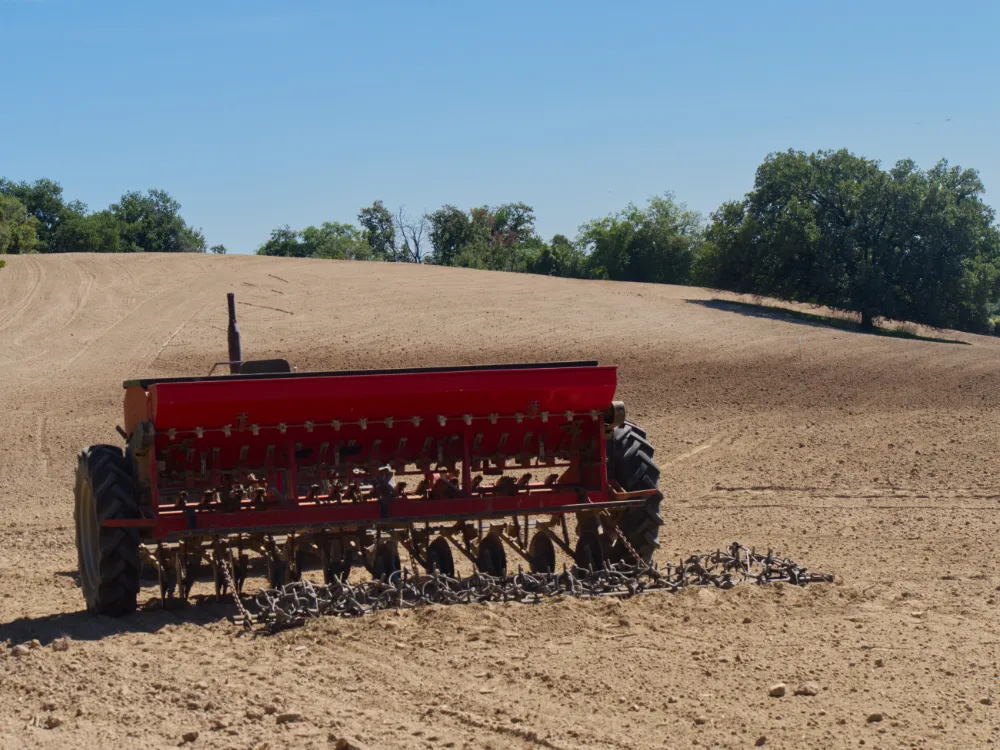
If you’re wondering why this dispatch is all meta about writing, it’s also because the day was largely uneventful. Into the Frying Pan, out of the Frying Pan. In and out for good chunks of the walk and not much else. What seemed like abandoned farming machinery lay there in the scorching sun. No other people apart from fellow pilgrims. It was one of these days.
“The hardest thing about writing is knowing what to write”. I’m not the first or the last to say and experience that. I think walking for a long period of time can help in a few ways with that. First, if you’ve already done a lot of research and thinking, walking is, I think, one of the best ways to move through that mental space that you’ve built up, synthesise, summarise, prune and connect. The subconscious will bring up new insights and ideas. Your job is literally just to write it up before you forget. Second, the walk can give us new material through the constant interaction with the world and surprise us. Maybe you thought that you only wanted to write about the history of the places that you’re walking, but then you meet people. Or spend a beautiful afternoon at a waterfall and you discover that the walk gave you something new to write about.
Observing the thought space. After a few days of walking with zero media inputs, I noticed where the mind went. Everything that I’ve consumed rose up to the surface and I saw the lenses through which I saw the world: the analogies, the metaphors, the annoyances, the joys, the questions, the observations and the connections made. It’s interesting to observe these patterns and then ask: Is that what I want my mind to think about? A lot of what we think about is shaped by what we read, watch, listen to and talk about. It’s like a mental food processor in which thoughts get sliced and diced. Depending on what you want to make, one needs to be very careful about the ingredients. A walk is a great way to see what ingredients you’ve stocked in your mental pantry and fridge, what treasures there are and what one might want to change. It’s also a great way to ask - what do I want to make with this food processor in the first place?
Why write? Ultimately, having to write something every day made me ask a lot - why write? Why put these words on the electronic paper? I don’t have a clear answer yet. But I’m looking forward to going back and reading all the dispatches, all the unpublished notes and the loose thoughts and then see - why do I write?
Walking and writing as an incubator. One of the best exercises I ever learnt about public speaking was to exaggerate. The teacher asked me to go on stage and give a 1-min talk and exaggerate a part of my demeanour: speak very slowly or so quickly nobody understands what you are saying. Gesticulate loads or keep your hands still. The body will build muscle memory by being in all of these states while speaking, so then you can find the right authentic combination for yourself. I think writing on a walk is similar - one can experiment with different voices, perspectives, words, styles, and ways to engage the reader. You get away with things because, hey, you only have a few hours a day to put it all together. From these little experiments, we can find what ultimately is authentic for our own voice. We can observe what comes up, what we want to keep and what is there to throw away.
The daily accountability. There is a moment when the commitment to daily dispatches moves from rushing to put something together to a focused and confident place. From there, you can write about anything. I was late so many times in the past 20 days, but I still kept sending something out there into the web.
Discipline & planning.Every day, I noticed I had to make careful decisions about how much time I’d spend writing, walking, eating, sleeping. How much rest do I need to both walk and then be able to write? What barriers are there to getting the creative output done every day? What’s under my control? It turned out that all I needed was a good night’s sleep, nutritious food, no alcohol and I was ready to take on the day. Probably true for life outside the walk. It also seems obvious, but planning logistics ahead of a trip is essential. For example, I just assumed any type of accommodation has an Internet connection these days. Or at least 4G signal. Not quite. Planning everything for your needs ahead will open up a lot of time to actually focus on writing and the creative practice. Just stay away from people who want to explain your horoscope sign, as they will go on for hours.
The last dispatch to come tonight or tomorrow.
Till the next (and final) one,
Florin