Frida
The making of an icon
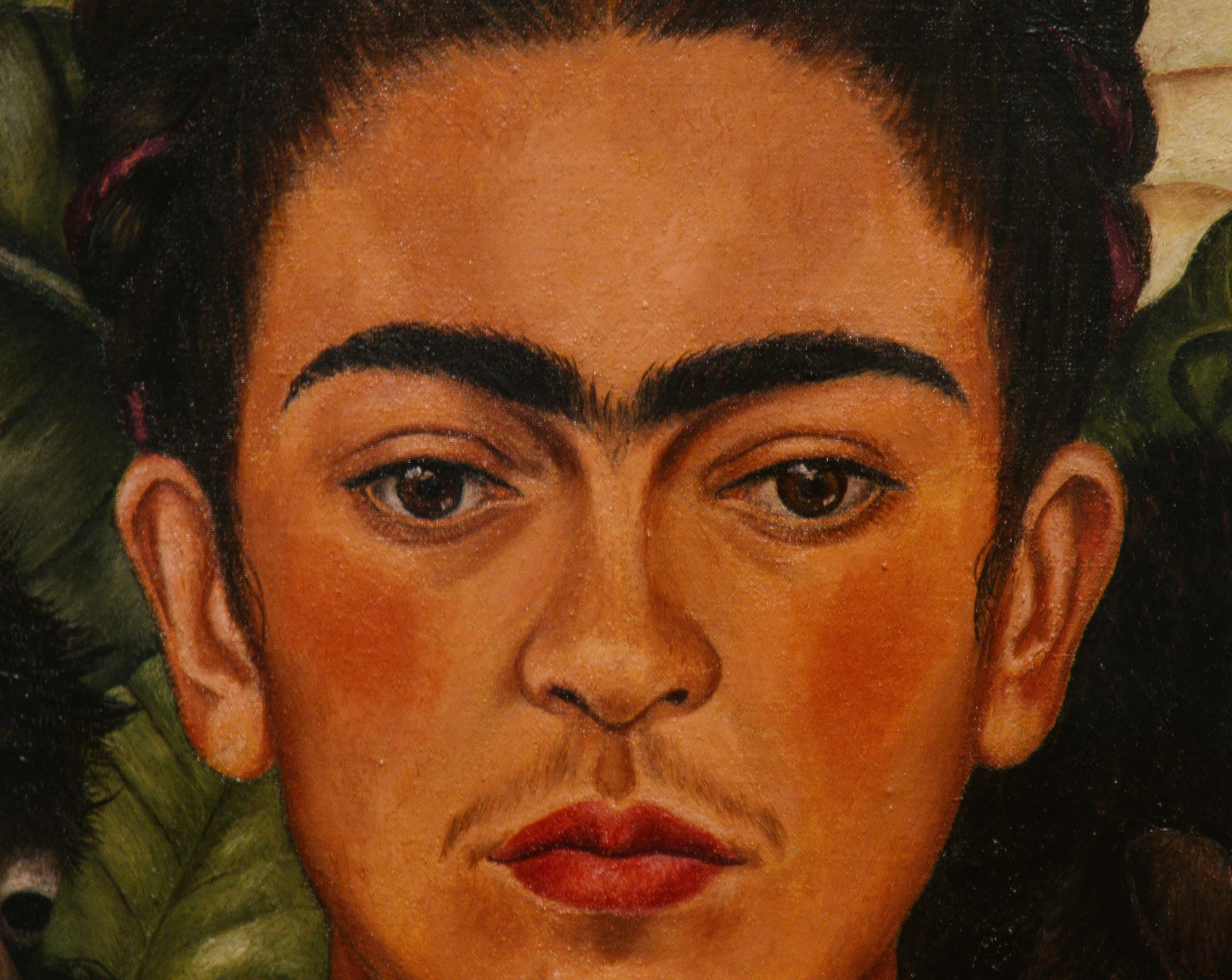
The face is familiar. You’ve seen it a gazillion times on tote bags, T-shirts and museum memorabilia. That strong gaze, which if you stare at for long enough, may hypnotise you.
But familiar doesn’t mean intimate. Who was Frida Kahlo, really? On June 25th 2026, Frida - the making of an icon opened at the Tate Modern. There I was, camera in hand, sweating and queuing and sweating more. For a few weeks every year, London feels a bit like Mexico City, though lacking the purple jacaranda trees and the high altitude.
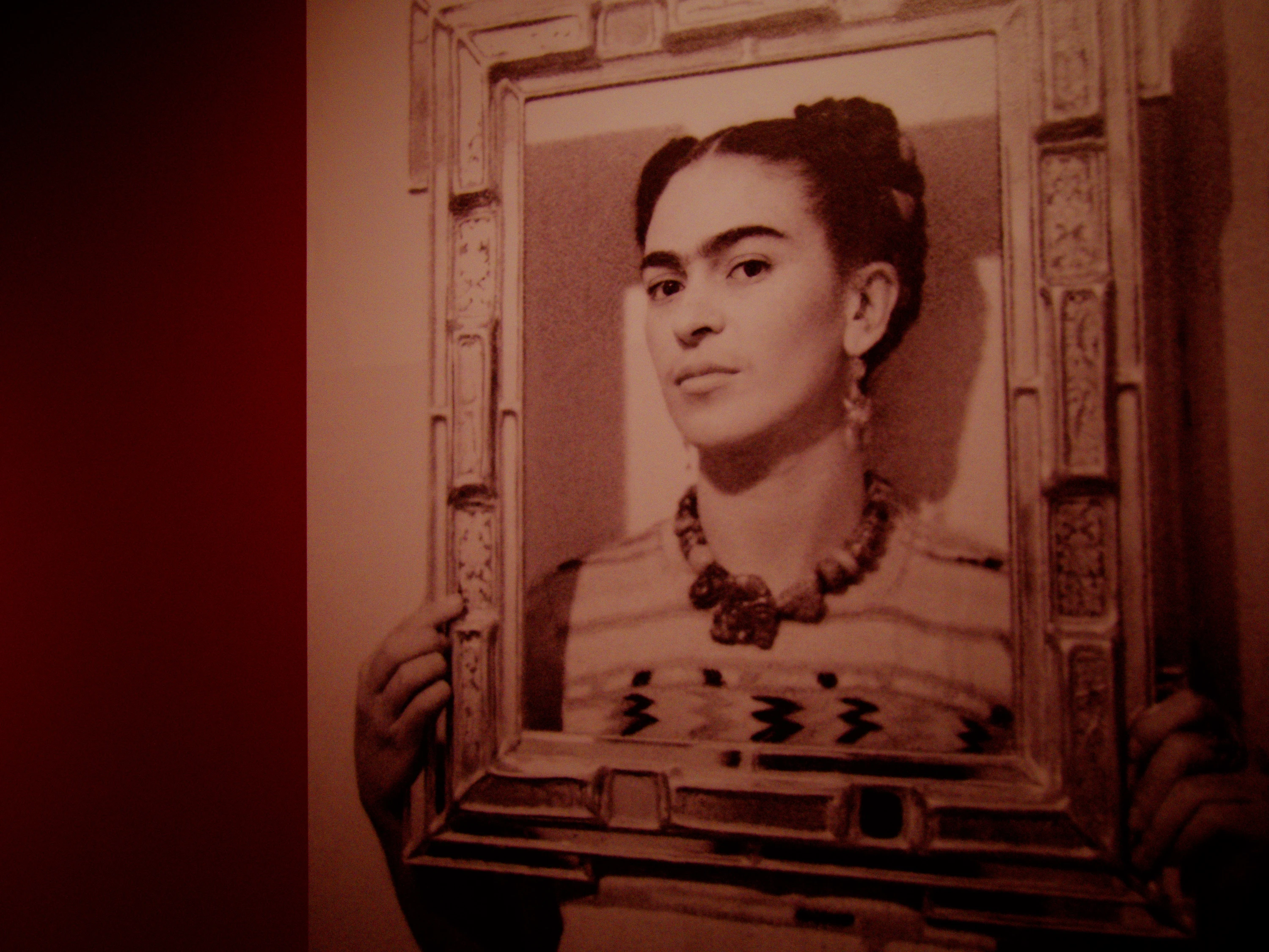
The first room presents Frida holding a frame, a nod to how she carefully constructed her own image. Great artists always resist clear-cut labels and “isms”Frida: I never knew I was a Surrealist until André Breton came to Mexico and told me I was one. I myself still don’t know what I am.. Any perspective on Frida’s life will certainly be incomplete, but perhaps we don’t need an answer, as much as we just need to engage with the question: who is the mind behind these surreal and intense paintings?
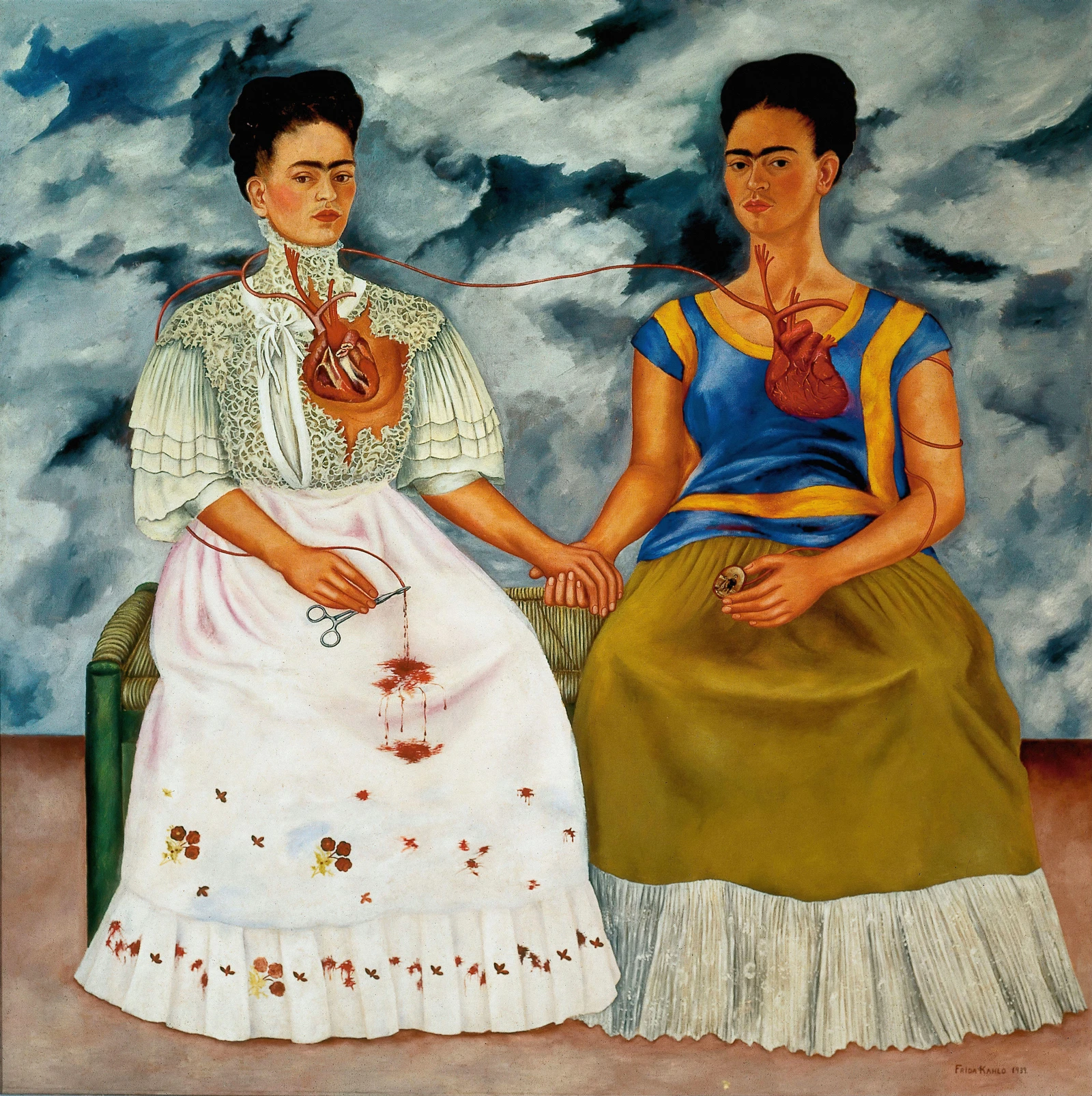
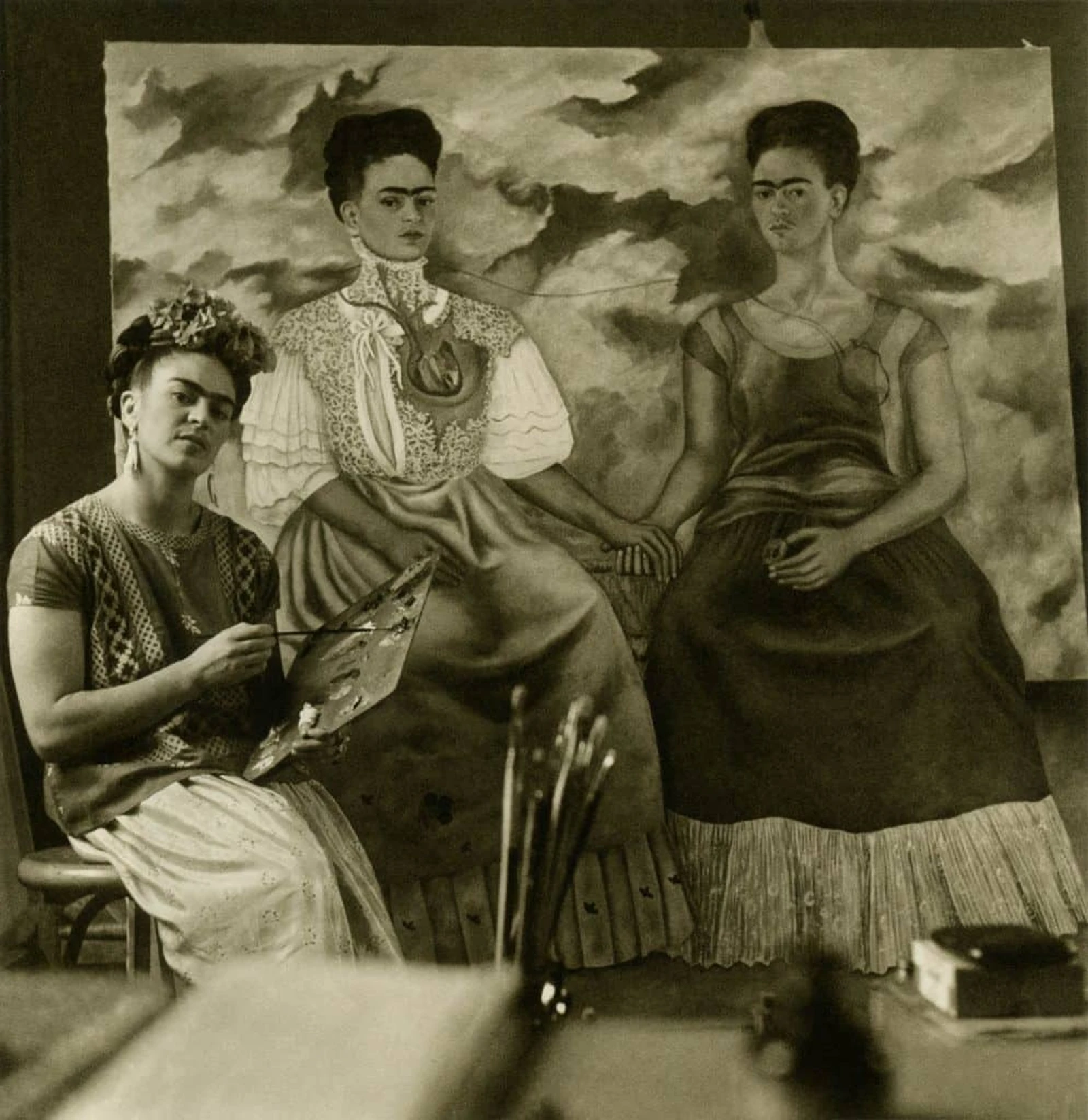
The Two Fridas, 1939
Extract from Frida’s journal about “The Two Fridas”
As Frida says, we have to enter her imagination through the O in Pinzon. There is a word that Hayden Herrera repeatedly uses in her book on Kahlo’s life: alegría. The dictionary translates it as joy, happiness. Dare I sprinkle a juvenile energy and sense of play, evident in Frida’s own choice of words:
At seventeen I fell in love with Diego, and my parents did not like this because Diego was a Communist and because they said that he looked like a fat, fat, fat Brueghel. They said that it was like marriage between an elephant and a dove.
I am full of desperation with d of dentist.
I am bored with a b of burrodonkey, stupid, thick.
I rather sit on the floor in the market of Toluca and sell tortillas, than to have any thing to do with those “artistic” bitches of Paris.
Frida’s letters and journal entries are full of frolic. It’s no surprise that during her teens, she joined “Las Cachuchas”The Caps, a prankster group that rode a donkey inside a classroom and lit fireworks around a dog on the school corridors. Mischief had always accompanied her, especially at the dinner table.
We had to pray before meals. While the others concentrated on their inner selves, CristiFrida’s sister and I would look at each other, forcing ourselves not to laugh.
Her formative years were after the Mexican Revolution, when the government commissioned artists to paint public murals that would promote a Mexican identity rooted in its indigenous culture, as opposed to copying European and North American values.
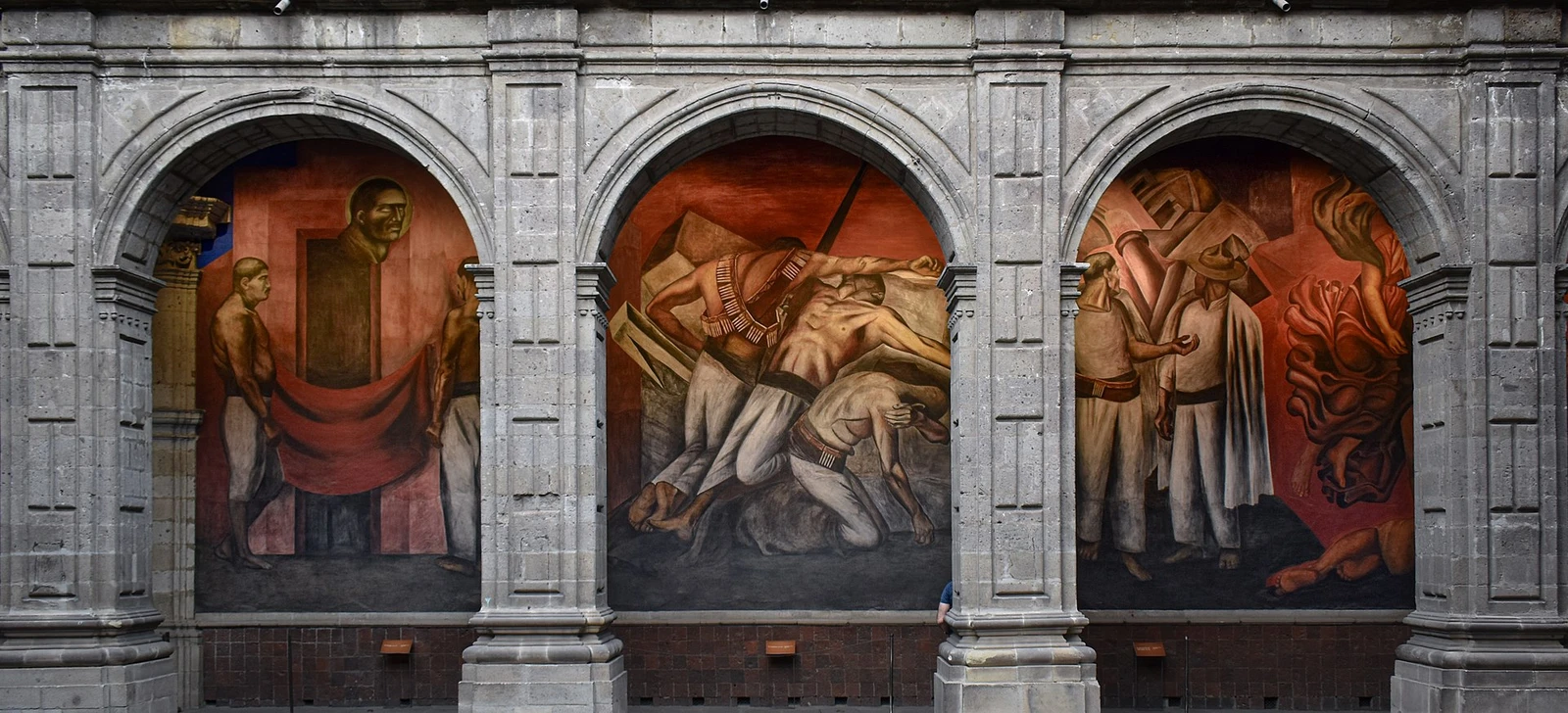
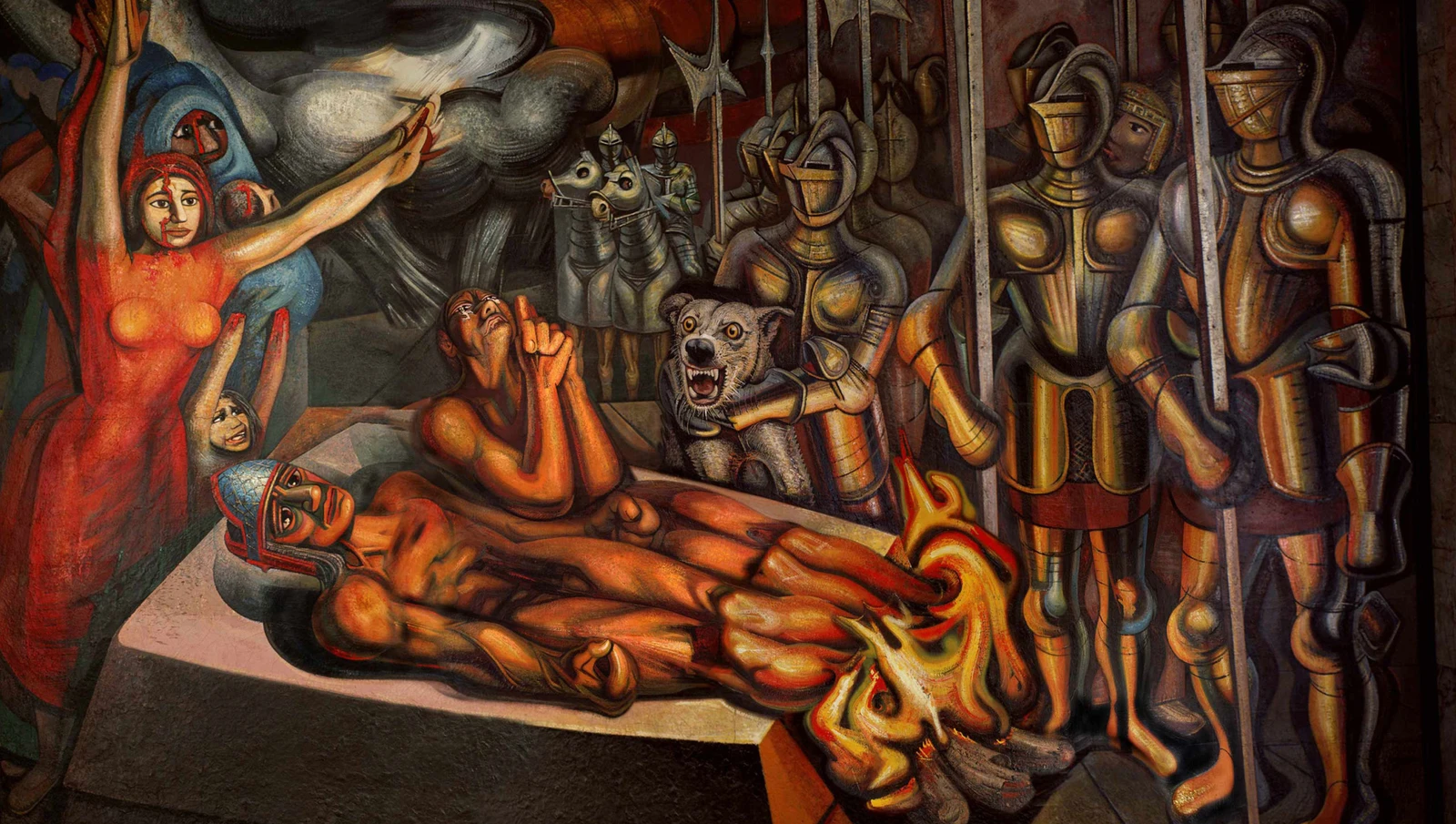
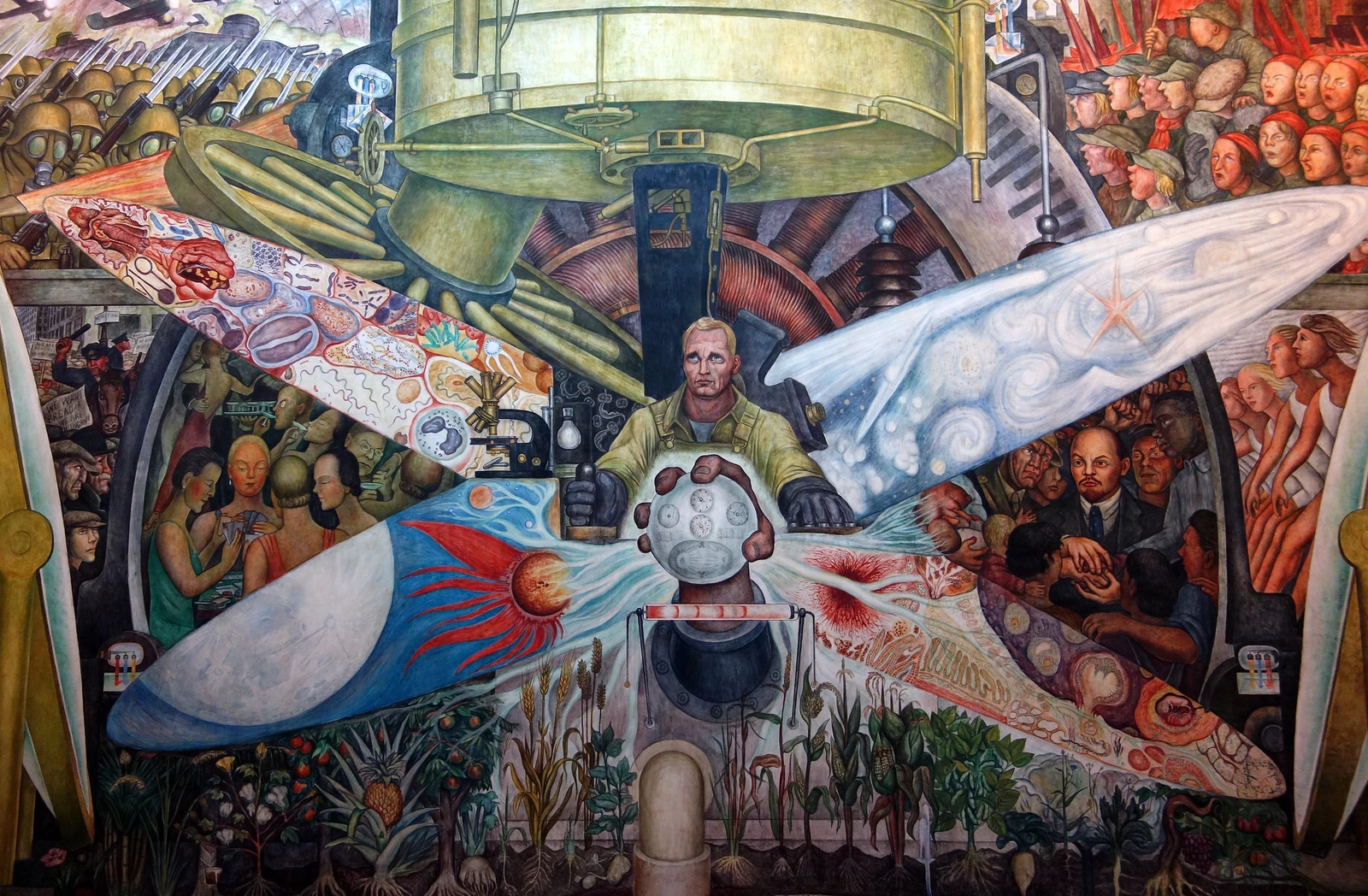
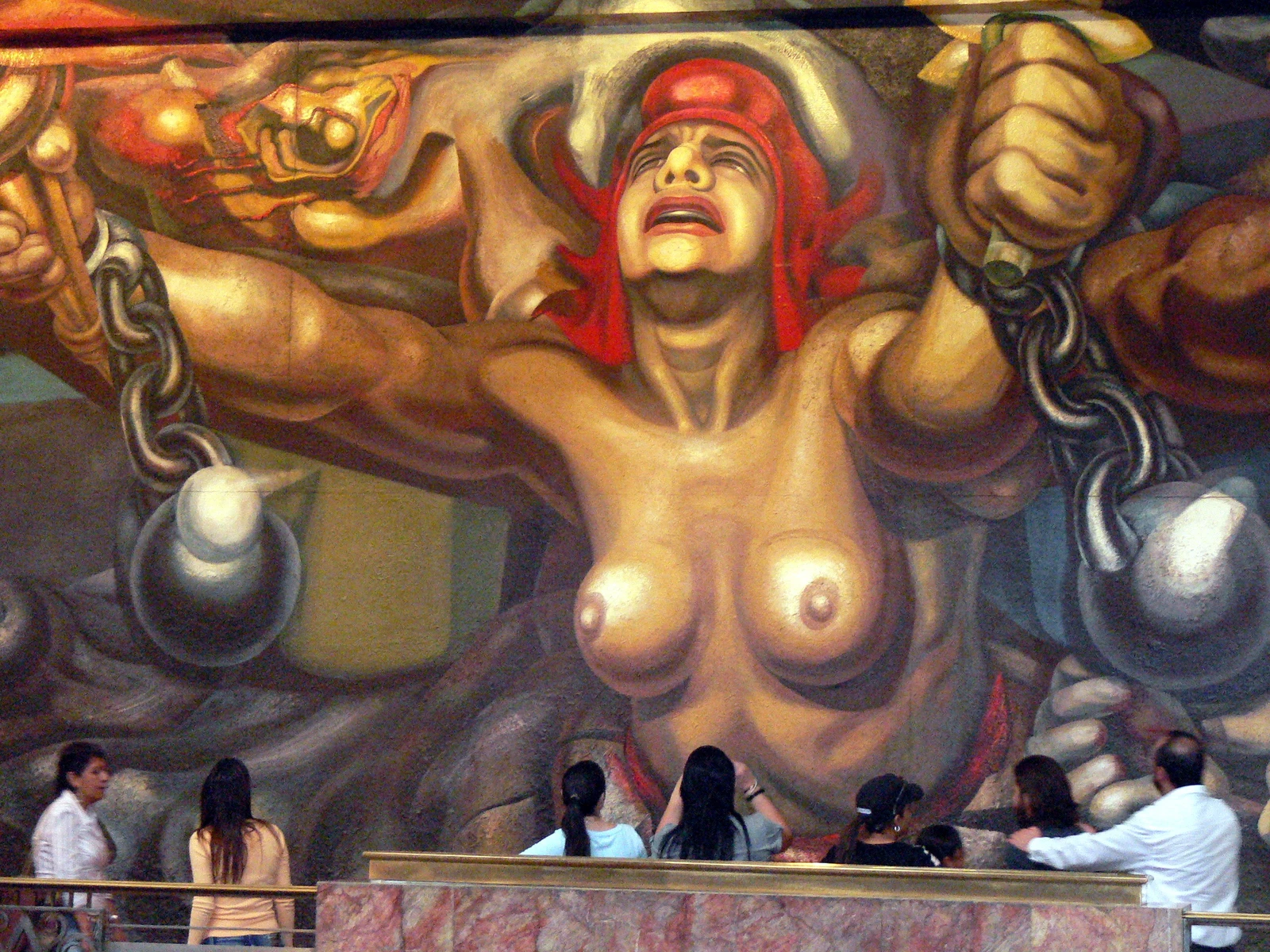
José Clemente Orozco
Three artists defined Mexican Muralism at the time: David Alfaro Siquieros, a hot-tempered revolutionary who always carried a gun, José Clemente Orozco, who painted the horrors of the Revolution and Diego Rivera, a charismatic toad-faced womaniser and Frida’s future husband. They met for the first time in her school’s auditorium in 1922. Rivera recalls:
One night, as I was painting high on the scaffold, there was a loud shouting and pushing against the auditorium door. All of a sudden the door flew open, and a girl who seemed to be no more than ten or twelve was propelled inside.
She had unusual dignity and self-assurance, and there was a strange fire in her eyes. She looked straight up at me.
“Would it cause you any annoyance if I watched you at work?” she asked.
“No, young lady, I’d be charmed,” I said.
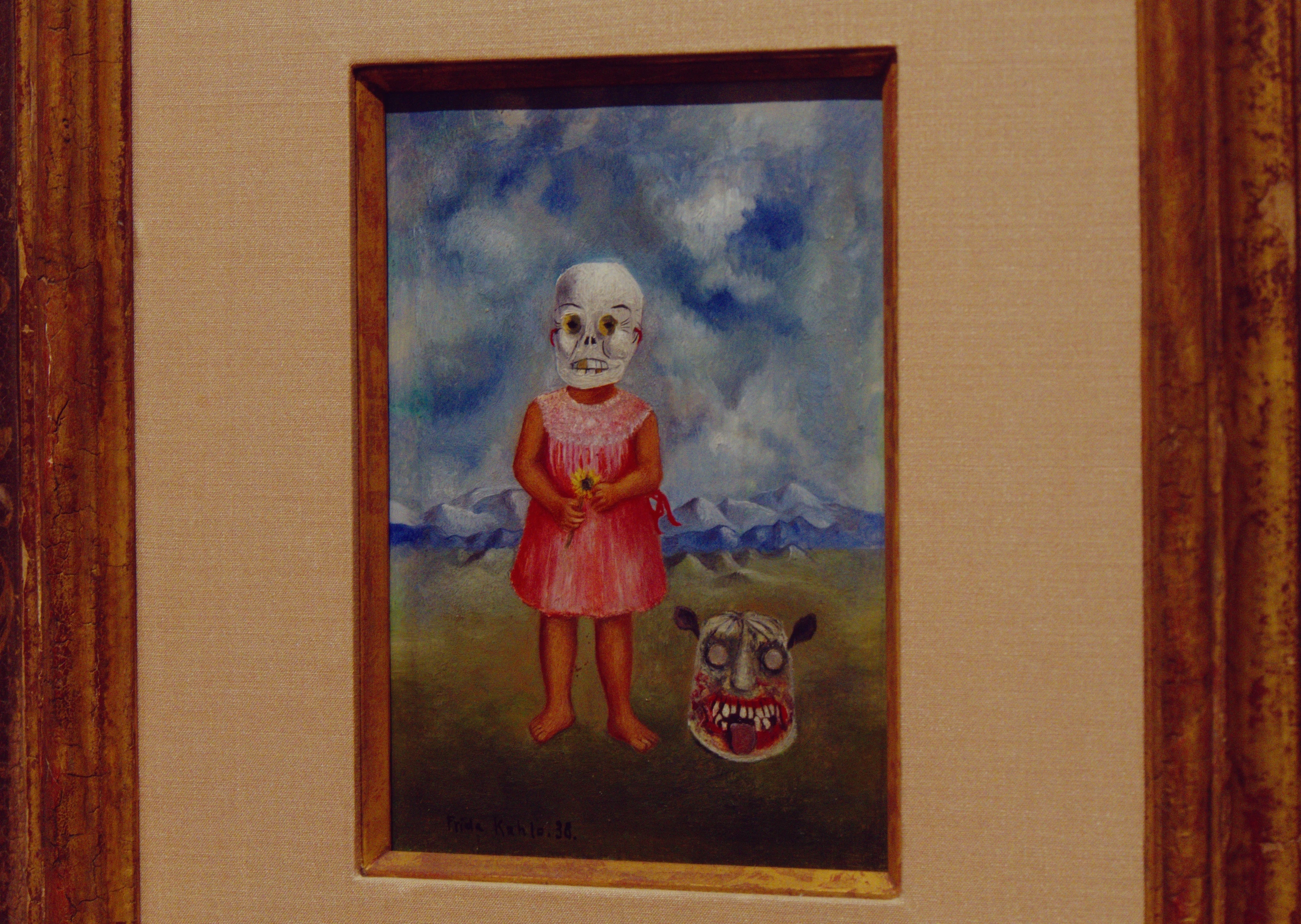
Nothing beats seeing the artwork in person. Digital reproductions lack the minute details that you get in real life: brushstrokes, layers, texture, even the size of the canvas on the wall has something to say. Girl with a Death Mask, a tiny painting, pulled me closer and closer. A small canvas holds a promise that there’s more to it.
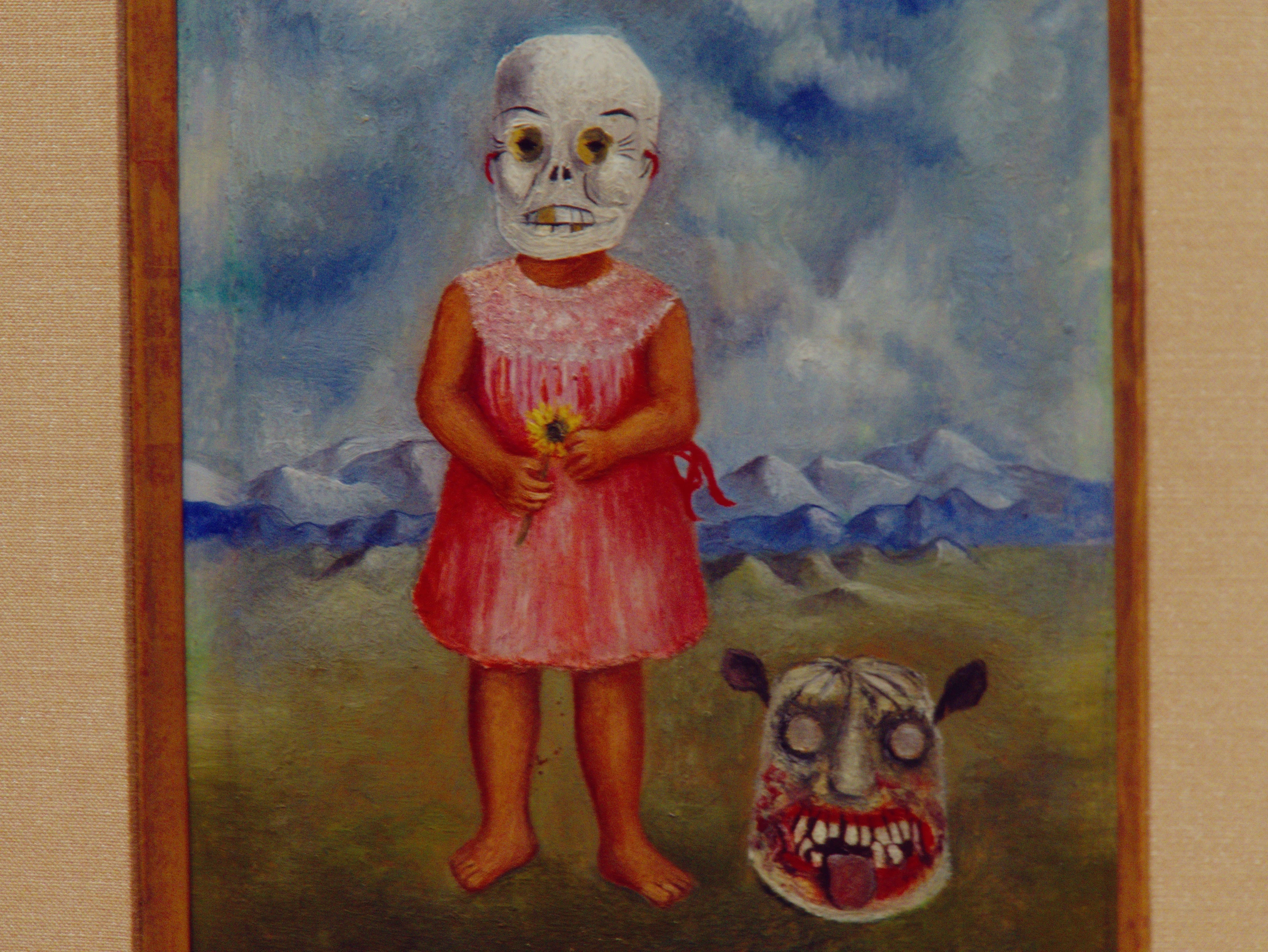
Look, look intently. I go up and squint, trying not to jostle everyone else huddling around the painting for a quick snap. Despite my careful negotiation of personal space, I still bump into someone. I look down. It’s a pitbull, sniffing my crotch. Uh-oh, my cojones. “Fear not,” the pitbull said, “I am a good boy”. I scuttle away.
“Her work is not for accountants,” I hear a guy next to me say to his partner.
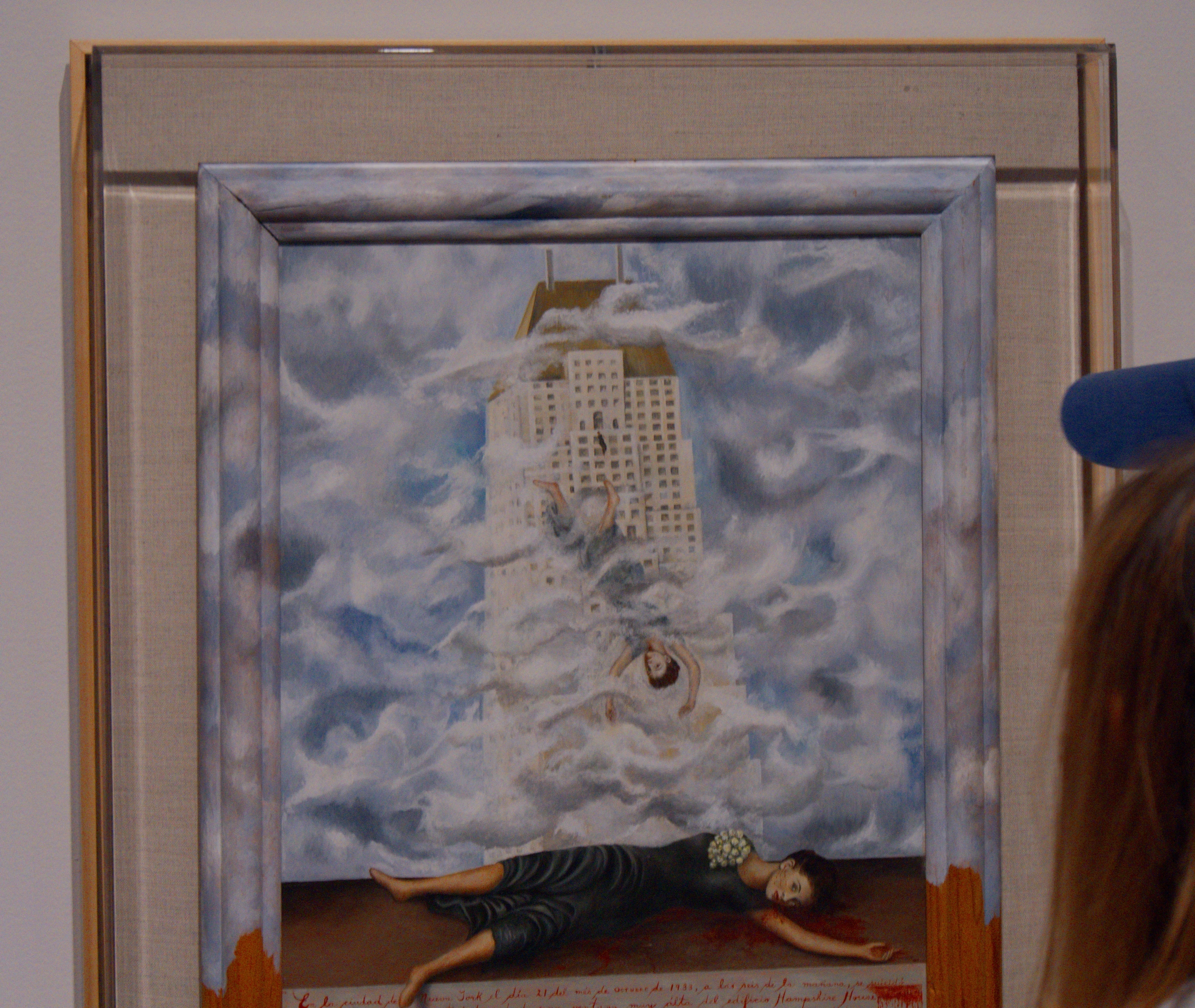
“Her work is exactly what accountants need!” I want to cry out, thinking of the accountants I know. If you’re dealing with numbers and spreadsheets the whole day, Frida’s work may help you feel that fervent emotion and might just rebalance yourself. André Breton, the surrealist leader, described Frida’s work as a “ribbon around a bomb”. See for yourself.
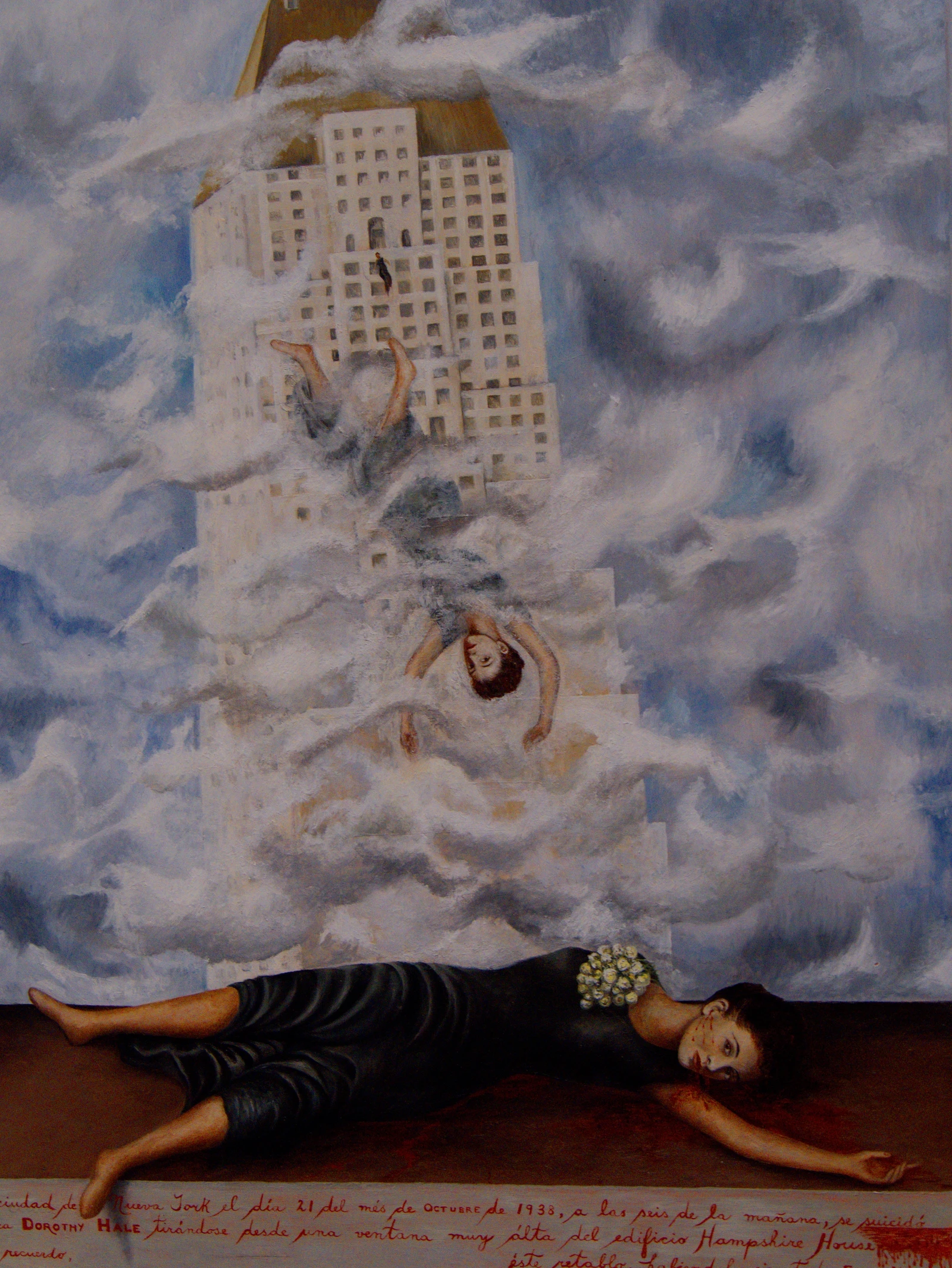
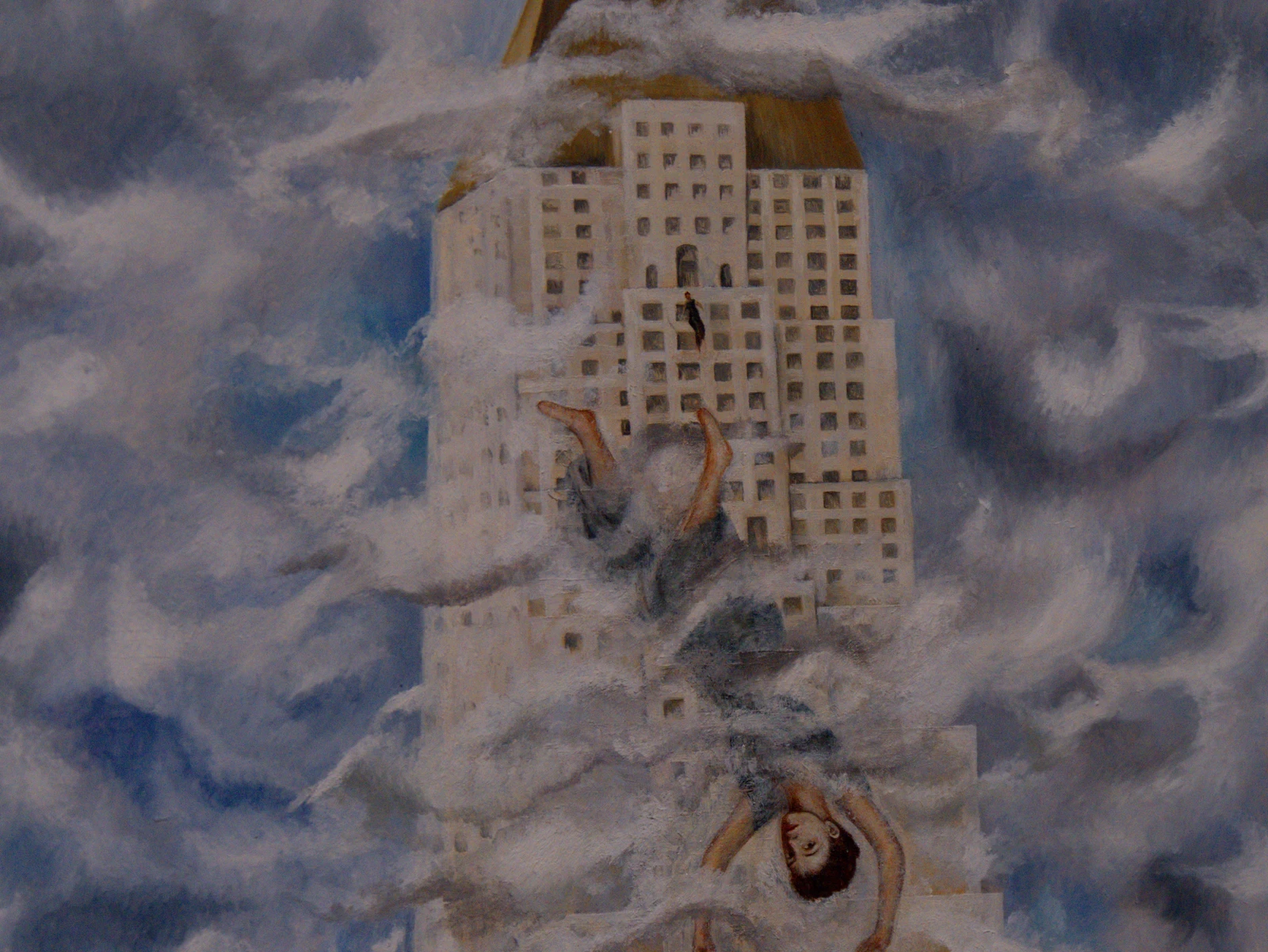
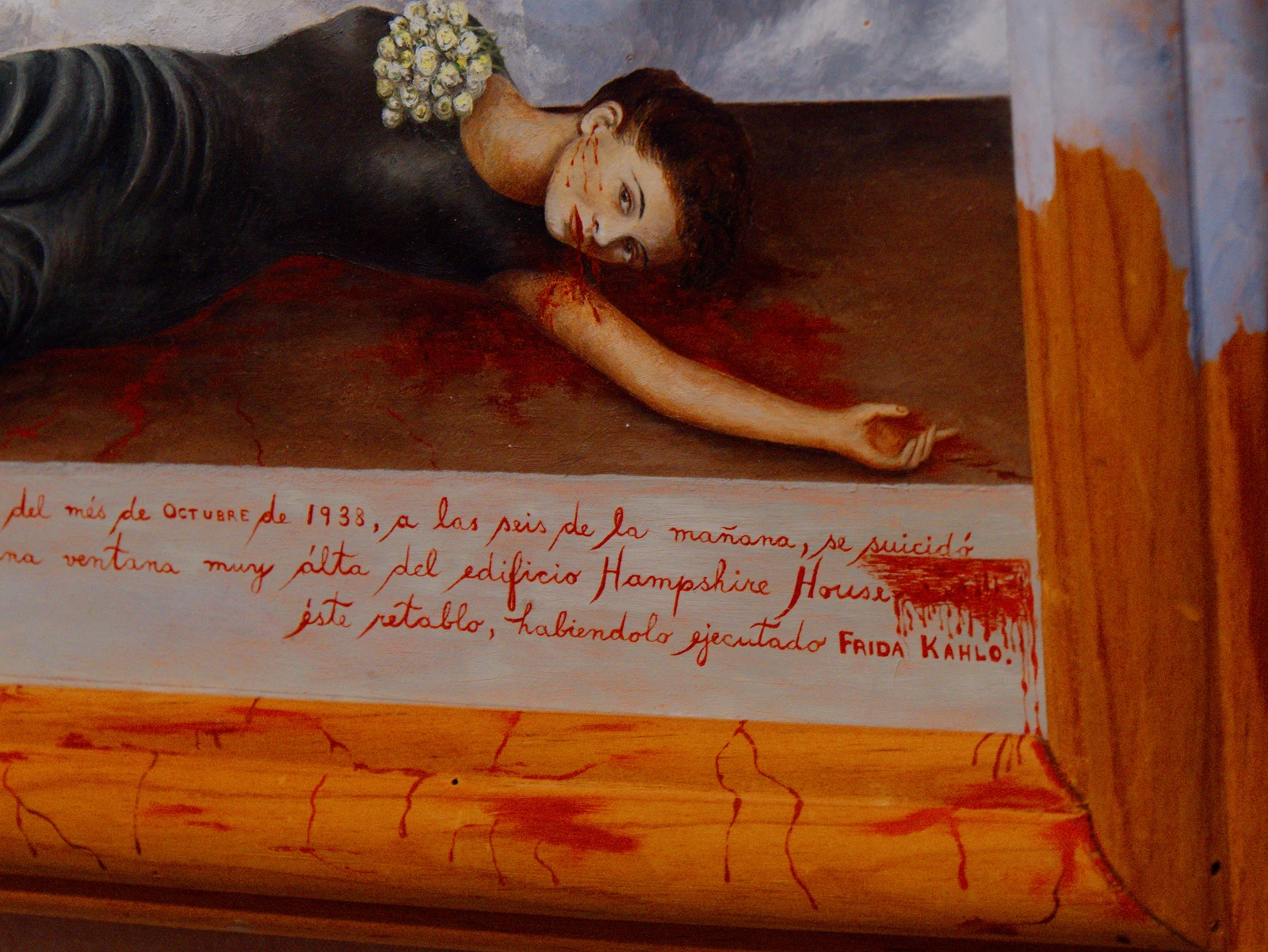
Clare Boothe Luce, who commissioned the painting, let out a gasp the first time she saw it.
Detail is key in Frida’s work. The fine brushstrokes give away her technical ability and reveal the many easter eggs that she has left for us.
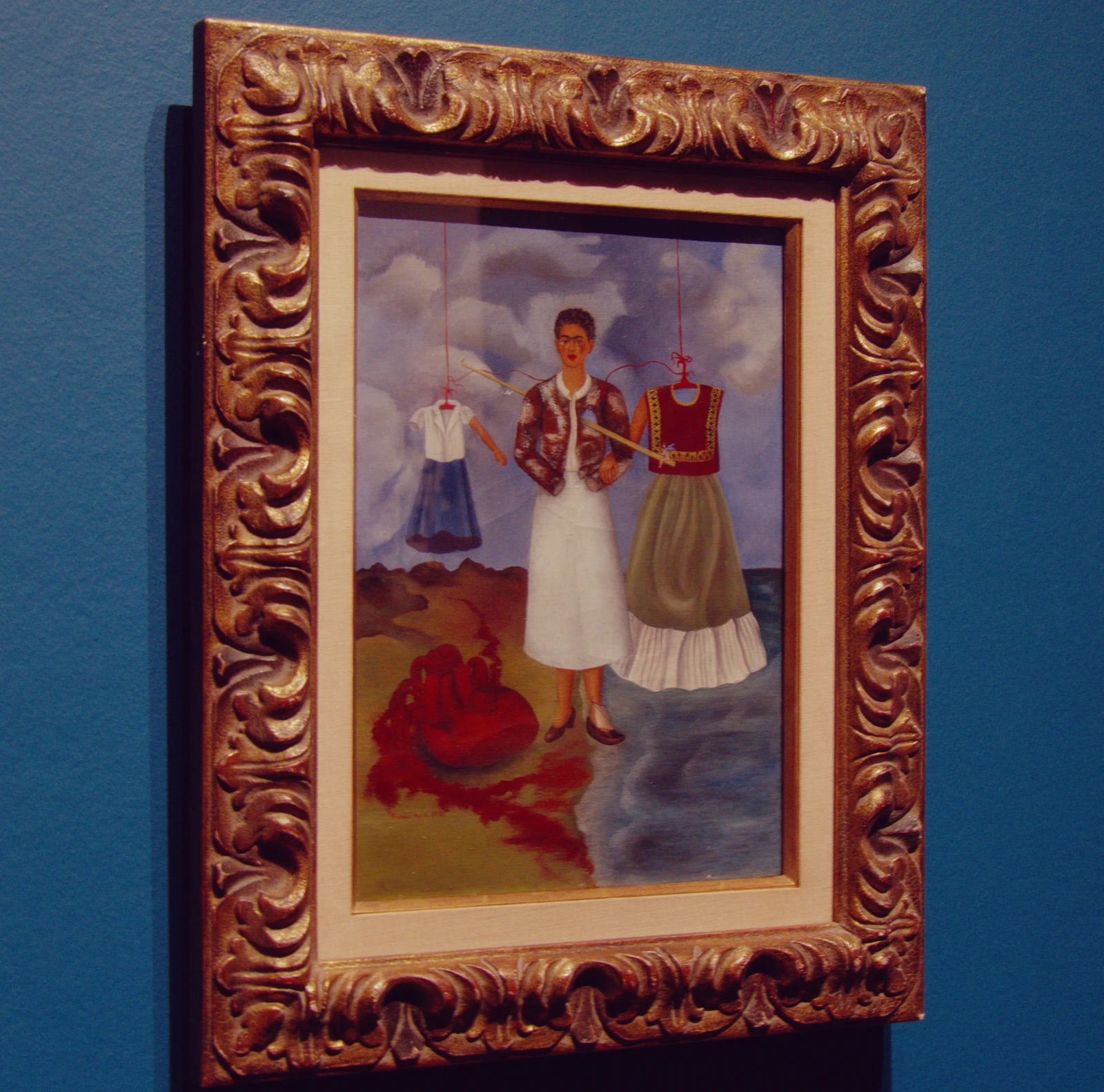
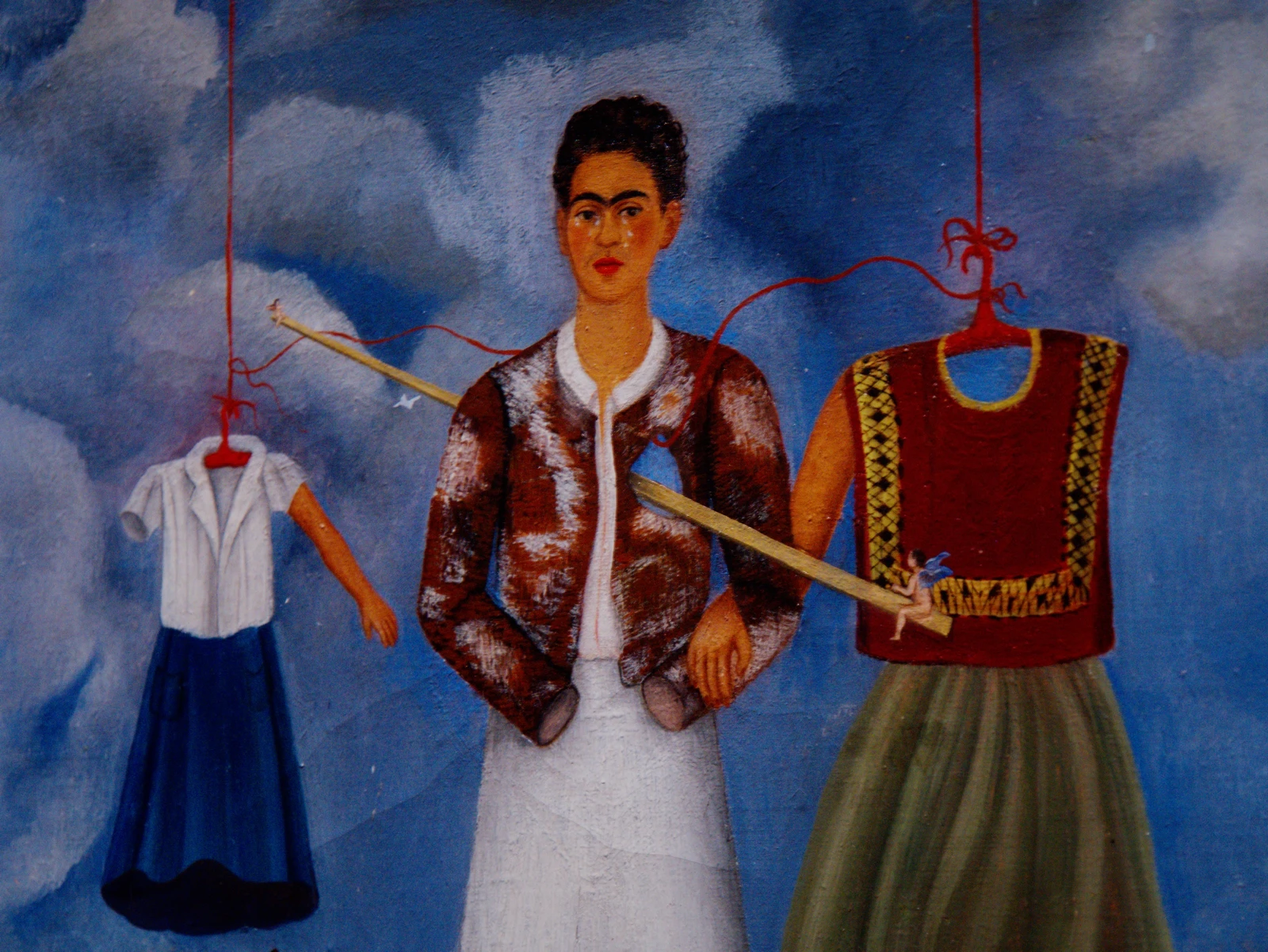
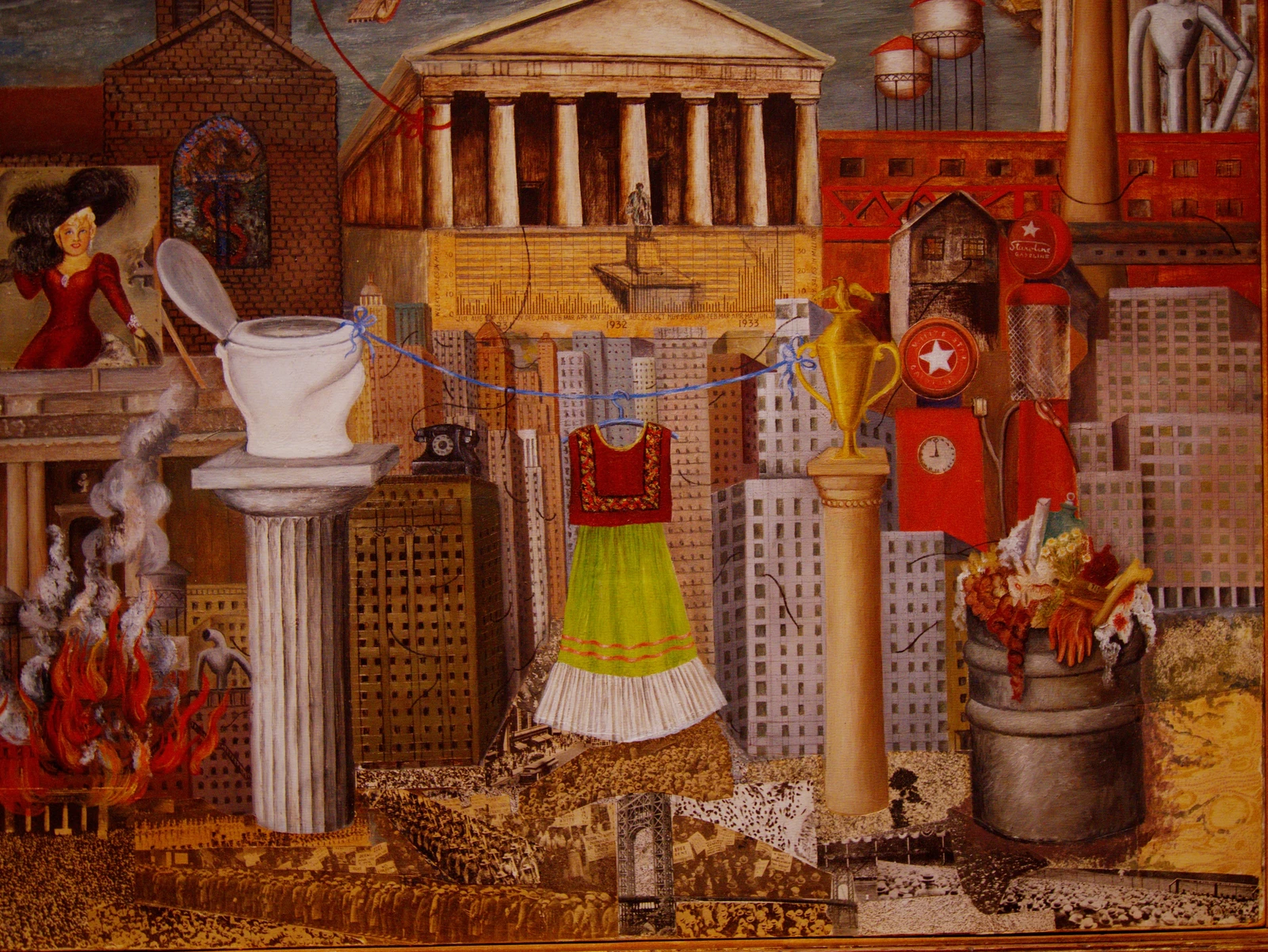
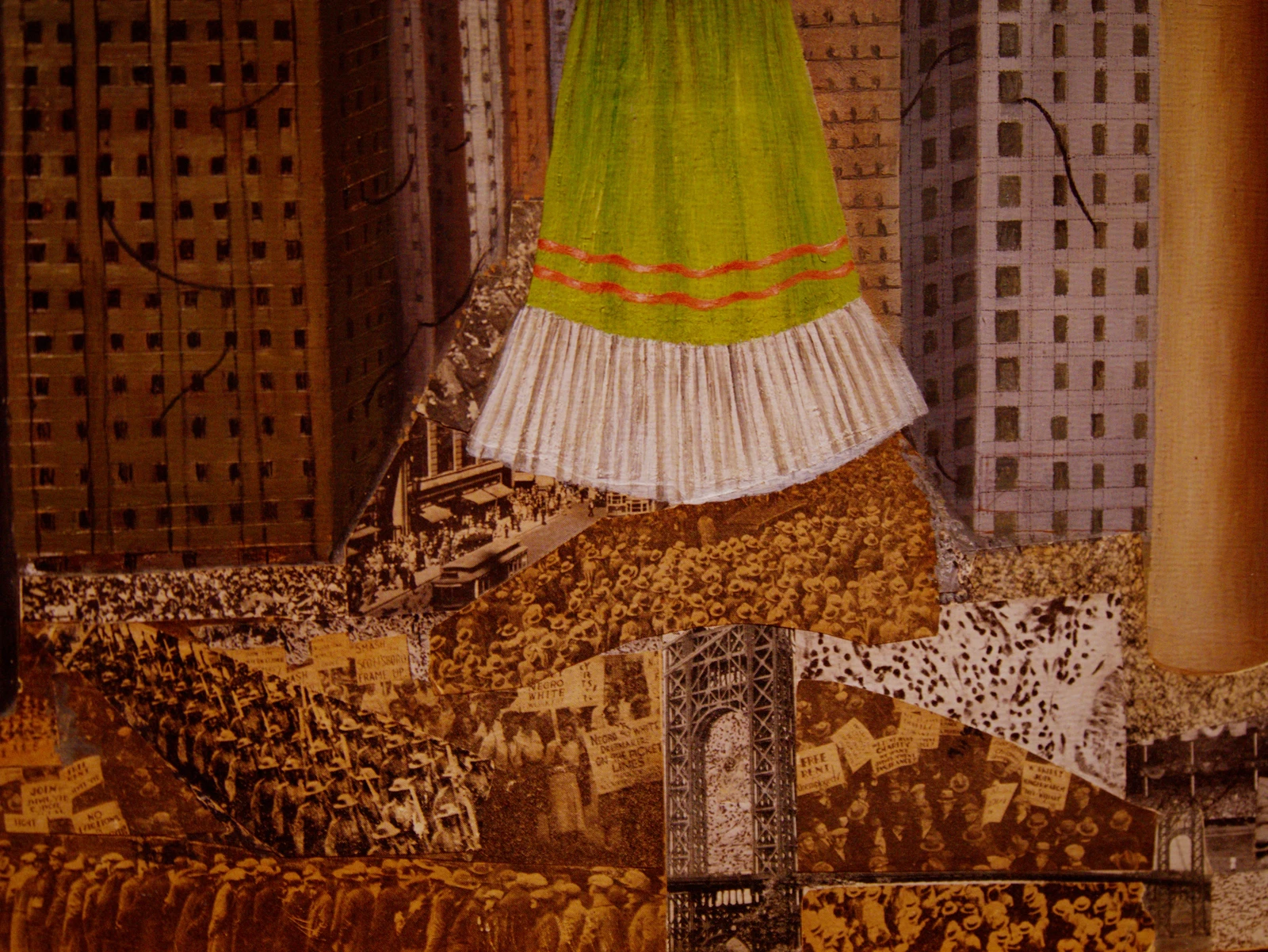
Memory, the Heart, 1937
Mexicanidadthe core of what it is to be Mexican was taking shape as Frida grew up, starting with the Mexican Revolution in 1910. The century leading up to it had been traumatic for Mexico. It gained independence from Spain in 1821, but ceded almost half of its land to the US in a series of wars and deals. Porfirio Díaz’s 35-year dictatorship ended with the Revolution, but plunged the country into a decade of civil war between competing factions. Frida proclaimed 1910 as her birth year, despite being born in 1907. Her and modern Mexico were one. She wore traditional Tehuan costumes as a statement of national identity.
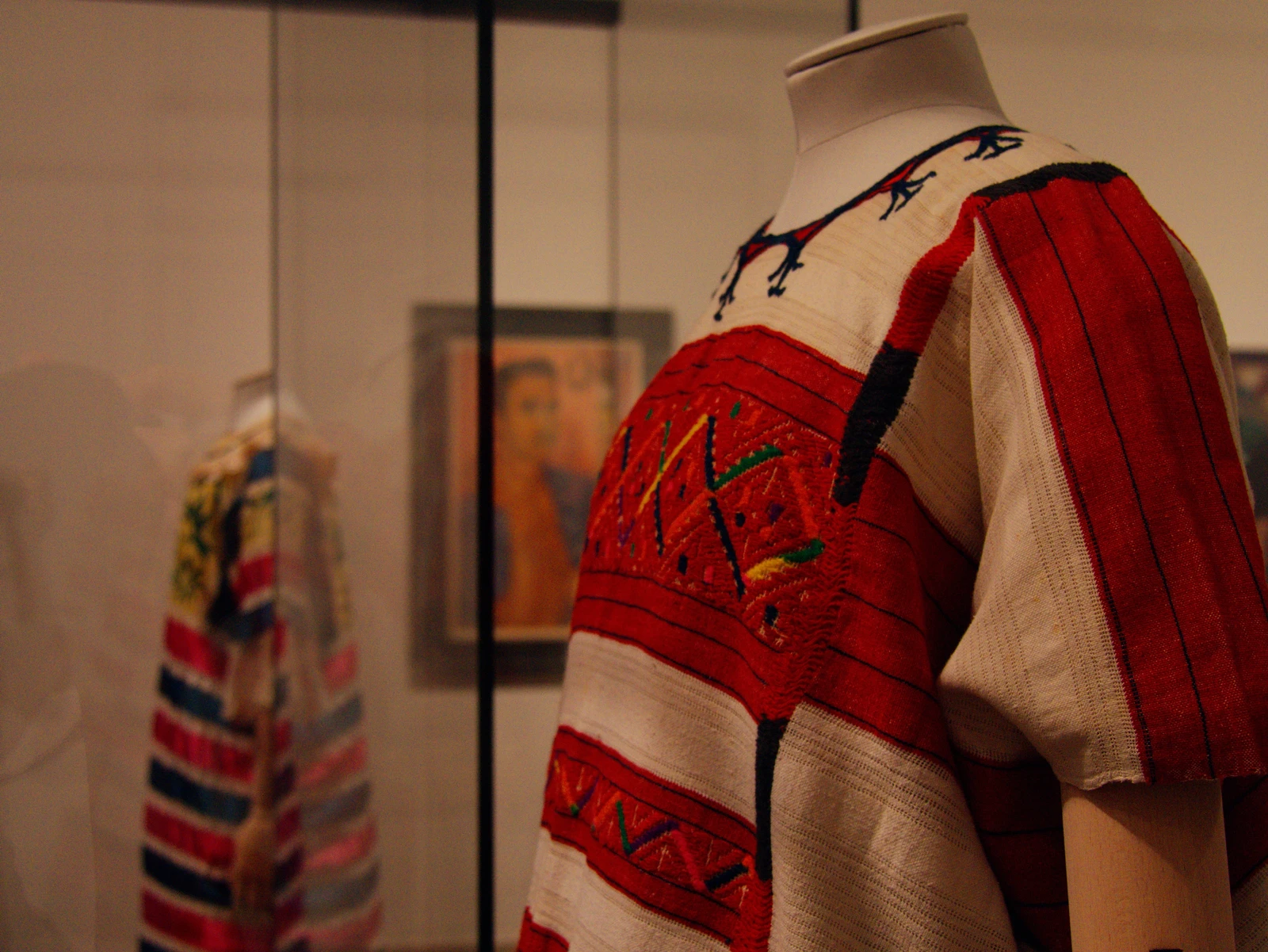
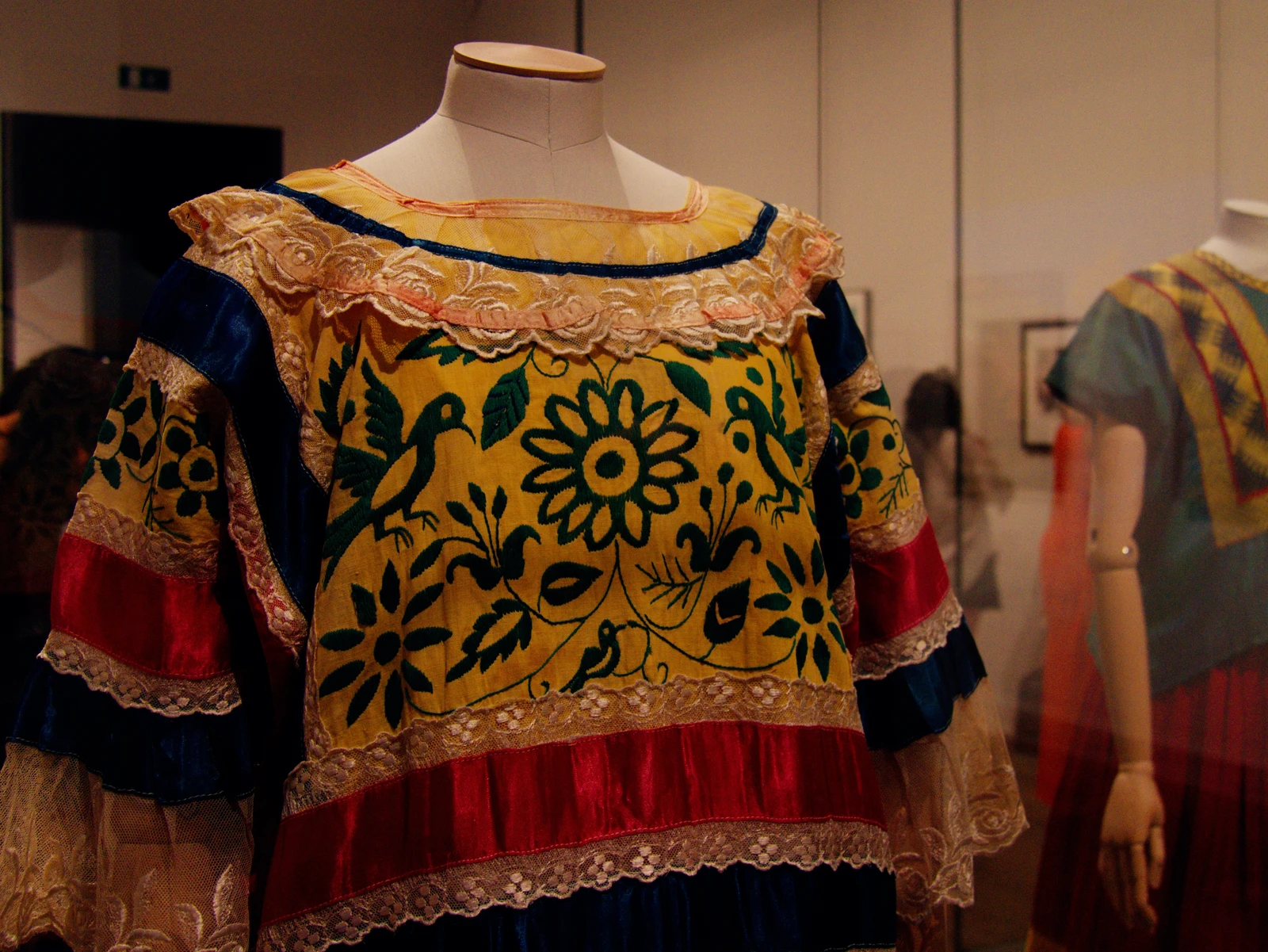
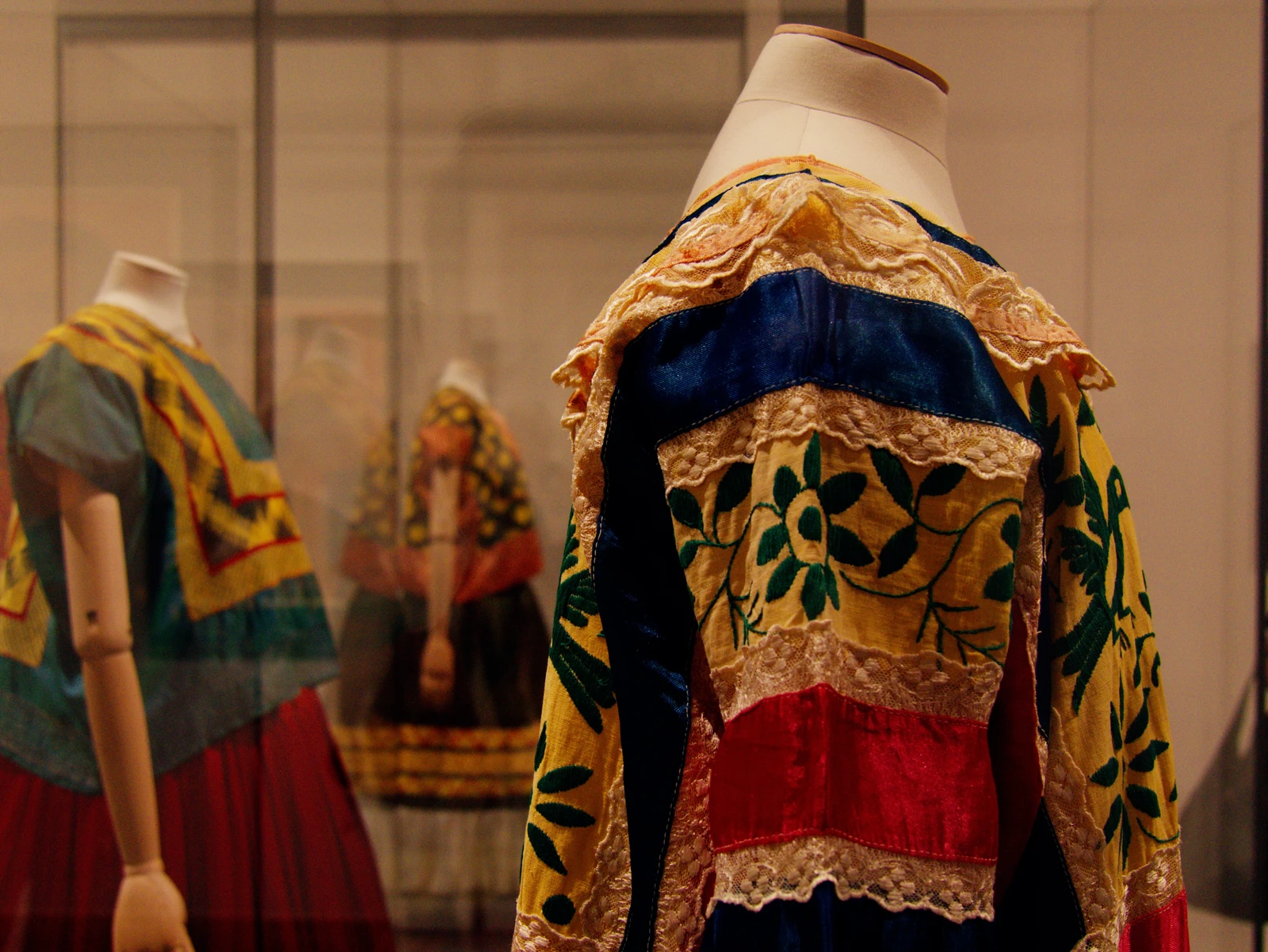
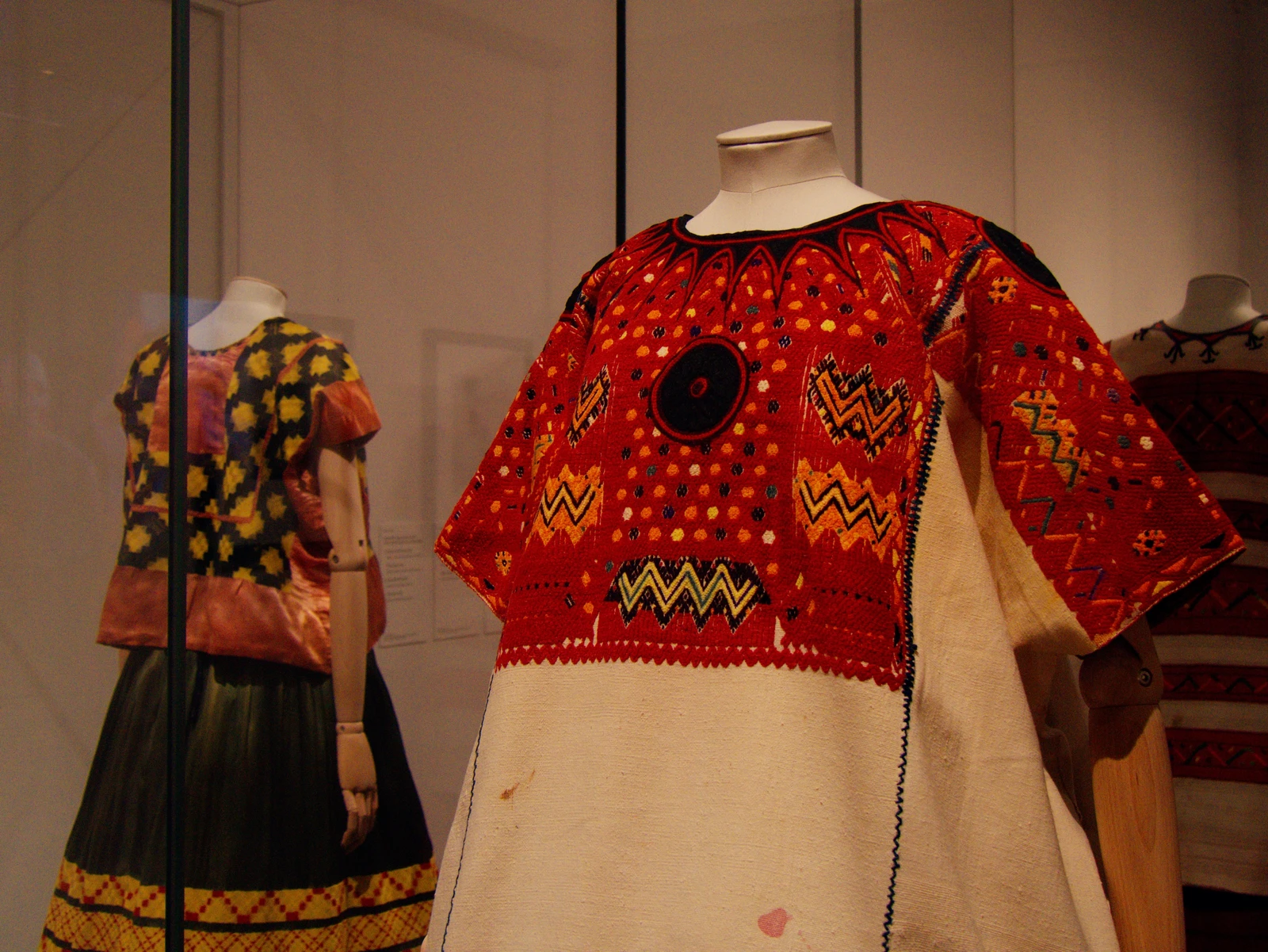
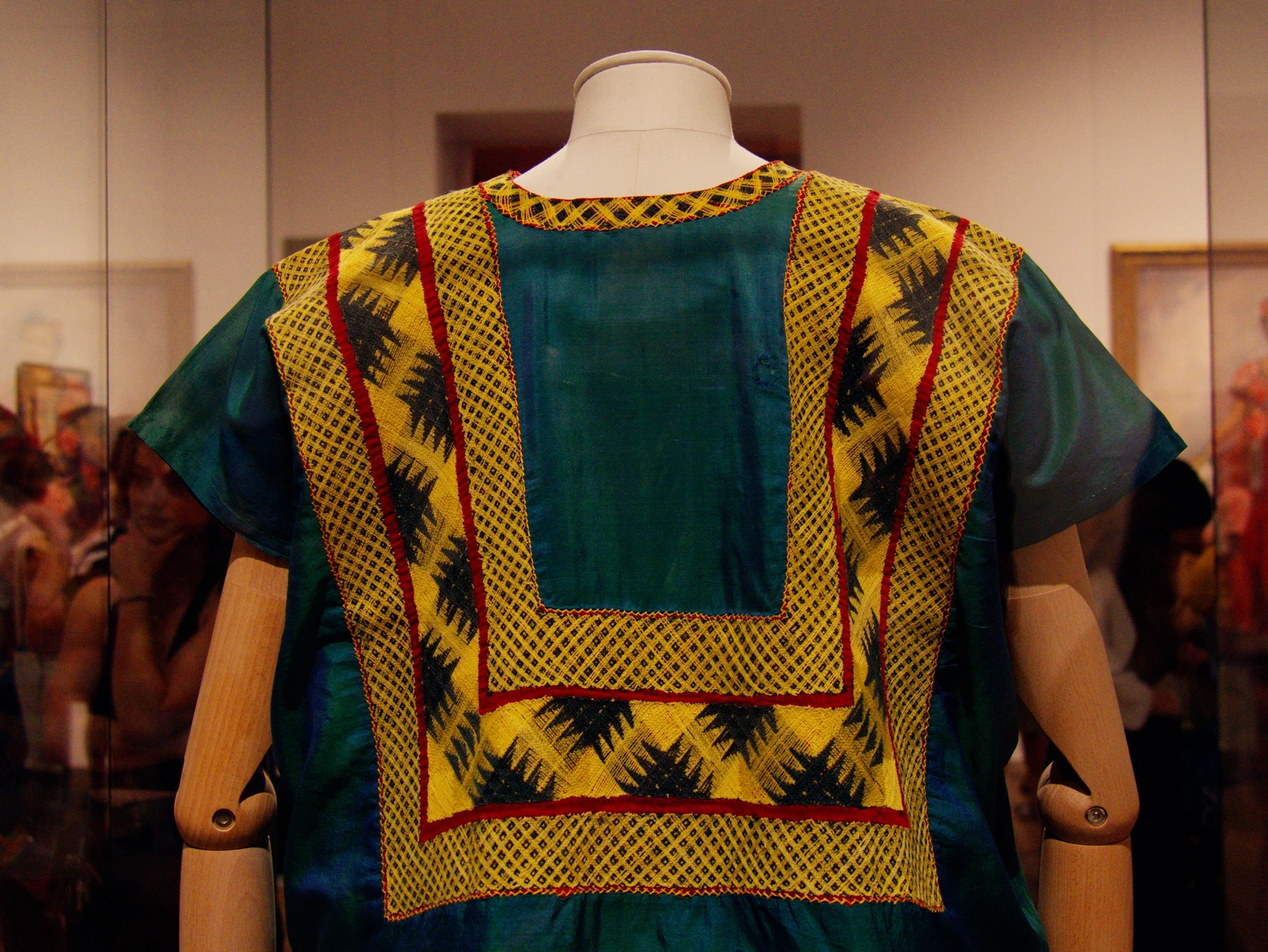
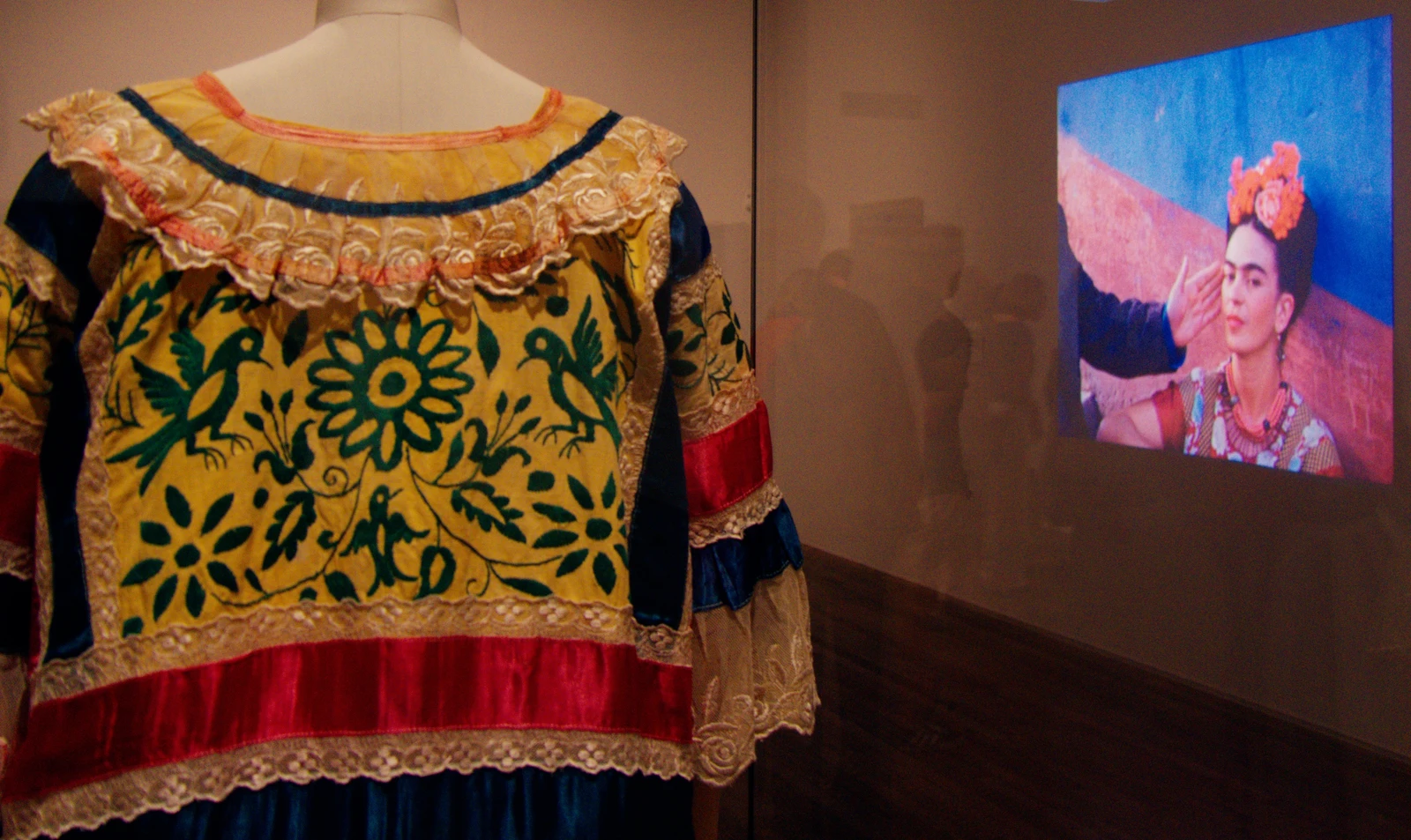
Extract from Frida’s journal
I was a member of the Party before I met Diego and I think I am a better Communist than he is or ever will be.
Frida and Diego hosted Trotsky in their Blue House after he fled Norway. Her affair with the exiled Communist leader quietly fizzled out before he was murdered with an ice axe a few streets away. In her last year, when bed-ridden and hardly able to move, she attended a Communist protest against the CIA-backed 1954 Guatemalan coup in a wheelchair. Whatever you make of her politics, Frida showed defiance and passion in the face of adversity. How she kept going is evident in her words to a friend:
I only want three things in life: to live with Diego, to continue painting, and to belong to the Communist party.
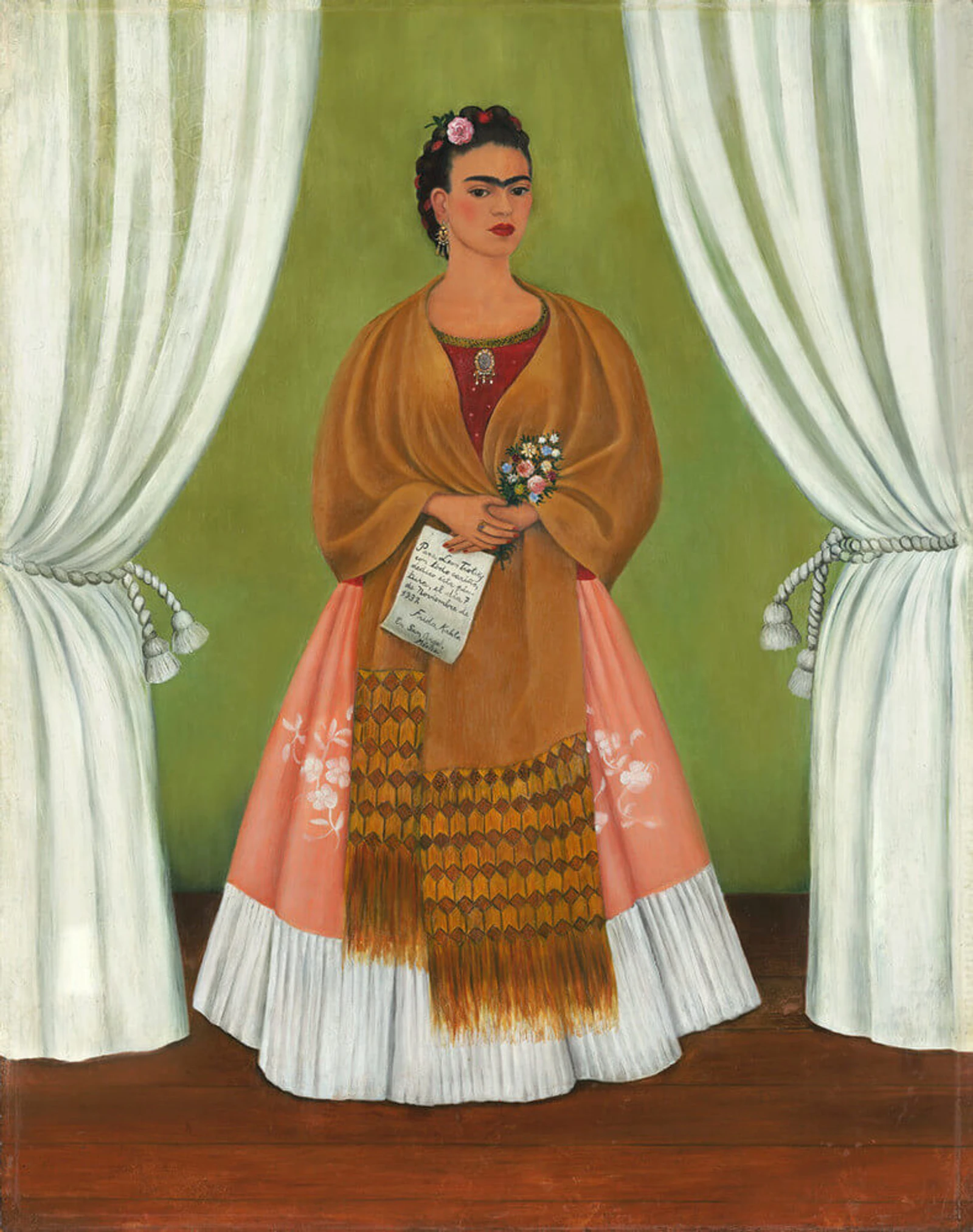
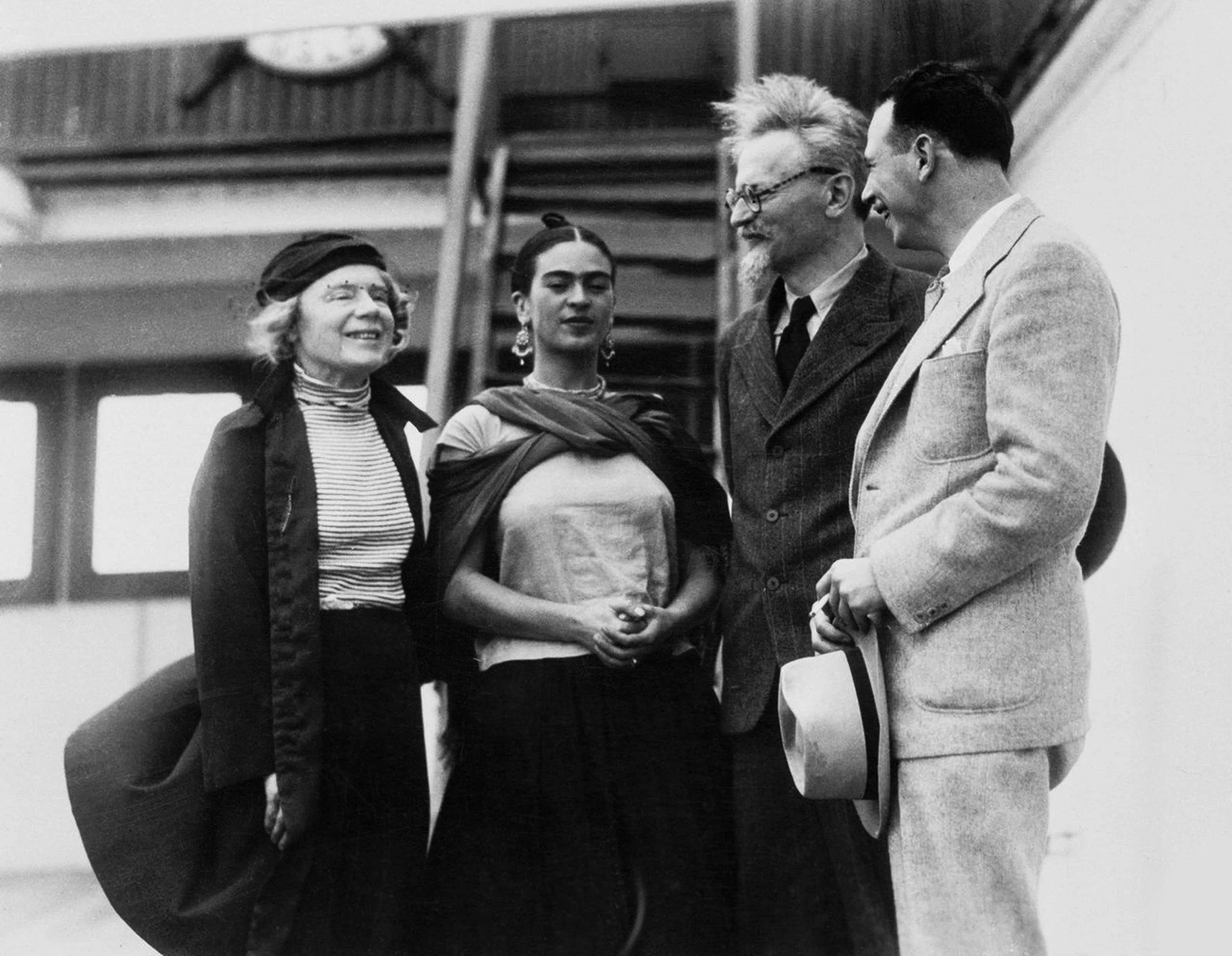
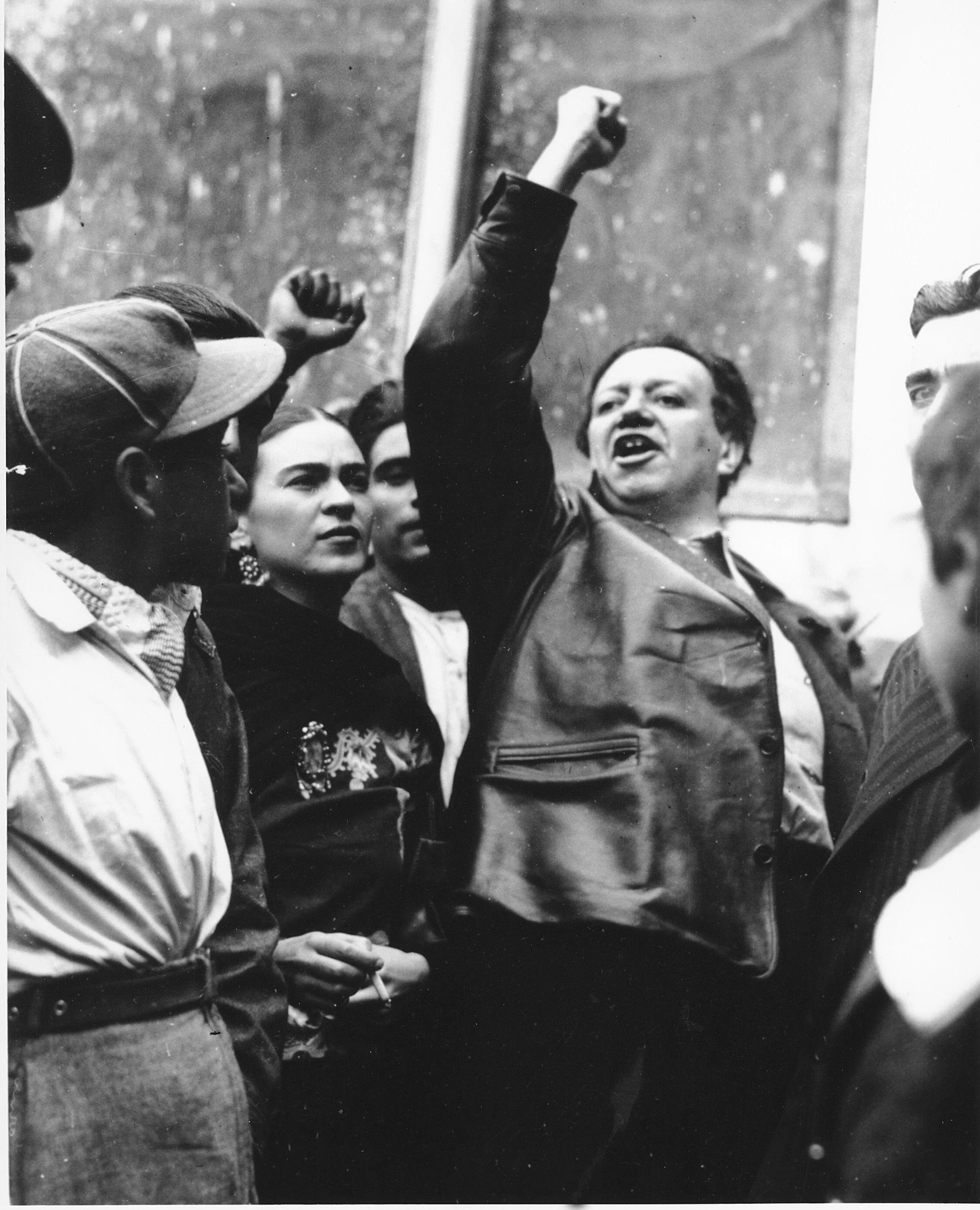
Self-portrait dedicated to Leon Trotsky, 1937
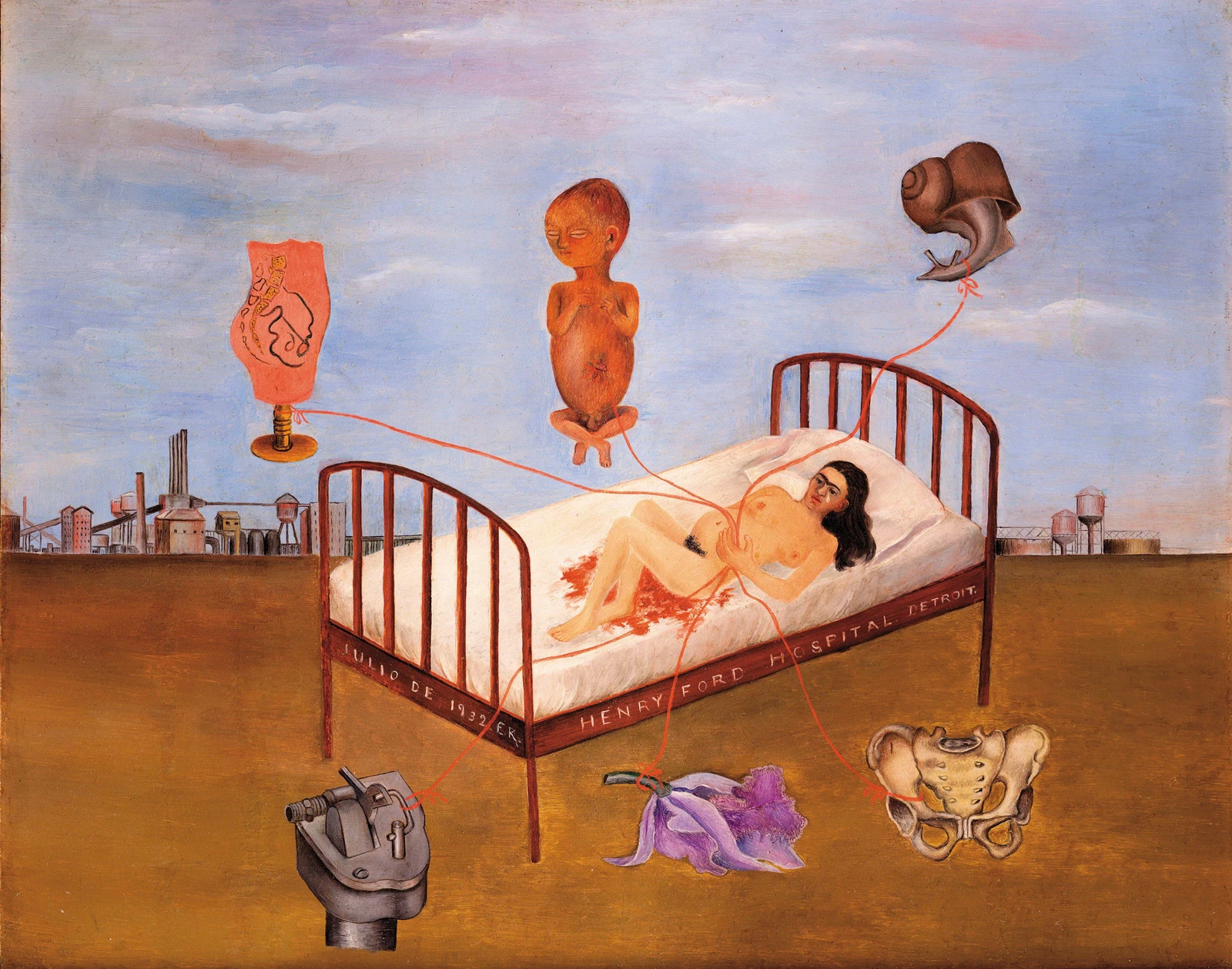
Frida’s passions, it seems, were anchors in a life that threw one challenge at her after another. At six, polio left her with a shorter and thinner right leg and a cause for bullying in school. Yet, she carried on, wearing layered socks, special shoes and skirts to hide it.
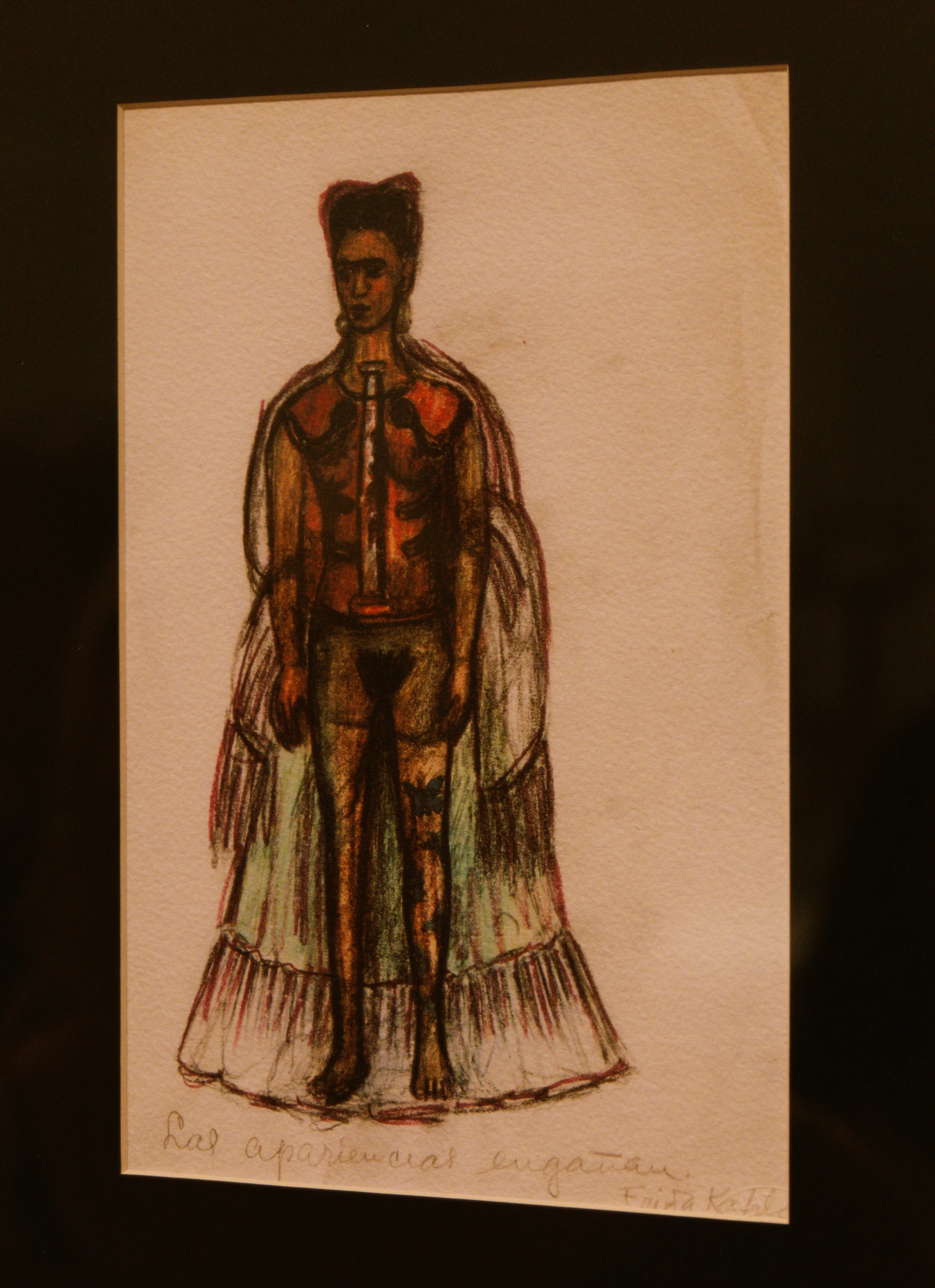
The first thing I thought of was a baleroMexican toy with pretty colors that I had bought that day and that I was carrying with me. I tried to look for it, thinking that what had happened would not have major consequences.
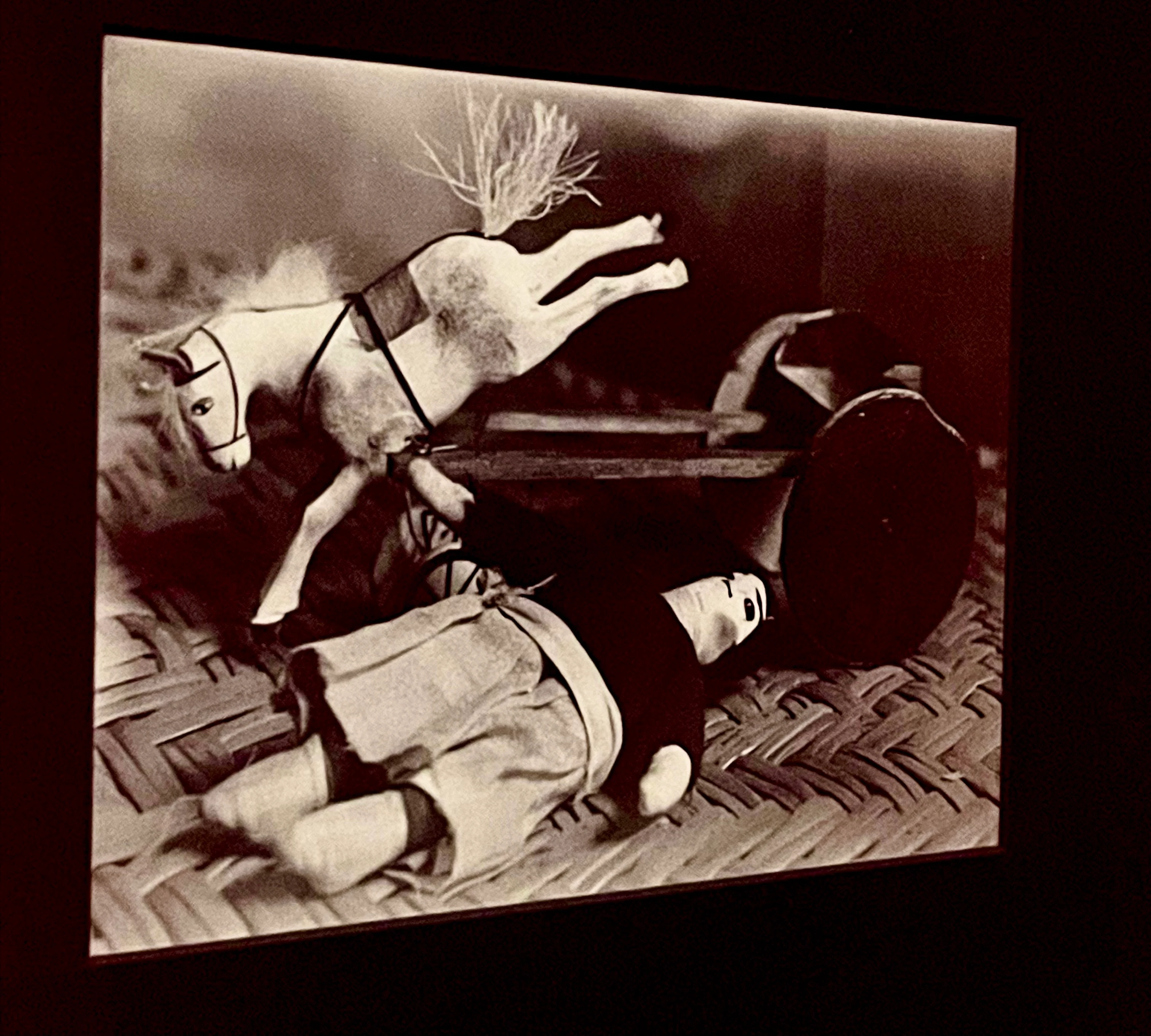
At 18, life tried to taunt her again, as she got on a wooden bus with Alejandro Gómez Arias, her boyfriend at the time. A tram smashed into the bus, breaking Frida’s spinal column, collarbone, ribs and pelvis. You don’t have to be a doctor to know what that means. A handrail crashed into her back and pierced her vagina. Frida quipped in characteristic fashion: “I lost my virginity.”
Confined to her home for months, Frida approached her new condition with alegría. She started painting.
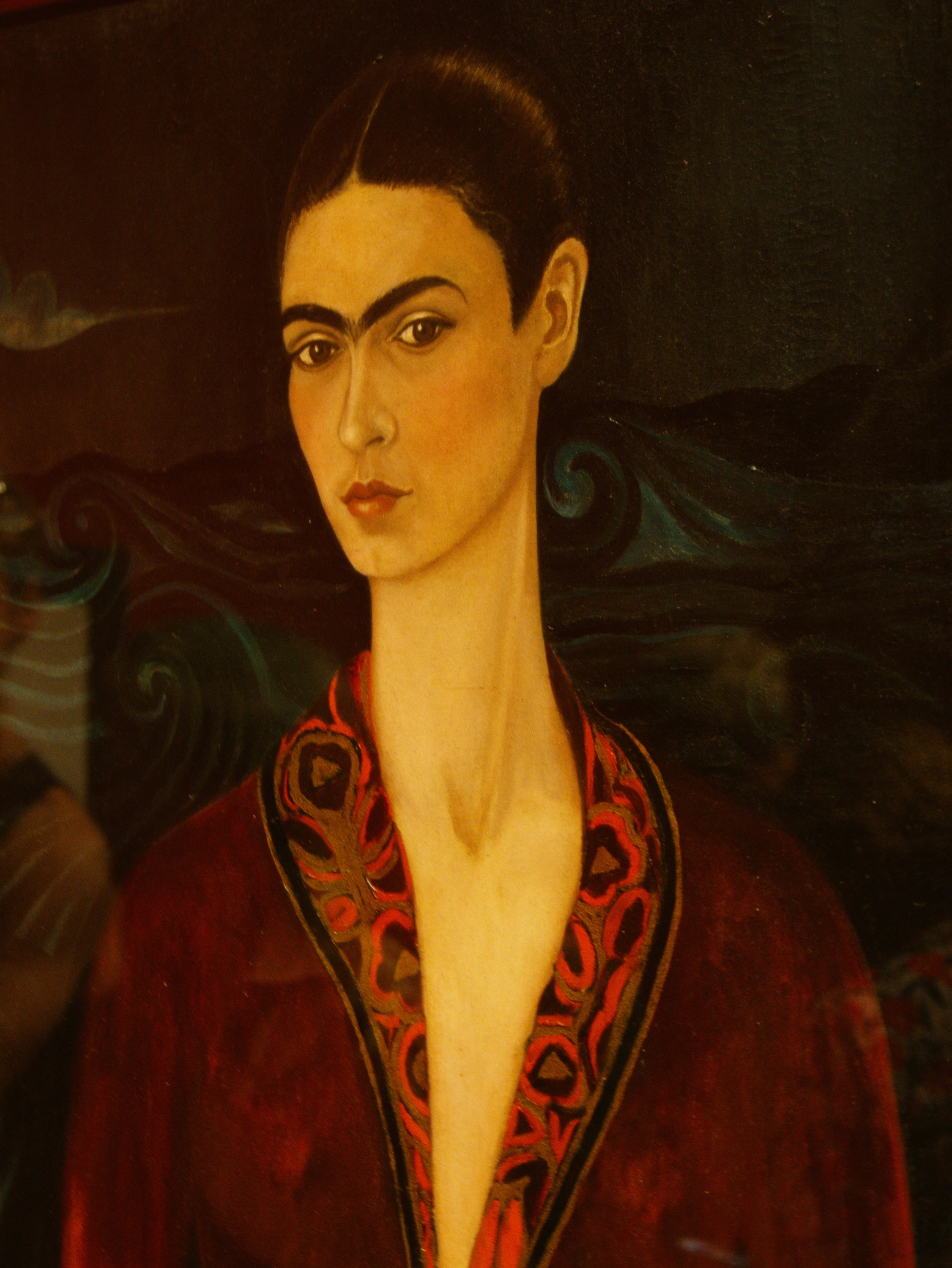
Her first self-portrait was a gift to Alejandro and marked the start of her artistic experimentation.
Forgive me for sending it without a frame. I implore you to put it in a low place where you can see it as if you were looking at me.
For the rest of her life, Frida wore rigid orthopedic corsets and prostheses. Despite more than 30 surgeries in total and having her right leg amputated, she responded in characteristic fashion: red prosthetic boots adorned with gold embroidery and little bells.
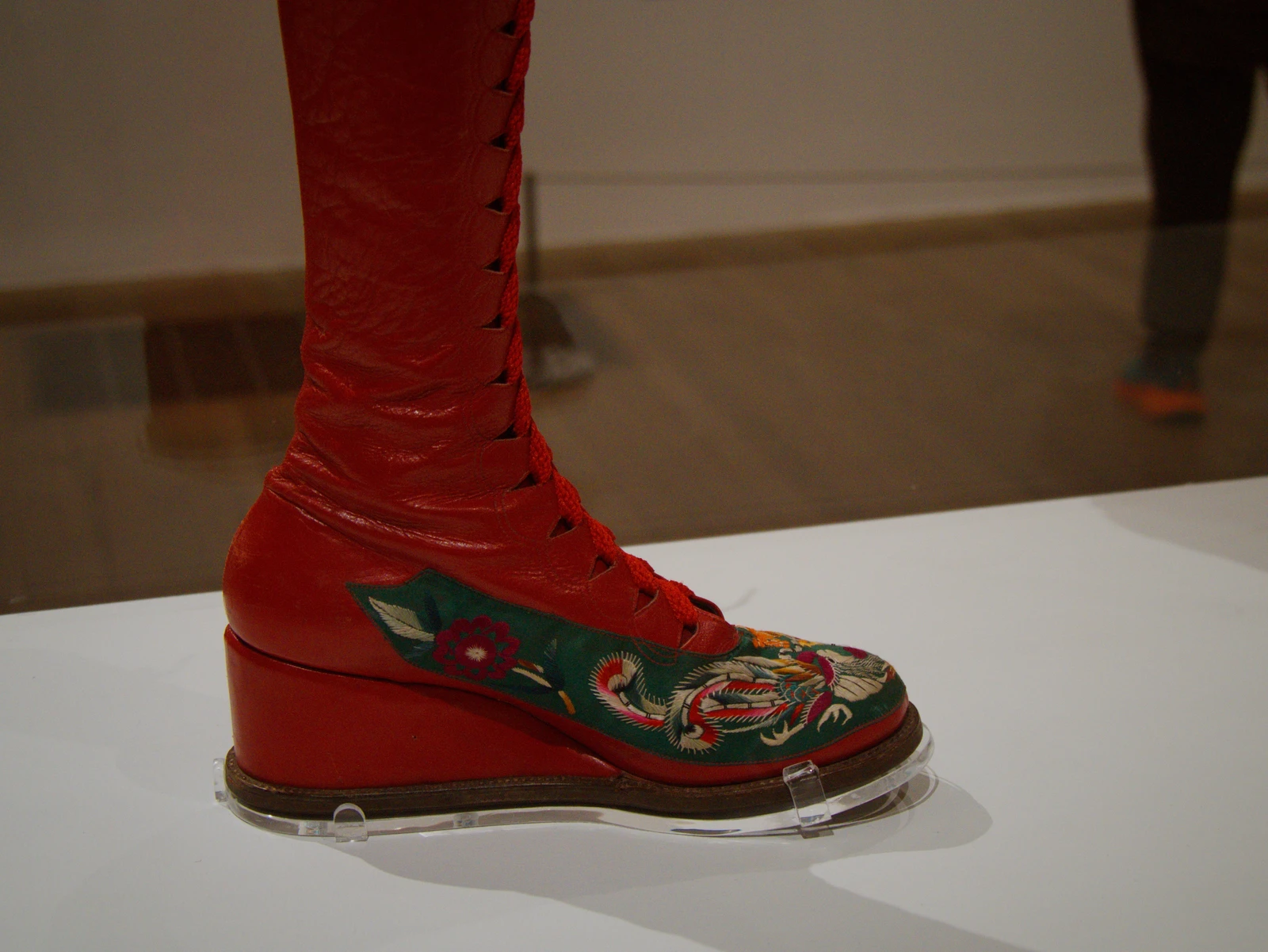
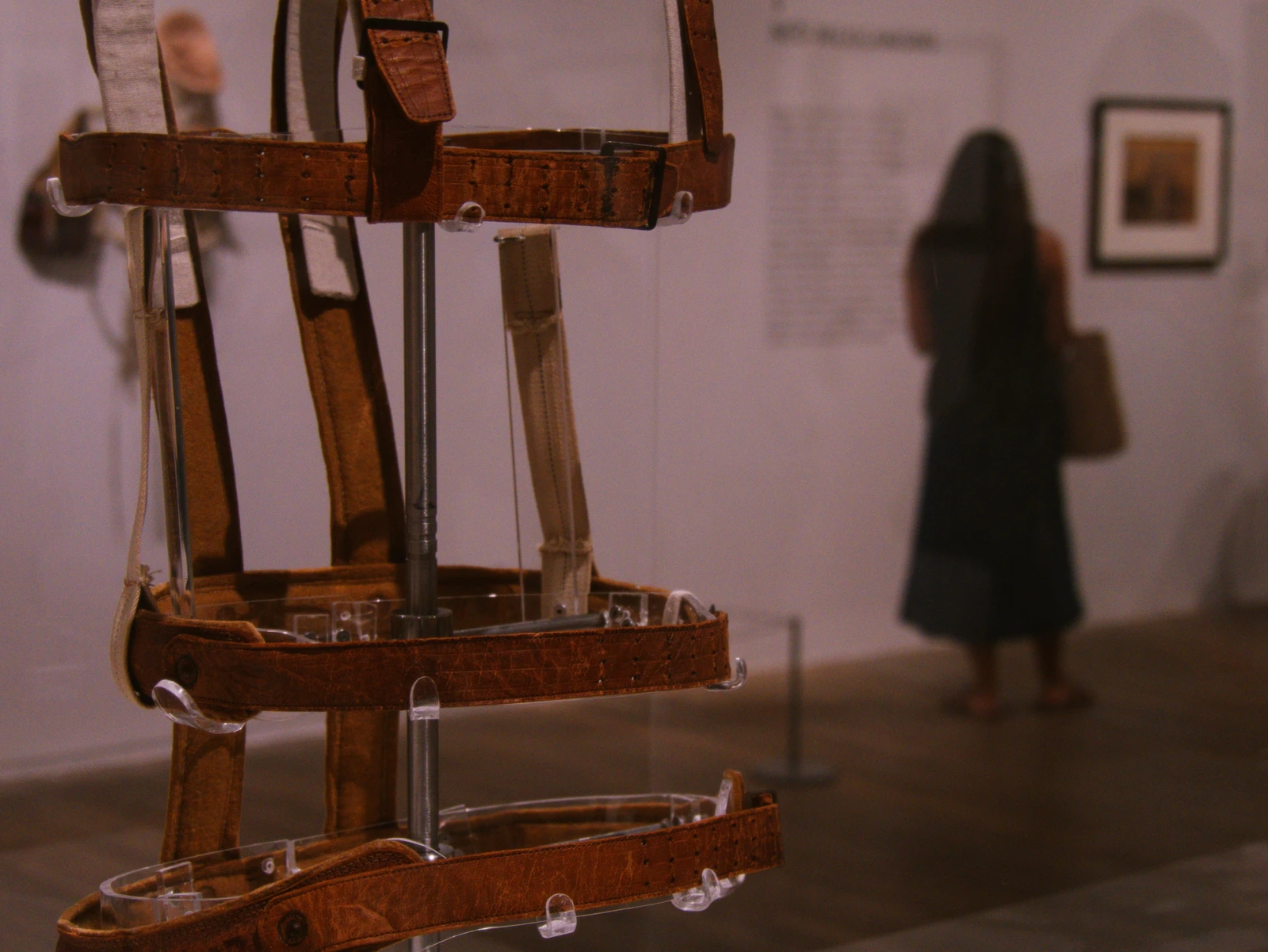
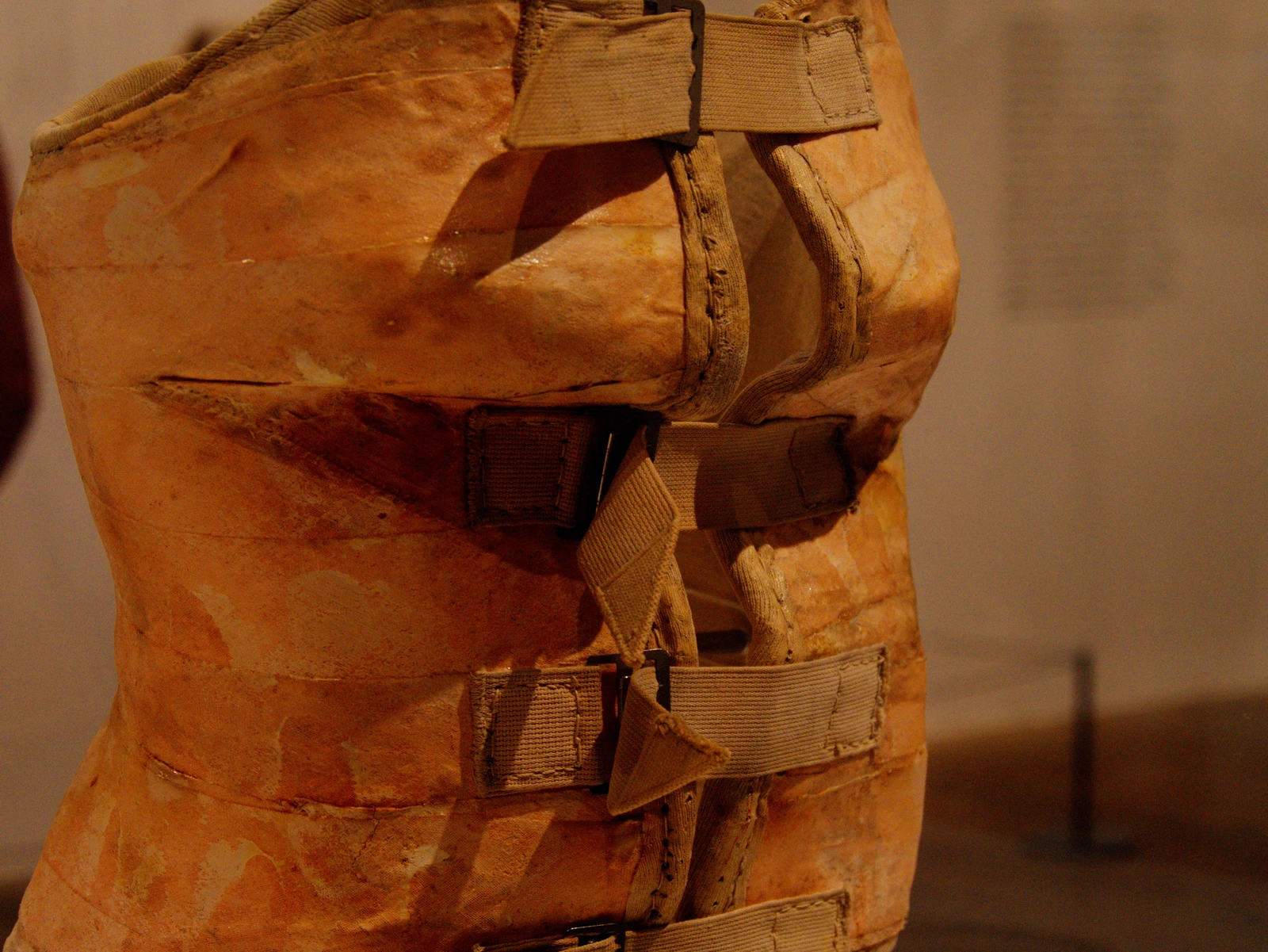
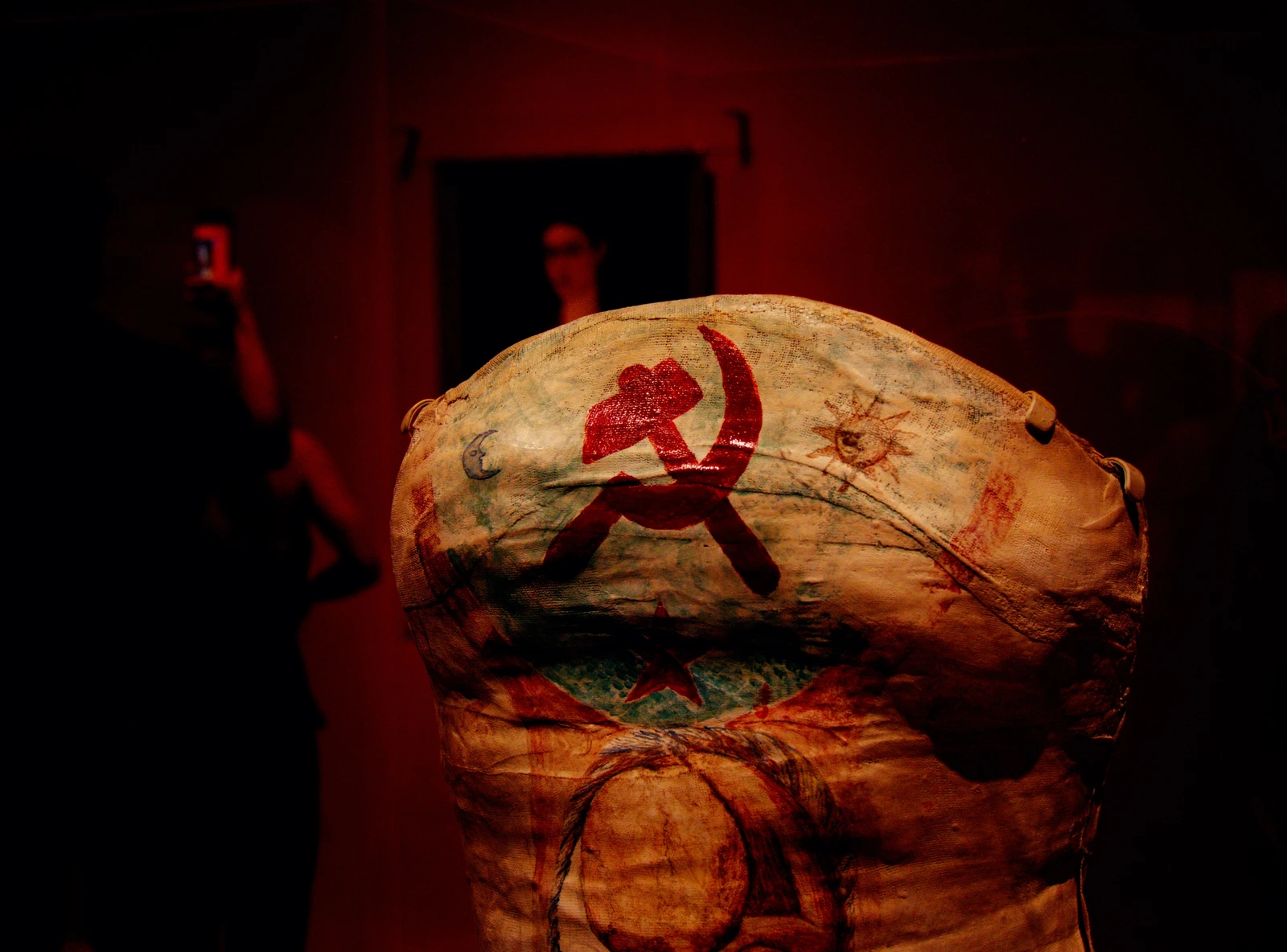
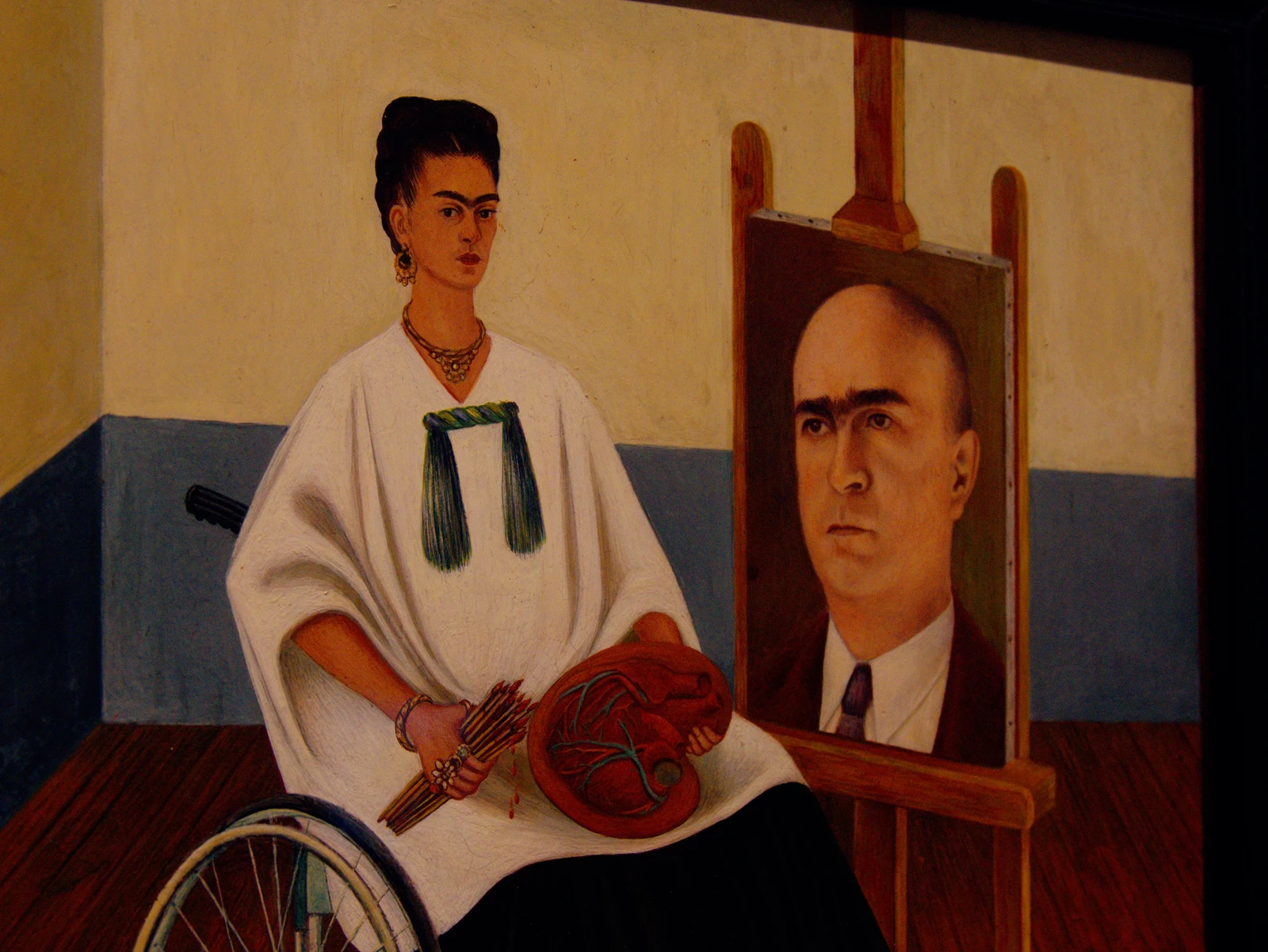
“These marvelous legs! And how well they work for me!”
I suffered two grave accidents in my life. One in which a streetcar knocked me down.
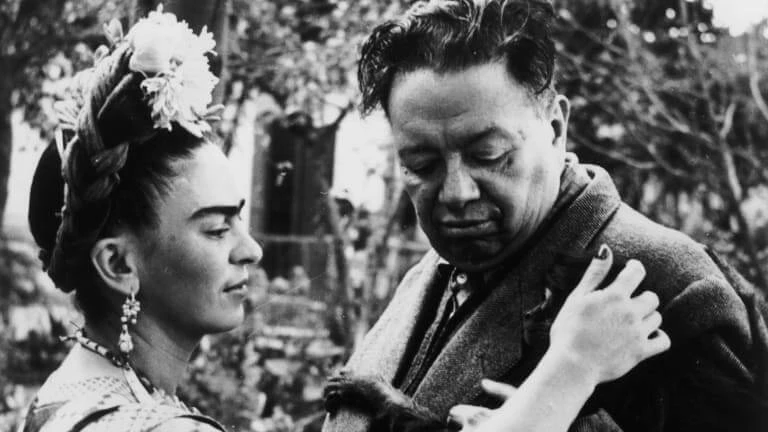
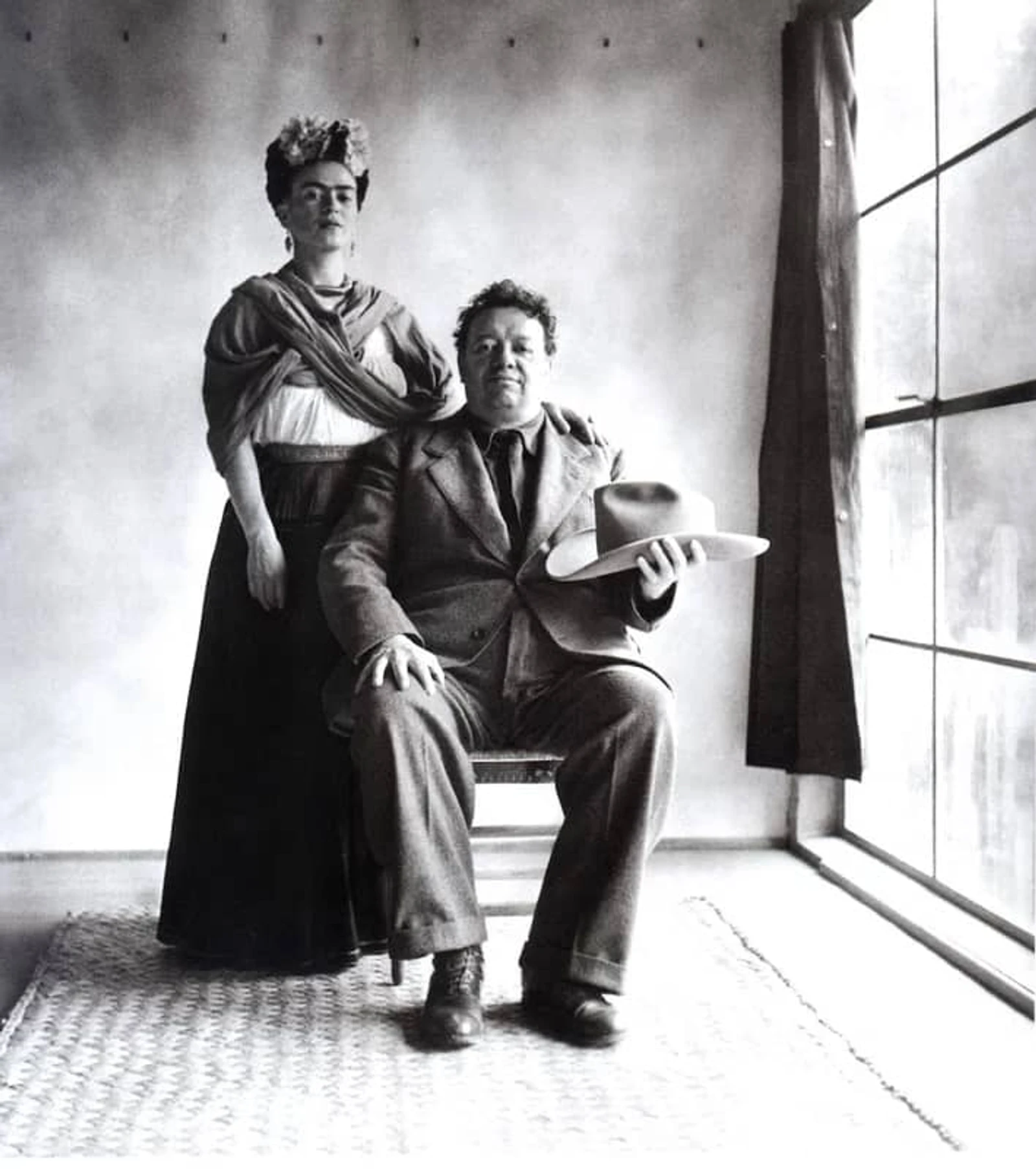
The other accident is Diego.
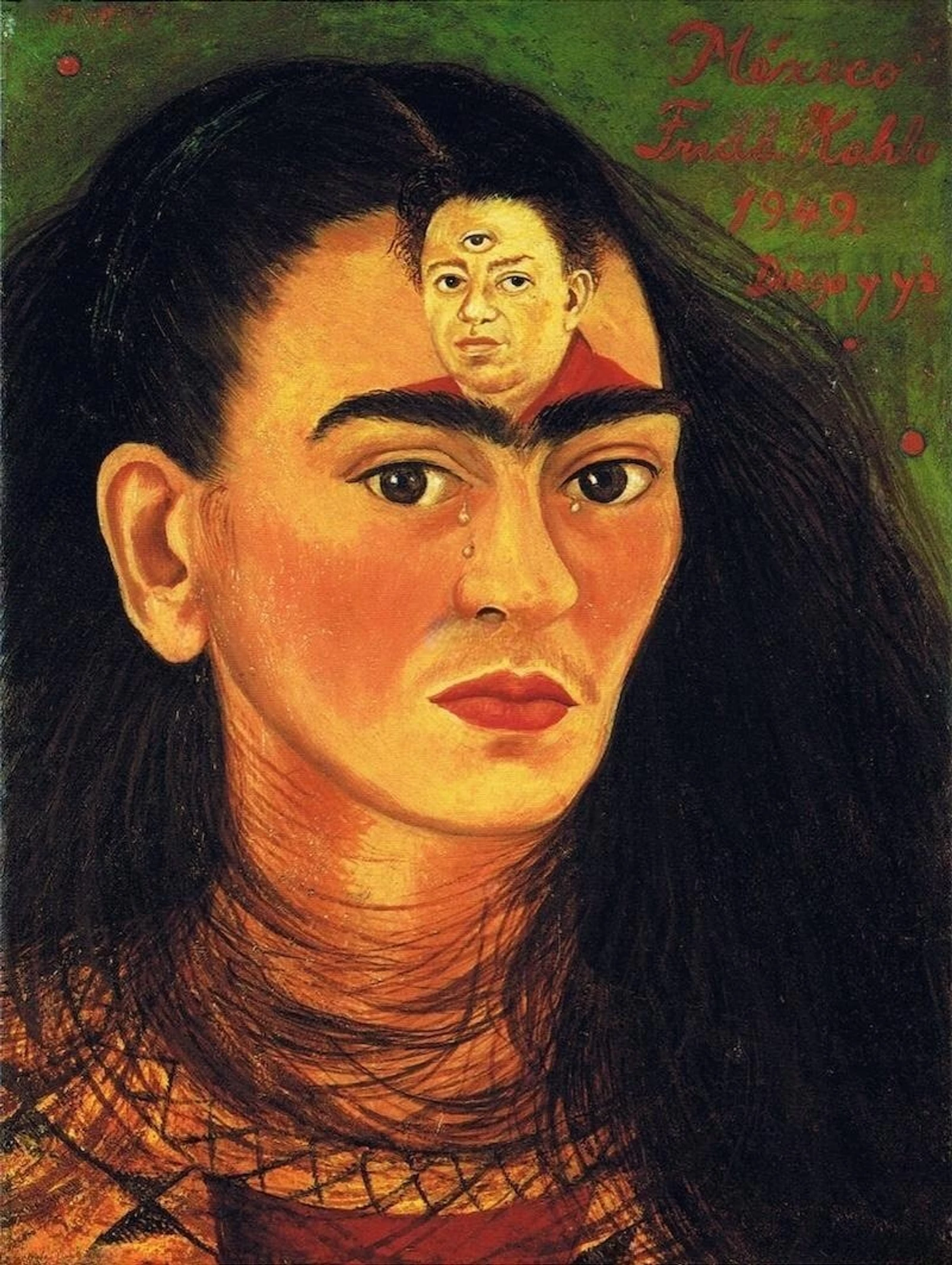
To describe Frida and Diego’s relationship as tumultuous would be an understatement. They married when she was 22, Diego at his third wedlock. He cheated on her with her sister and others. Frida’s affairs included both men (Isamu Noguchi, Nickolas Murray, Trotsky) and women (Jacqueline Lamba, Josephine Baker, Chavela Vargas). They divorced and remarried just a year later. Read about their love affair and you see it’s a bit like a painting: interpretation is up to you.
I paint my own reality.
The only thing I know is that I paint because I need to, and I always paint whatever passes through my head, without any other consideration.
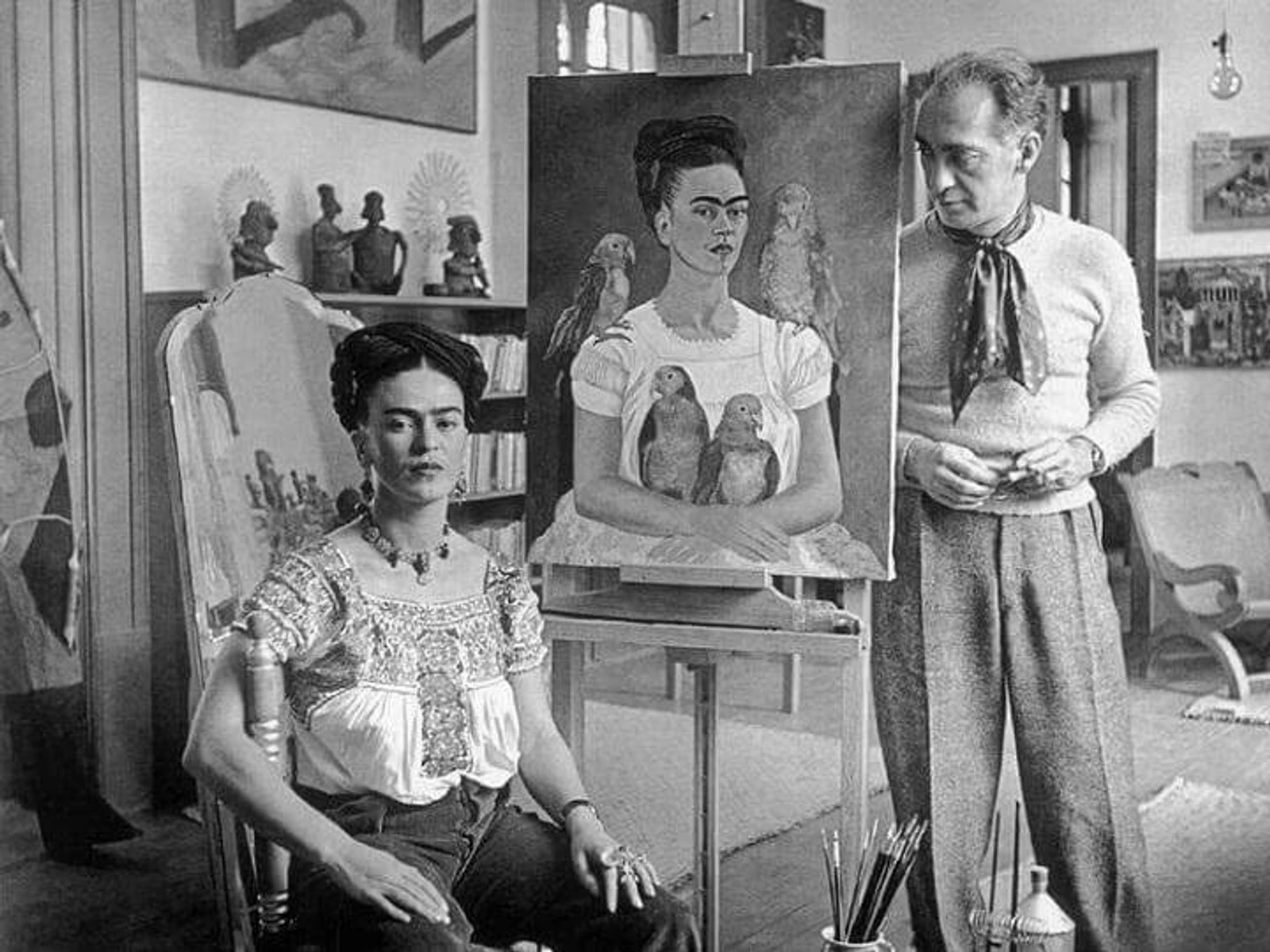
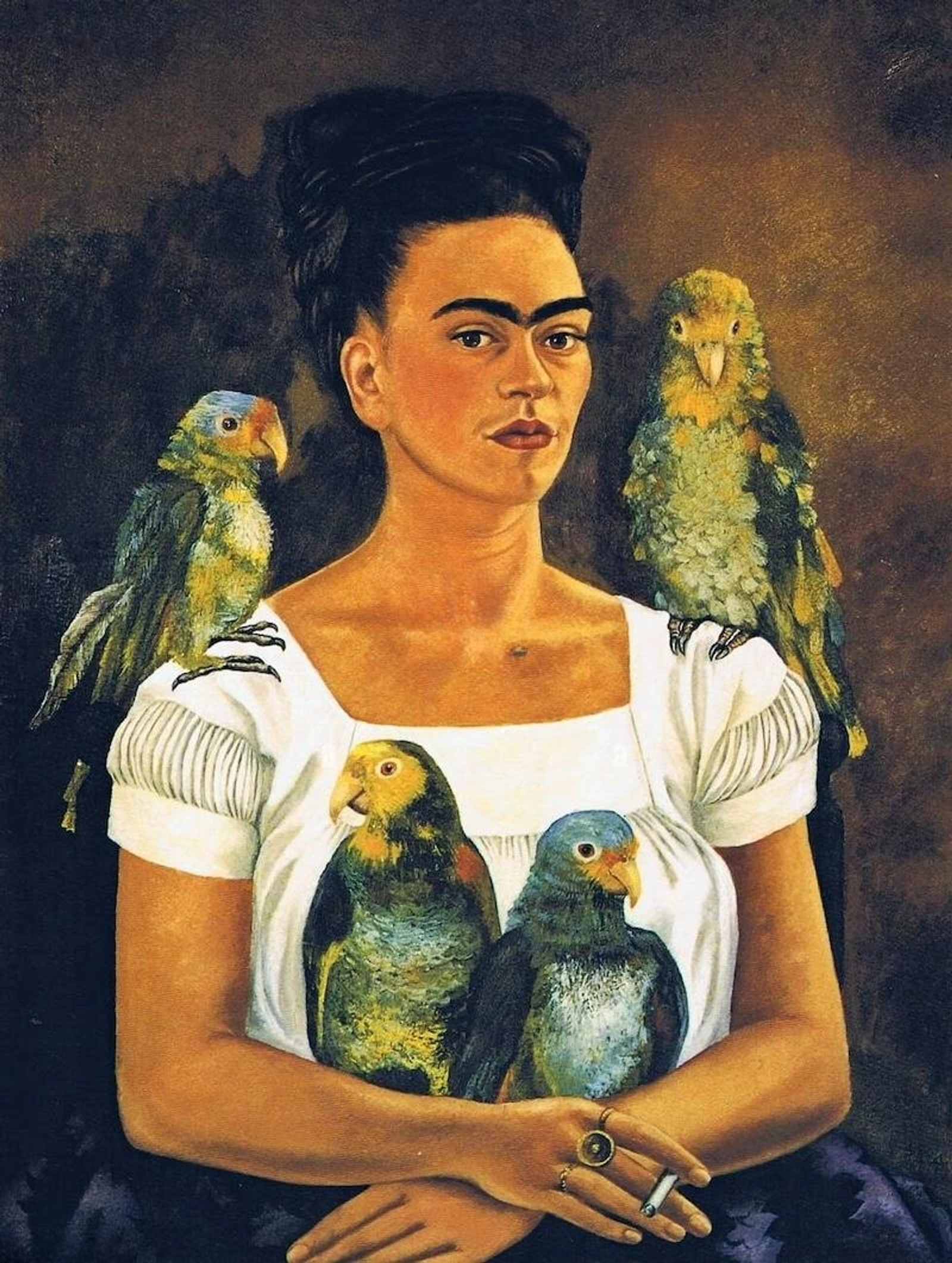
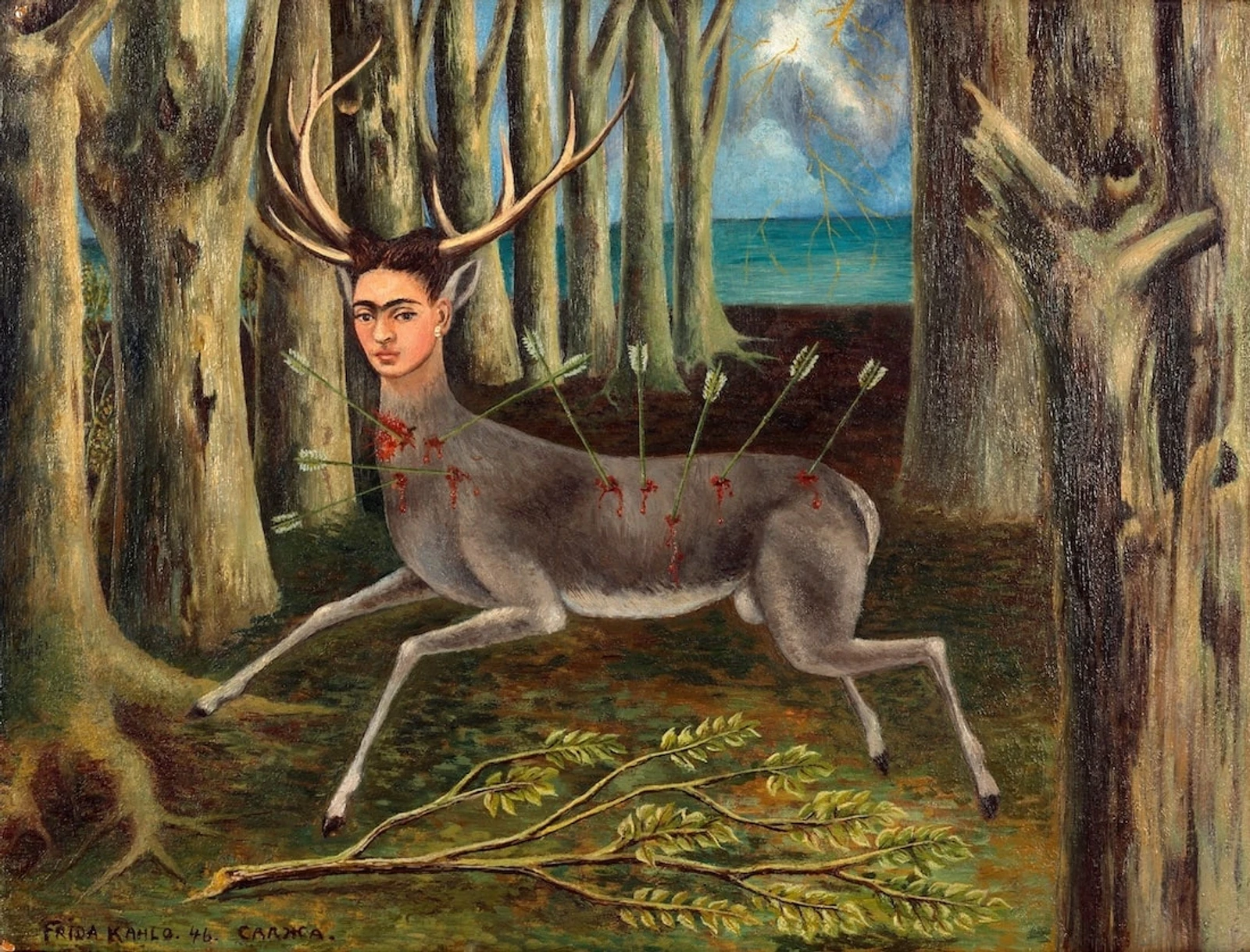
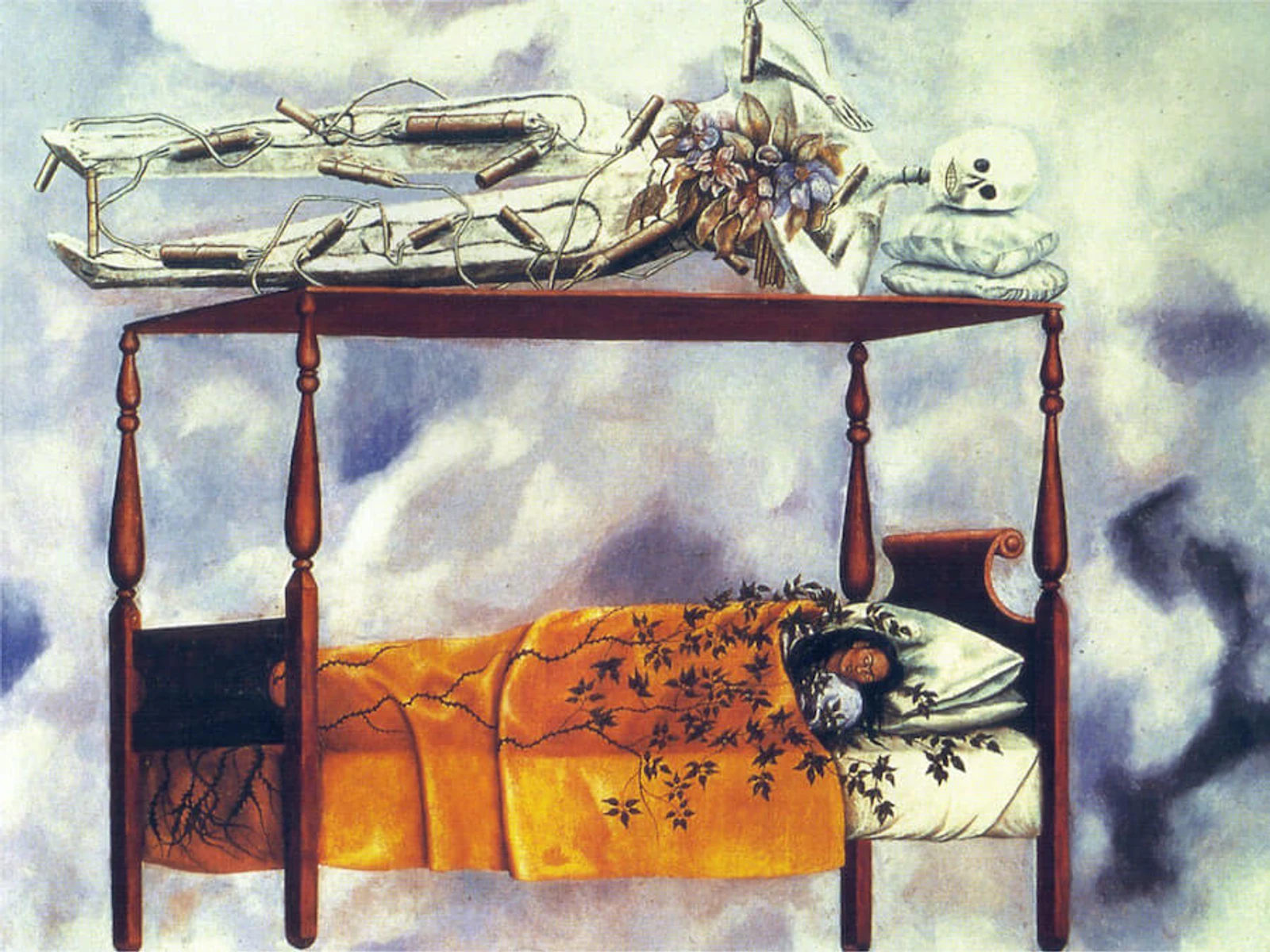
To get a sense of their 25 years together, we only need to take a look at her work.
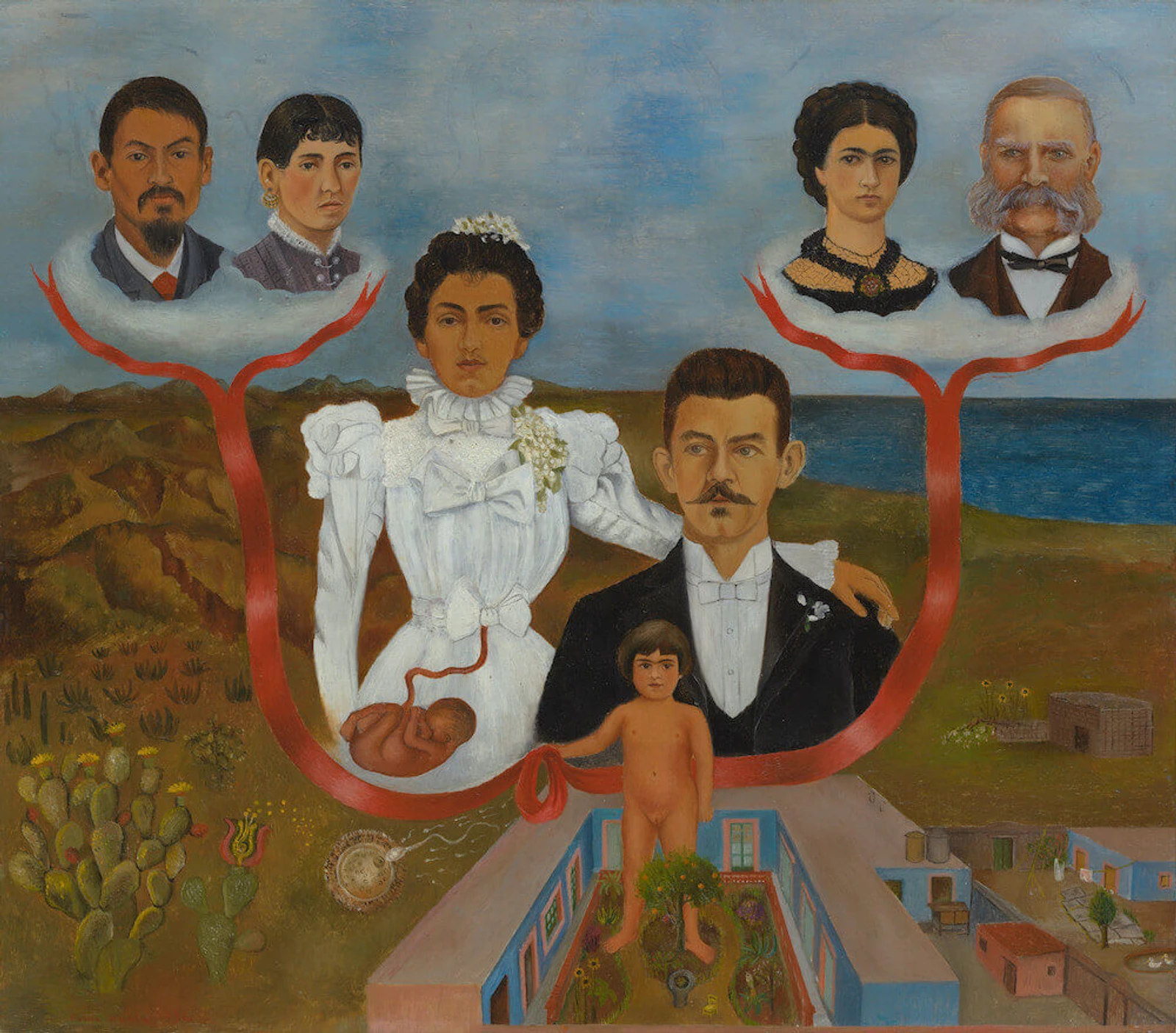
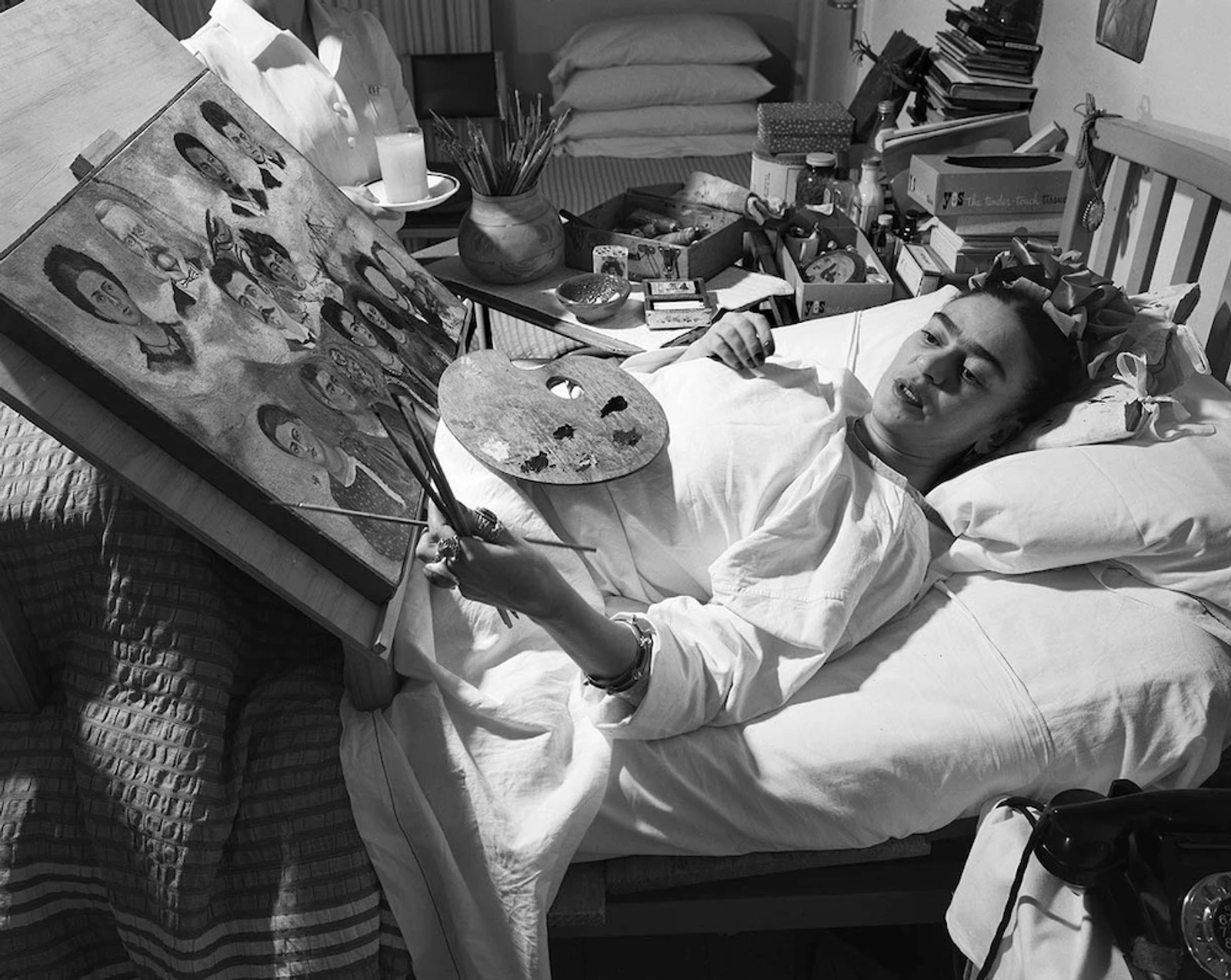
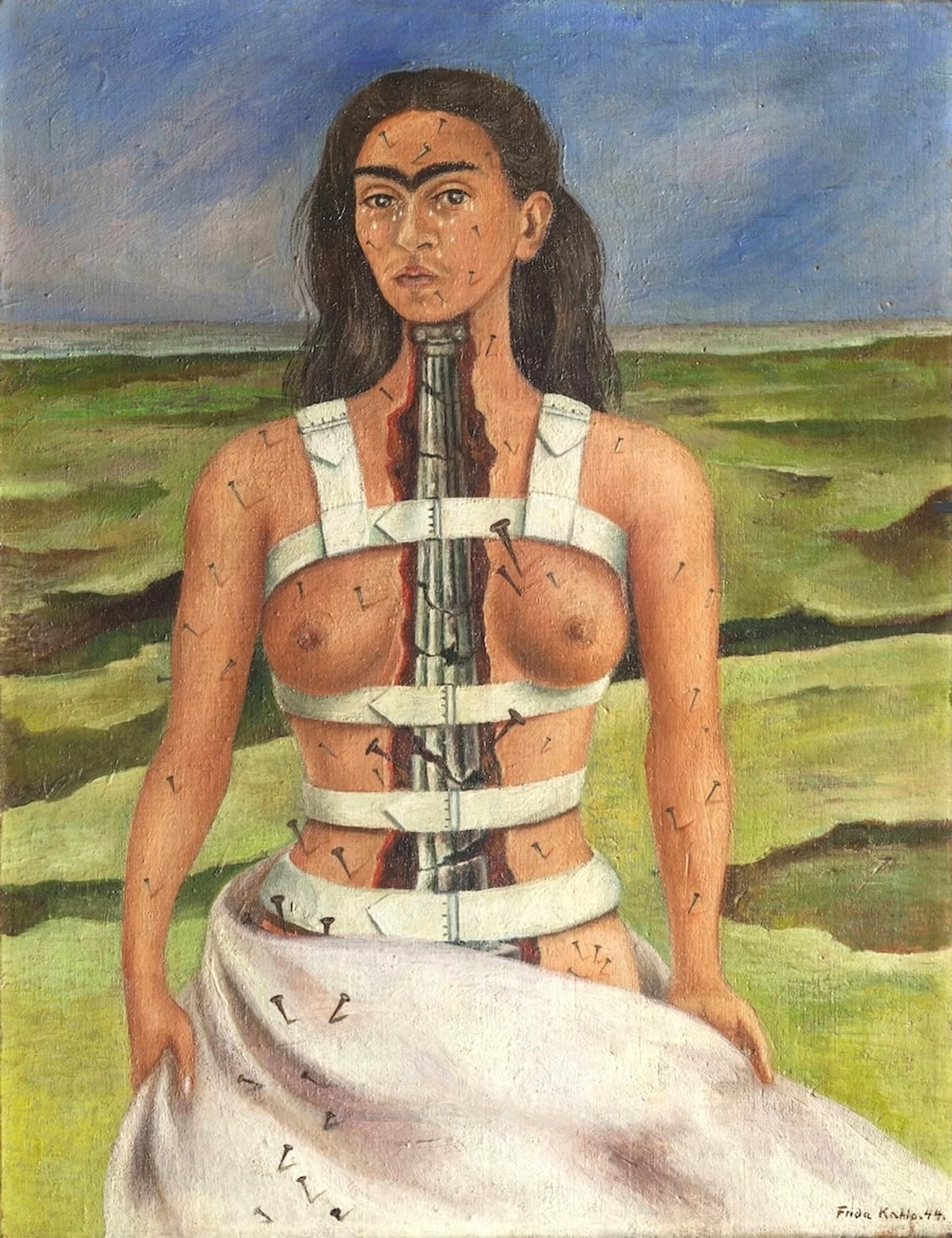
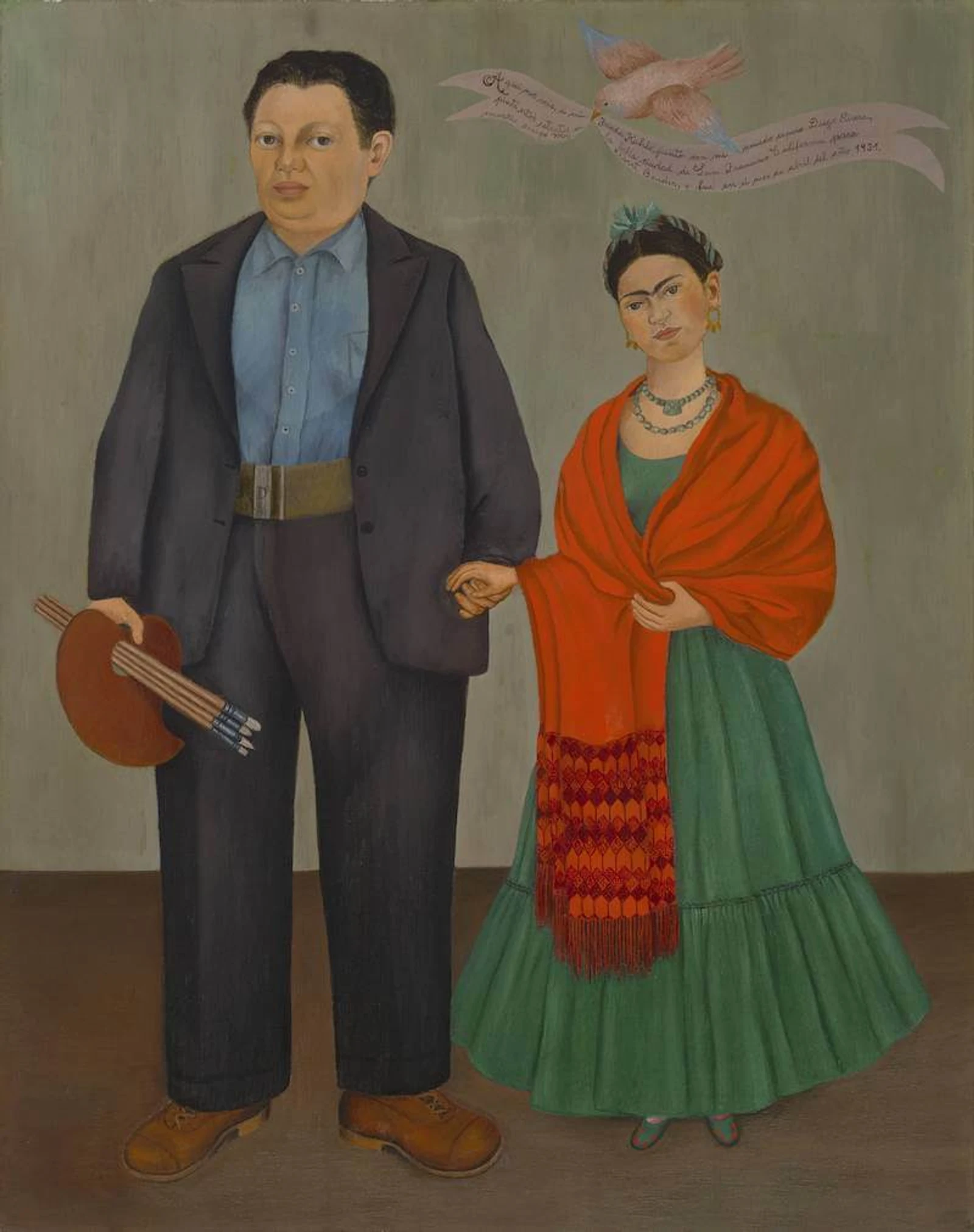
My grandparents, my parents and me, 1936
Frida’s work doesn’t hide the difficulties of her last years. She projects strength and vulnerability in each portrait, defying illness through her piercing gaze. Her life, the more I look at it, is like her paintings – a mosaic full of ambivalence, contradictions and passion that first slaps you and then lets you appreciate it. Just like her last letter to Diego.
Extract from Frida’s last letter to Diego
Frida’s work can be inspiring to some, jarring to others. What you get from her reality is up to you. It may spark your imagination, help withstand hardship or teach you to love vehemently, as she did. Go through the O in Pinzon and you might find Frida there, whispering: whatever you do, do it with alegría!
Frida — the making of an icon is on at the Tate Modern until Jan 3rd, 2027. For an in-depth take on Frida’s life, check out Hayden Herrera’s biography and her journal.
This is the first issue of “Up Close” — a series based on art exhibitions in London. Subscribe below for updates.
Interested in more stories?