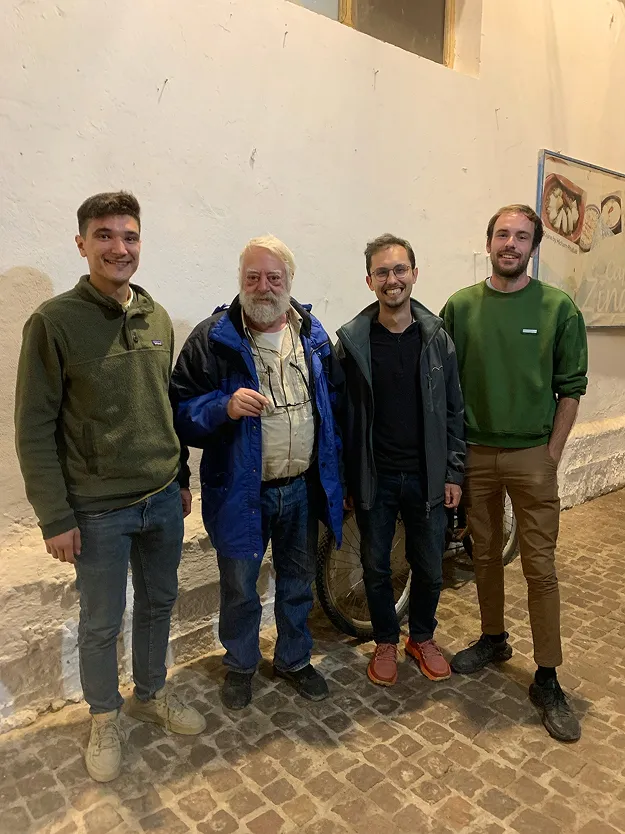
“RAGAZZI, YOU WILL NOT UNDERSTAND WHAT I SAY. IT IS OLD ITALIAN,” Piero advises, ”but listen to the music.”
Our 75-year old white-haired friend sets the scene. Dante is advancing through the 9th Circle of Hell, reserved for traitors. Virgil, the Roman poet, is meant to guide him. Dante sees that he has no fucking clue where they are going. His companion had never been this far. We had never been this far. Piero’s words take us out of the cosy back-alley tagine restaurant.
We are in Hell. Yet, as Piero reveals, there is no vast Martian landscape with incessant fire and bubbling cauldrons. We are on the shores of Cocytus, a frozen lake – a bitter, desolate wasteland of ice. We almost hear the stark silence. Betray and you’ll end up here. Dante comes across two souls, frozen together. “One is gnawing at the other’s brain,” Piero says, widening his eyes. He taps the back of his skull to specify that it’s the occipital lobe, the locus of visual processing, that we are concerned with. Then Piero makes it visual for us. He leans over, takes my head into his calloused hands and acts it out. Slurp, squelch, schlorp, followed by steading chewing. More vivid than the original text.
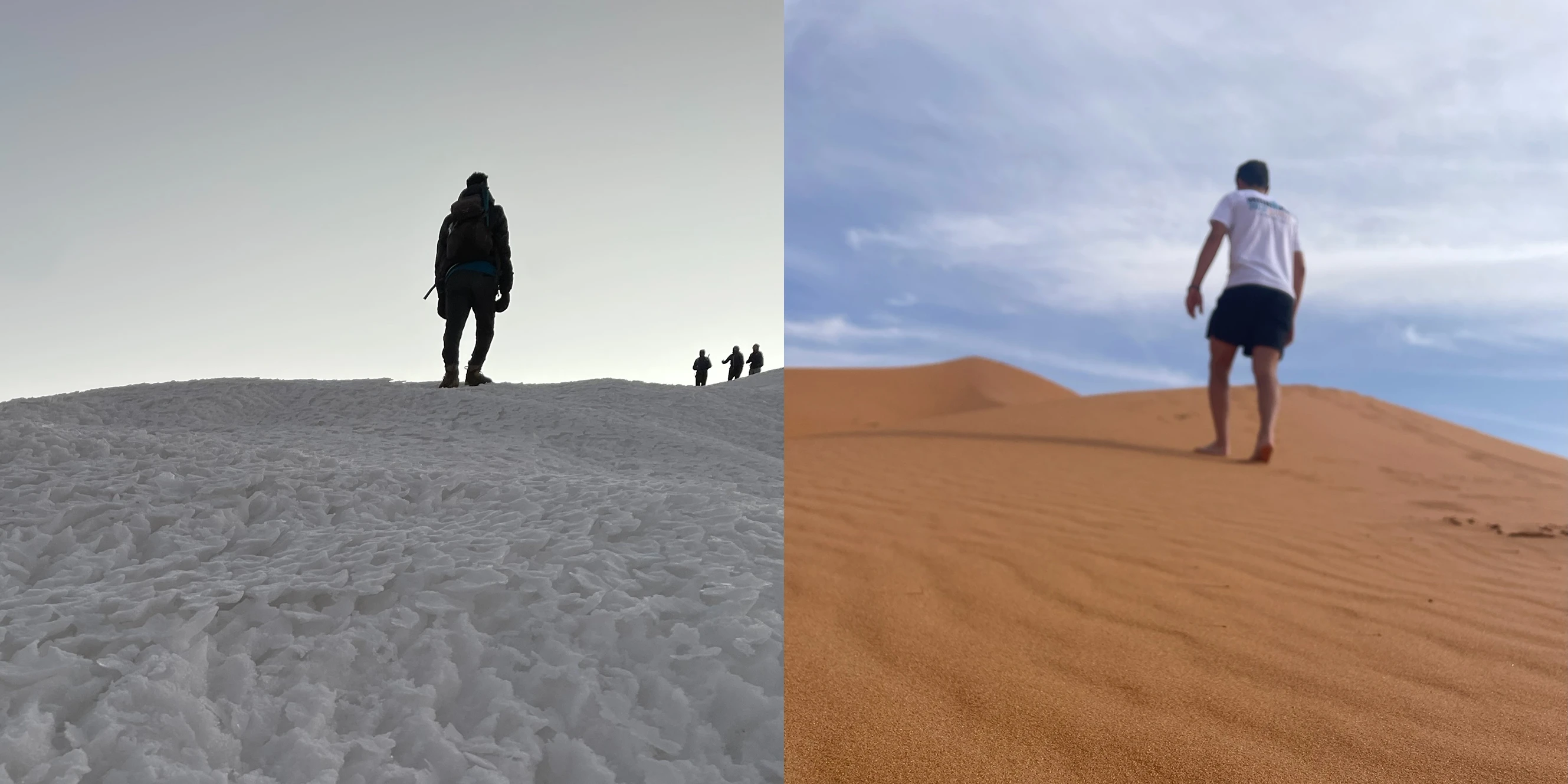
The recital then starts. The 32nd Canto from memory. We sit and listen for the next 10 minutes. I grasp only a few words, but the music is enough. Piero’s face transformed, his sharp dark eyes switch between wide and accusatorily narrow. One moment we are the audience, the next we are walking with Dante through the icy hell. It was only days since we climbed Mount Toubkal at 4,167m. We were in search of something, just not sure what. I remember the Greek myths my grandfather told me at bedtime. I shiver at this gift of chance.

Piero taught European History and Italian Literature at high school. His white beard competed with Darwin’s, but he was a few years behind.
“Most teachers attempt to impose a world view on their students,” he says. “I always tried to make it relevant to them.”
He had me there. I wish I had teachers who acted out cerebral cannibalism. He was proud that no student slept in his class. Nobody was on their phone. I bet no one tried to cheat. His presence is more avuncular than grandfatherly. “Una domanda per i ragazzi intelligenti,” he tests us. “How does one start a fire in the desert?”
“Cow dung,” I hypothesise, after several unsuccessful guesses.
“Bravo. Bravo. Bravo! Bravo, lo psicologo!” he says, tapping me on the shoulder. I was “Lo psicologo”, because of my university degree. He buys us a round of drinks. The lesson then moves onto the intricacies of bovine excrement combustion.
Our second dinner with the energetic Piero was just like the first one: unplanned. We celebrated the final night of a 3-week Moroccan trip with one last tagine in a back alley in Essaouira. Tagine, as a dish, always contains one essential ingredient: surprise. The conical lid of the container hides a sizzling combination of ingredients. Eating a tagine follows the three-act structure.
Act 1: Setup. The characters are revealed: chicken with potatoes and broiled lemon wedges. Or beef with boiled eggs, prunes and roasted almonds.
Act 2: Conflict. The flavours mix and leave you in awe. Sometimes there’s a bone to pick. If the proprietor is generous, you struggle to finish.
Act 3: Resolution. You’re satisfied and you wonder what’s the next tagine that you’ll try. Every time it’s a surprise.
During Act 2 of our final tagine, Piero’s large figure looms in the narrow alley. “Ah, it’s the clever ragazzi again!” he calls at us. Then, like Virgil did to Dante, he guides us through hell, to paradise. Or rather, his own version of it.
We met Piero the previous night. The place packed four tables on a small terrace in the medina. An hour into our fish tagine, he sits down and orders couscous – customary for a Friday. A lighter is an excuse to start the conversation. Between the three of us, we spoke enough Italian and Spanish to ask questions that drove Piero into long monologues, rants and stories. He justified his lack of English. As a toddler, American troops still occupied Rome post WW2. He remembers Uncle Sam’s G.I.s. They were tough on Italians. After the war, Americans sent ‘10-in-1’ CARE packages to Europe to relieve hunger.
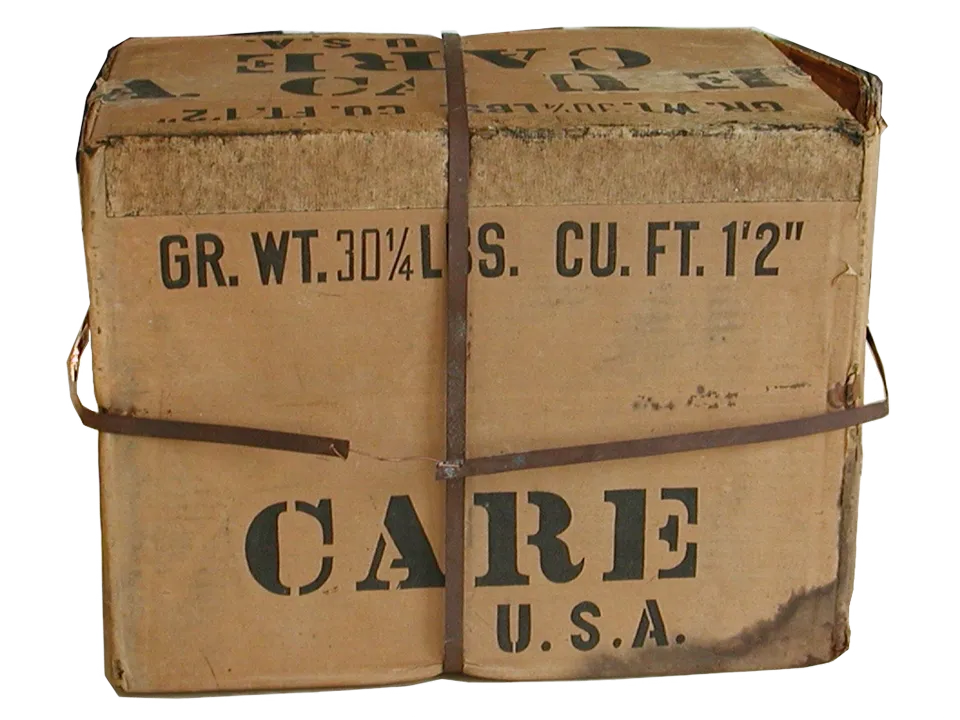
“My mother, who was a tough peasant, made me eat these horrible food packets,” Piero says. “Freud would say that my subconscious then refused to learn English.”
“Years ago,” he continues, ”I saw them in a museum in Belgium. I told the director that I should be part of the exhibition.” He punctuated sentences with laughs from the bottom of his belly. Humour permeated most of Piero’s anecdotes. We laughed, stoking his fire even more. Every half an hour, he pulled out a short cigar and puffed.
“I have three houses. Rome, Florence, Madrid. Like the rich,” he jokes. He invites us, but says he needs to check with his Spanish wife. He now travels solo, because she’s fussy and books all the hotels, tours and food in advance. That’s military service. She once refused dinner because of a little hair in her tagine. Piero holds one of his white hairs to make sure we understand the folly. And, to his amusement, she expected a shower in the Algerian desert.
“A shower in the desert!” he repeats, underlining the absurdity.

“Americans are crazy to let a 27-year old be a manager,” he says in disbelief, shaking his head and referring to his son. He works at Amazon for three times his pension. Oh, and he engages in cyber wars with the Chinese. “Pew! Pew!” Piero lets out tiny laser noises to illustrate. Oh, and he’s also a communist. Oh, and he travels everywhere on his money.
“I’m your son’s age and I’m a manager as well,” I say.
“The English are equally crazy,” he concludes.
Piero is Rolf Potts’ archetype of the Vagabond. He despises tourists, those who fear death and stinginess. When we pull up Google Maps, he says he doesn’t need it in Greece, Italy and Portugal. He travelled all of the ancient Mediterranean: Algeria, Egypt, Spain, Tunisia, Turkey. I think about the size of his hippocampus. He had first been in Morocco 52 years ago. The country changed, but the tagine stayed as good.
“How are Algerians different from Moroccans?” one of us asks.
“They are more serious,” he says. ”Like people in Trento. But that’s not Italy,” he makes sure to reiterate several times. He was a Roman and he was proud of it. Time for a history lesson in how Italian resentment carries over hundreds, if not thousands of years. He sets the scene: in 15th-century Italy, city states are constantly allying, marrying and warring with each other. Volterra is a Tuscan town, self-governing but paying an annual tribute to Florence. In 1472, riots break out over a mining contract dispute. Lorenzo de’ Medici decides to put down the uprising by sending an army. Terms of surrender are disregarded. The Florentine army murders, plunders, rapes and ransacks Volterra. Lorenzo tries to do damage control in the aftermath, but Volterrans know. They know that His Magnificence mismanaged the contract dispute, chose violence over diplomacy and withdrew the town’s self-governing rights. Volterrans, Piero says, remember and resent till this day.
“Ragazzi, let me tell you about Covid,” he adds. Quarantine was not for him. He wanted to travel across France.
“I had the train to myself,” he says. Just like the rich. He pretended to be a policeman and interrogated the only other woman who was on the train. He almost gave her a fine. In France, the 75-year old trickster made doctor appointments for “all possible disfunctions”. Wherever he wanted to visit, he found available urologists. If the police stopped him, he would pull up his booking.
“I told the police,” he says as a matter of fact, “that I was very concerned about my sexual health.”



“When you’re old, don’t think about the future,” he says as we’re walking out.
“And when you’re young?” I ask.
He pauses to think, mists his glasses and rubs them clean. At 19, he sat an archeology exam. They went into Rome’s catacombs and saw a skeleton. Upon touch, bones turned into dust. “Make sure to see a corpse before you’re 30,” he advises us. ”It will cure your fear of death.”
It was late November 2022. ChatGPT had just come out. A friend once joked that billionaires, once they don’t have much to worry about, start fearing death and AGI, spreading their concerns to the rest of us. Piero seemed to fear nothing. I’m pretty sure he didn’t care much about AGI. He seemed to have transcended the daily circles of hell: inadequacies, insecurities, ruminations. The BS of life. Maybe he was too old for that shit. Maybe he found a cure in his short cigars, eating couscous and walking his sacred 15km. Piero moved through life with an aura of humour and lightness. He was unapologetic, yet caring.
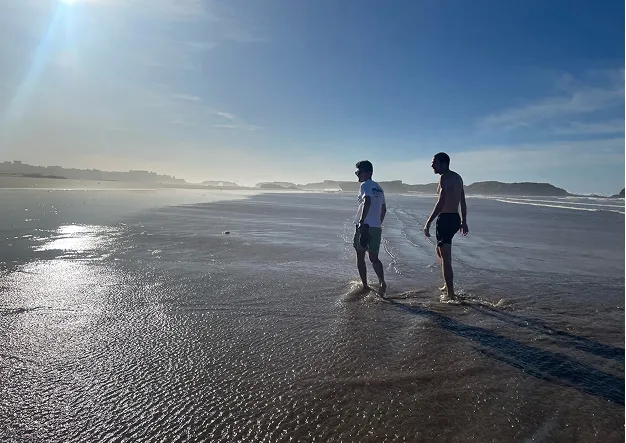
The next day, we took one final beach walk in Essaouira. His aura followed us. We had no appetite for brains. Perhaps we entered Piero’s Paradise.