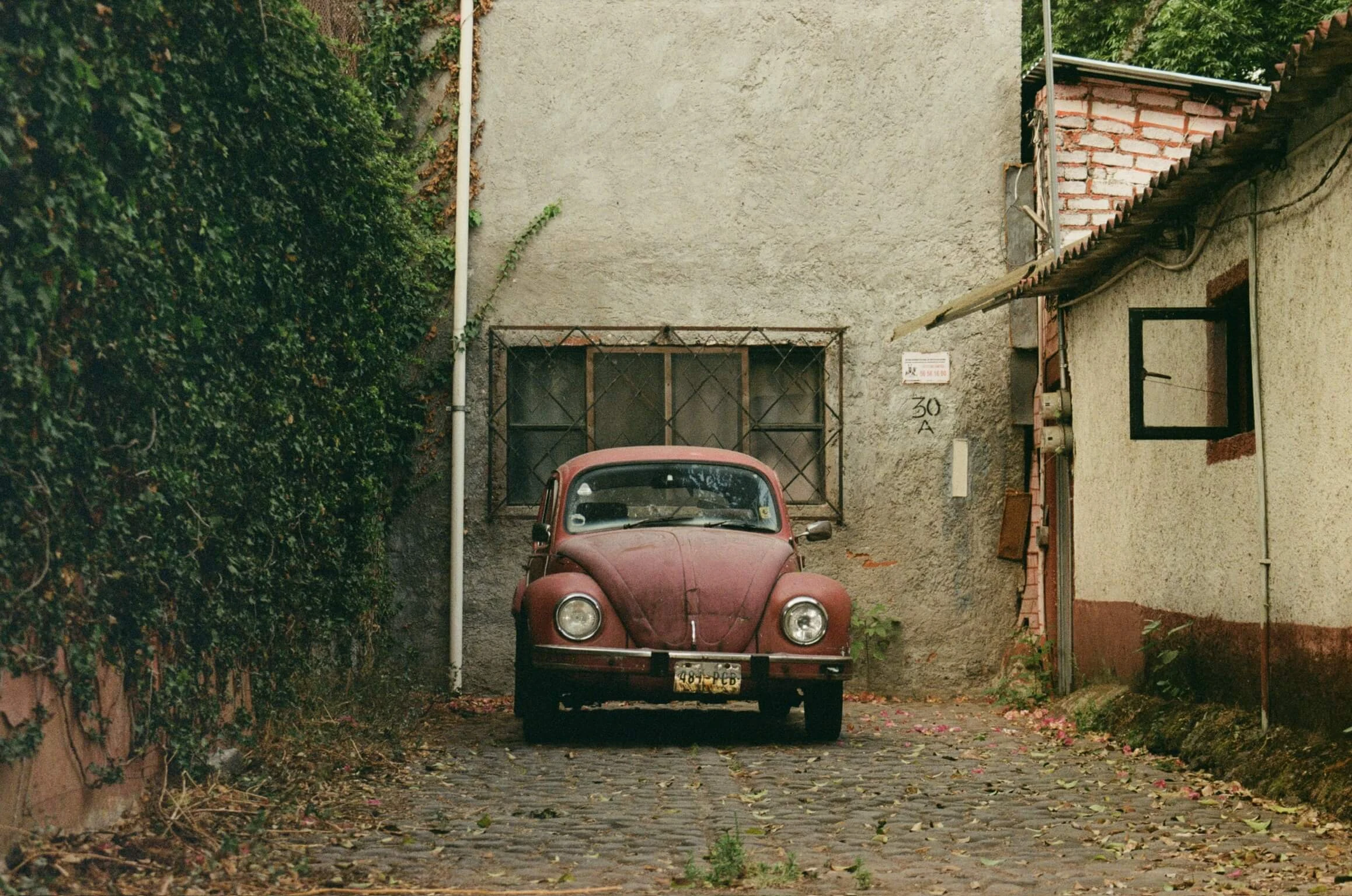
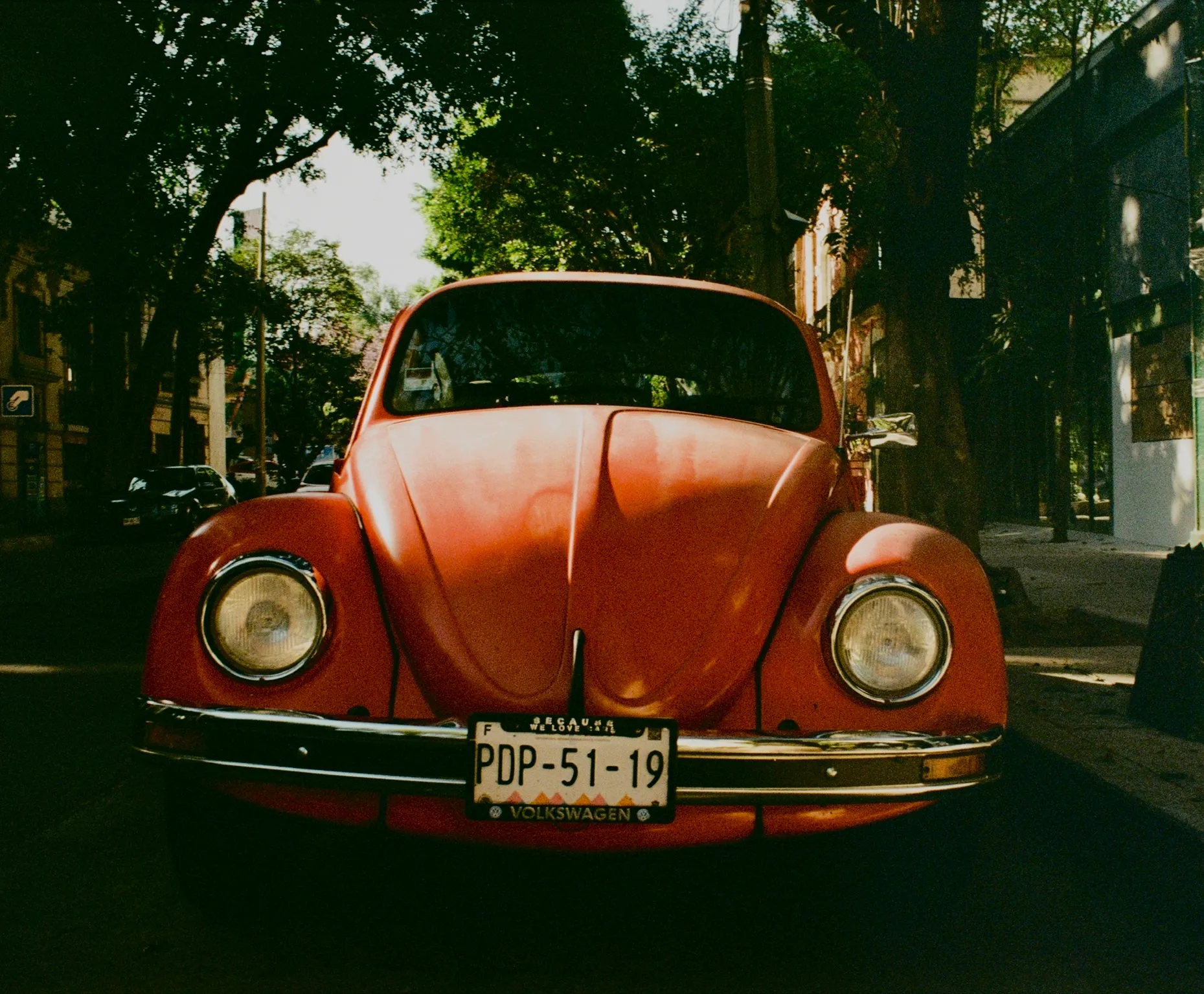
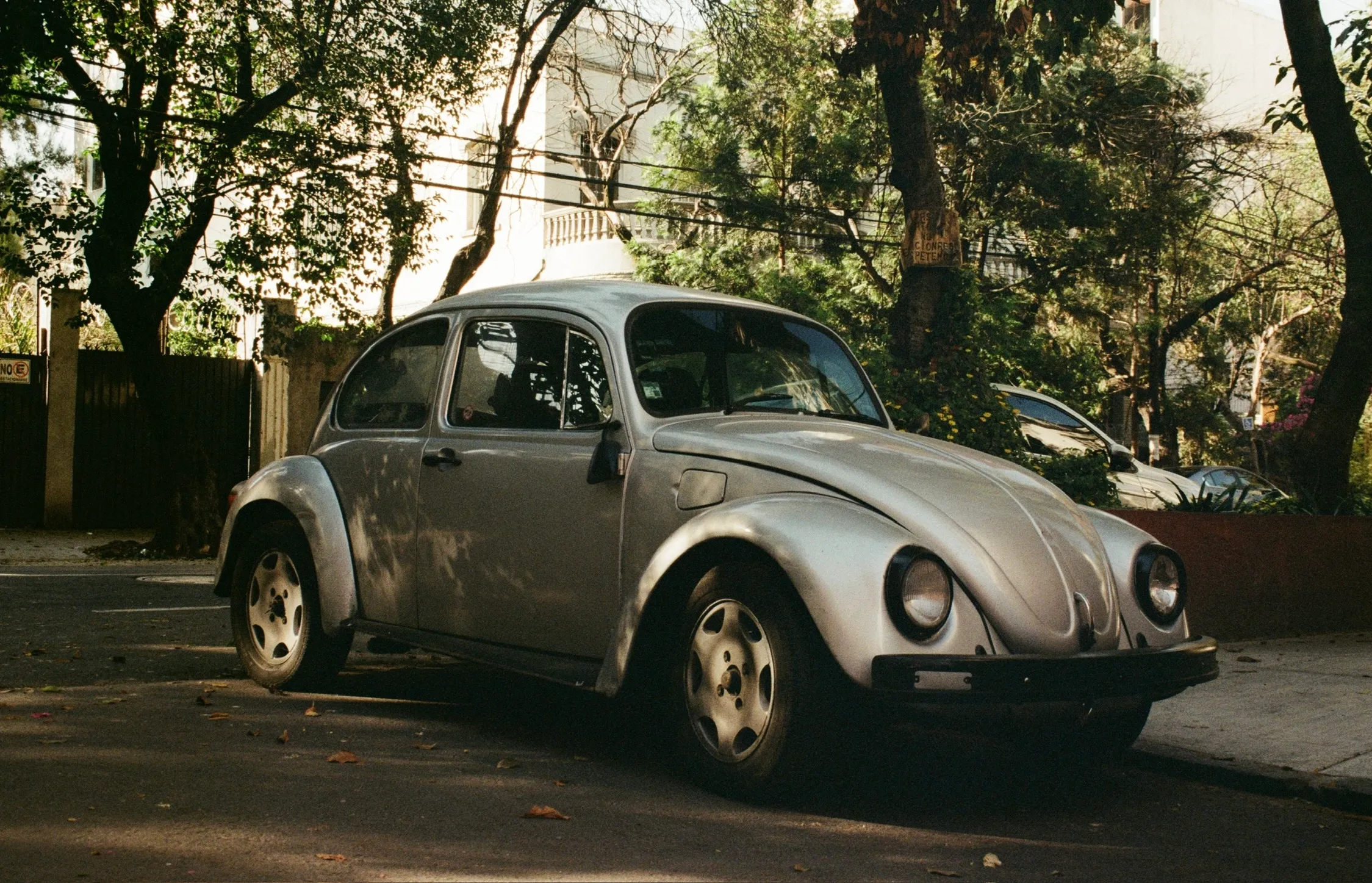
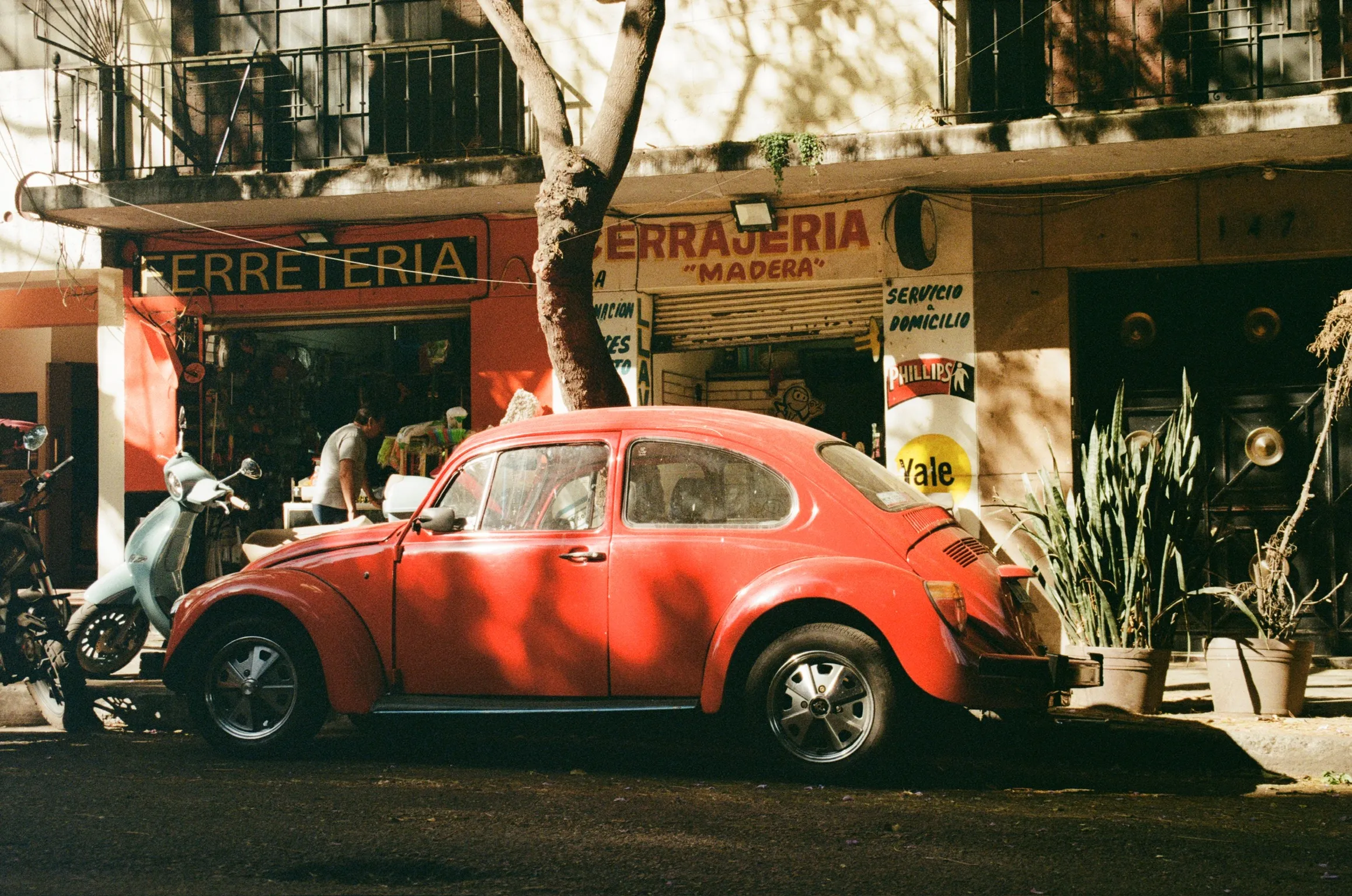
ROMA SUR, CIUDAD DE MÉXICO (CDMX). Eyes wide open at 5 a.m. (jetlag). I can’t go and see Frida’s house or Rivera’s murals. No taquerias are open. Pulquerias closed a few hours ago. I engage in the only sensible activity: walking. I step outside, turn a few blocks and I stumble upon a red beetle, a relic in good condition. The small text just above the number plate draws my attention: “Because we love…” – I can’t decipher the last word. Why bother? These first three justify most things in life.
Next block, another beetle. Turn right, another one. And then another one. One’s a pleasant surprise, two’s a coincidence, three’s a pattern. I google “volkswagen beetle mexico” and I discover the country’s love story with the car.
The Internet says:
“It’s the family member that lives in the garage.”
“You could replace the fan belt with a panty hose.”
“We Mexicans say, with a wire and a Chiclet (chewing gum) you can fix a Vocho.”
The love is in the name: el vocho in local code or vochito, should you be endearing. Linguistic origin unknown. Some say it may be the bastard of bicho (Spanish for bug) and Volkswagen. Brazilians call their own fusca. Go figure.
When reading about the VW Beetle, “success” comes up a lot. What does it mean for a car to be successful? The question belongs to one of these coaching sessions that quickly escalates into therapy when they ask you “What does success mean to you?”. To reach sales targets and maximise shareholder value? To create jobs? To be a good employer? Fair wages? To become a cultural icon? To really be a people’s car? Oh man, life, unlike cars, doesn’t come with an owner’s manual. It’s complicated.
If you grew up in Mexico, this mechanical family member permeates every memory: weekend shopping, summer holidays, drivers honking at you when you struggle uphill (¿Qué te pasa, wey?), learning how to drive, your first kiss (or more), graduation and speeding to the hair salon already dressed on your wedding day. Locals remember ads featuring the beetle with the delicious mole Poblano and inappropriate uncles telling inappropriate jokes about the car at the dinner table. In the late 90s an estimated 1.1 million vochos took people across DF’s neighbourhoods (Distrito Federal, another term for CDMX). Of these, 72,000 official green-and-white taxis, all made in Mexico. The “people’s car”. There’s a lot of history, I find, in these two words and an apostrophe.
How did a German car achieve such mexicanidad? Let’s rewind to 1934.
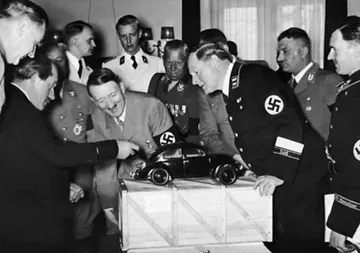
These people’s cars had zipped up and down the Obersalzberg, whizzing around like bumblebees.
In March 1934, the story goes, Hitler gave engineer Ferdinand Porsche a pencil sketch of what was meant to be a “people’s car”. Germany was already behind other countries in mass motorisation. Something had to be done. The car was to cost no more than 1,000 reichsmarks for the average Fritz. Porsche and his team got to work. They drew on the design of the Czech Tatra T97 and Bela Barenyi’s sketches in a French automobile magazine. In 1937, Porsche unveiled the final product. With its rounded edges, it looked nothing like the initial doodle. The Führer loved it and yeah, uttered the words above.
Yet, the prototypes still cost around 1,400 marks. A middle class salary averaged no more than 300-360 per month. Hitler now insisted on capping it at 990. No more questions asked. Germany, while gearing up for war, splurged 1.75 million marks on developing a propaganda car – more to do with vanity than anything else.
The German Labour Front promoted and subsidised the expensive bumblebee, baptising it the “KdF-Wagen” – Kraft durch Freude. Strength through Joy. Ads featured the car in Alpine surroundings, promising the dream of relaxation and pleasure to every member of the “people’s community”. Just forget about unemployment, militarisation and the concentration camps, enjoy your free time. In total, about 270,000 people enrolled in a savings scheme for their new KdF-Wagen, paying 5 marks weekly. A Ford-style factory was built with a surrounding town bearing the car’s name: KdF City. Hitler declared the car a symbol of the National Socialist people’s community.
Behind closed doors, industry executives ridiculed it as the “Führer’s pet idea”. Used to disregarding accounting principles, Hitler’s insistence on the price resulted in a loss of 1,080 marks per vehicle when produced. By 1939, The KdF-Wagen was a commercial flop. Only 630 KdF cars made it to their owners, most part of the Nazi leadership. Fritz must have felt cheated.
History then unfolded as we’ve heard it so many times. On September 1st 1939, Germany invades Poland. France and Britain declare war two days later. World War II starts. The KdF factory shifts production to military needs: stoves, mines and antitank weapons. In true Nazi fashion, the factory uses forced labour from Eastern Europe and political prisoners.
“I understood then that I am a slave…The first days in KdF City made me understand that I was an object. An object that can work.”
Julian Banaś, Polish national
Air raids in 1944 target the factory. Only a small part is affected. Allied forces capture KdF City on April 11th 1945. The war ends with a few undamaged Beetle prototypes forgotten in a corner.
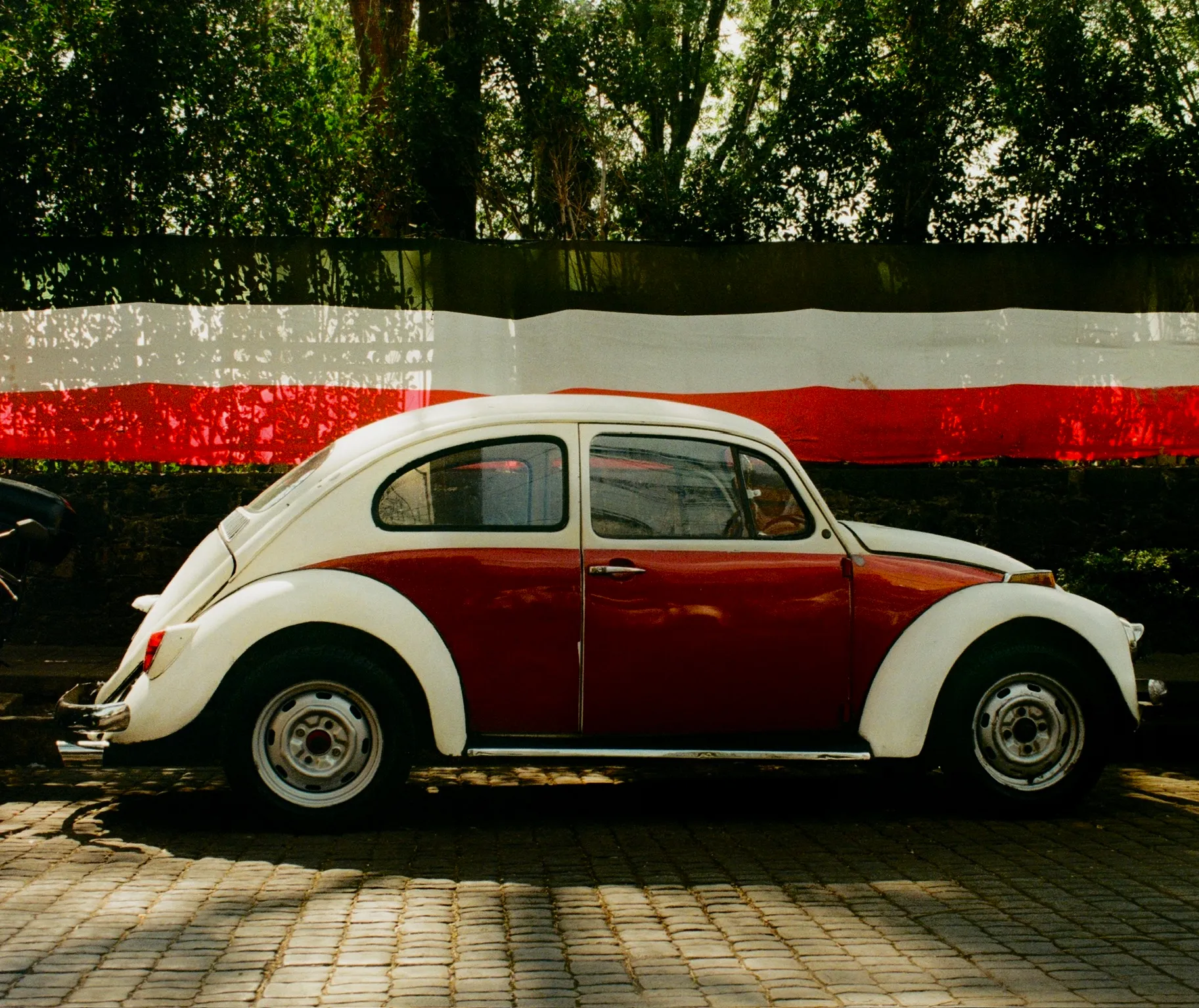
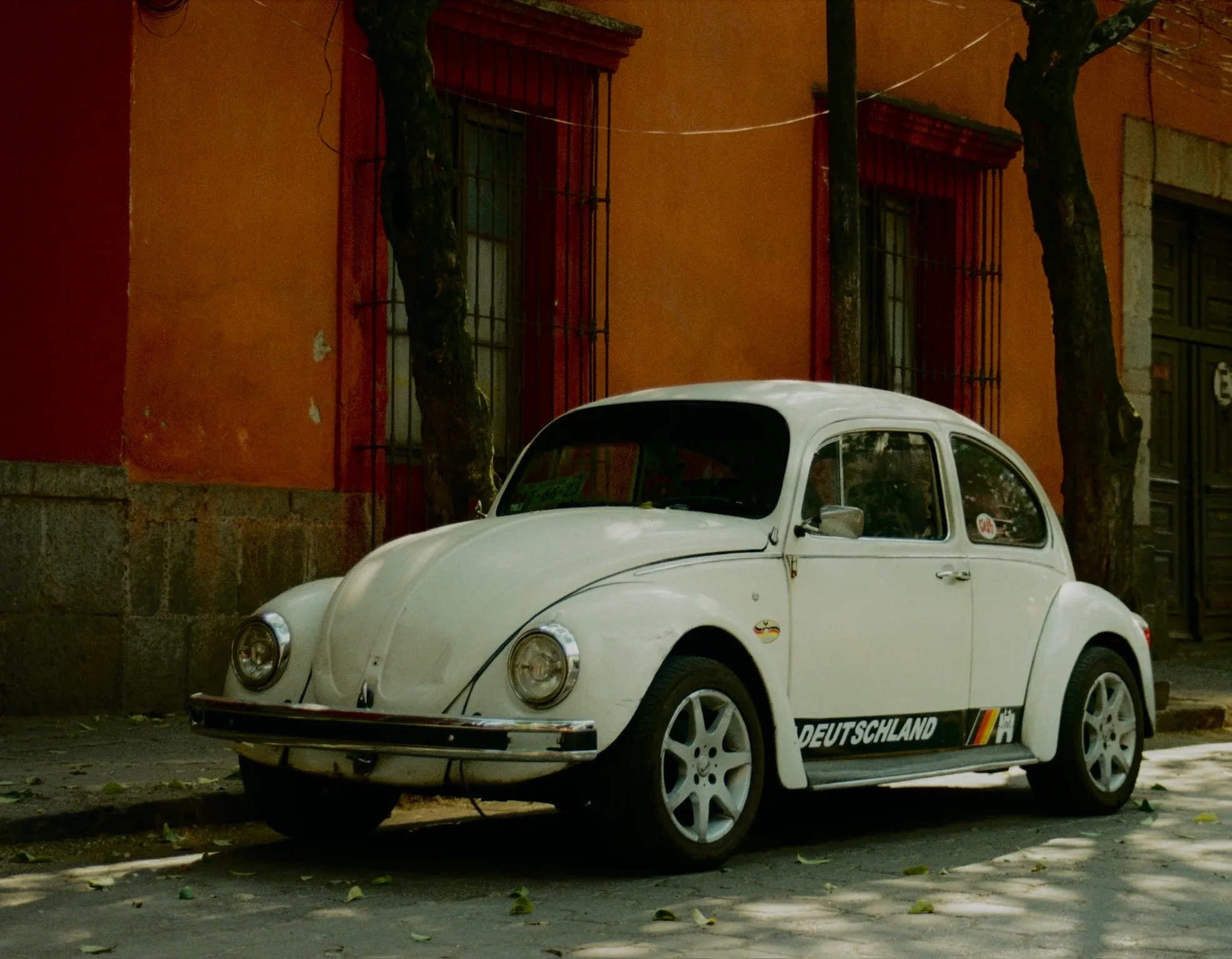
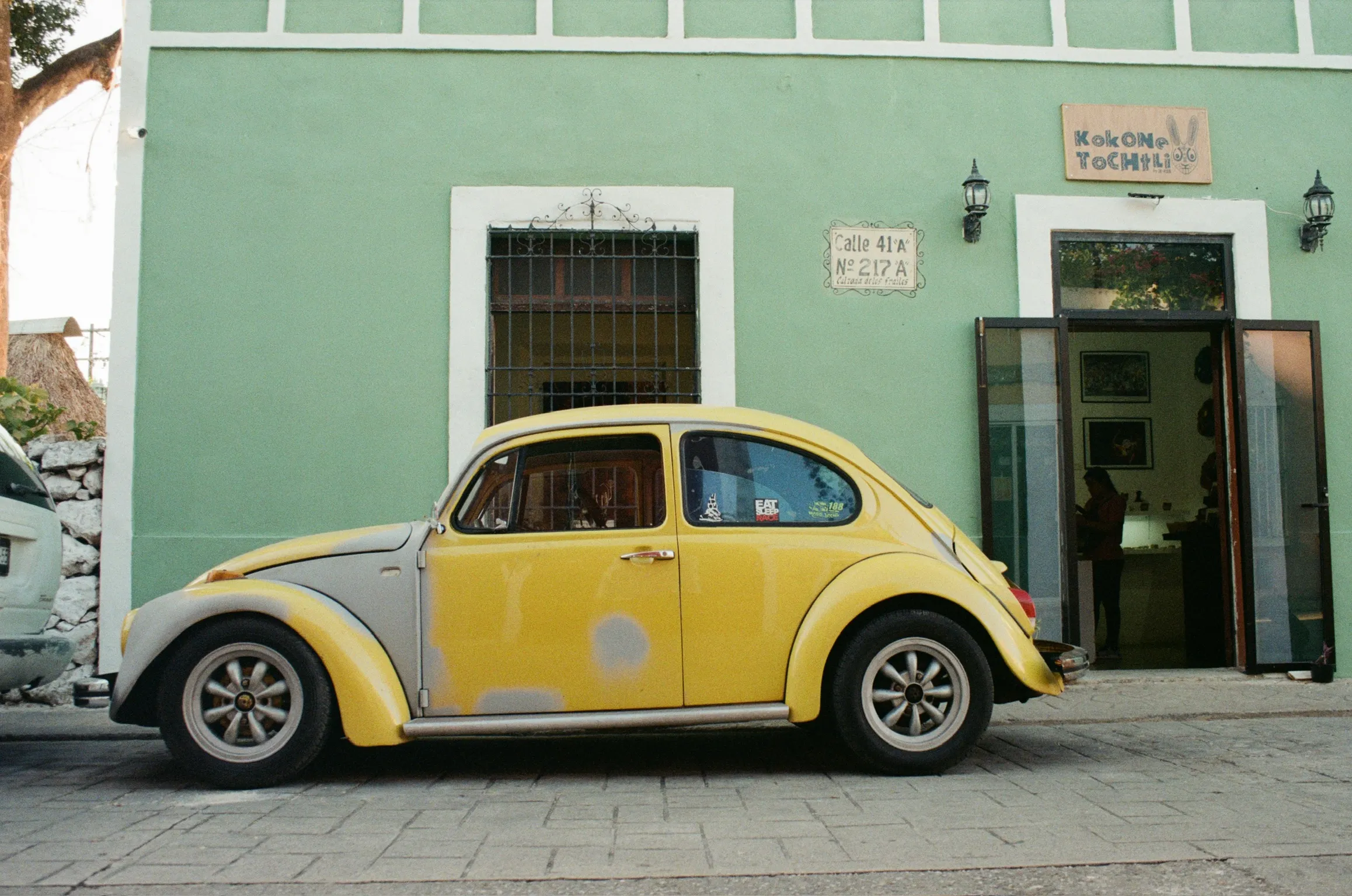
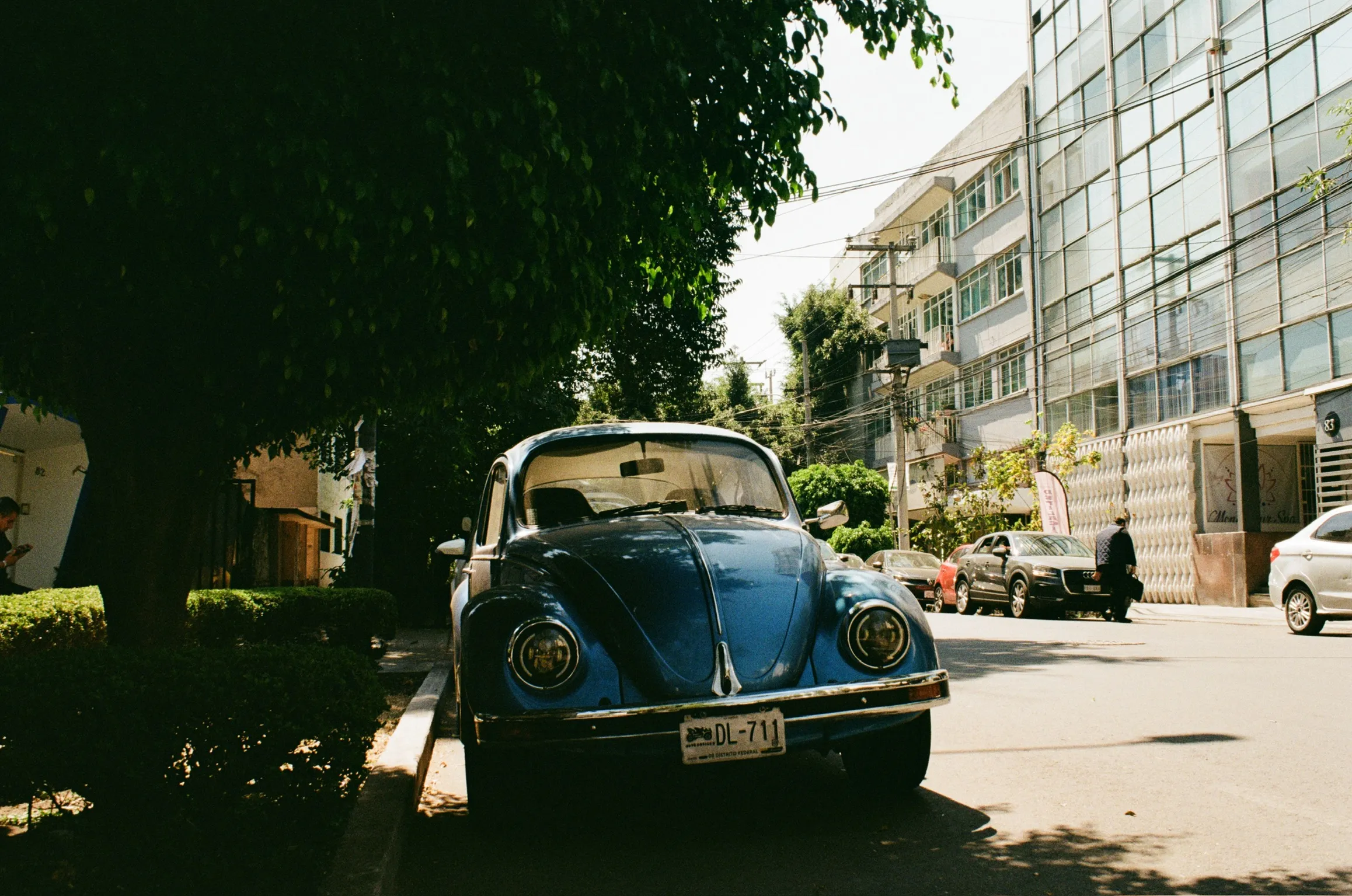
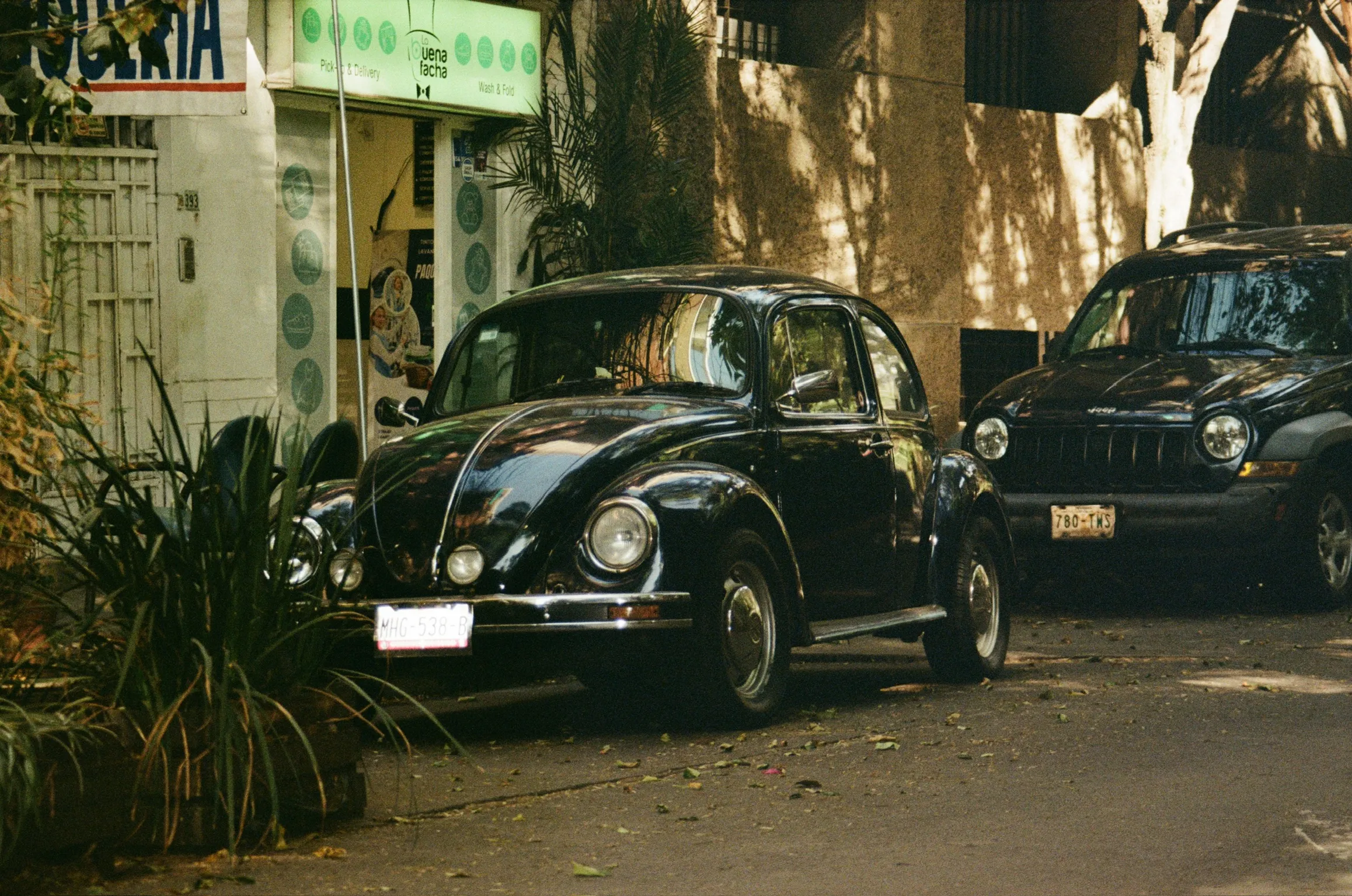
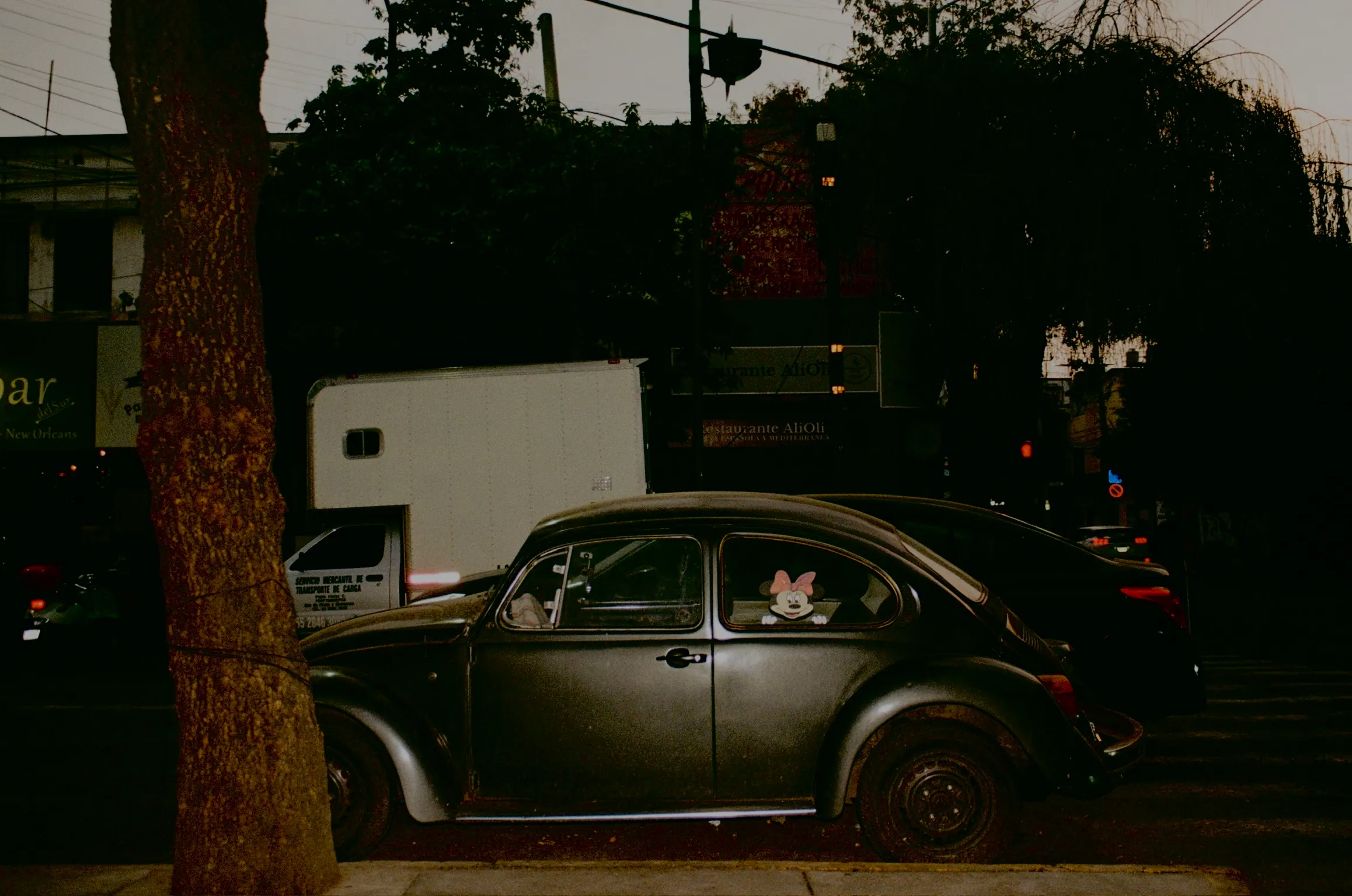
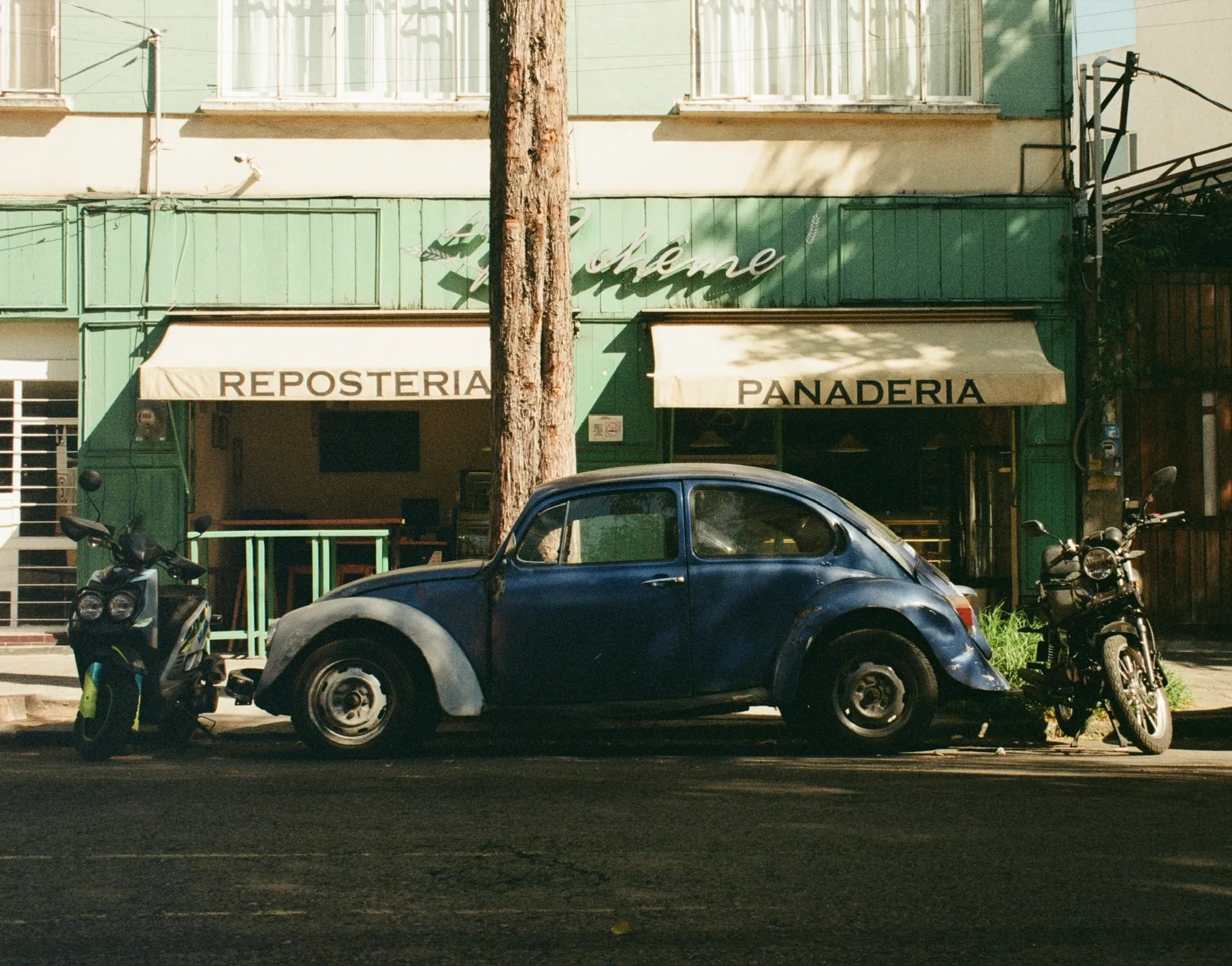
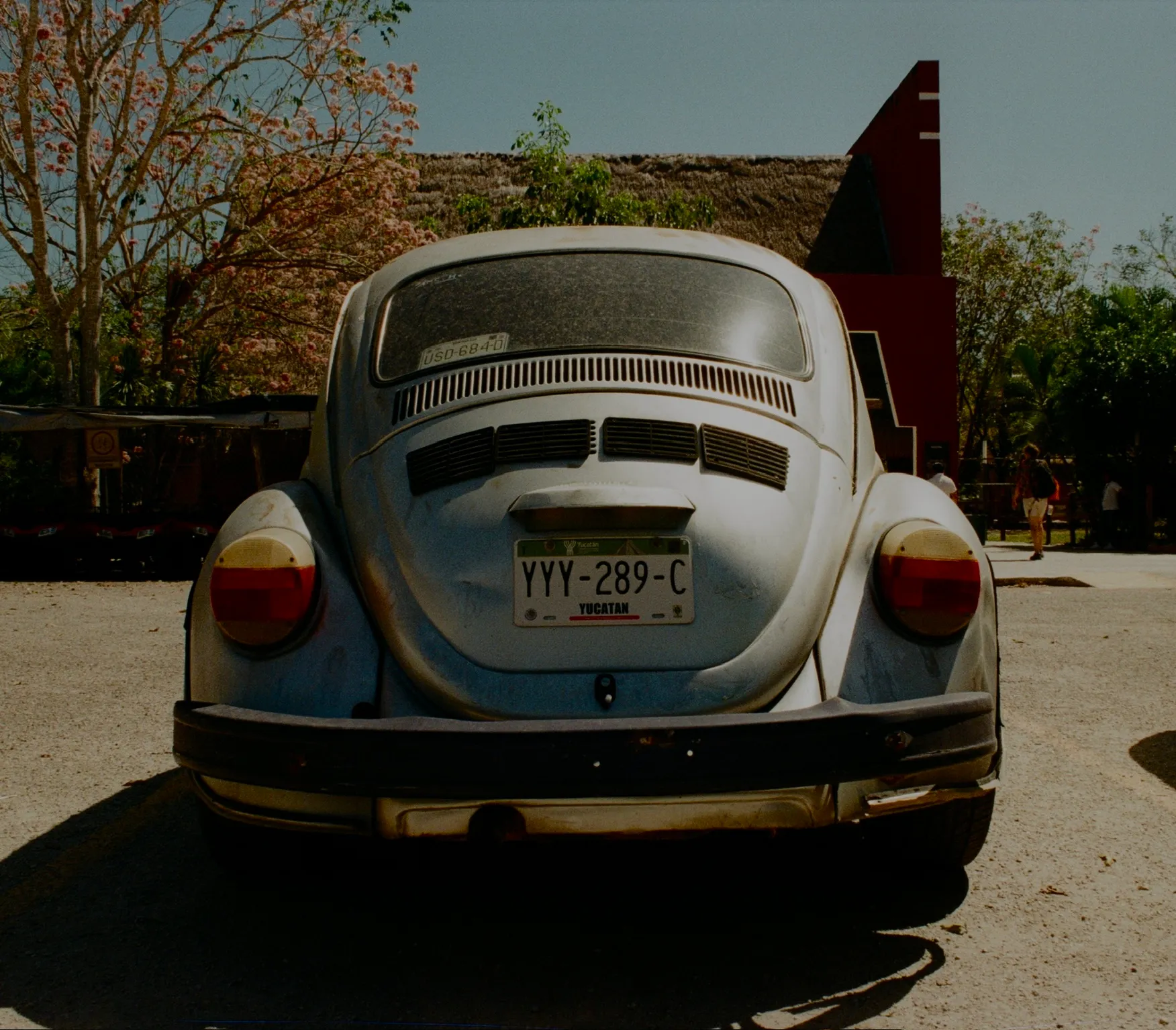
For the remainder of my stay in CDMX, jetlagged or not, I start my days at 6 a.m. with vocho spotting. Not hunting, as chasing one would be silly, rather amusing. Not tracking, as unlike lions, vochos leave no traces. Spotting, like birdwatching, requires patience and curiosity. On the streets of DF, some vochos move, others have become permanent storage facilities. Some have thick layers of dust and paint coming off, others are squeaky clean. Inside, some have rubber ducks and stuffed toys on the dashboard, while from others bizarro Mickey Mouse stares at you as you walk by. They’re a feature of the city, not a bug.
In 1945, the British military took control of the KdF City, renamed Wolfsburg after a nearby castle. Officer Ivan Hirst found an undamaged Beetle prototype. Story goes that he painted it green and pitched it as a practical vehicle for occupation forces. Volkswagen was born. By 1946, an initial run of 20,000 Beetles roamed around West Germany carrying British troops around. In less than 10 years, the Wolfsburg factory produced one million cars, becoming the poster child for Germany’s post-war economic miracle. Volkswagen was now the Federal Republic’s familiar brand, a source of national pride – somewhat of a sensitive subject, given recent history. Bernhard Rieger, historian of the Beetle, described Volkswagen’s emergence in the 50s as a “historical carwash”.
Mexico’s love story with the beetle, like any relationship, had its ups and downs. The start was full of passion. A VW subsidiary shipped parts from Wolfsburg and assembled them in Mexico in 1954. To showcase the car’s reliability, seven beetles entered in that year’s Carrera Panamericana. They all finished the 3,211 km race. The beetle was on a trajectory to acquire its mexicanidad. In 1962, a new law required all vehicles in Mexico to contain at least 60% locally-produced parts. Volkswagen opened a factory in Puebla in 1967, employing 11,067 people and selling 88,158 cars a year by the end of 1974.
When one wants to make an authentic mole poblano, one cannot accept any substitutes since, as everyone knows, it is an incomparable dish, which is made with very special ingredients and requires a laborious preparation process that allows for no improvisation.
In the same manner, when one wants a good car, made conscientiously and with the best parts, the necessary choice is a VW Beetle, which, by the way, is also produced in Puebla. … And the truth is, in Puebla, we are particularly proud of our mole … and of our VW Beetle.
Volkswagen Ad, 1977
Then, the honeymoon ended. In the 80s, a line worker in Puebla earned less in a day than their Wolfsburg counterpart in an hour. Workers organised into an independent union, demanding higher wages, given Mexico’s inflation rate of 100% at the time.
One feels very lonely, it is very cold… it is dangerous and the work is hard, running at a high pace.
Puebla press operator
The management in Puebla played hardball. Workers went on strike, blocked highways with buses and set tires on fire. Volkswagen’s reputation was at risk. On top, annual sales were unpredictable and limiting government quotas frustrated German executives. The troubles continued. In 1992, amid strikes, Puebla management plant fired all of its 14,000 workers – an action unthinkable back home in Wolfsburg. Most were hired back, apart from the protest leaders. VW’s success in Mexico was questionable. Yet, by the late 80s the company took advantage of a government tax break that made the vocho an attractive car to own. Ten years later, VW had a 28% share of the Mexican car market and thousands of beetles roamed the country’s roads.
The vocho’s mexicanidad is not easy to settle. A worker at the Puebla factory emphasised its foreign origins, adding that “It has nothing to do with our culture”. Many others focus on the car’s reliability, sturdiness and popularity.
An American is driving along a lonely road in a Chrysler when he hears a funny noise. What does he do? He immediately stops and calls for road assistance. After 15 minutes, a tow truck shows up as well as a rental vehicle, in which the driver continues his journey safely.
A Mexican is driving along a lonely road in his vochito when he hears a funny noise. What does he do? He takes a large sip from his beer bottle, turns his car radio to maximum volume, steps on the pedal, and continues his journey safely.
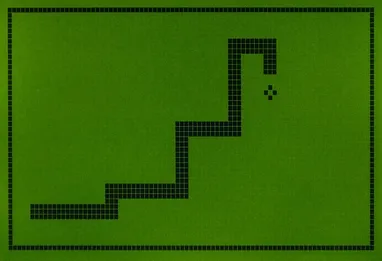
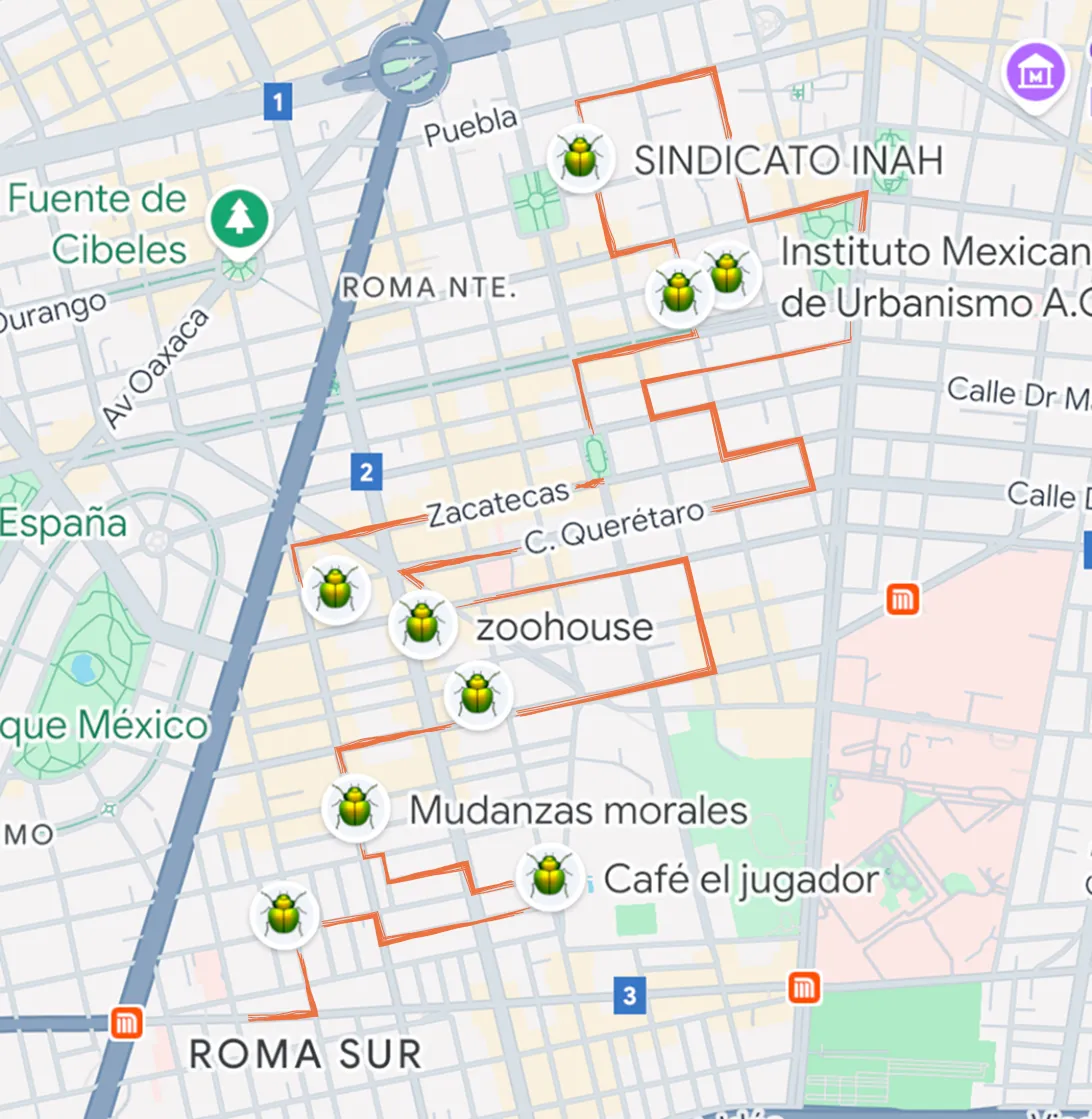
Walking the streets of DF in search of vochos reminds me of playing Snake on my mum’s Nokia 3410. The game demands mastery and so does vocho spotting. I’m after the dopamine reward. I learn to navigate the rare pedestrian traffic lights and the frenetic streets. I pay more attention. The jacaranda trees with purple flowers. The beautiful Art Deco facades. The houses with incandescent walls. Forget Google’s efficient path and the Ubers. There’s a buzz to finding a vocho, inspecting its quality and looking around. Old typewriter shops. Parks, squares, cacti, you name it. It feels good. There are side streets to find and if you’re lucky, get into conversation with vocho owners. These beetles are white rabbits, each with a land of wonder to open up. One such rabbit led me to a gallery in Coyoacan. I ring the doorbell.
Jorge, the owner, gives me a tour of his private gallery. Original sculptures and paintings by Leonora Carrington and Remedios Varo, two foreign artists who made CDMX their homes in the early 20th century.
“A lot of surrealist artists in CDMX,” I comment.
“Well, of course, Mexico is a surreal country,” Jorge says.
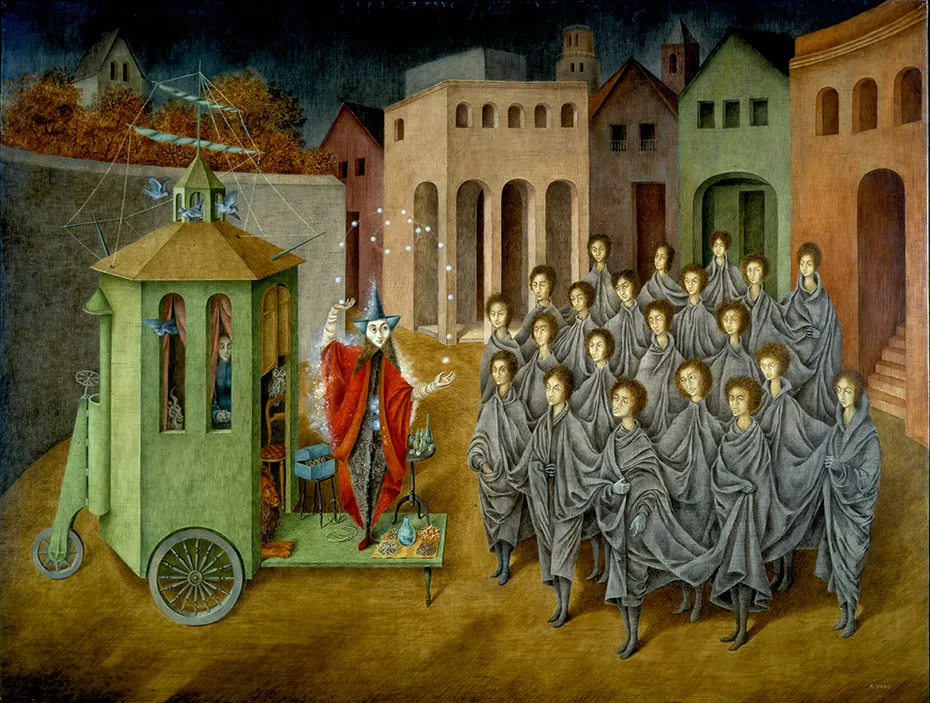
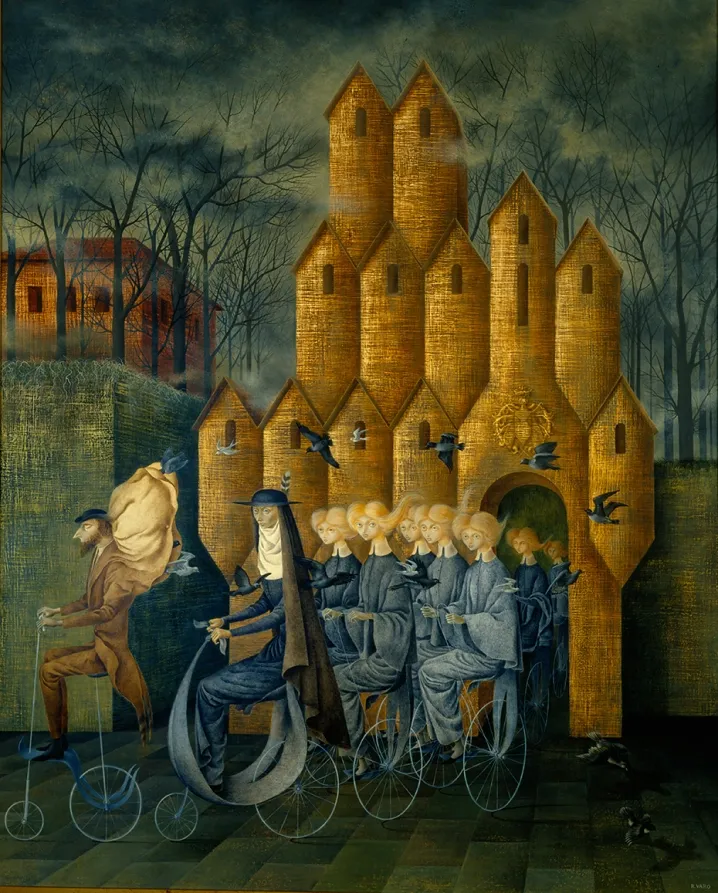
El Vochito would’ve fit in their universes, right amongst the whimsical creatures and fragments of imagination with occasional dark origins – just like the VW beetle. I ask Jorge about his vocho. Of course he had one, he laughs. Everyone did.
For the next few days, surreal vochos populate my dreams. They’re trying to tell me something. They are opening the doors, winking with the headlights. They HONK when annoyed. Don’t forget us? See you next time? Learn Spanish? Don’t be a gringo? Think small? All good things to consider.
In 2002, DF’s new law required 4 doors for taxis to operate. Vochos were under the threat of extinction, especially with competition from new beasts, such as the Subaru Tsuru. A mariachi band and much sadness accompanied the last Mexican beetle as it rolled out the production line in 2003. Nine years later, all taxi licenses for the VW beetle expired. In 2025, vocho spotting is an excuse to discover CDMX on foot. Parts are not easily found anymore. Their famed sturdiness does not guarantee their survival. The ones we can still see on the streets are there “Because we love” – part of Mexico’s collective memory.
Was the Volkswagen beetle a successful car? If you’re part of the DF jet lag club, go for a walk. Find out for yourself.
Notes
- 1. For a much more detailed and complete history of the VW beetle, check out Bernhard Rieger’s “The People’s Car”. Most quotes and historical facts were taken from this book.
- 2. I took all the photos of beetles on film with a Minolta Dynax 4.
- 3. I don’t own the copyright for the rest of the images. Sources: Wikimedia Commons & Wikipedia.