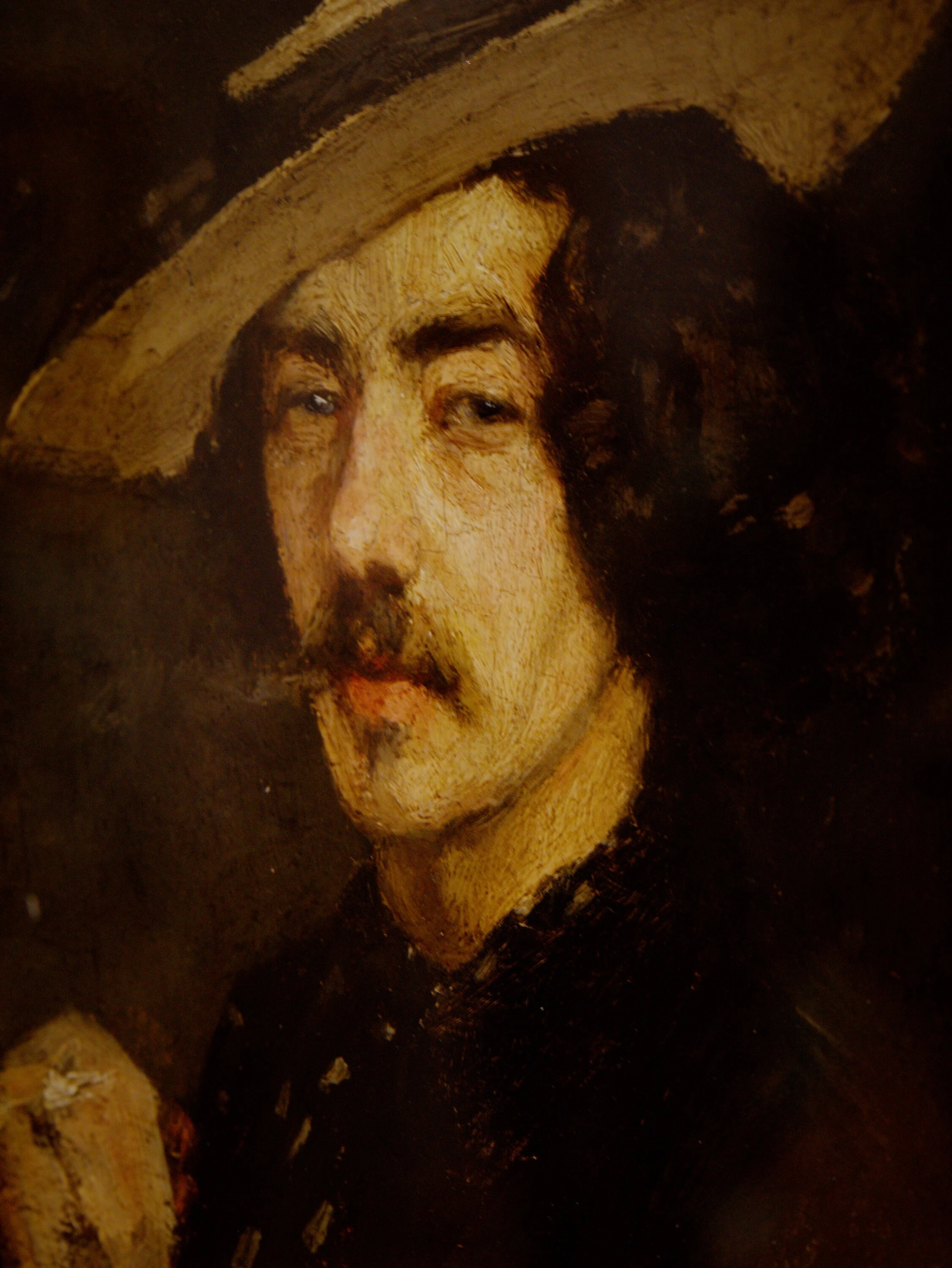
Whistler
The elusive butterfly
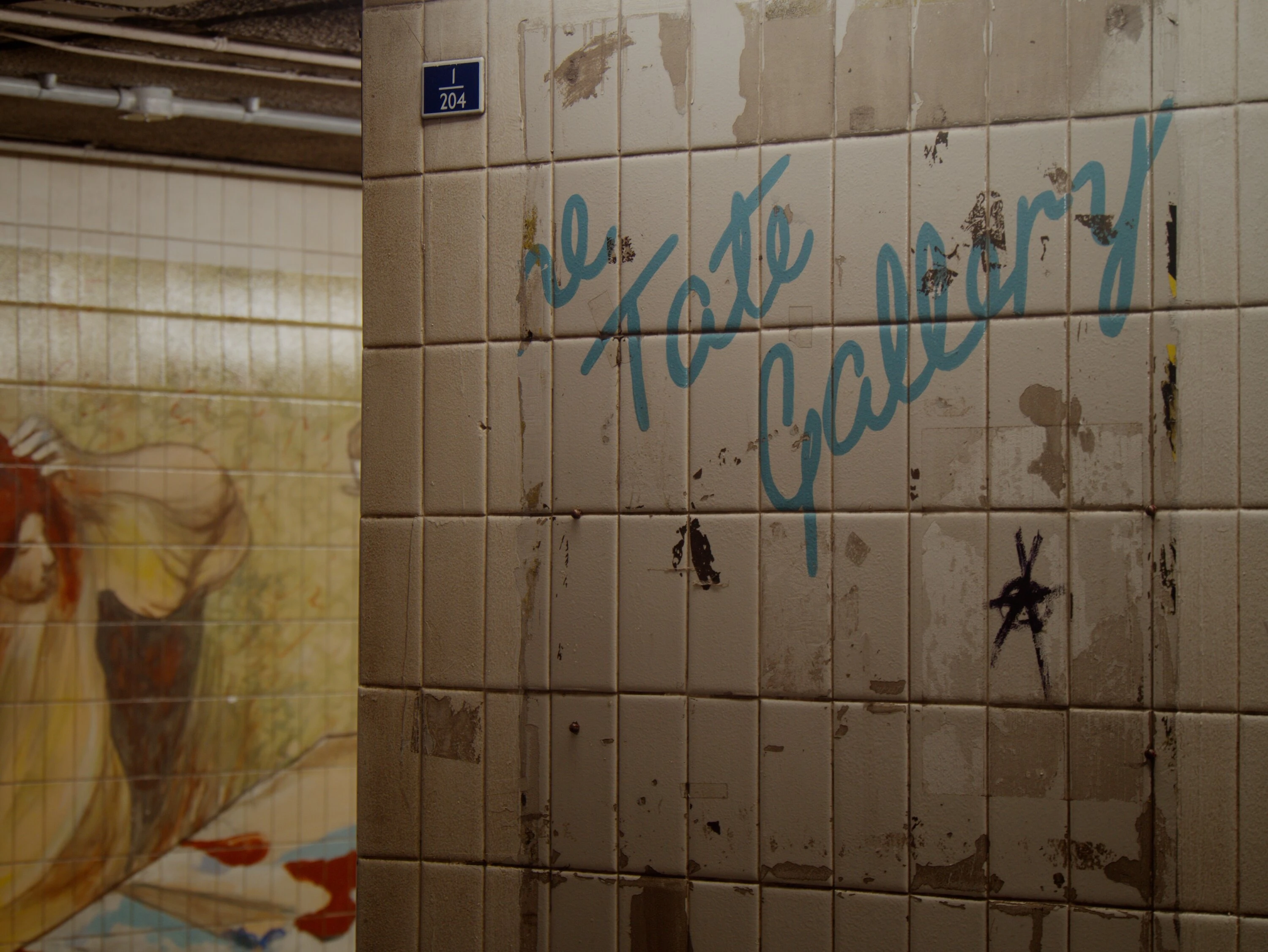
A deep breath in. And an immediate cough out. It’s London Underground fumes, reminiscent of Victorian England, a fitting scent to put me in the right state of mind for the Whistler exhibition at Tate Britain.
I wish that I had received a letter invite from Whistler himself. It would have probably started with “Mon cher Baron” or “HOITY-TOITY! My dear Florin!” and continued to admonish me for falling into a “gulf of silence”.
It might’ve contained stabs at art critics, the imitators and the Royal Academy, punctuated by “well hurrah!” and truths such as: “A life passed among pictures suffices not, Messieurs to make a painter”. To sign off: “Ever Yours”, “Jim the Grinder”, his usual butterfly signature or “this greeting from the generally-misunderstood-though-well-meaning-yet-difficult-to-explain brother Jim” – had I been family.
I think we know what to expect of Whistler.
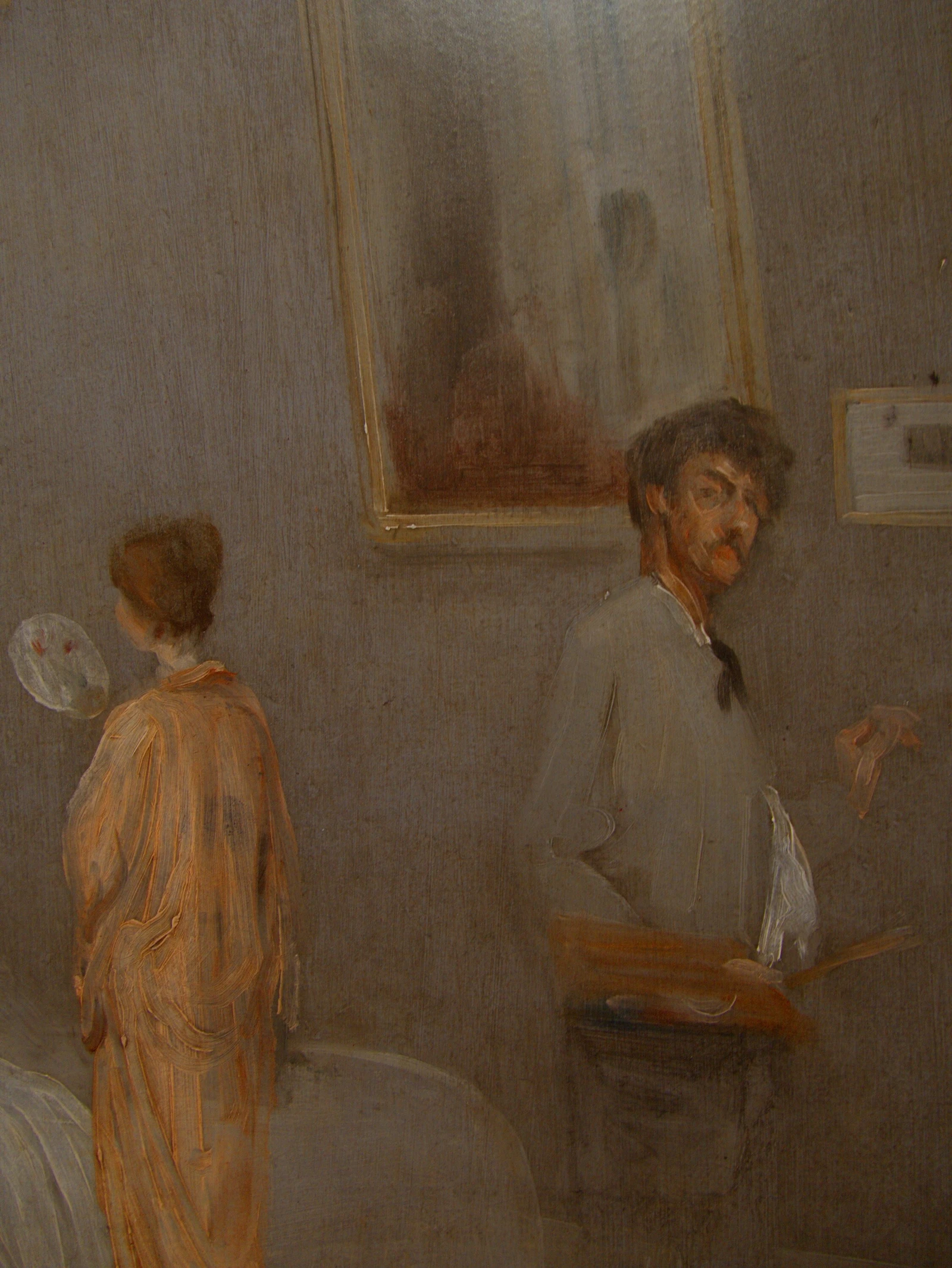
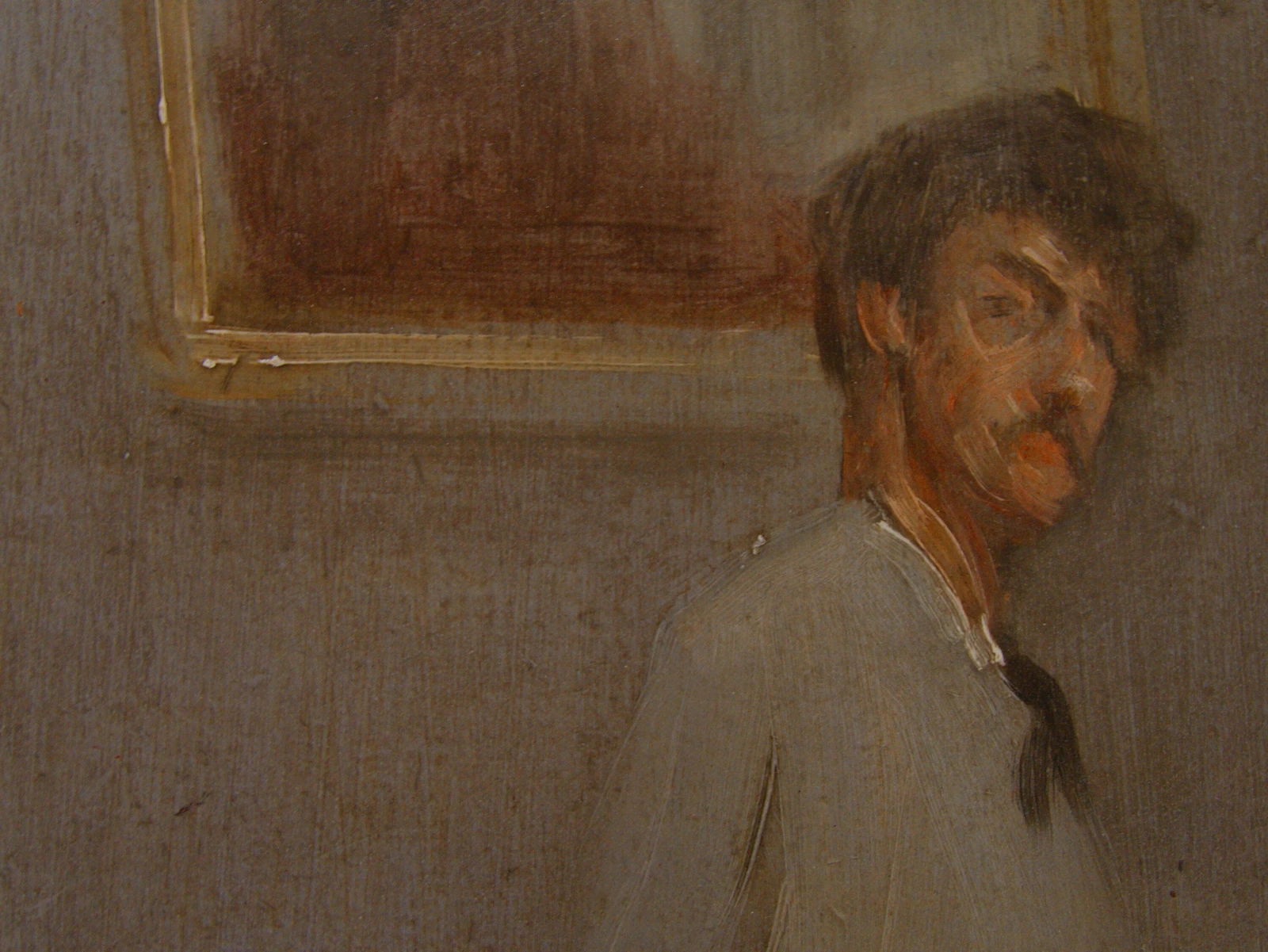
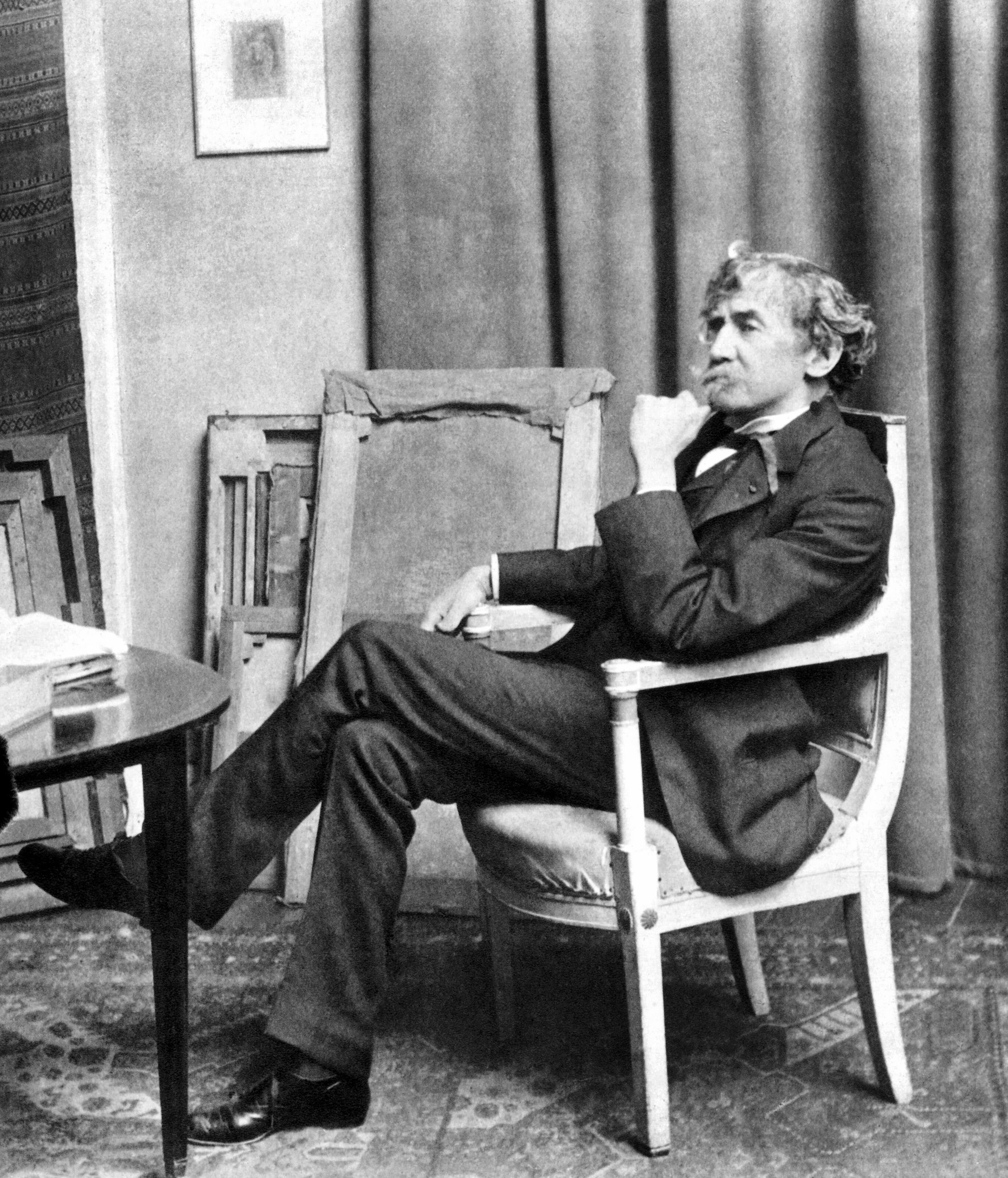
The Artist in his Studio, 1865
The letter, the moustache and the earlier fumes bring me closer to the 19th century. The soundscape of the exhibition adds to it: oh yes, absoluuuutely, gosh, isn’t that lovely? Even the onomatopoeia is in Received PronunciationQueen’s English, as heard on Downton Abbey or The Crown.
Had I been punctual for an 11 a.m. breakfast, he would’ve probably been an hour or two late, busy primping himself in front of a mirror before making a grandiose appearance. I would’ve had to kill time, not in a stuffed Victorian parlour, but a simple room decorated with Japanese woodblock prints, silks, purple fans and a vast blue-and-white china collection. Whistler competed with his friend, the painter Dante Gabriel Rossetti, in collecting japonismethe European craze for Japanese art and aesthetics of the 1860s artifacts.
The hand-made menus, designed by Whistler himself, might start with oyster soup, then venture into fried cod, mutton, cold lamb and pheasant. Cheese, pastries and coffee to end. The offering depended, of course, on his volatile finances, as one guest remarked: “the charm of the host sufficed to cover any deficiency in the feast.” In the company of artists, dealers and potential buyers, breakfasts and lunches served as opportunities to gauge reaction to new works.
Enough to know who we’re dealing with, but not what. I’m scratching my head: What do we do with art so far removed from us?
I can read about the 19th century, but not travel back in time. The Thames is still there, yet completely different. How can I relate to Whistler’s work? Can I feel a little bit of what he felt when looking at the river? My first clue is in overhearing a retired American couple with their grandson.
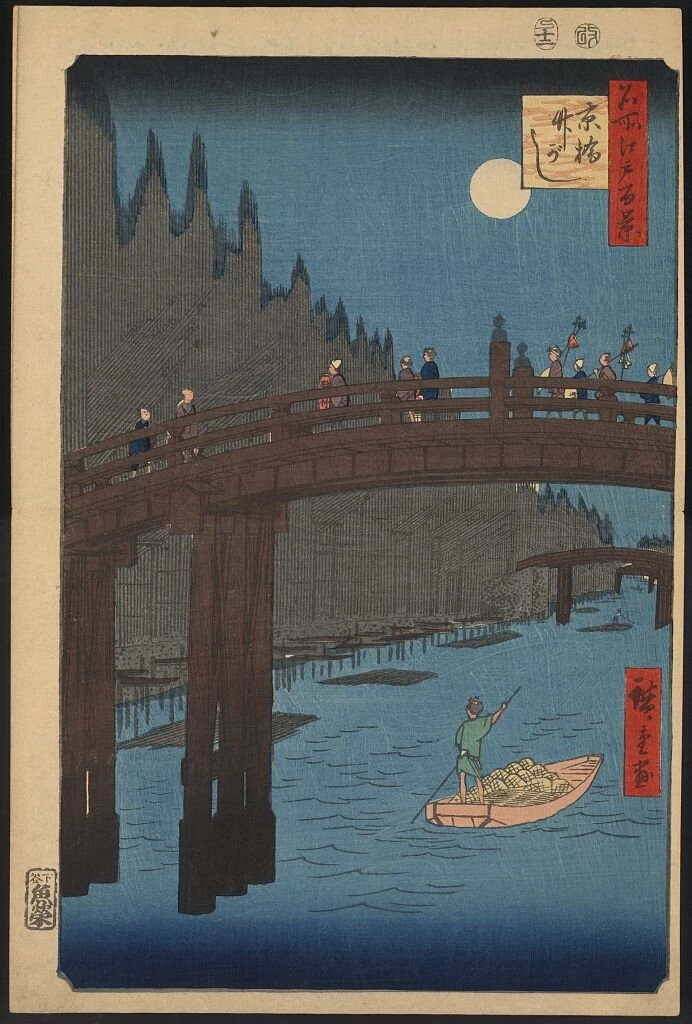
“These are some things that he liked,” grandpa said. He then picked the little one to look up close at the woodblock print.
“What do you see?”
“Umm…a bridge…the moon, ummm… I like the boat!”
The boy ran to the wall and slapped the butterfly signature printed on it. “I caught the butterfly!” He hasn’t yet learned that Very Serious Lesson: in museums, one must not touch anything.
Still safe from prejudice, he’s not looking for a complicated story behind the painting. He likes the boat and that is enough. Whistler would’ve pointed at the little lepidopterist and said: “He gets it!” All of his life, whether in feuds, controversies or legal battles, Whistler fought passionately for the idea that art should be enjoyed for what it is.
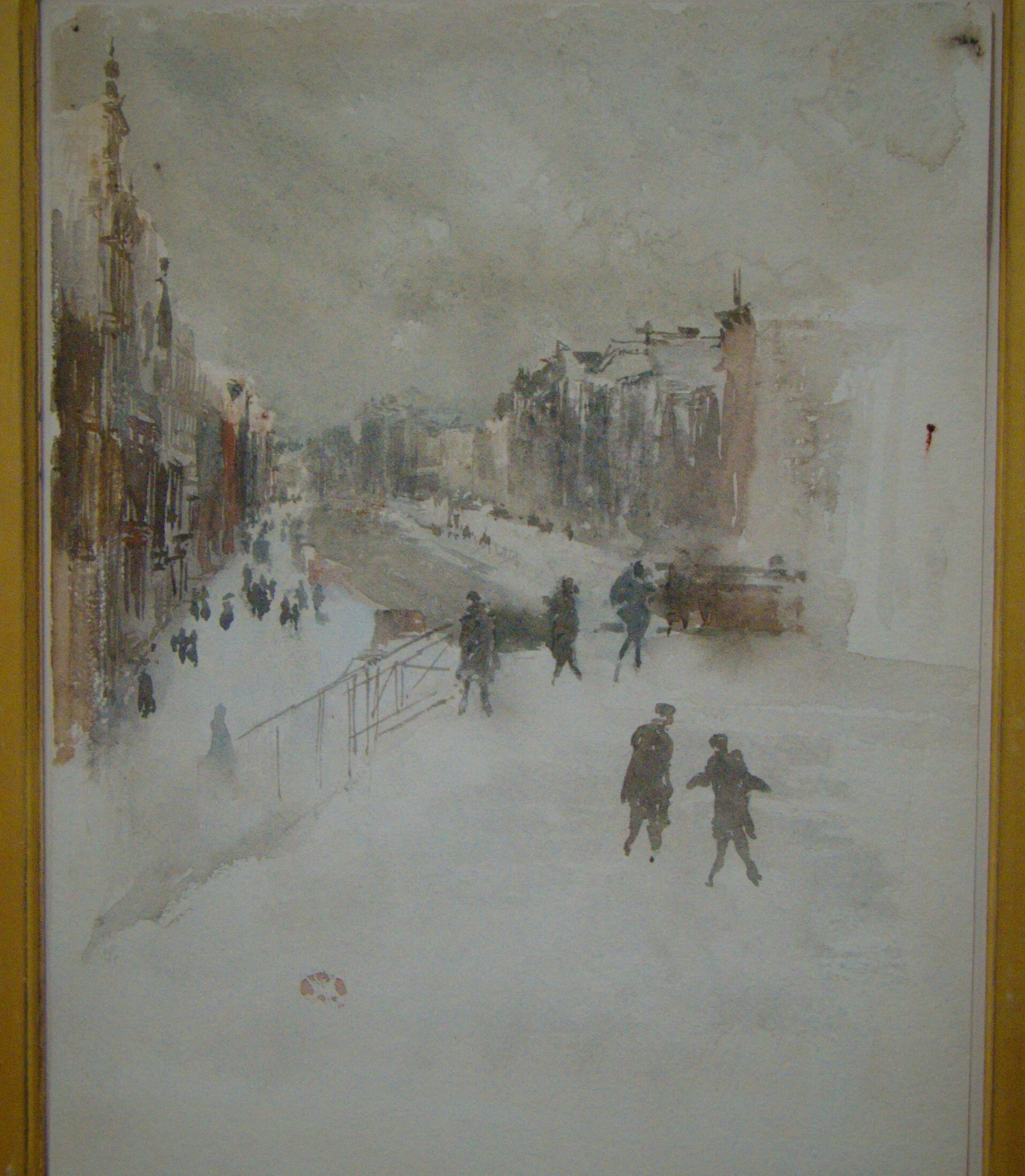
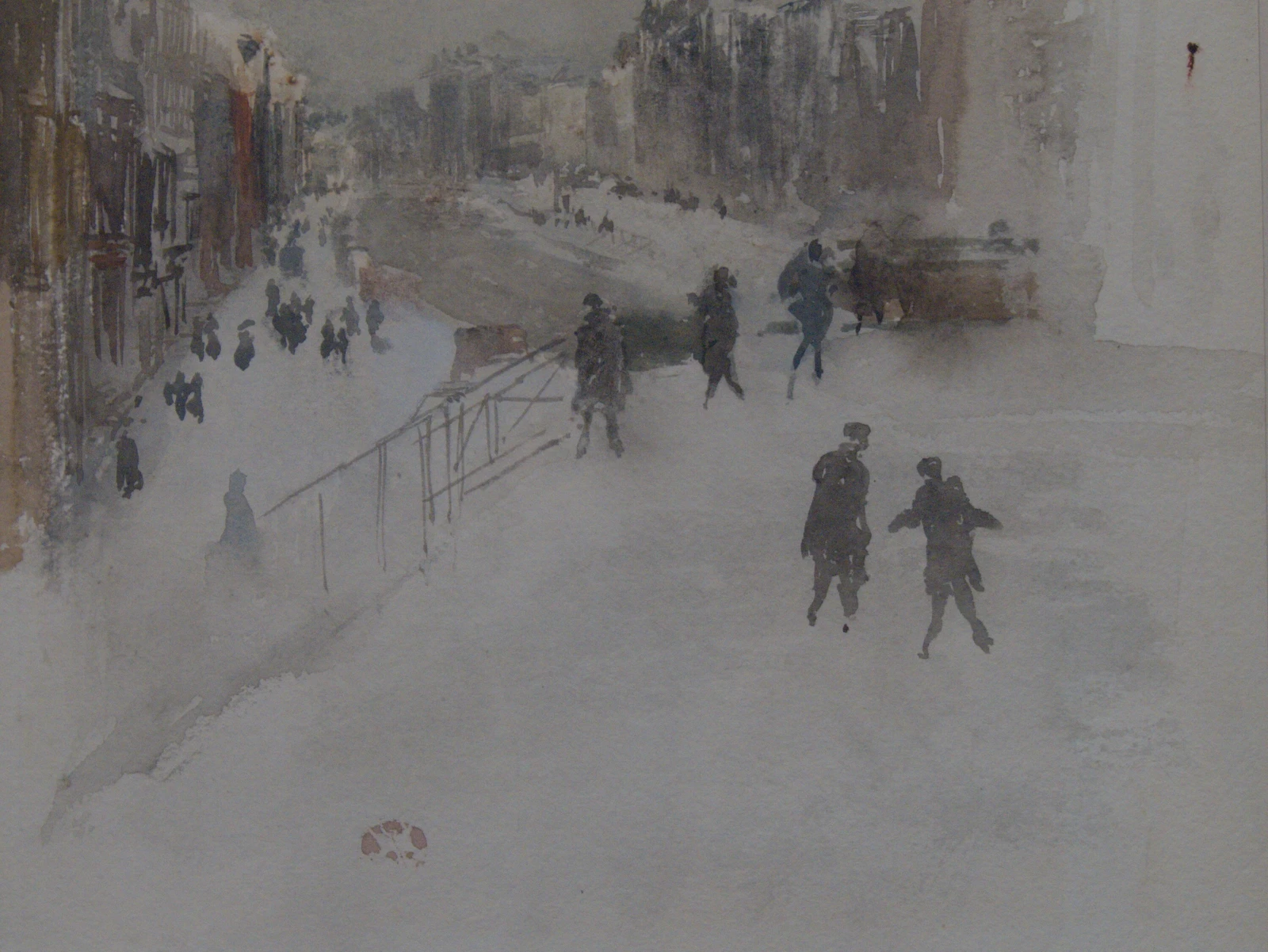
Snow, Amsterdam, 1882
“I’se drawrin” the 2-year old Jemie said, hiding under a table with paper and pencil. Born in Lowell, Massachusetts, James Abbot McNeill Whistler came from a family of soldiers and engineers. Tsar Nicholas I employed Major George Washington Whistler, Jemie’s dad, to build the railroad from St. Petersburg to Moscow. Anna Matilda McNeill followed with the family to the imperial capital in 1843, when Jemie was nine. Their start in Russia was marked by sorrow, as Charlie, Jemie’s younger brother, passed away during the voyage.
Jemie’s upbringing was privileged: art classes at the Imperial Academy of Fine Arts, French and Russian with private tutors and piano for thirty minutes a day. Anna, a devout Episcopalian, instituted morning family prayers and evening Scripture readings, against which the boys sometimes rebelled. For young Jemie, drawing was the chief activity. Rembrandt’s etchings and Raphael’s cartoons captured his imagination on a trip to England.
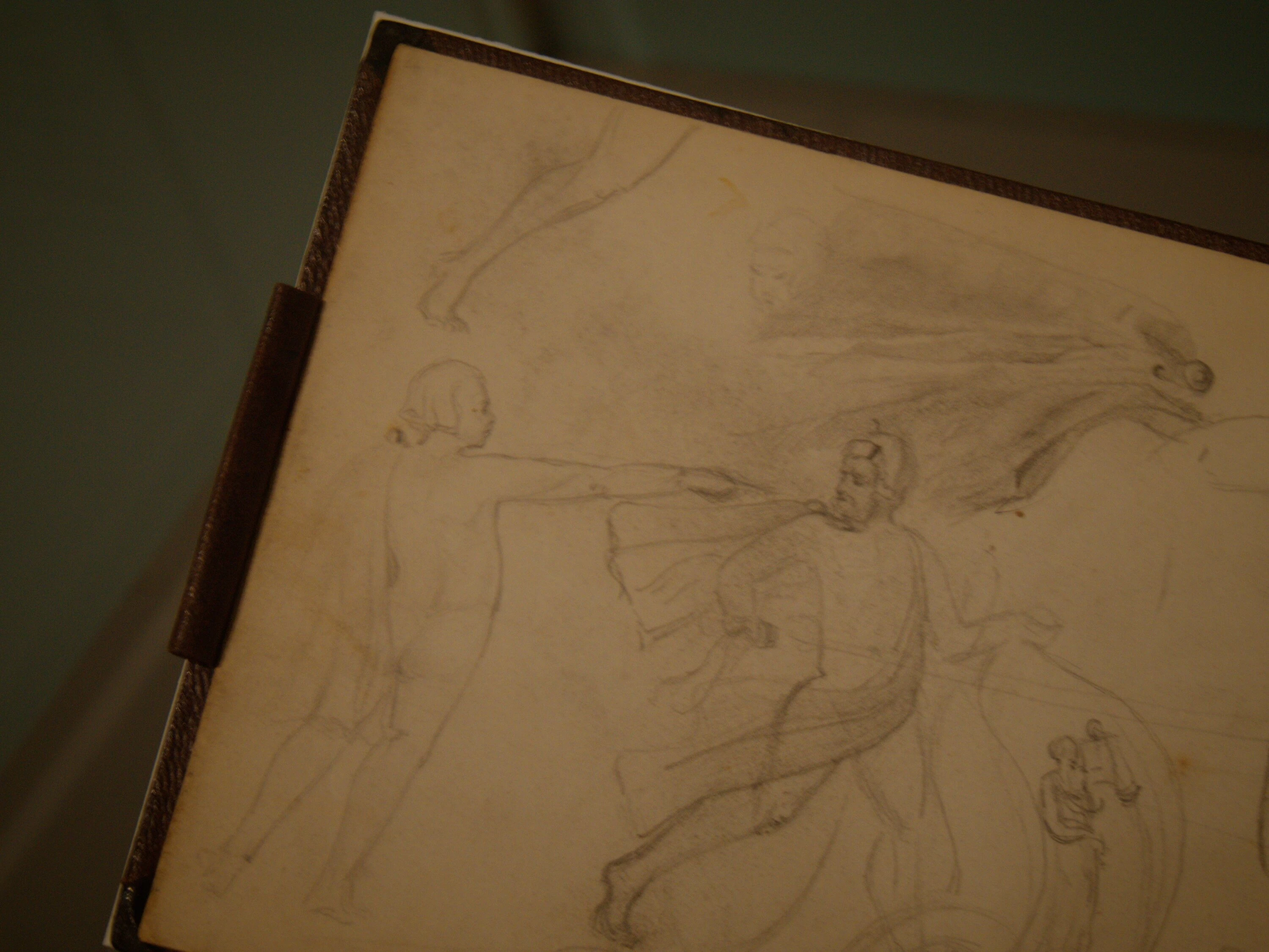
In the exhibition, we’re lucky to flick through Jemie’s sketchbook on an iPad. St. Petersburg offered plenty of inspiration: old bearded men, milkmaids, soldiers, horses, mermaids, dogs, chariots, smugglers, izvozchikscoachmen. In 1848, Anna and the children travelled to England, stayed with relatives and Jemie attended boarding school. Major Whistler remained in Russia on railway duties. “You know Jamie dear that I should be your best friend. I trust you feel that I am so,” he wrote to his son. Less than a year later, fourteen-year-old James received the news that cholera took his father away.
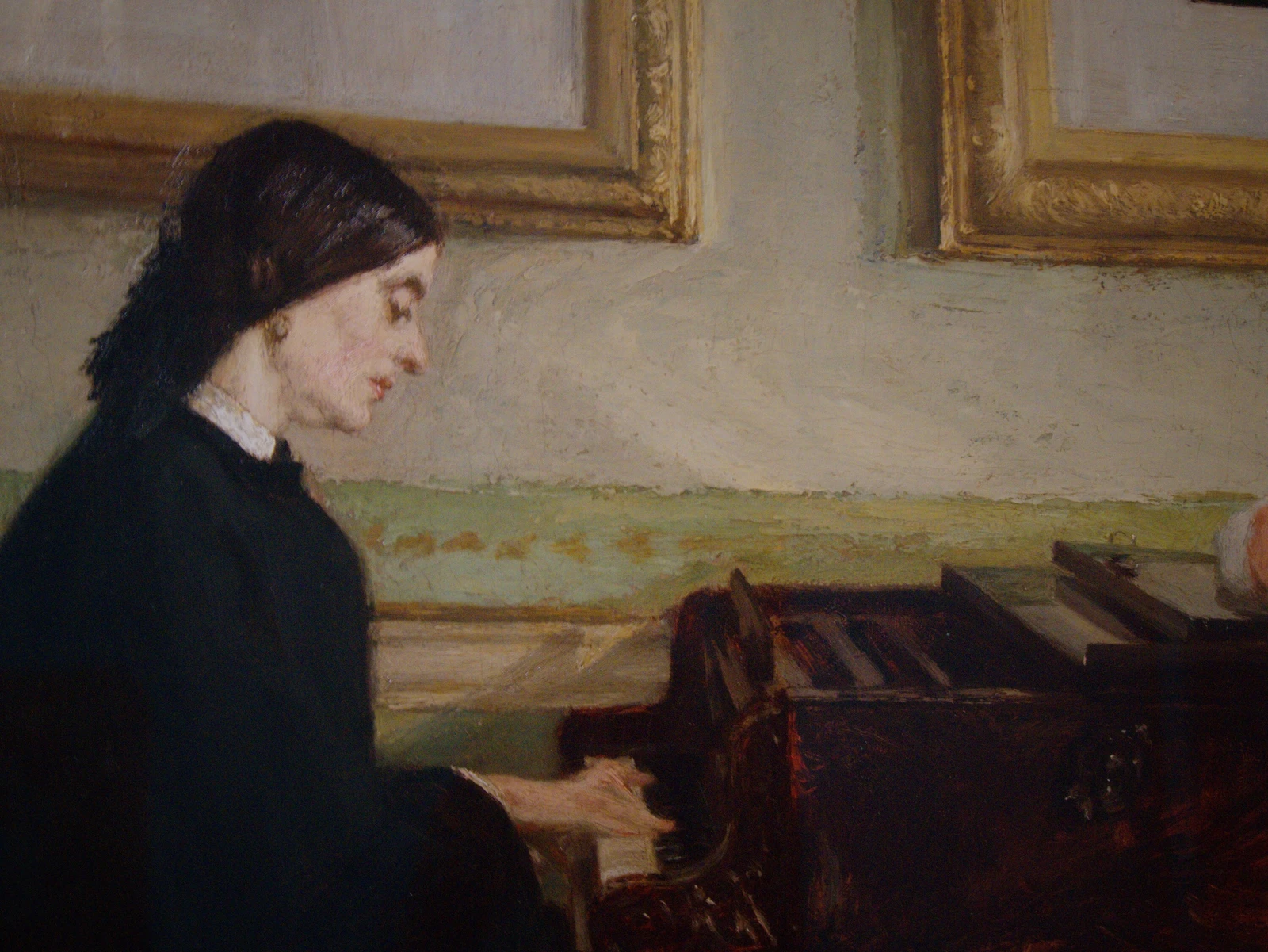
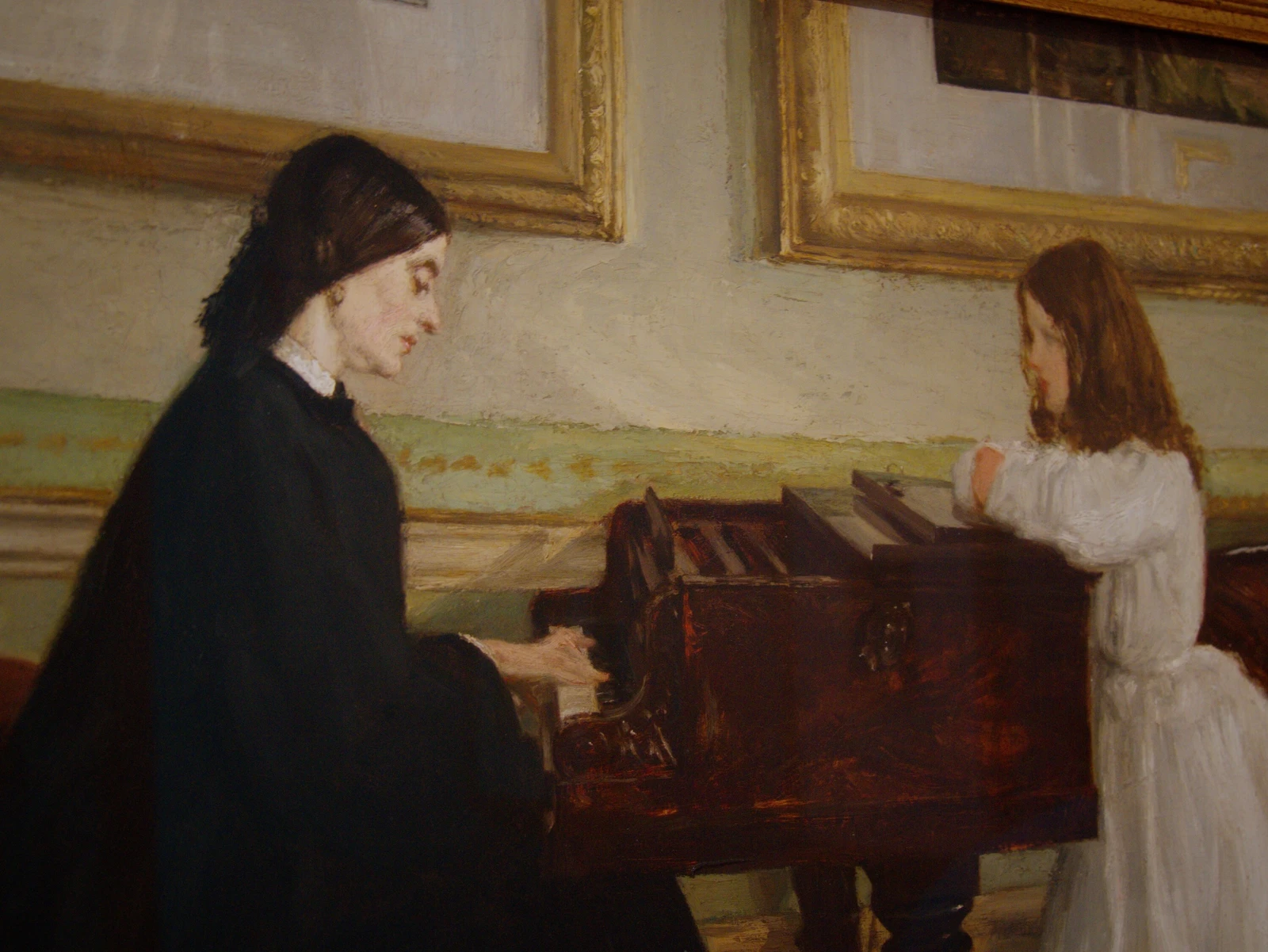
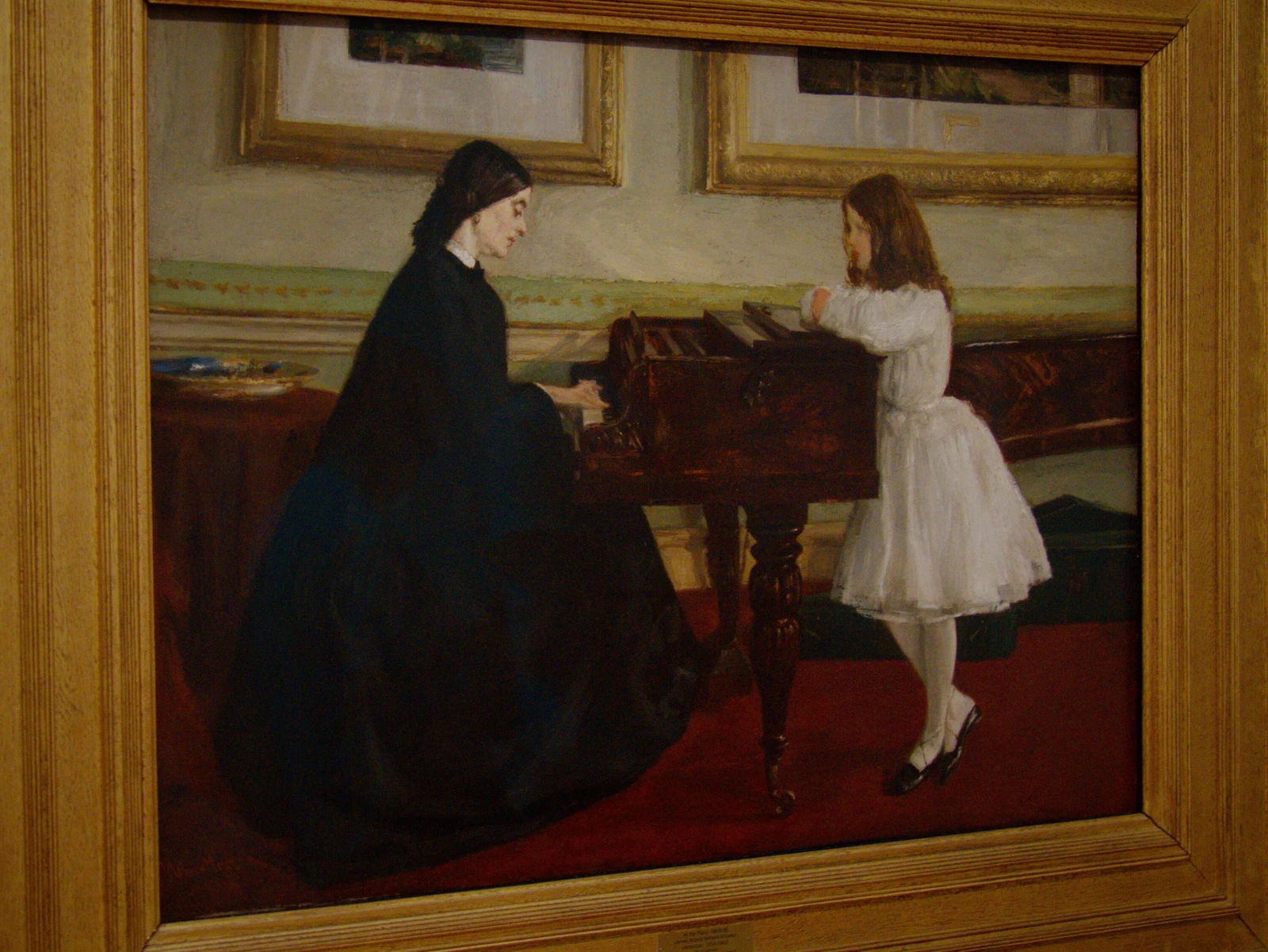
At the Piano, 1859
Deborah, his older half-sister, was the only one of the children who inherited Major Whistler’s musical talents (he was a self-taught flutist) and, consequently, his piano. The audio guide suggests that the piano was Whistler’s way of remembering his father, embodying his missing presence.
After Major Whistler’s death, the family returned to America and at 17, Whistler was set to follow in his father’s footsteps by becoming a West Point man. After three years of mischiefwhich included sins such as long hair at the military academy, he was expelled. Officially, he failed chemistry. His apocryphal quip later in life: “Had silicon been a gas, I would have been a major-general.” Still, he never stopped drawing, producing close to 200 studies by his 20th birthday. After a stint at the U.S. Coast Survey in Washington, 21-year-old Whistler set for Paris in search of la vie bohème.
Thousands of floating existences... in the underworld of a great city.
Charles Baudelaire
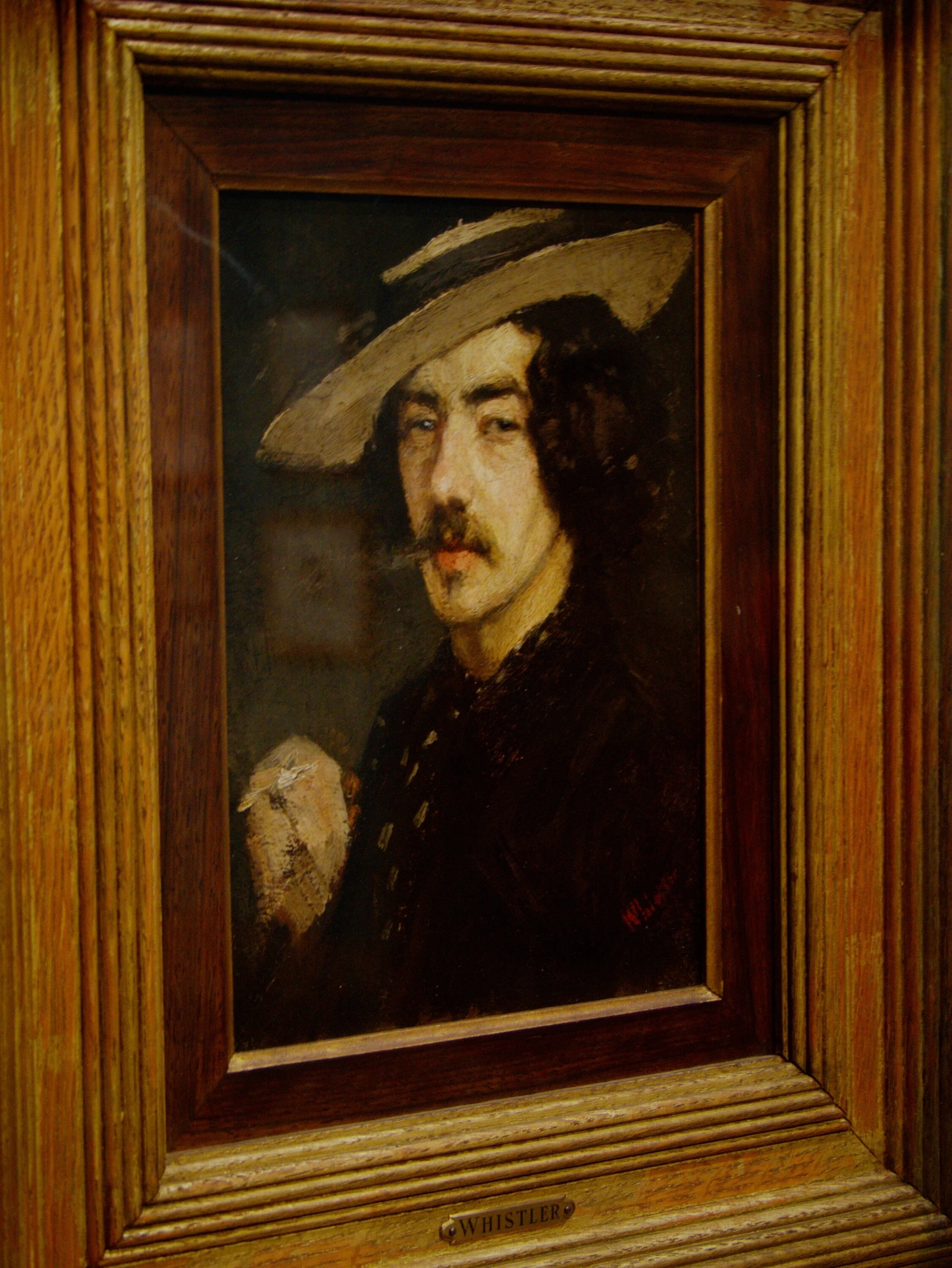
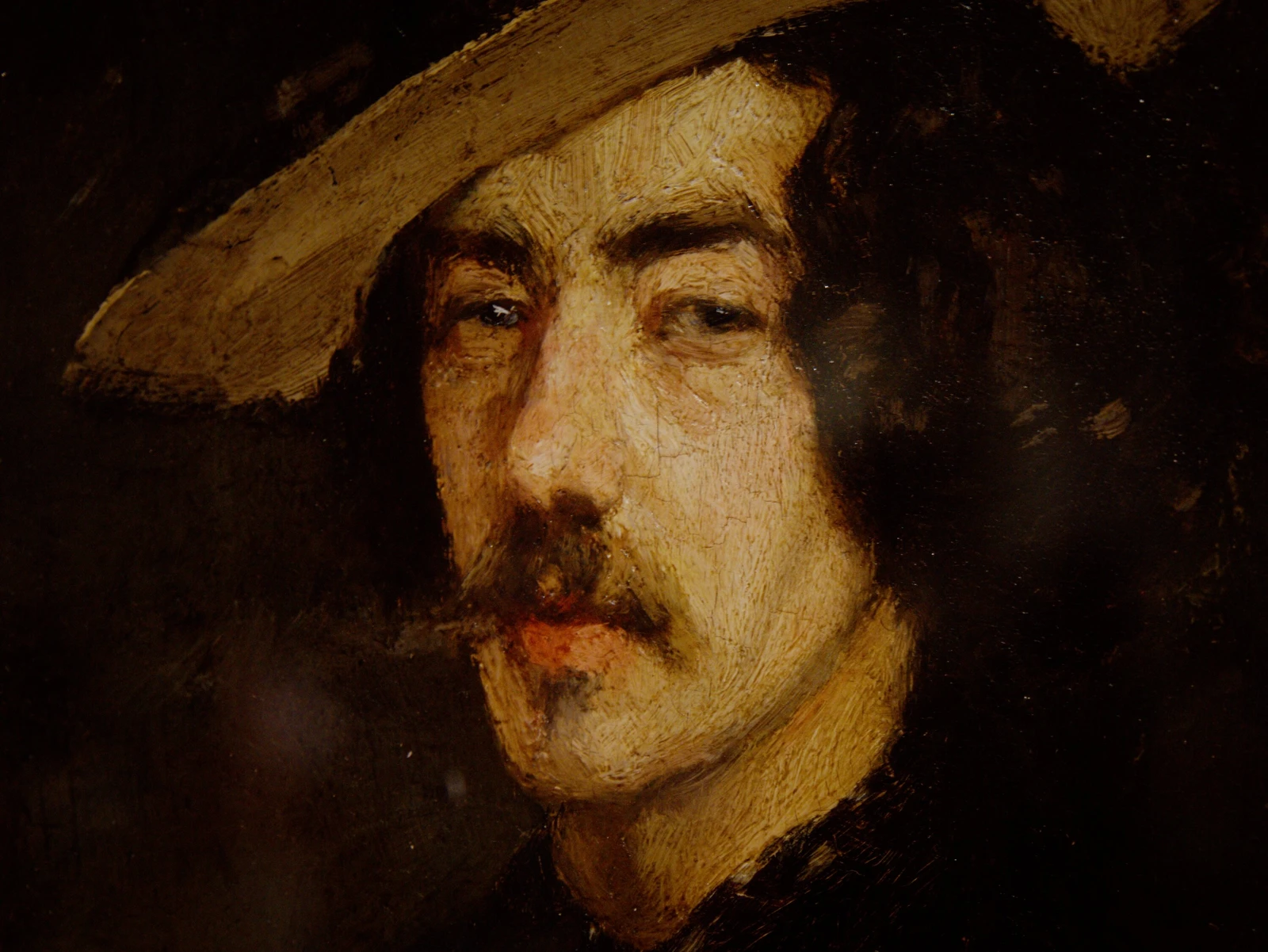
Whistler Smoking, 1856-1860
Paris, 1855. What better time to be a bohemian?
Whistler took drawing classes at the Ecole Impériale et Spéciale de Dessin and switched to evening classes to match his late rising after a bottle of wine with friends. Jimmy, as he became known, lodged in the Latin Quarter, moving around dozens of times. He extended his monthly allowance by pawning, borrowing and running tabs. It’s enough to hear the music of the cancan, the popular dance at the time, to imagine the rhythm of Whistler’s Parisian life.
Offenbach — Orpheus in the Underworld
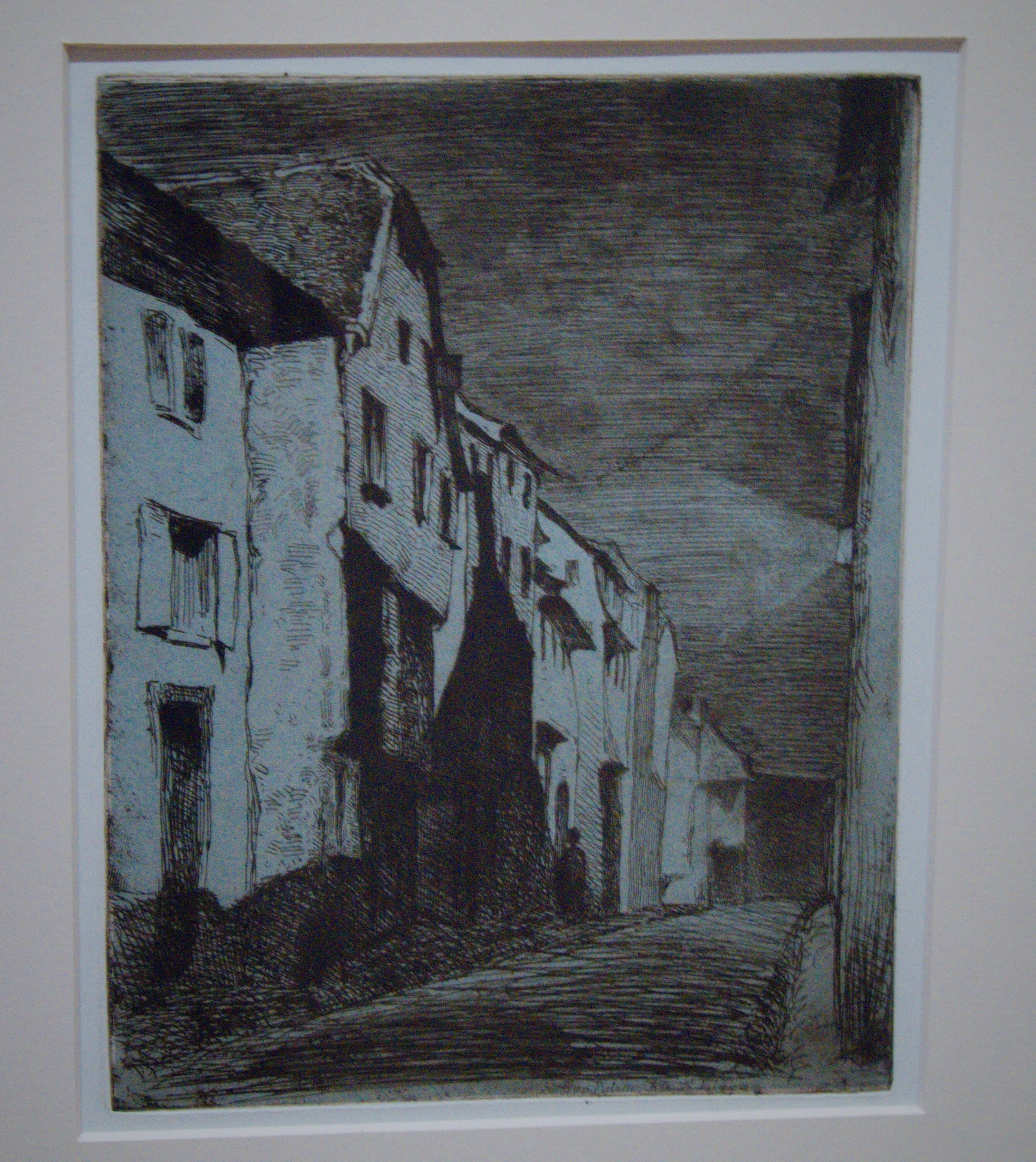
Street at Saverne
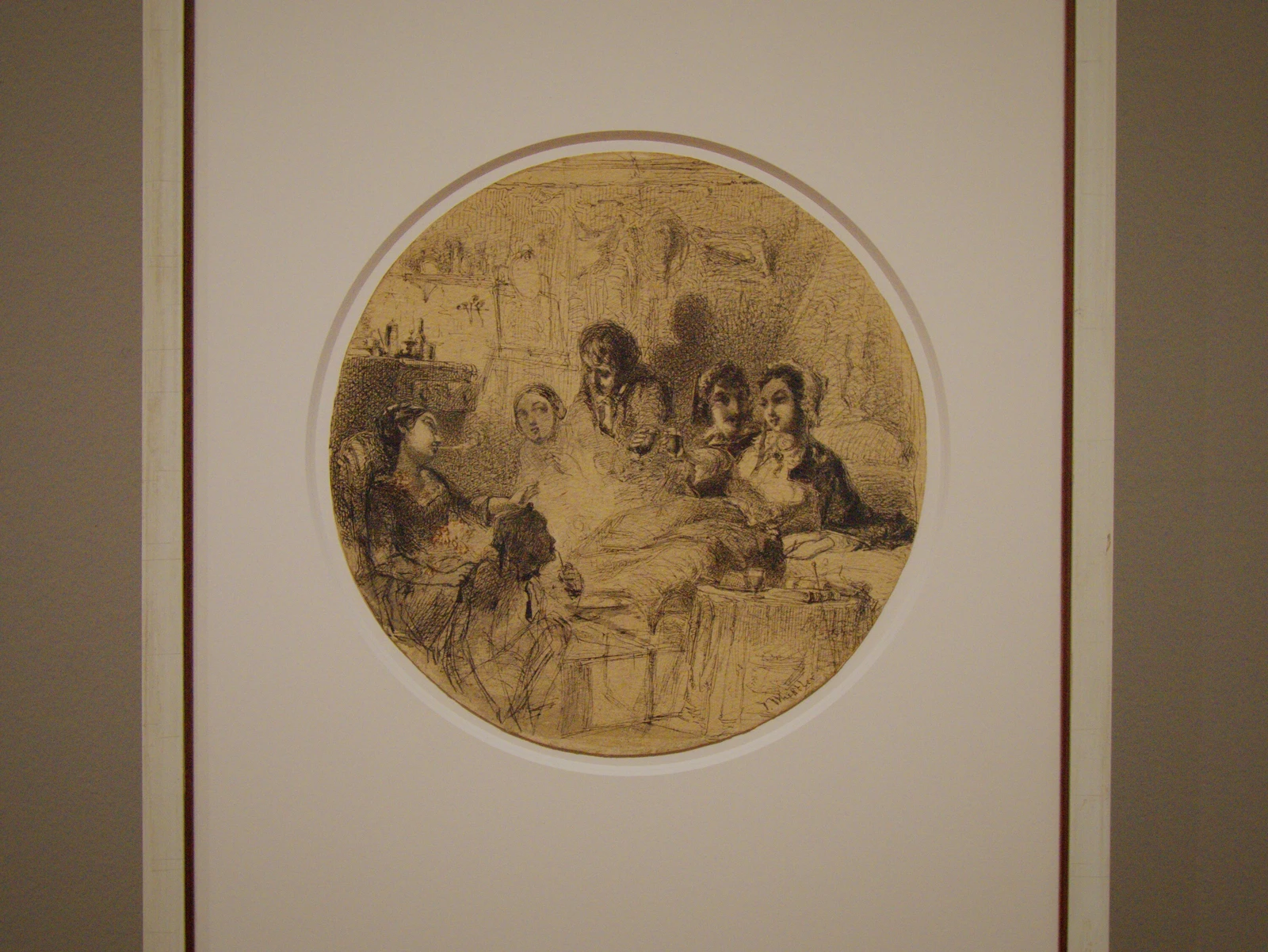
Jimmy met Héloise, a petite dressmaker, who moved in with him. Their amour survived up until she shredded his drawings in a fit of jealousy. She wasn’t alone – his mother, seeing what “impure” drawings Jamie sent to his brother Willie, burned them all. The young artist, in contrast to later confidence, lamented: “No one cares for Jemie; no one cares what I do.”
Whistler’s Parisian apprenticeship included dating Finette, a cancan dancer by the name of Josephine Durwand, befriending Mère GérardThe portrait of whom would become his first painting since America, a blind flower seller and a trip to the Rhine Valley in Germany, during which Jimmy and his companion characteristically ran out of money. They paid their way back by drawing portraits in exchange for soup, bread and a roof.
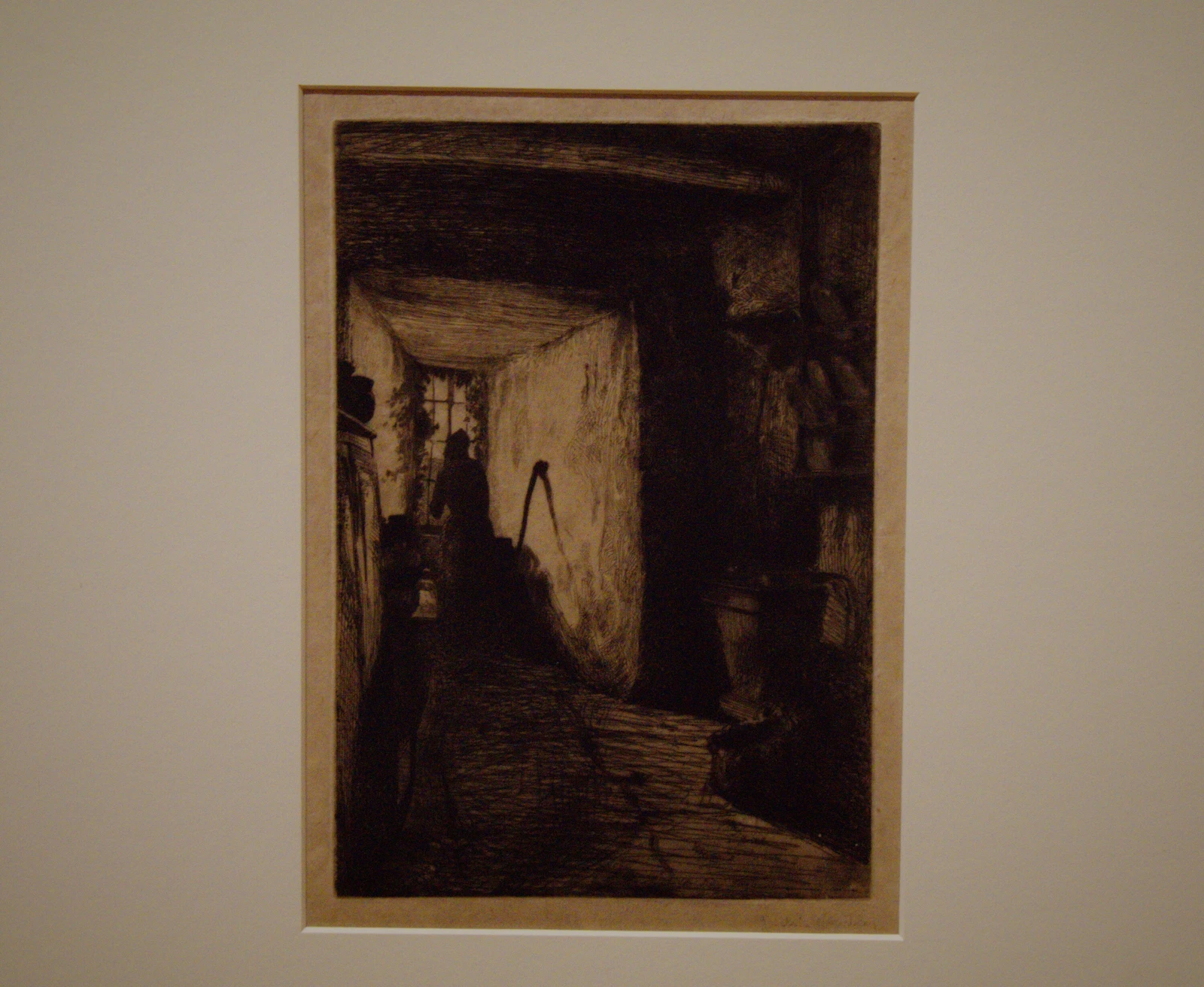
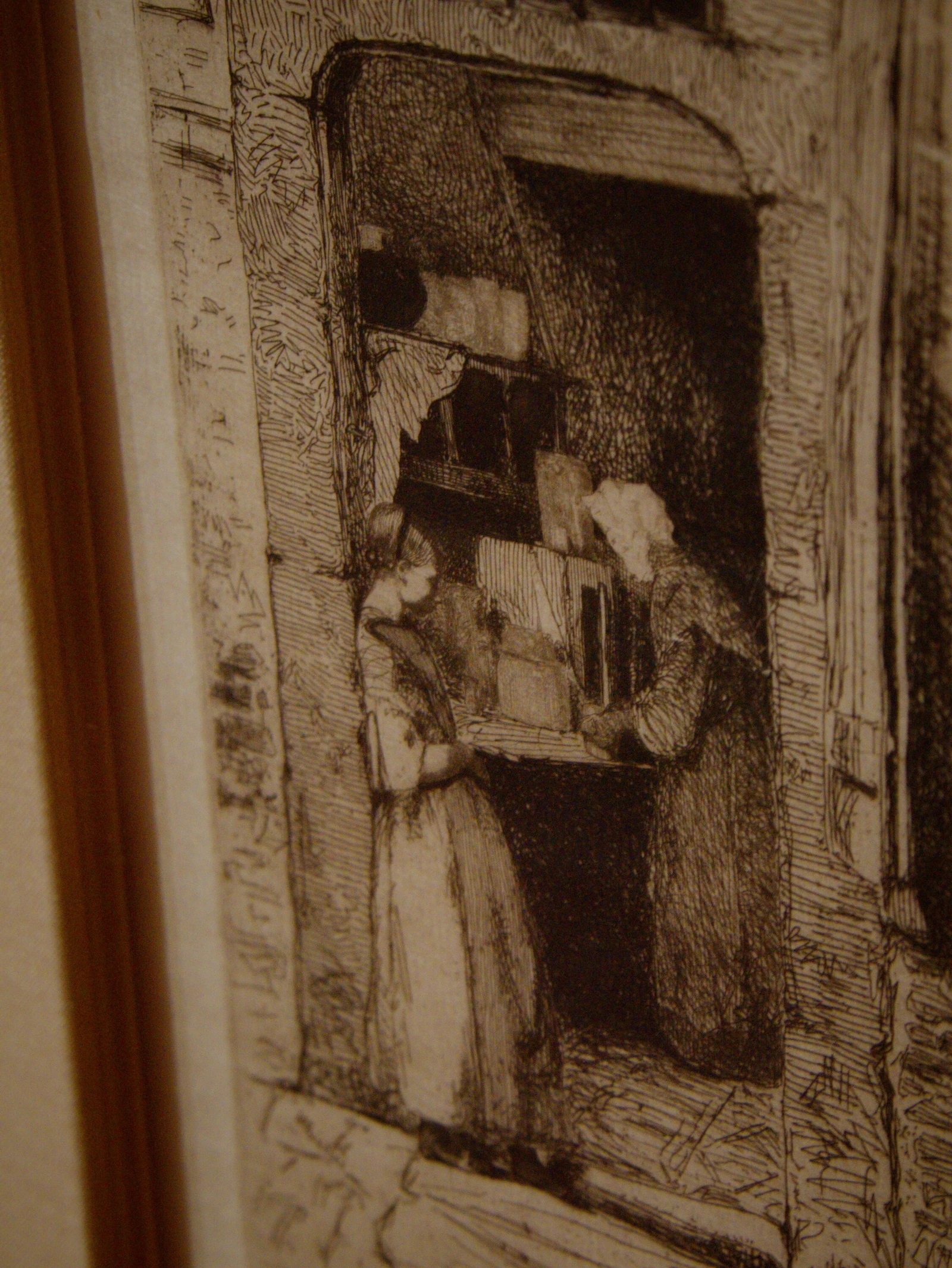
Jimmy’s adventures exposed him to the “heroism of modern life”, as Baudelaire put it, not the ideal and the bucolic represented in paintings at the time. From run-down areas of Paris to rag-gatherers and flower sellers, Whistler etched people and places onto his memory, then on copper plates. Whistler was a modern street photographer of sorts, a 19th century Daido Moriyama. The French Set, 12 etchings of London, Paris and Cologne, was his first artistic success.
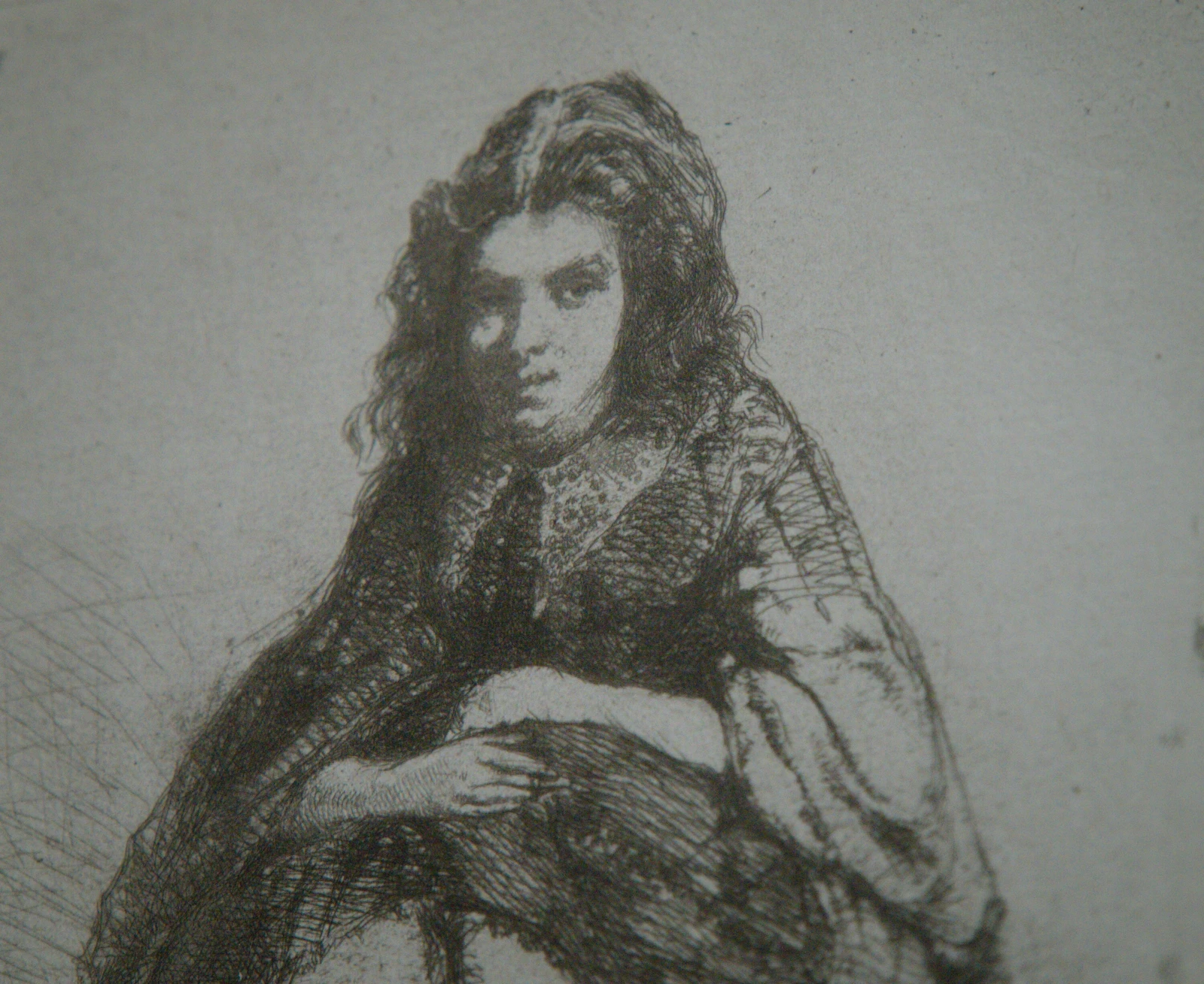
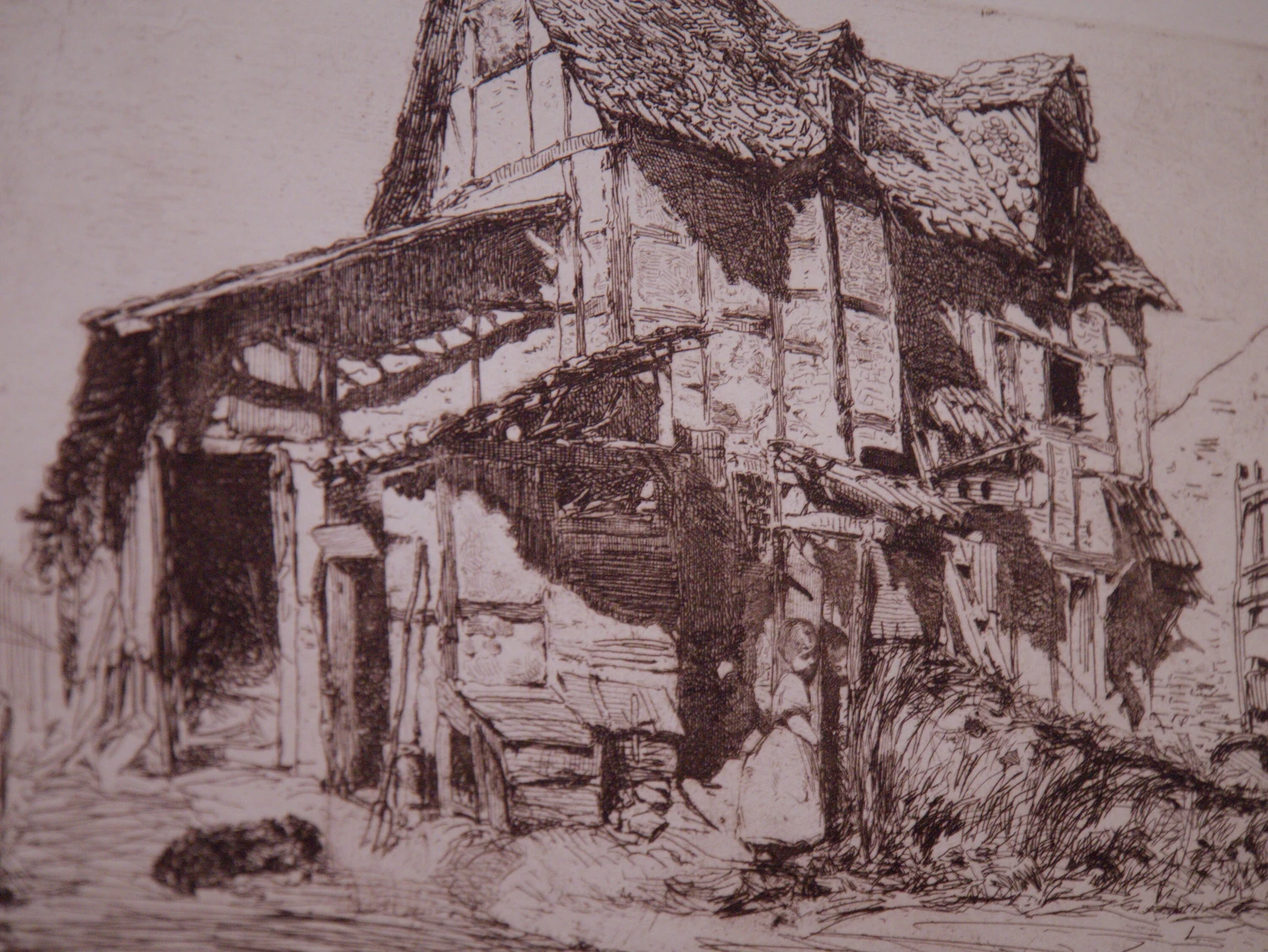
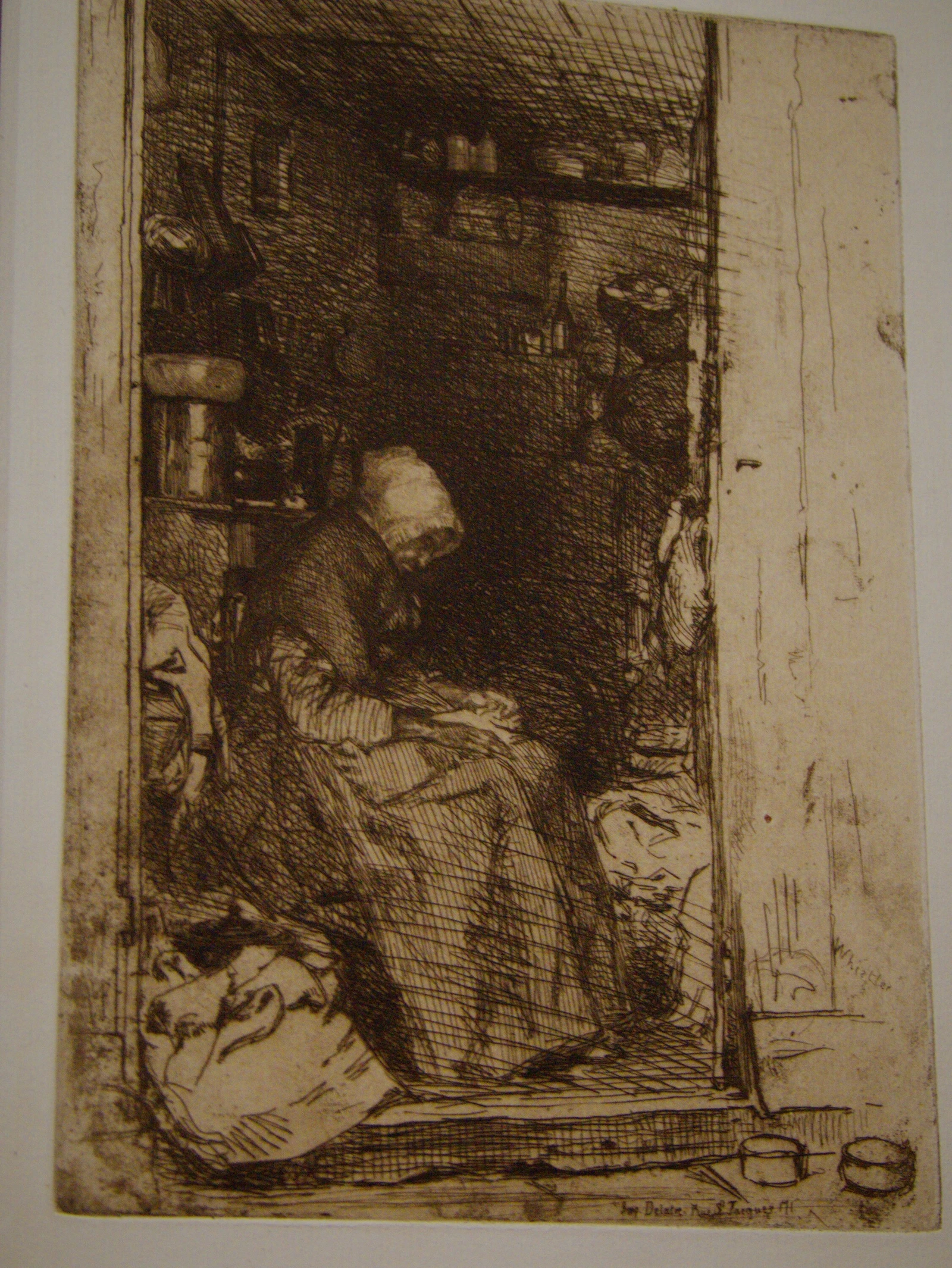
Fumette (Héloise’s nickname)
This is where my own cancan dance starts. Whistler’s etchings pay off when you go up close and see the expressive faces, some with their mouths open like in a candid photo. The lines are fuzzy, jumping from random scribble to fine details. Moving around is advised, as is taking a step back. Some things you see when the museum attendants worry that your nose might touch the precious etching, some farther away. The other visitors should scoff at you getting in the photos that they’ll never look at again.
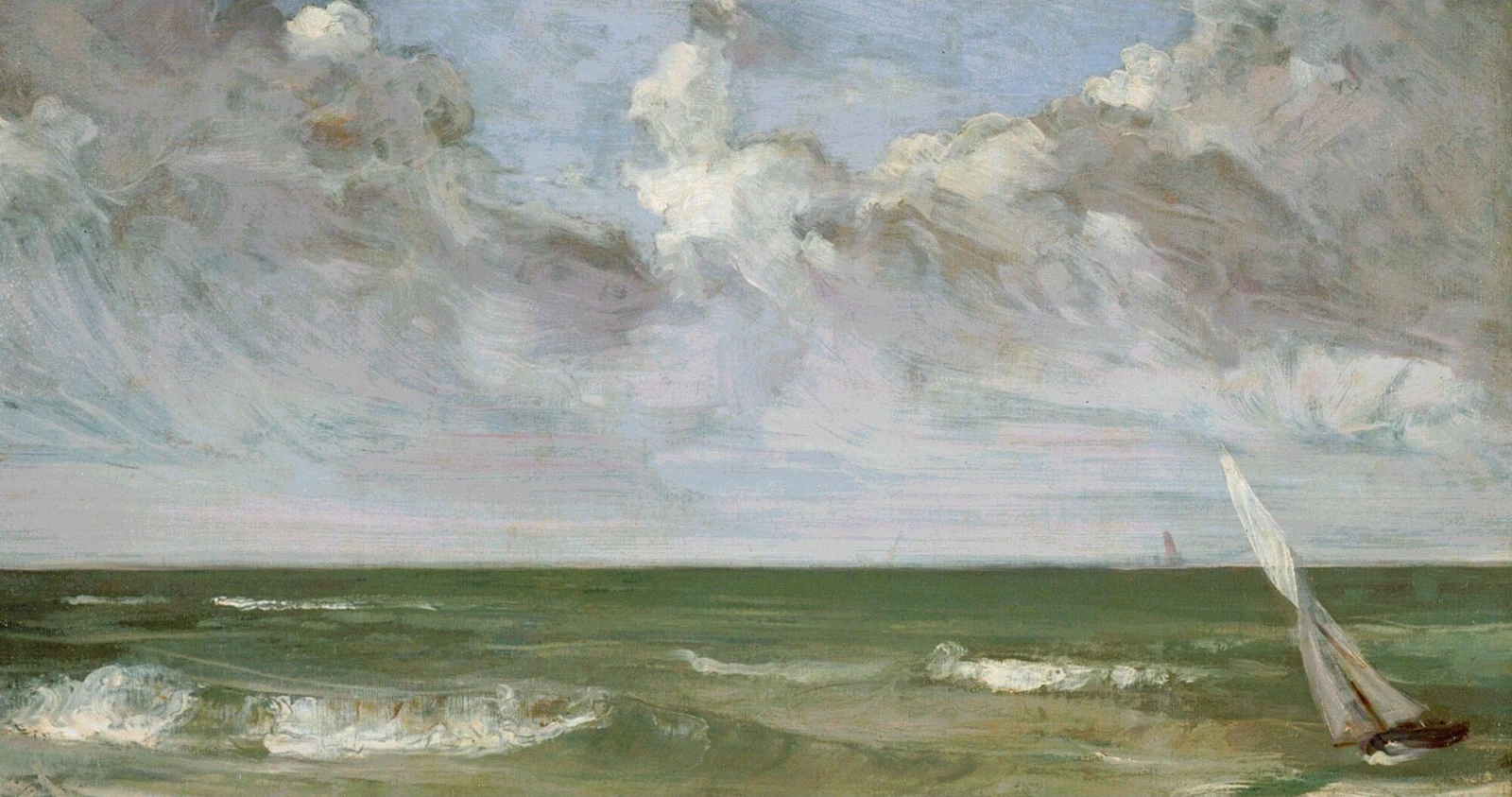
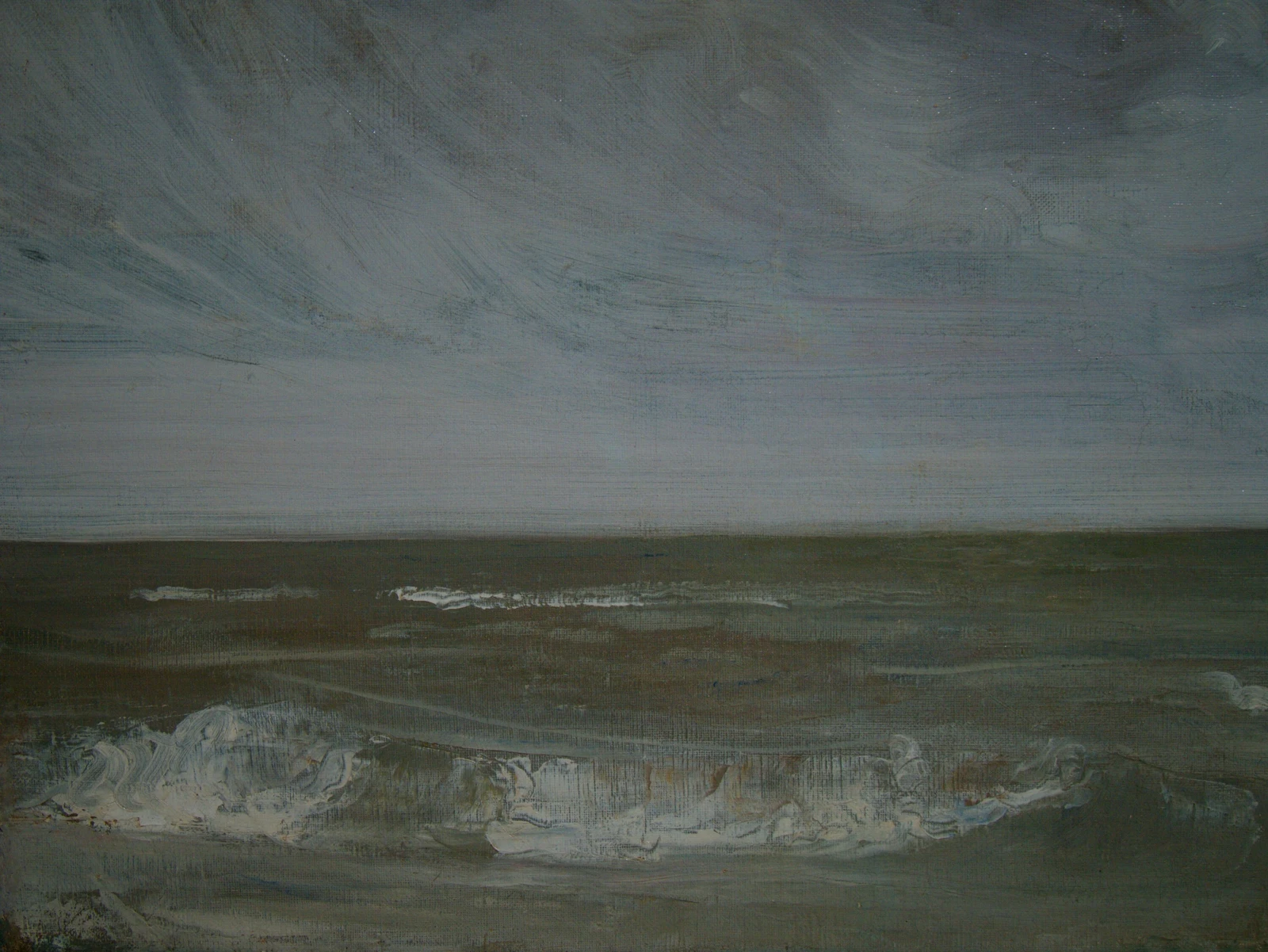
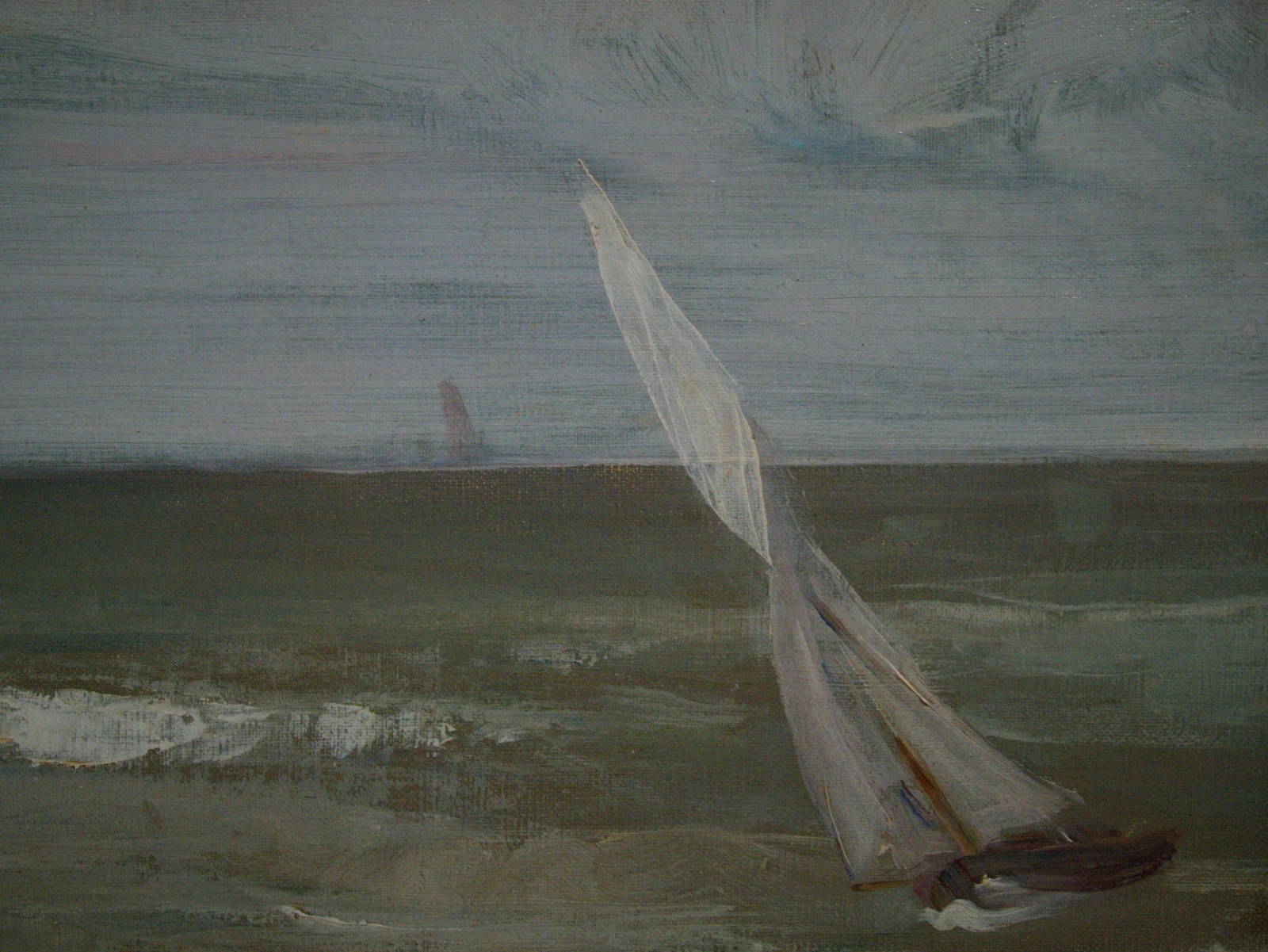
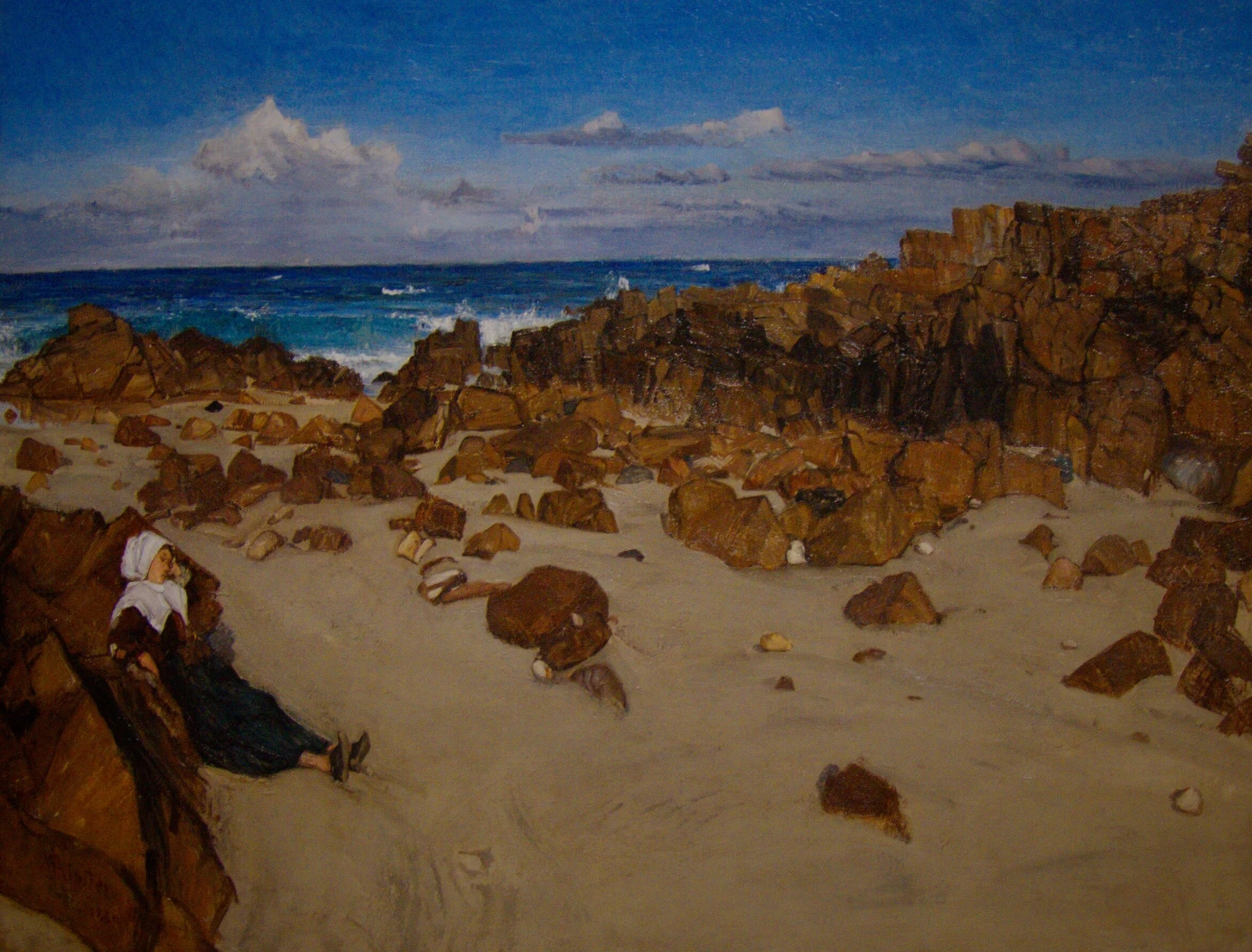
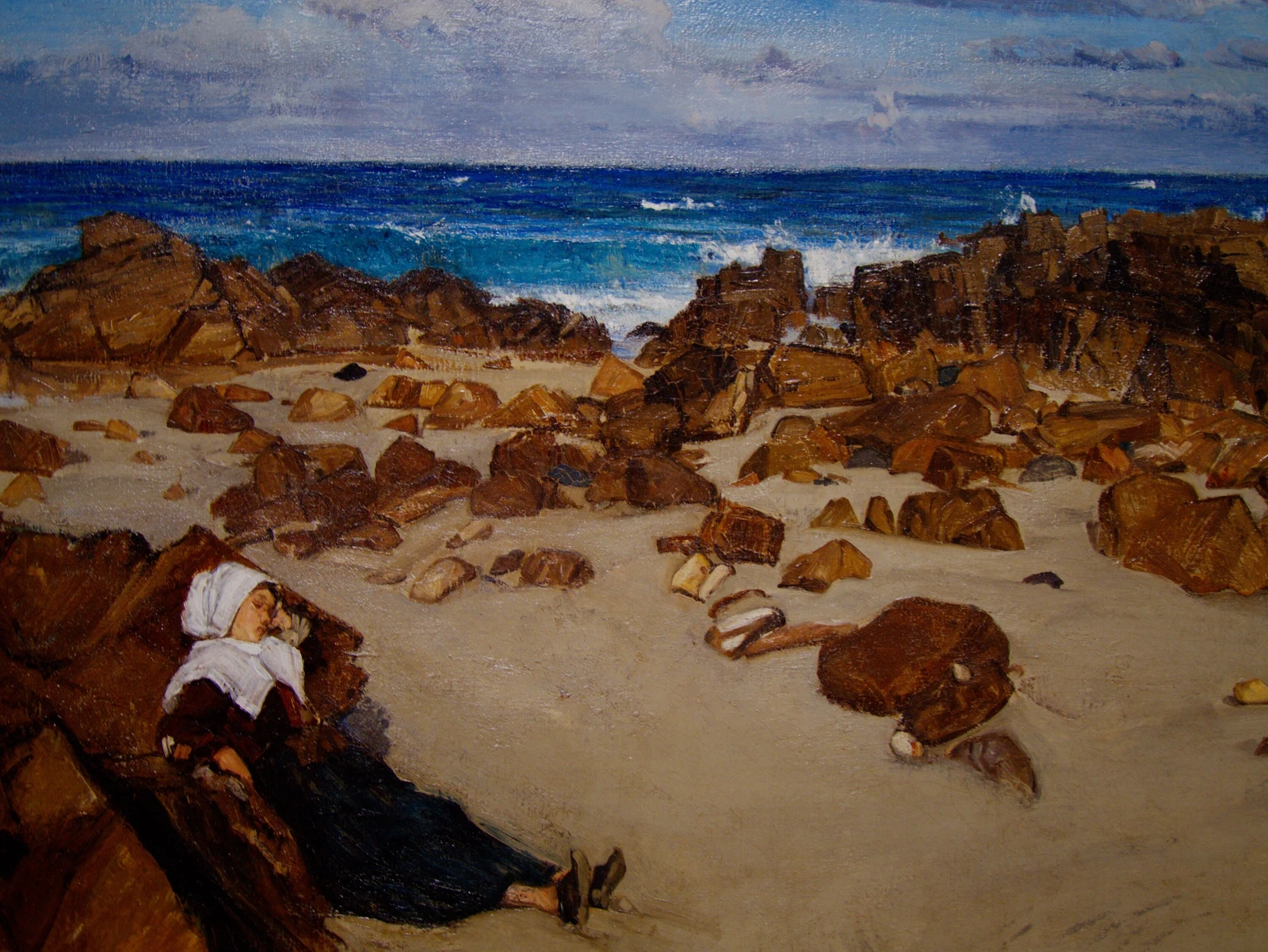
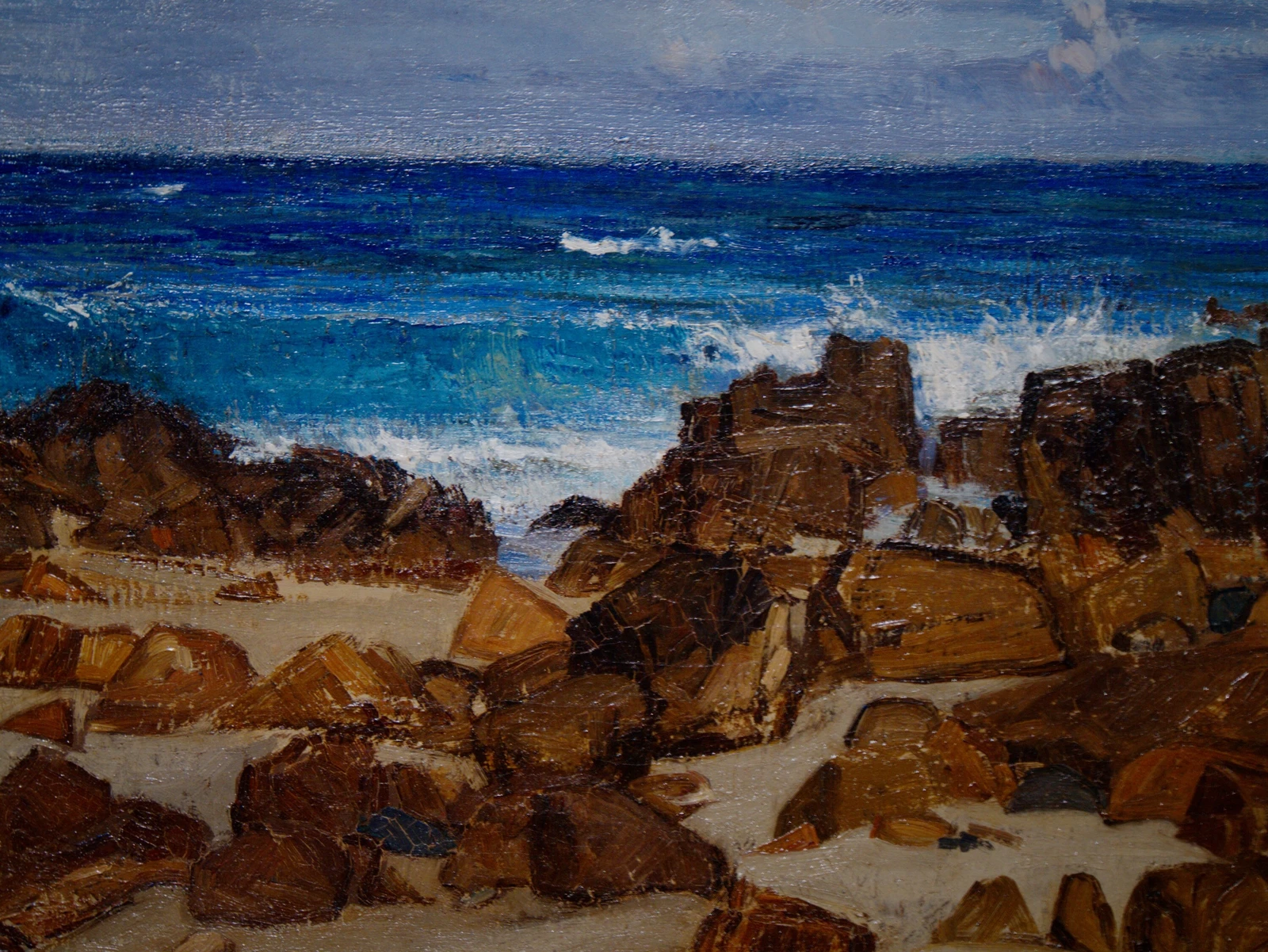
Green and Grey, The Channel, 1865
Or you can do the flamingo in front of the seascapes: stand, arms crossed, feet at 90 degrees to each other (Birkenstocks are optional) and stroke your chin or moustache if you have one. The art critics will take you for a connoisseur.
Looking may come with a million intrusive thoughts: What is this? Should I like it? Do I say “ummmm” and nod? Eventually, you learn to ignore these mosquitoes and swat them away. What is left is to enjoy the painting.
He taught us to paint and we taught him the waterman's jerk.
Walter Greaves
From Paris, Whistler moves to London to stay with Deborah and her husband. The bustling dock areas of Wapping, Rotherhithe and Battersea attract him and he meets the Greaves brothers, who take him to the Thames at dawn and dusk. He sketches the river and its people. The boatmen and the dockyard workers are not perfect static figures, rather impressions that invite you to imagine their movement.
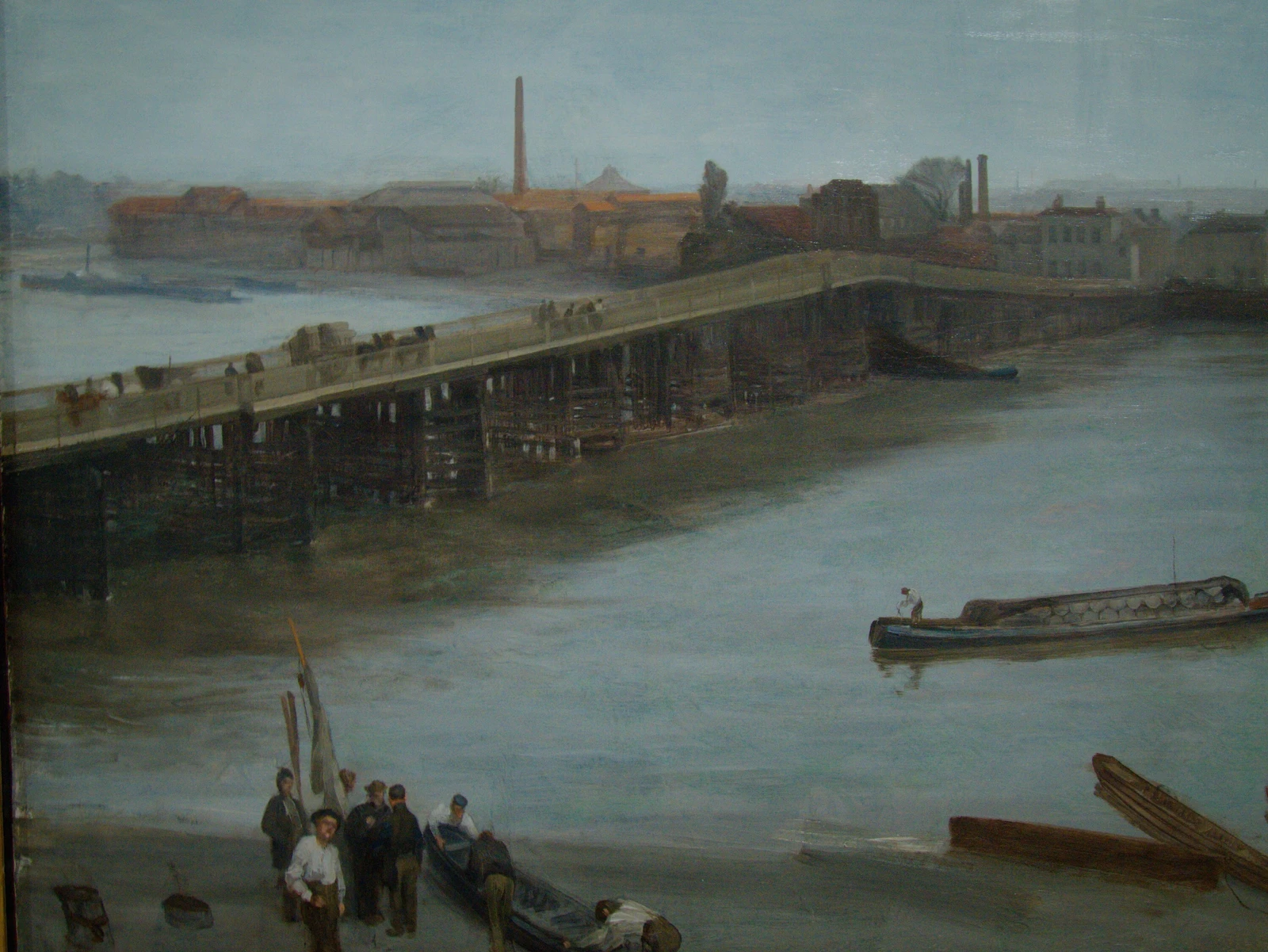
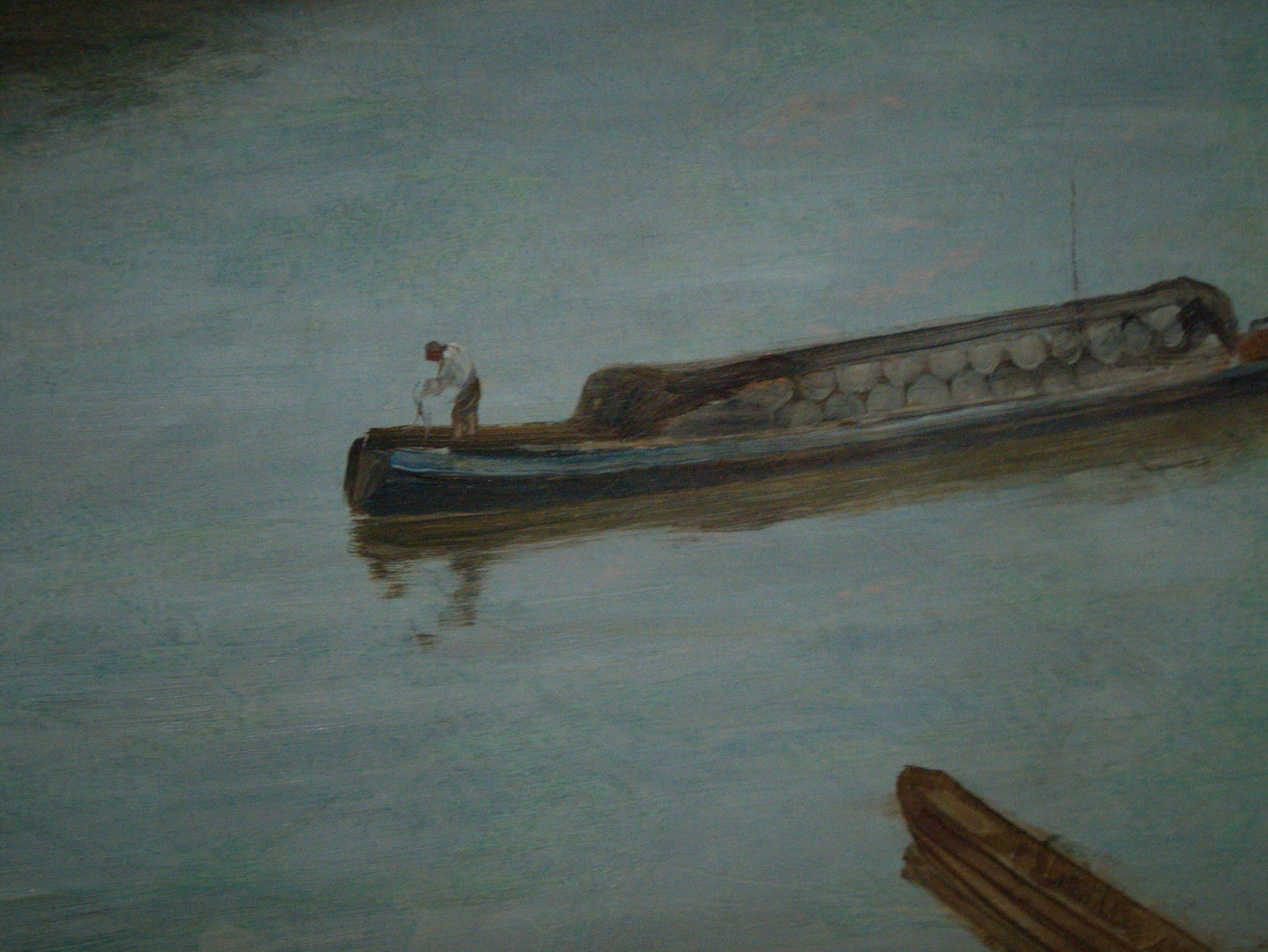
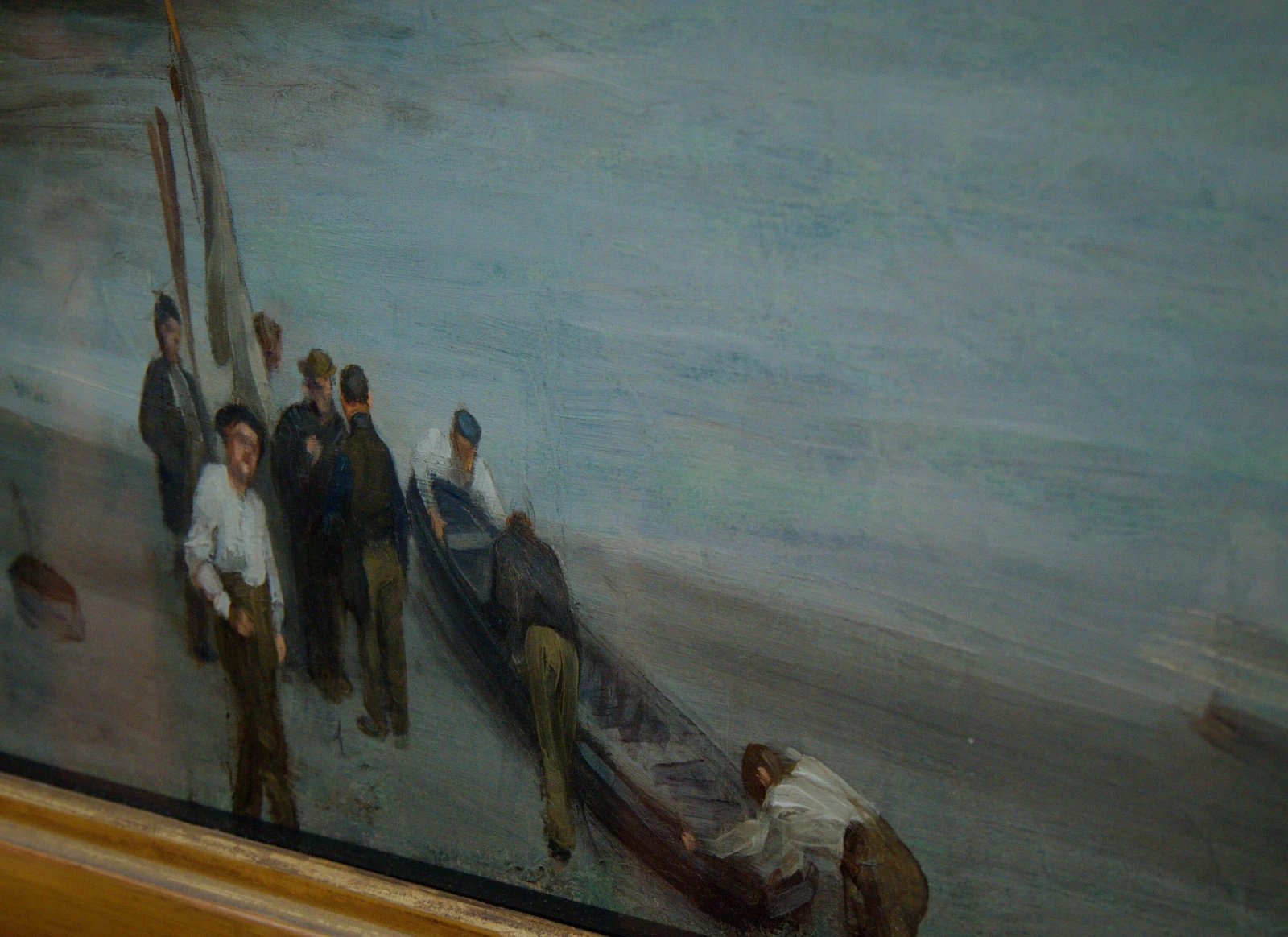
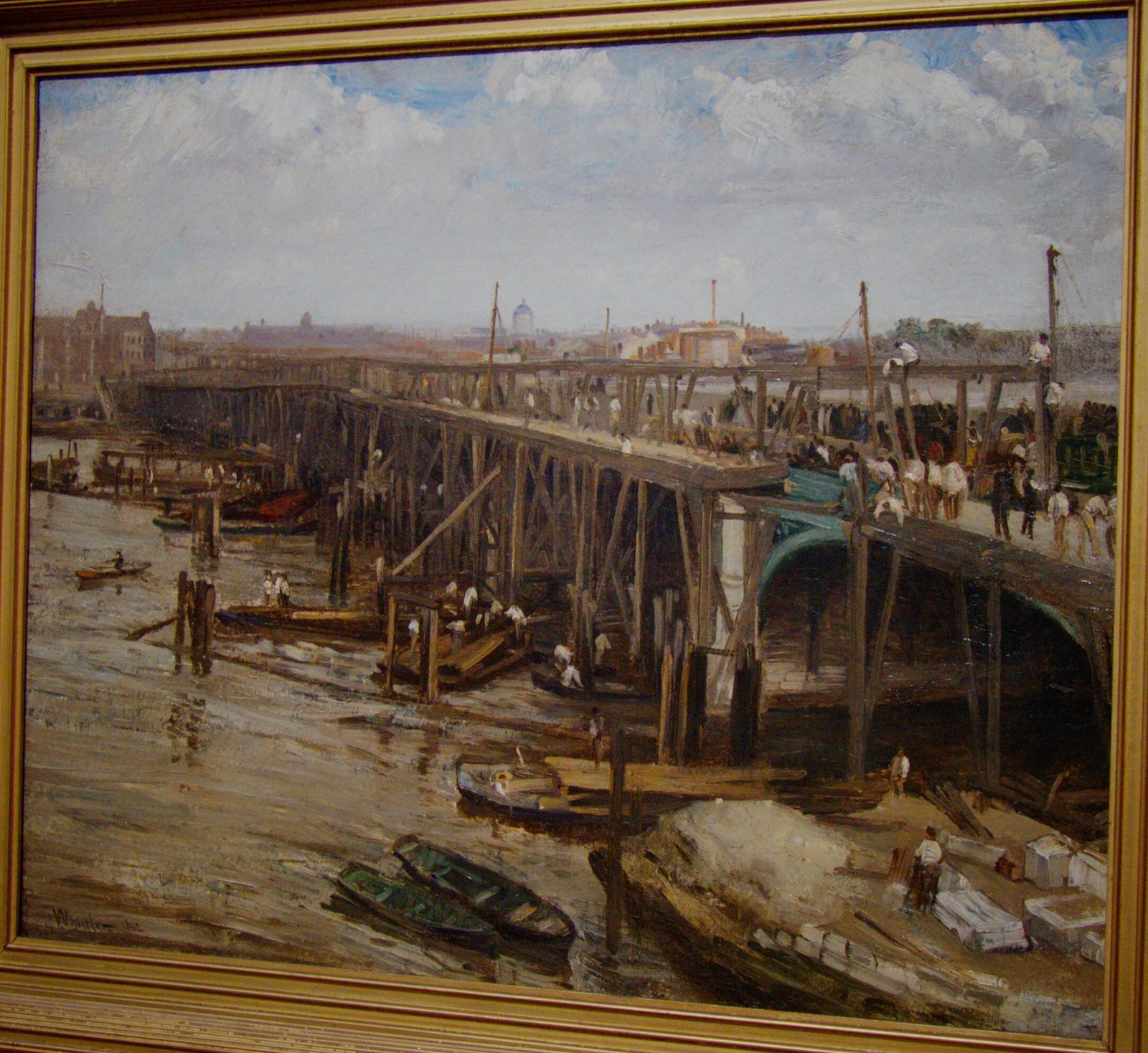
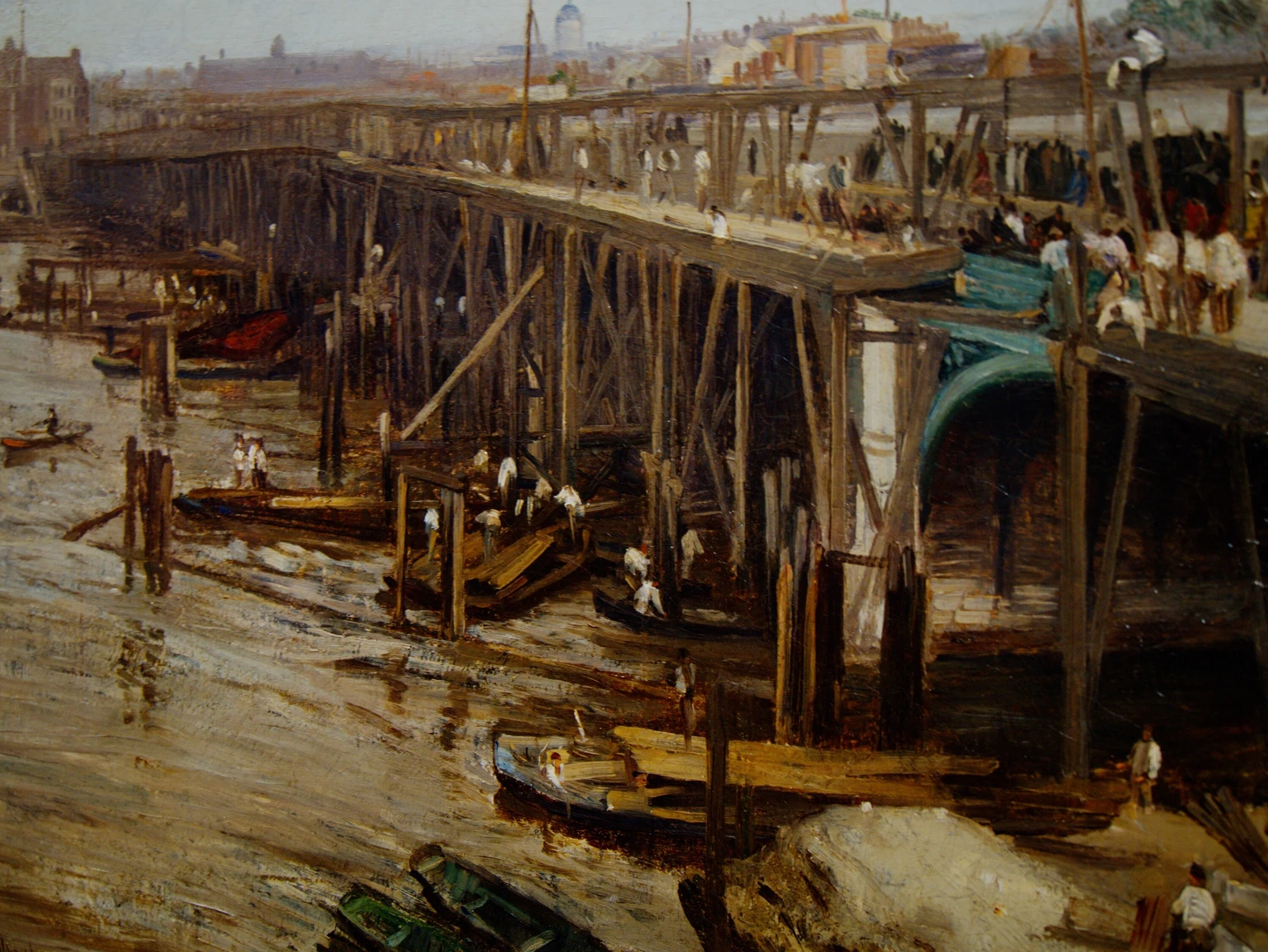
Brown and Silver, Old Battersea Bridge, 1859-1863
In London, he also meets the young Irishwoman Joanna “Jo” Hiffernan, who becomes his model, lover, companion and, for years, a stabilising and practical presence in his life. Despite never marrying, they lived together (until his mother moved in) and she ran his studio and finances, with Whistler giving her power of attorney.
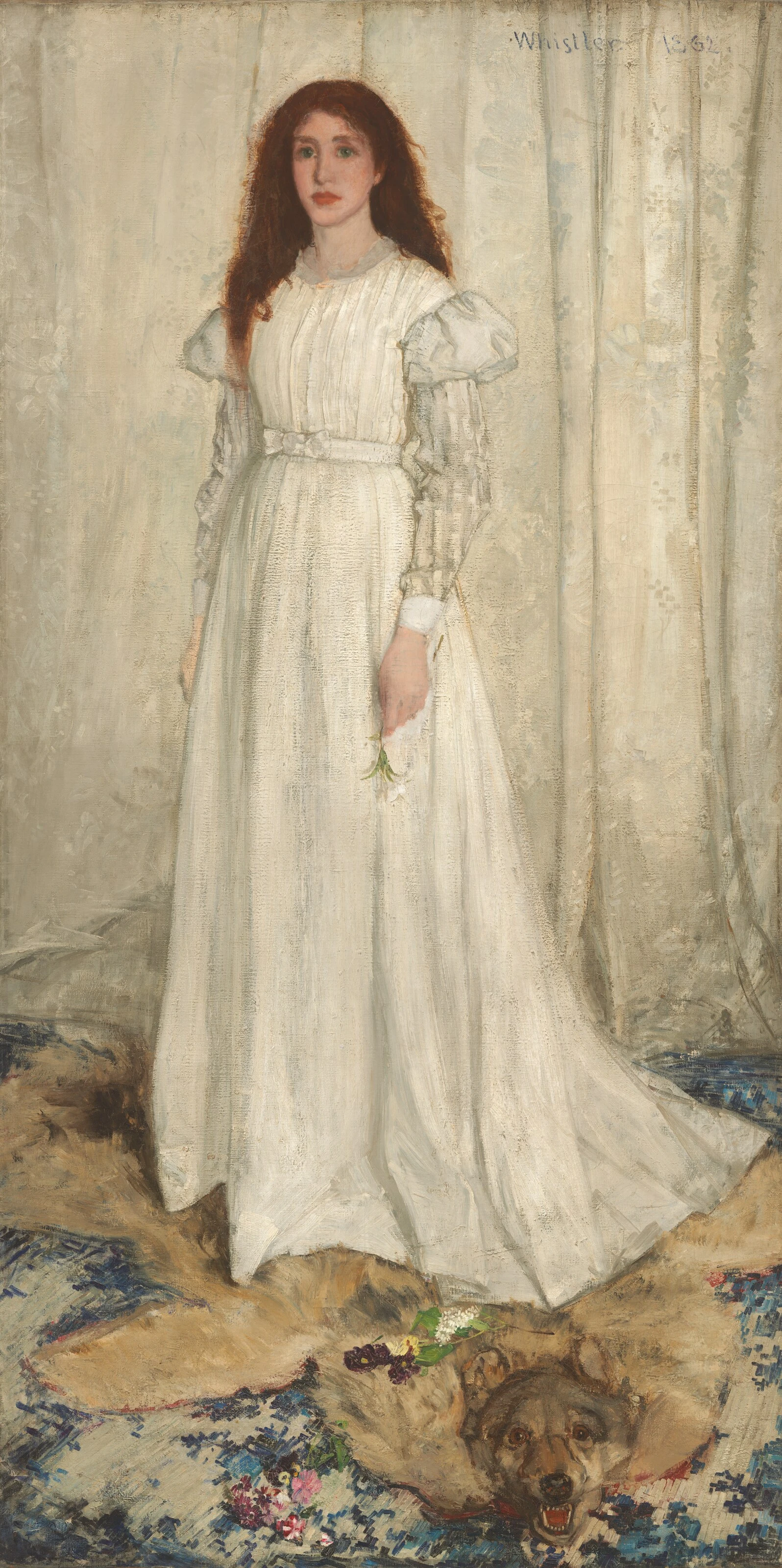
Jo was the model in The White Girl, later Symphony in White, No 1. Whistler submitted the painting to the Royal Academy. A large painting of an unknown lady not from the upper class? No literary scene, historical moment or Biblical episode? No moral lesson? Outrageous, Mr. Whistler. Outrageous. Surely, it cannot be just a girl in white. Why, it’s not even finished. The White Girl was rejected.
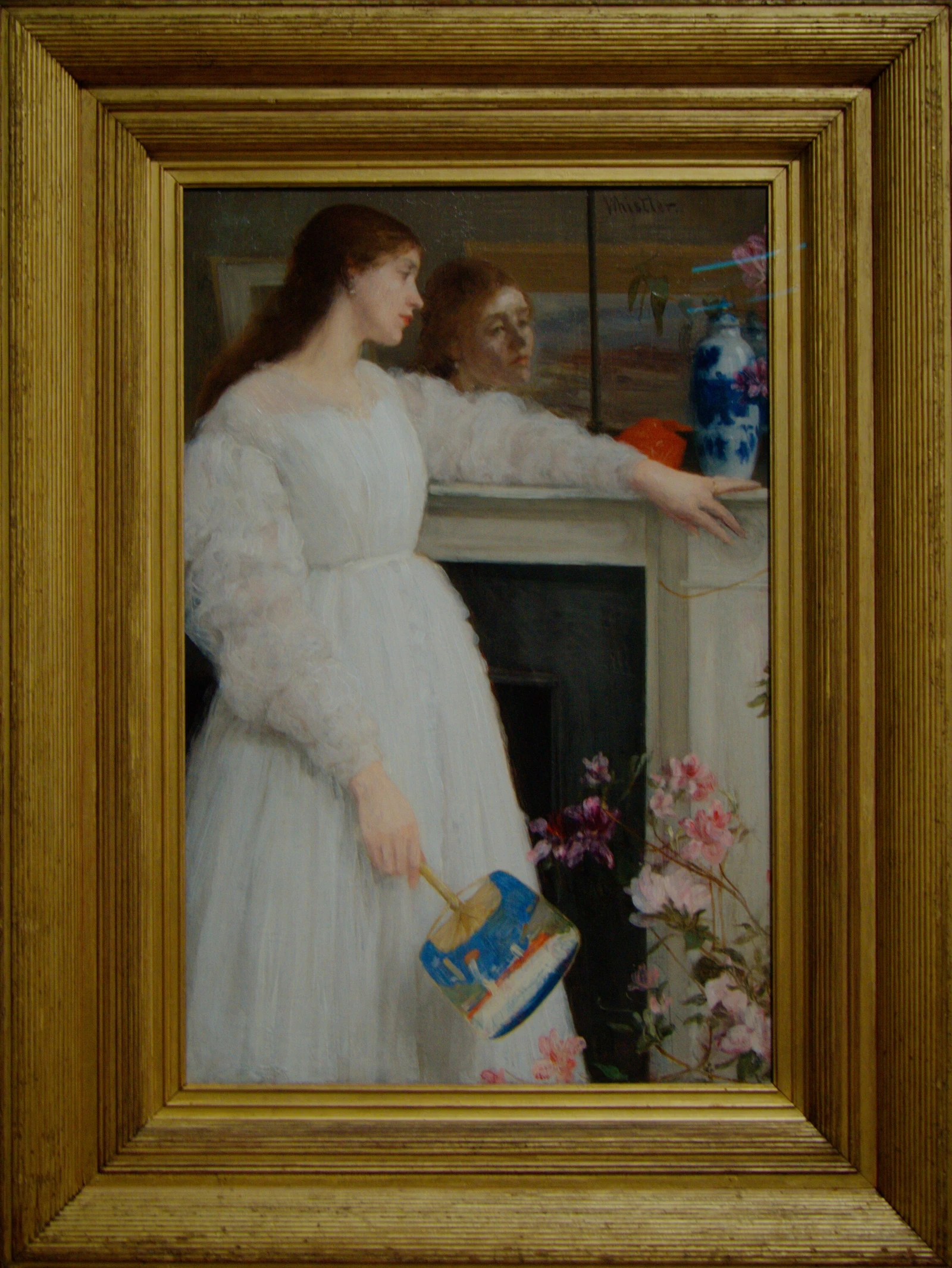
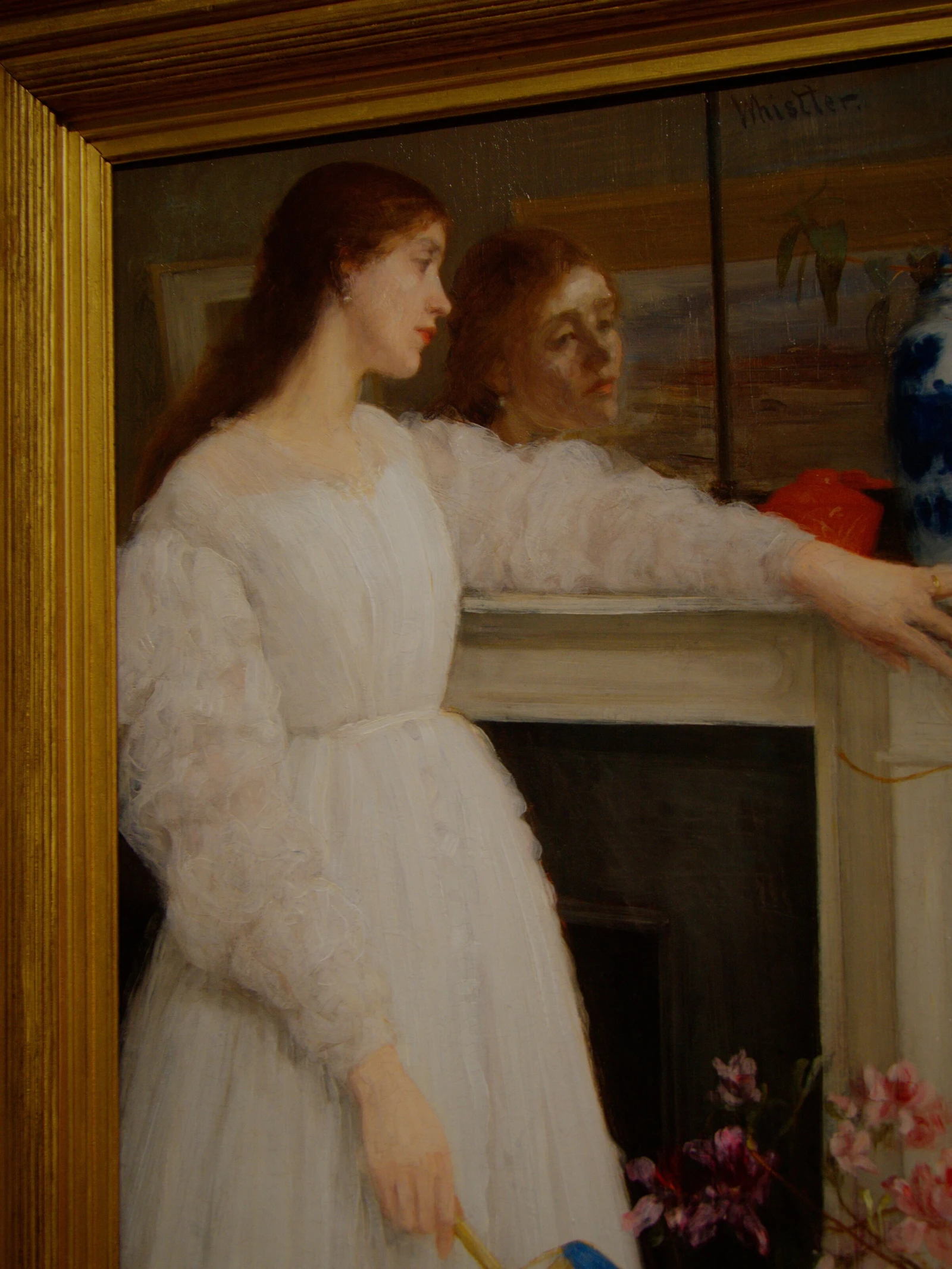
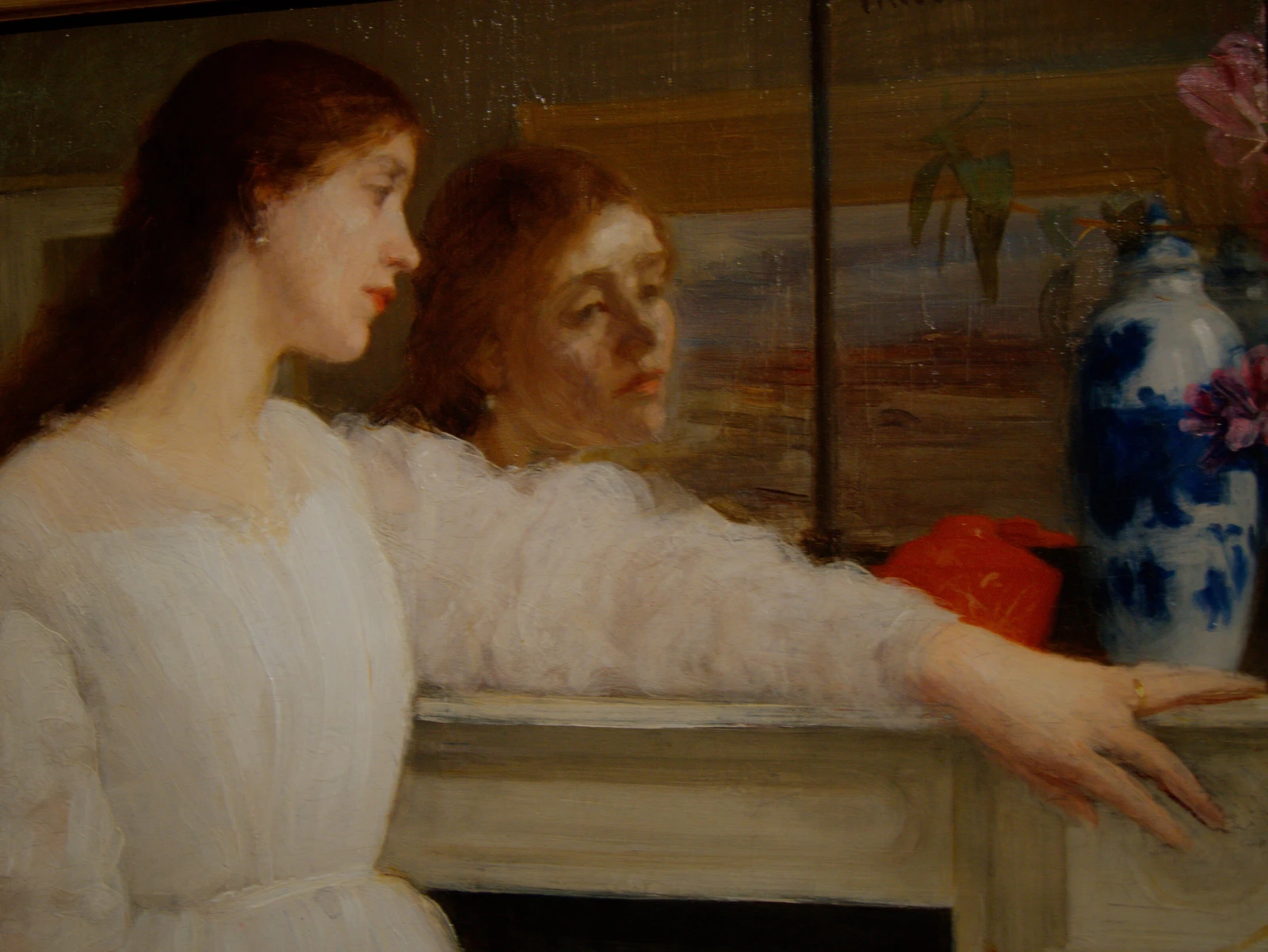
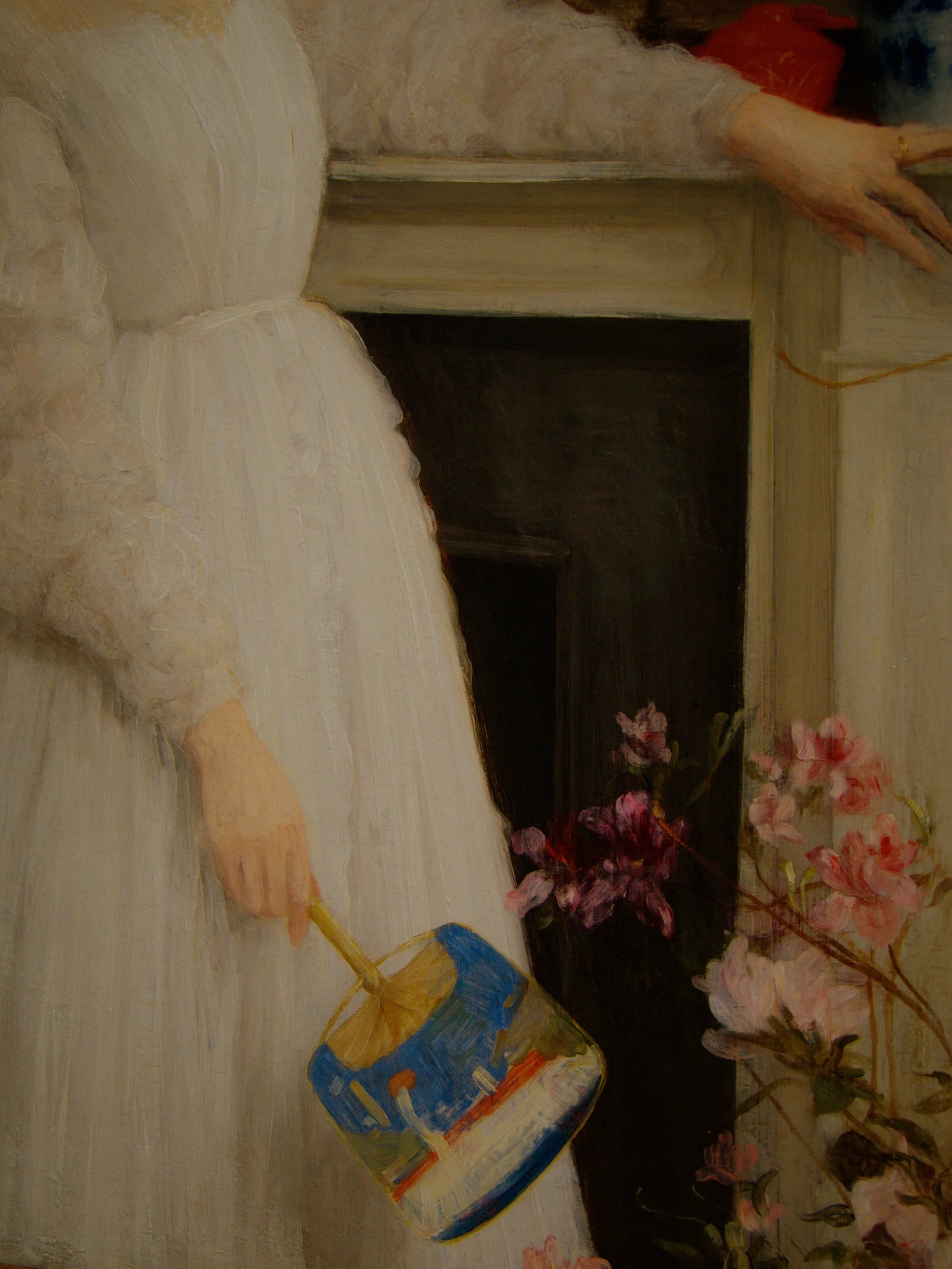
The Little White Girl, Symphony in White, No. 2, 1864
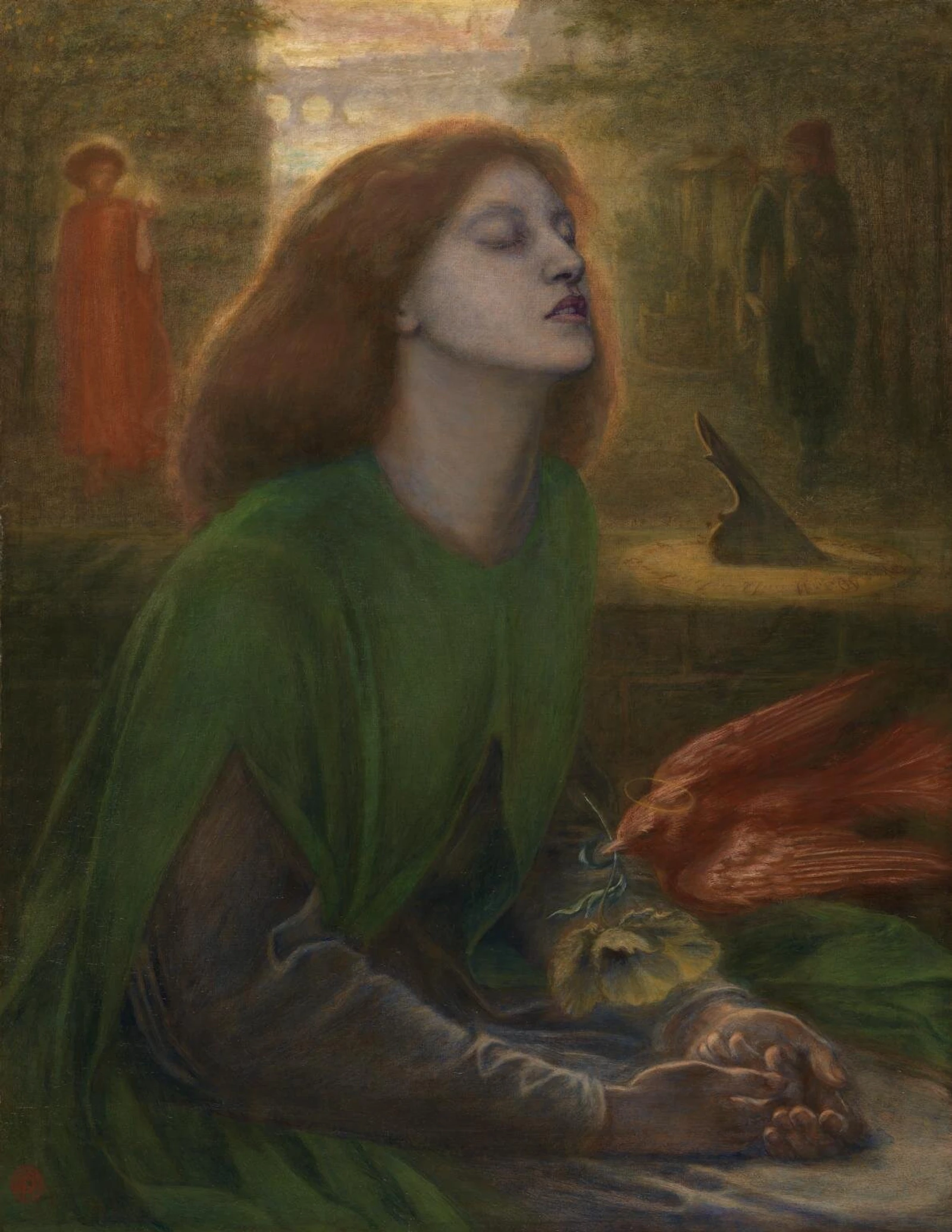
Whistler was hitting a wall and he wasn’t alone. Rossetti, Whistler’s friend and japonisme enthusiast, was an early member of the Pre-Raphaelite Brotherhood, a group of painters advocating for inspiration before Raphael, the Renaissance master. The Pre-Raphaelites revolted against the traditional and formulaic that was taken to be “good”.
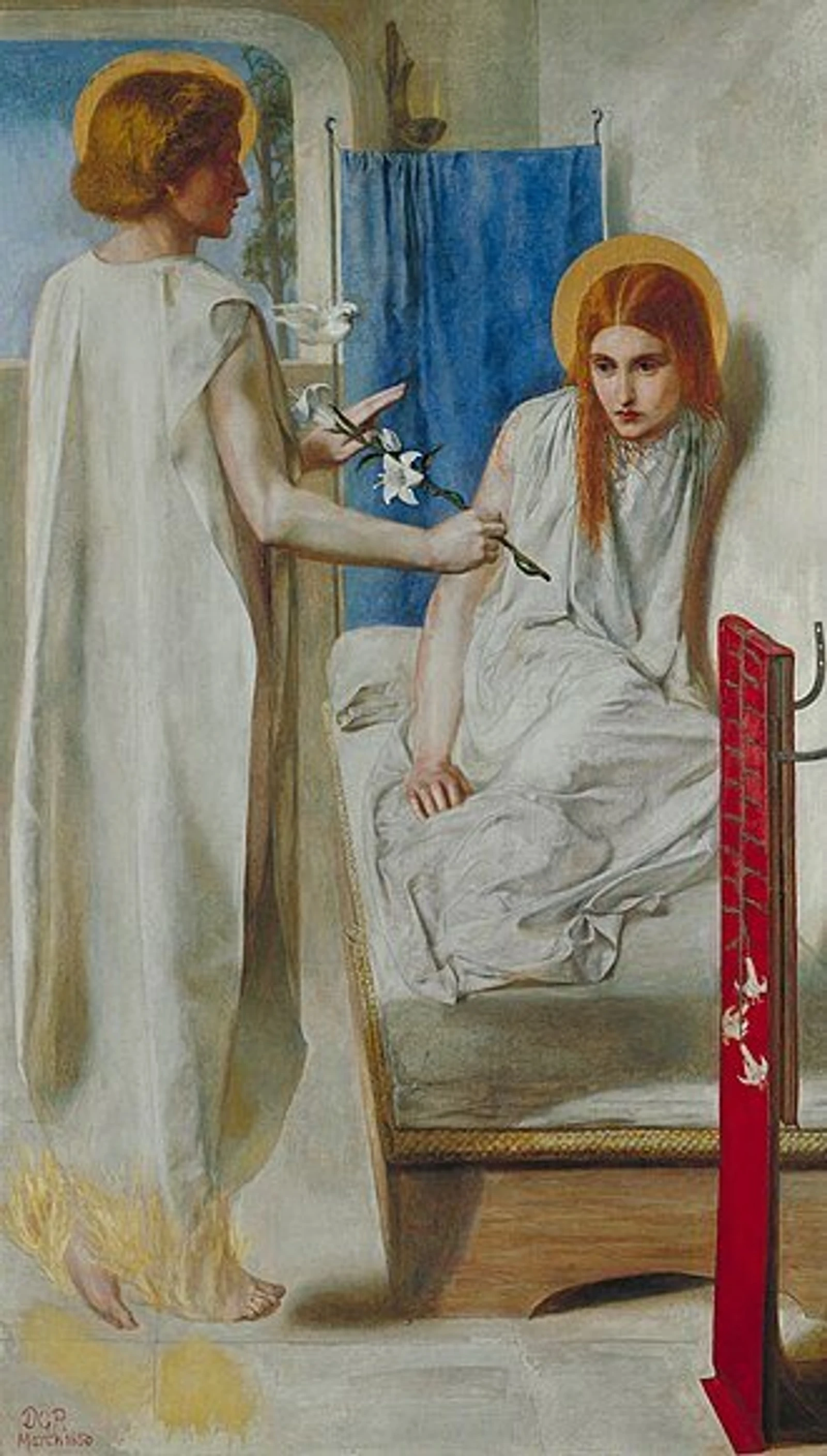
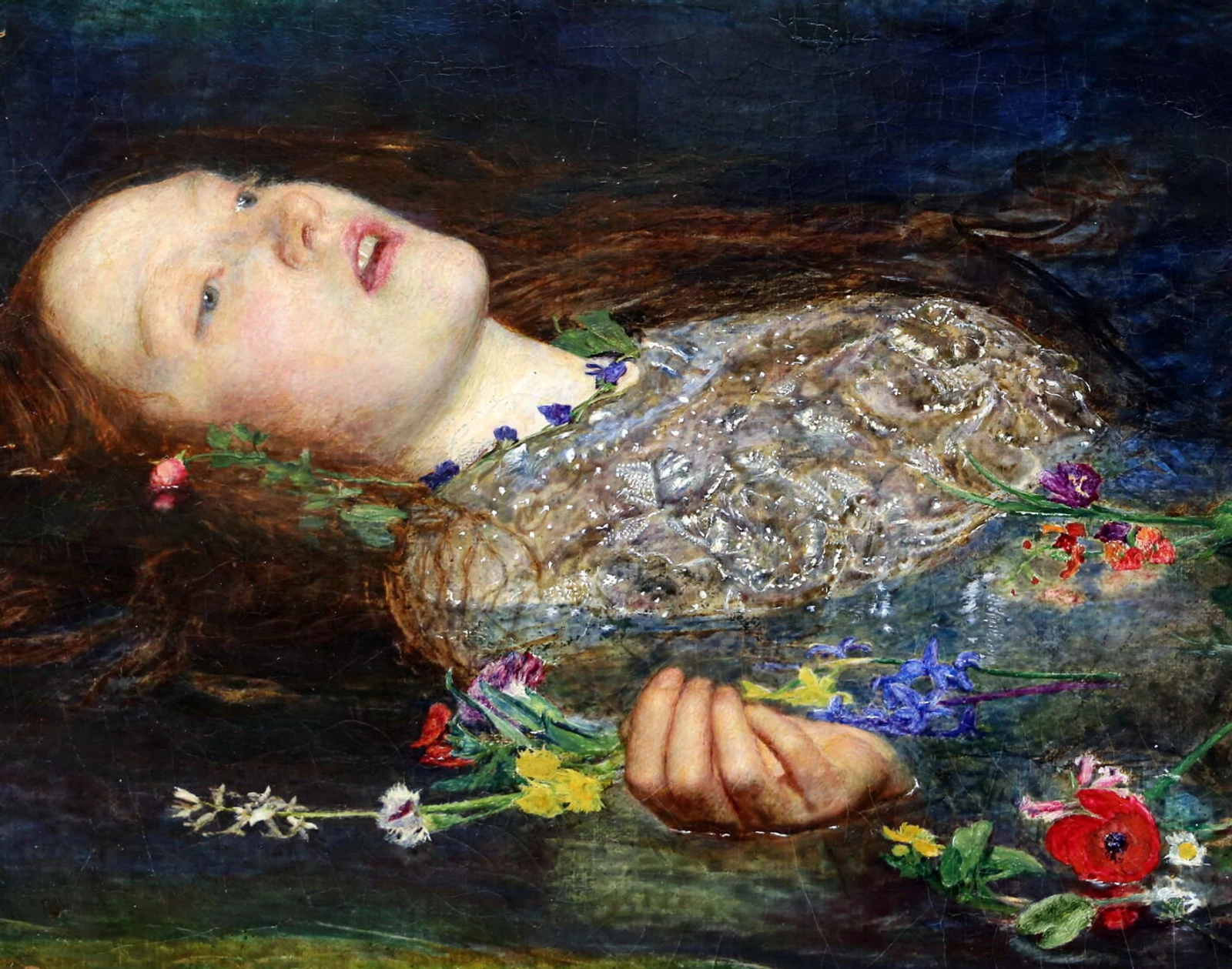
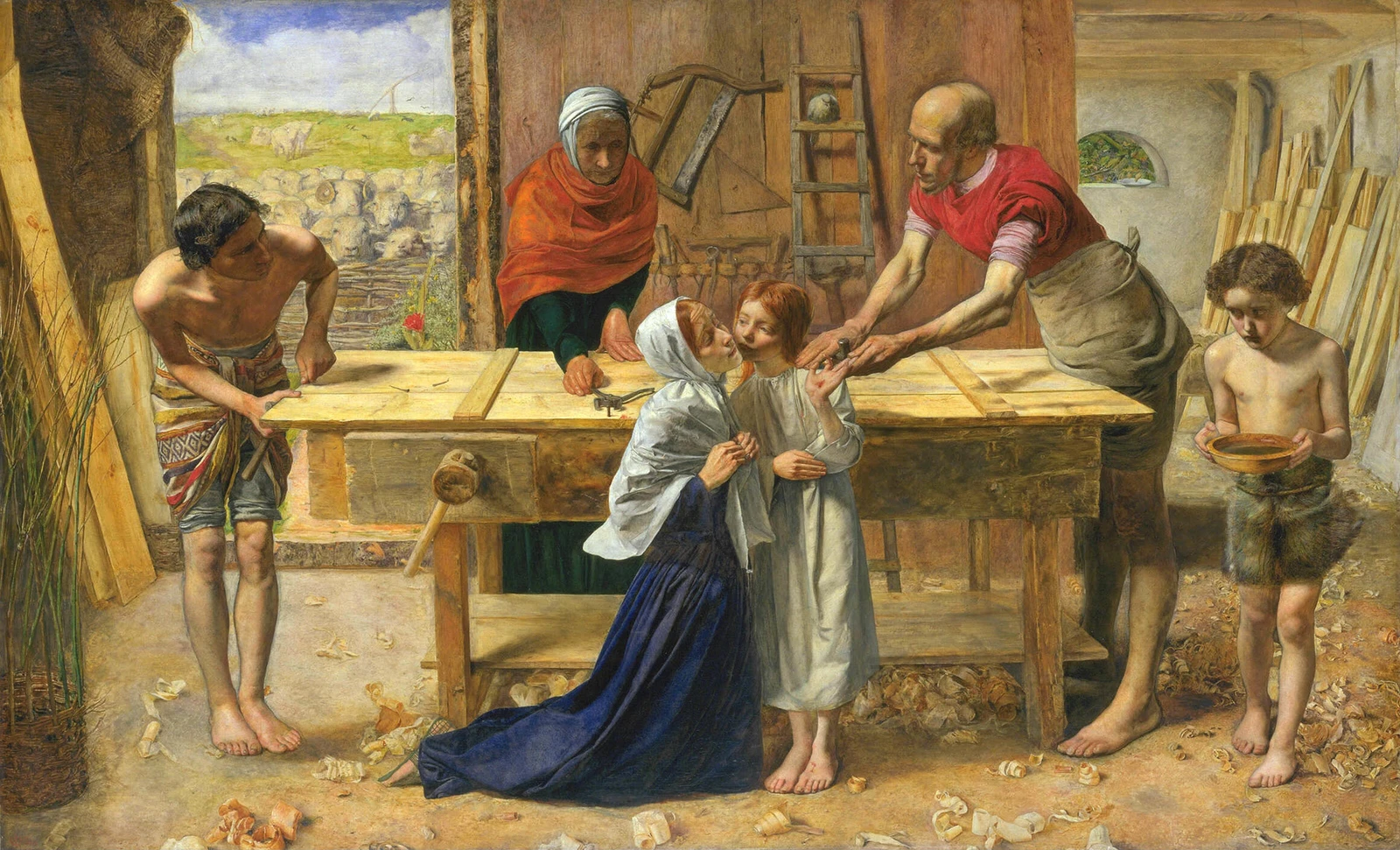
Ecce Ancilla Domini! Dante Gabriel Rossetti
An artistic turning point came in 1866, when Whistler joined a former Confederate H. H. Doty on an alleged torpedo mission in Valparaiso, where the Chileans relied on his three torpedo ships to fend off the Spanish blockade. Having arrived earlier than Doty, Whistler did the job that he was hired for: spying. He kept track of naval and diplomatic movements, listened in on conversations, acquainted himself with British officers and, of course, painted, taking his experiments in capturing atmosphere on canvas to a new level.
Whistler observed the port of Valparaiso from a distance. I try to follow suit by standing 5m away and contemplating a Spanish cannon blasting any minute.
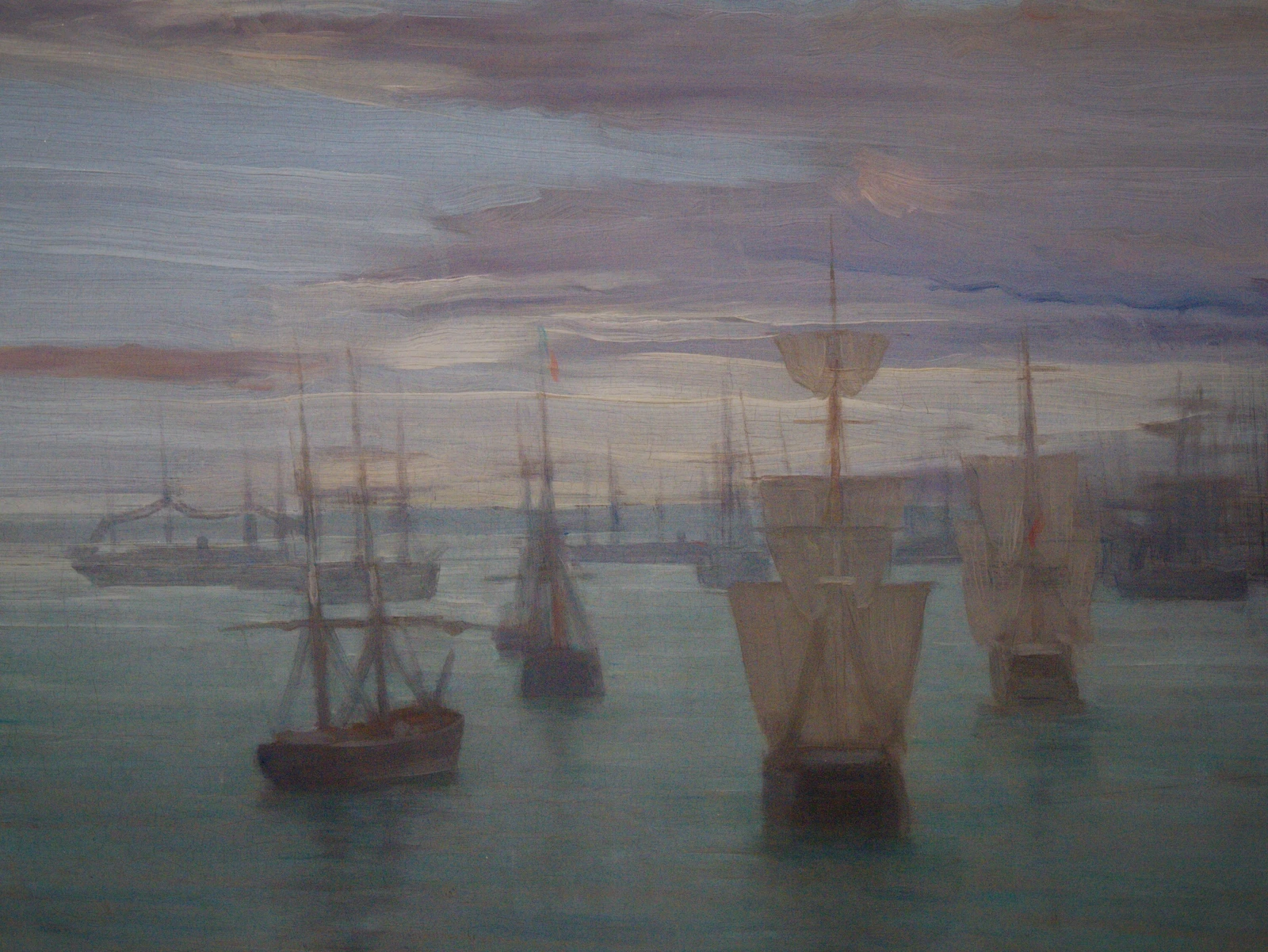
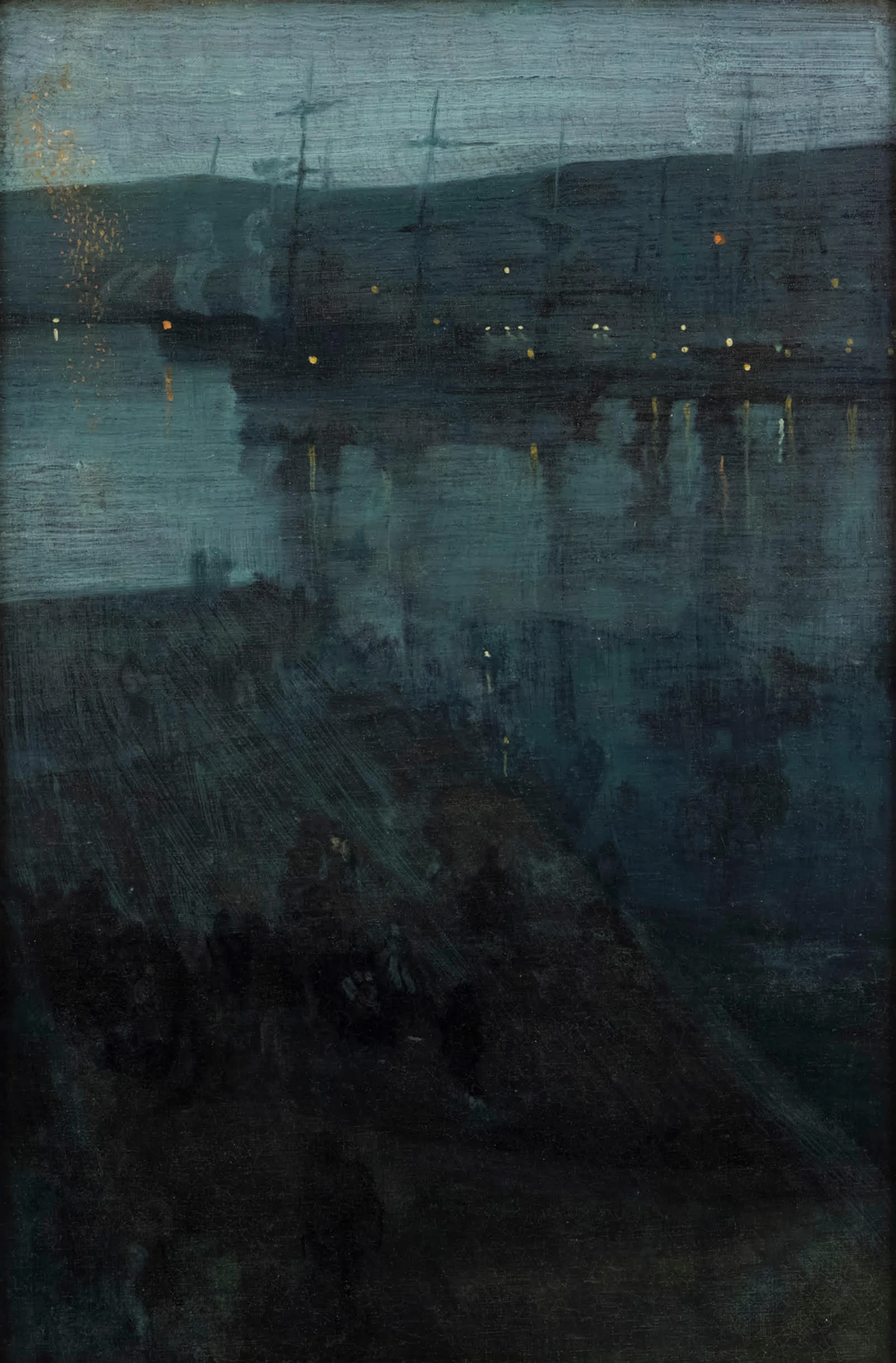
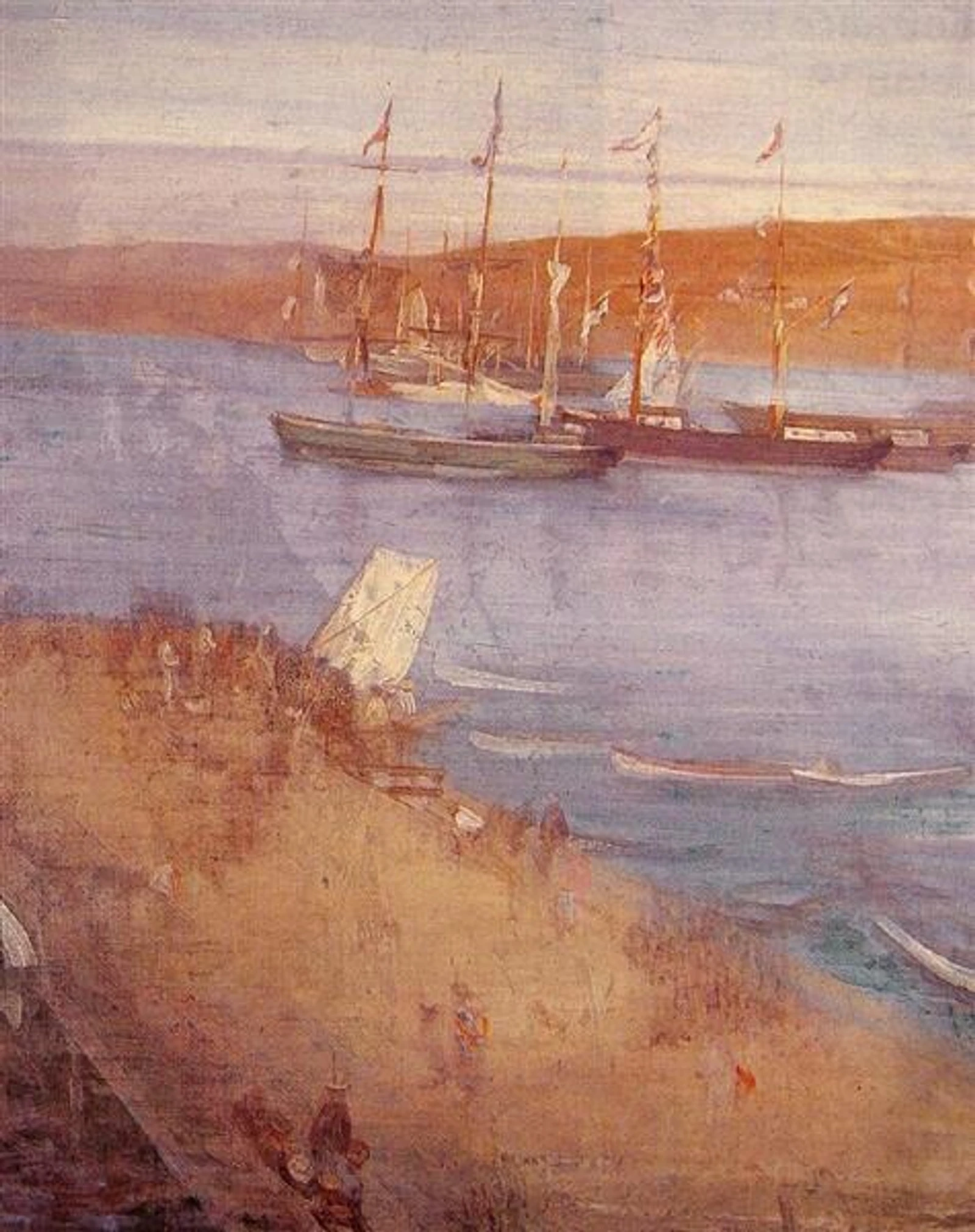
Whistler’s Valparaíso paintings are supposedly the few visual records of the Spanish blockade.
As tensions built up, the Spanish fleet bombarded the port, though causing few casualties as most fled to the hills. Declaring victory, the Spanish set off to Peru and then home. Four months after Whistler’s arrival, Doty arrived late to the party with his torpedoes, which nobody had any use for anymore. The two fell out, Doty accusing Whistler of seducing his wife and booked separate returns to England. On the way back, the painter got into fights with other passengers due to his racial prejudices (Whistler openly held racist views at the time, sympathetic to the Confederate cause). His secret agent career ended at Waterloo Station, where Doty waited for him to get into yet another fight: “This is Whistler the Artist, a scoundrel, a seducer, a betrayer of his trust, mark him.”
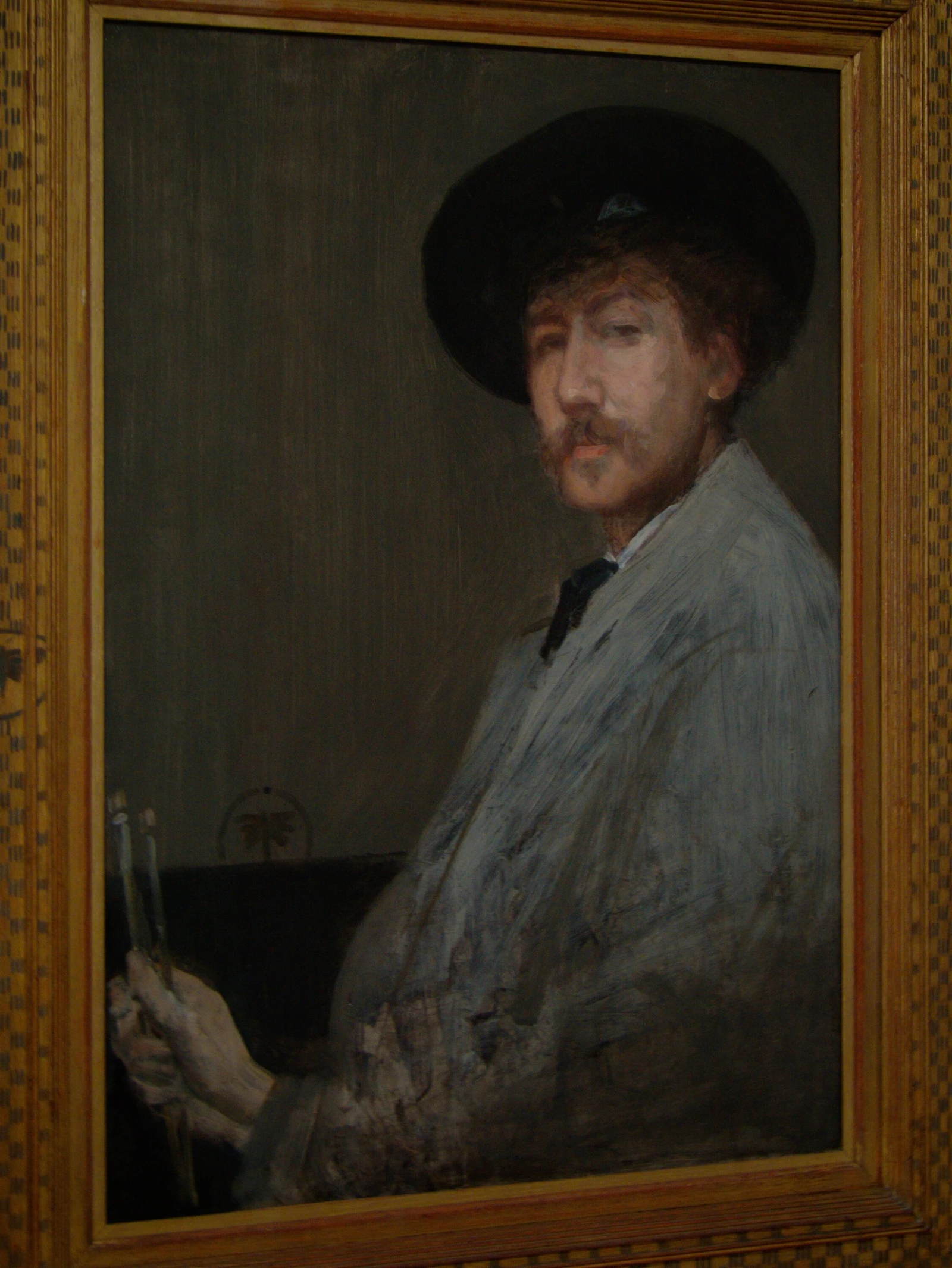
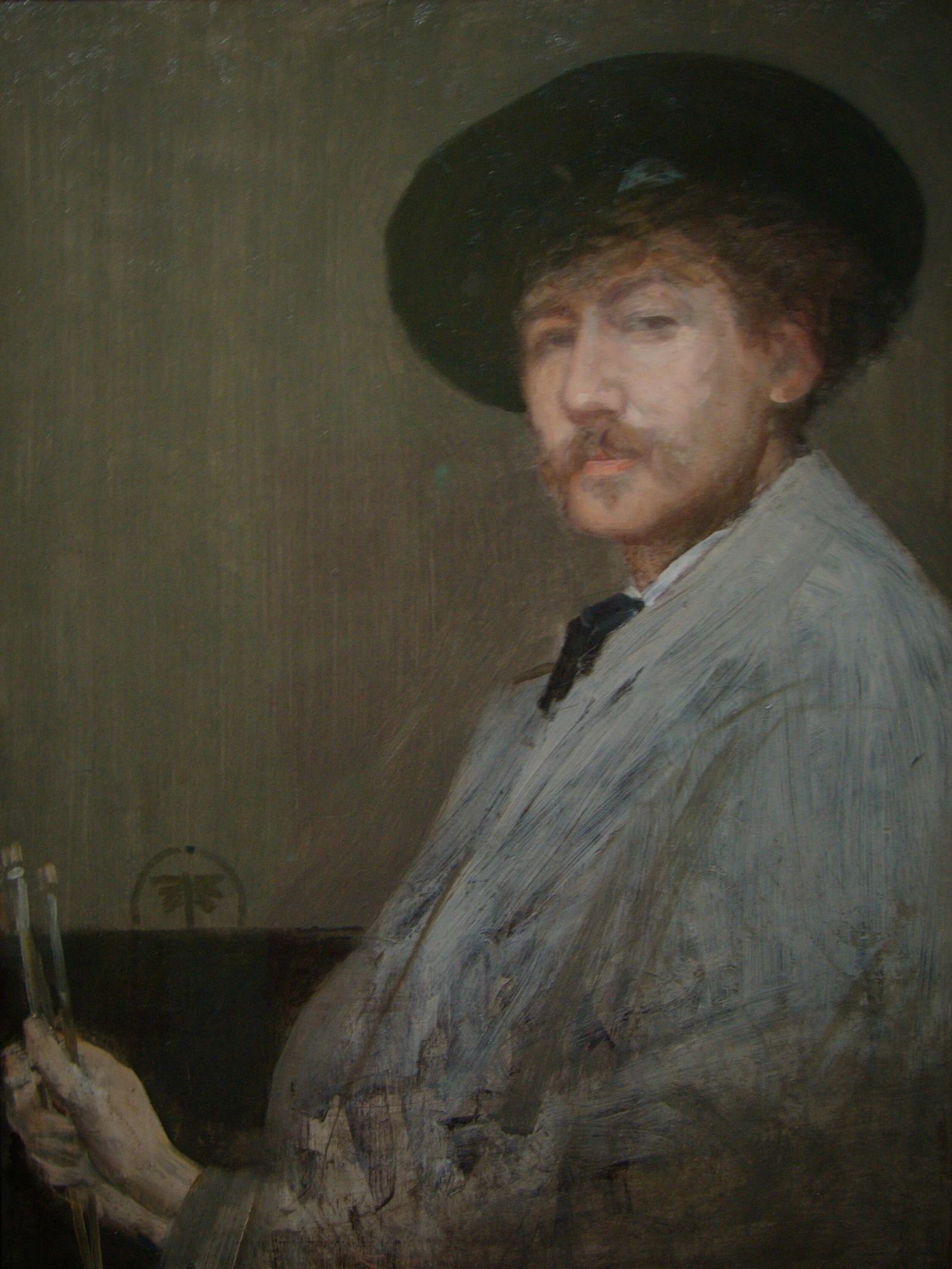
Arrangement in Grey: Portrait of the Painter, 1872
Private and public feuds became a ritual. He fell out with his brother-in-law, then with his patron, the magnate Frederick Leyland, for turning his dining room into a “Peacock Room” by spending lavishly on a complete redecoration. He opened exhibition catalogues with the negative comments of critics and later in life published “The Gentle Art of Making Enemies”, a memoir of all of his fights. Whistler understood the benefits of publicity, whether good or bad.
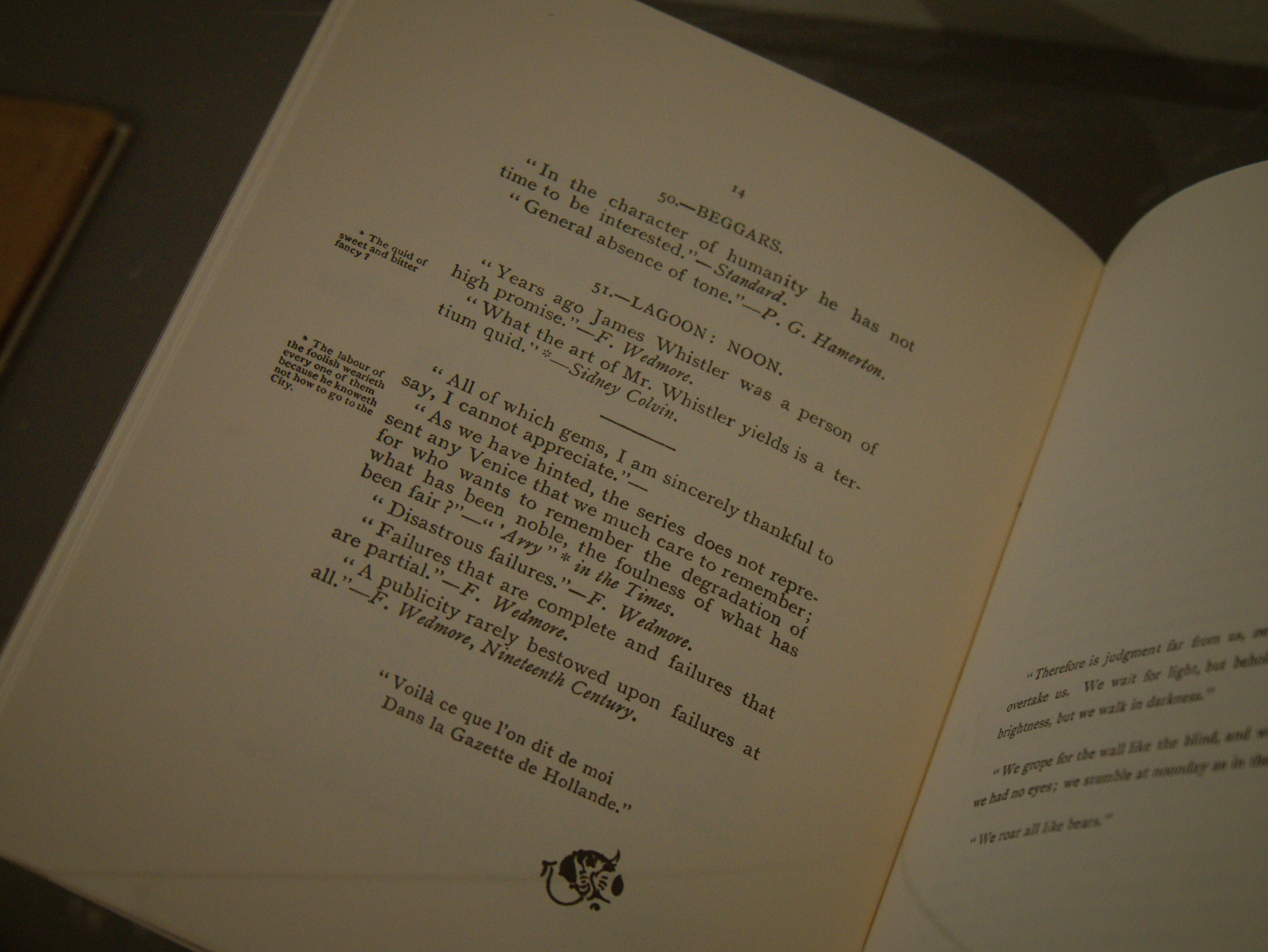
Whistler sued John Ruskin for libel in 1877. The established art critic had reviewed Nocturne in Black and Gold: The Falling Rocket: “I have seen, and heard, much of Cockney impudence before now; but never expected to hear a coxcomb ask two hundred guineas for flinging a pot of paint in the public’s face.”
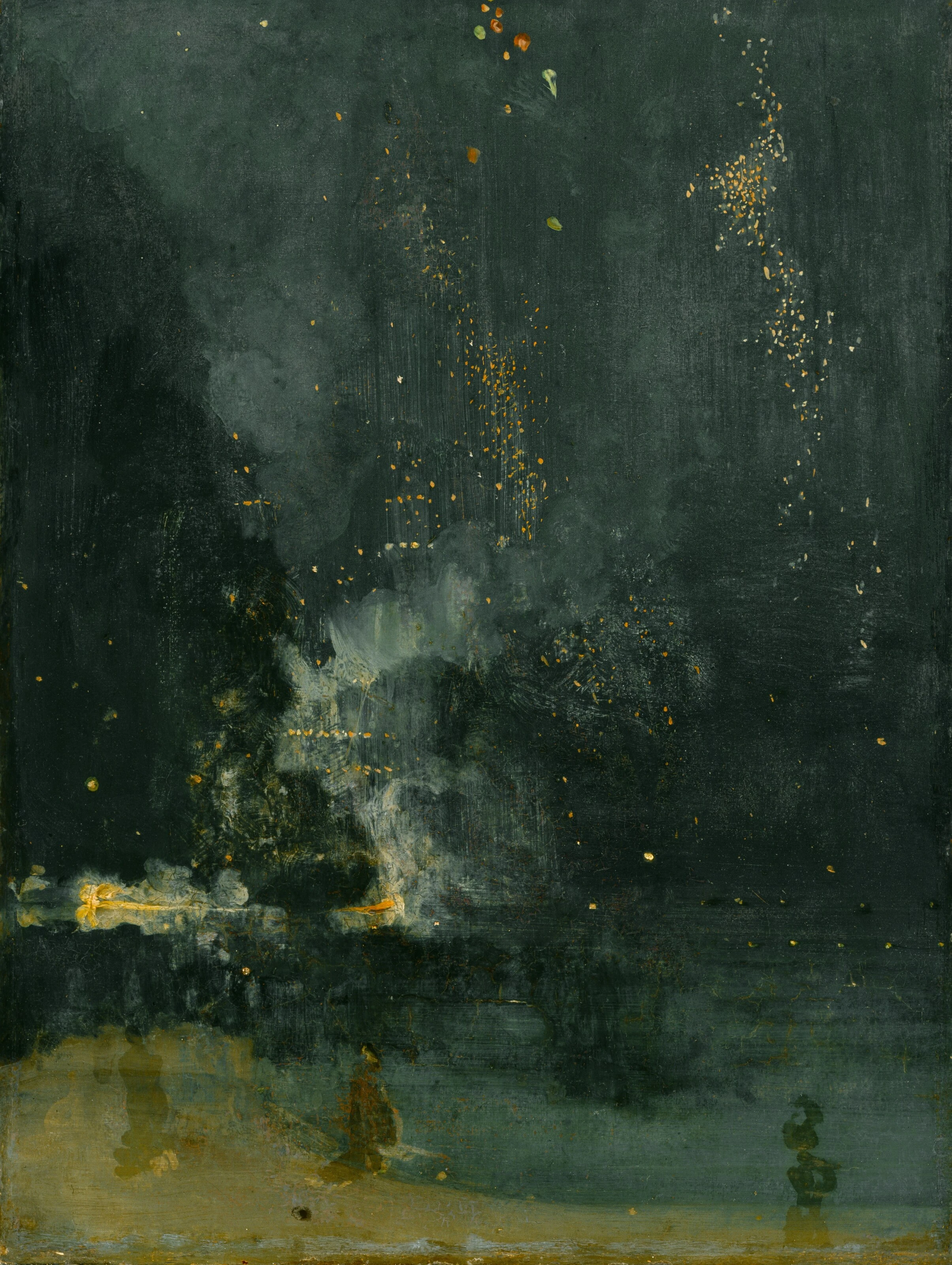
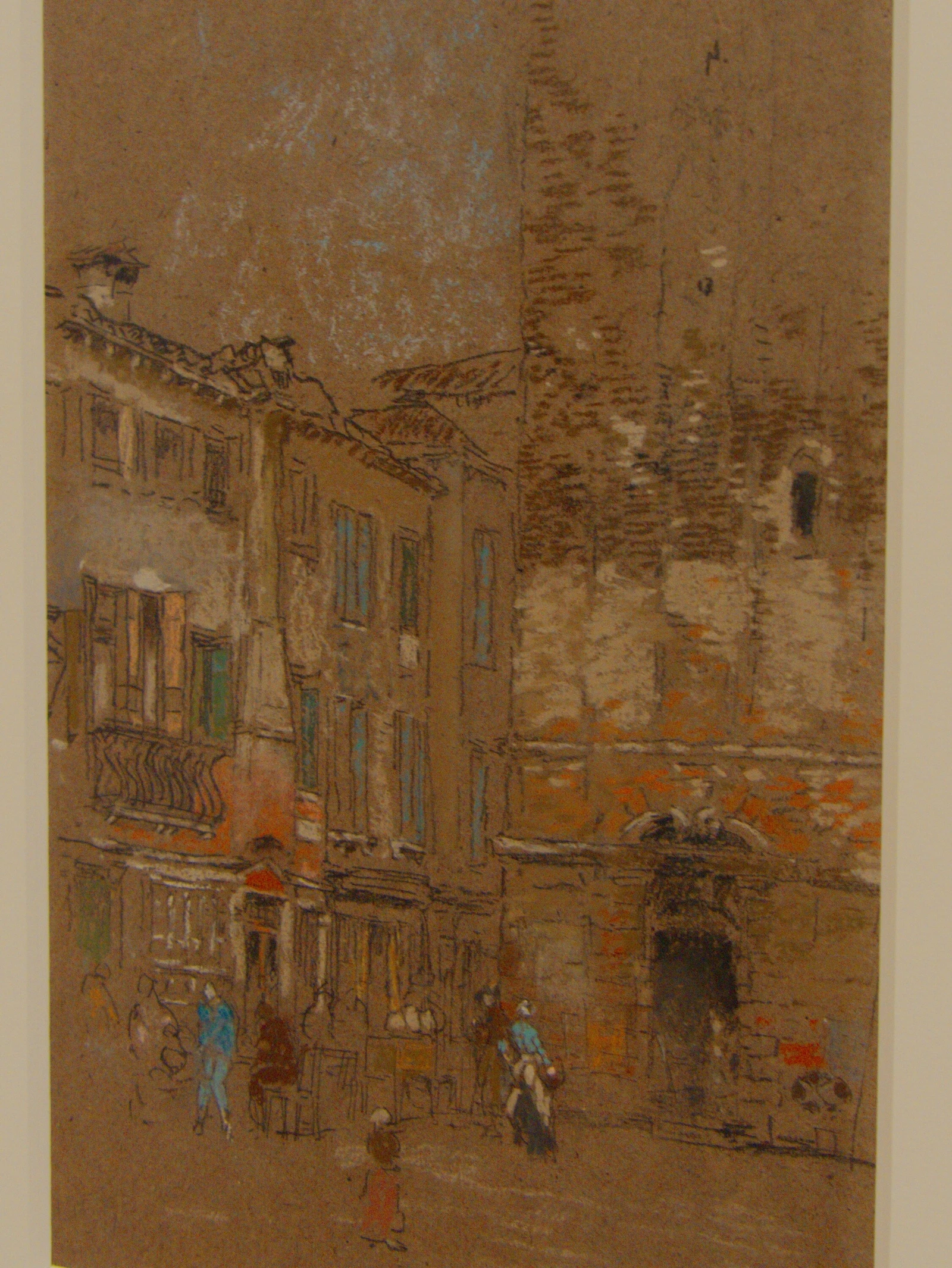
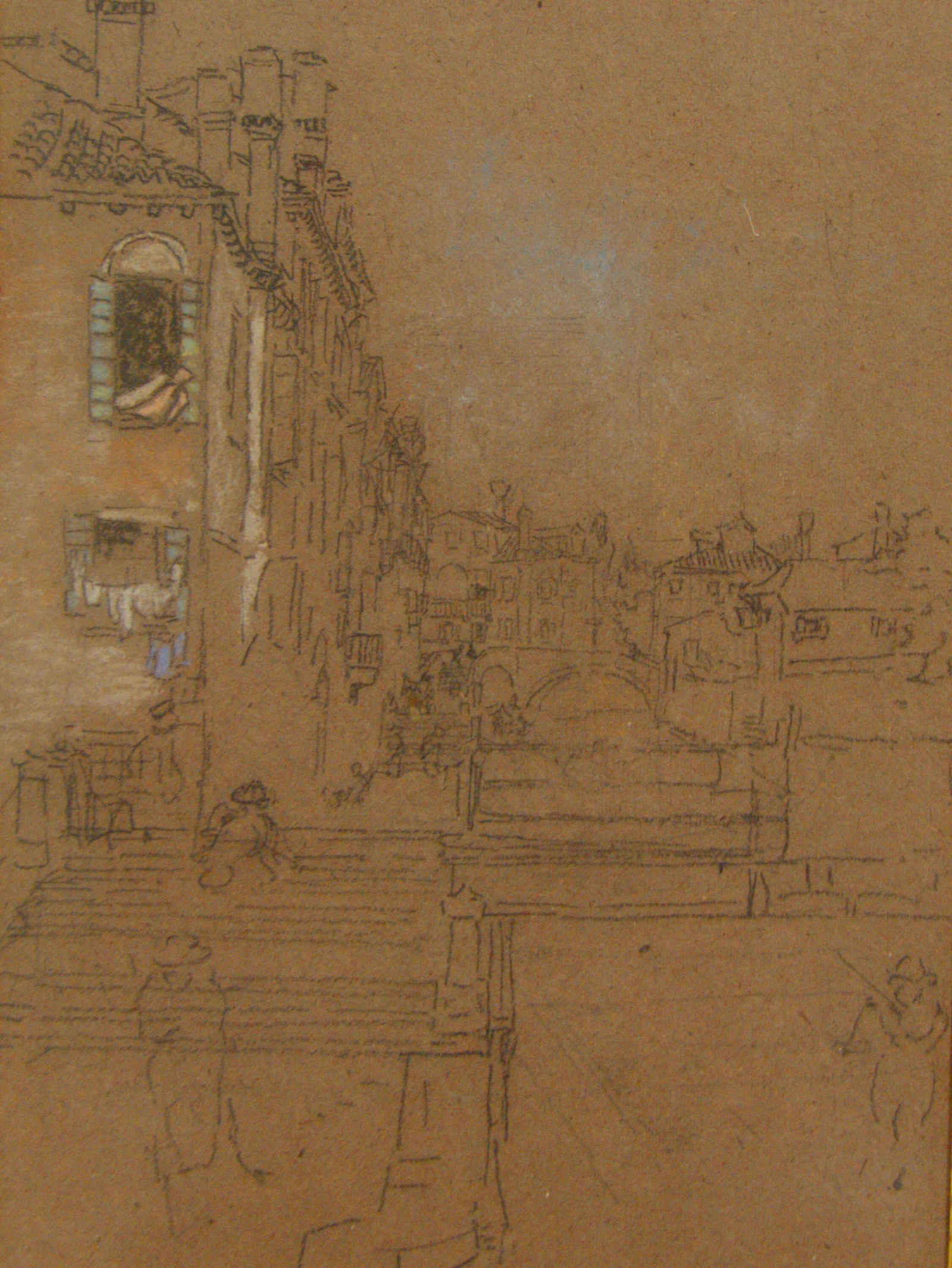
Ha ha! It was Whistler who laughed at the end of the trial. Yet, the legal fees amounted to more than the nominal 1 farthingthe equivalent of 15-20 pence in today’s money won in damages. His house, studio and paintings were auctioned off. Forced to reinvent himself, he set off to Venice on a commission and returned after 18 months with 200 etchings and pastels, an even greater appetite for controversy and, as you can expect, meager finances.
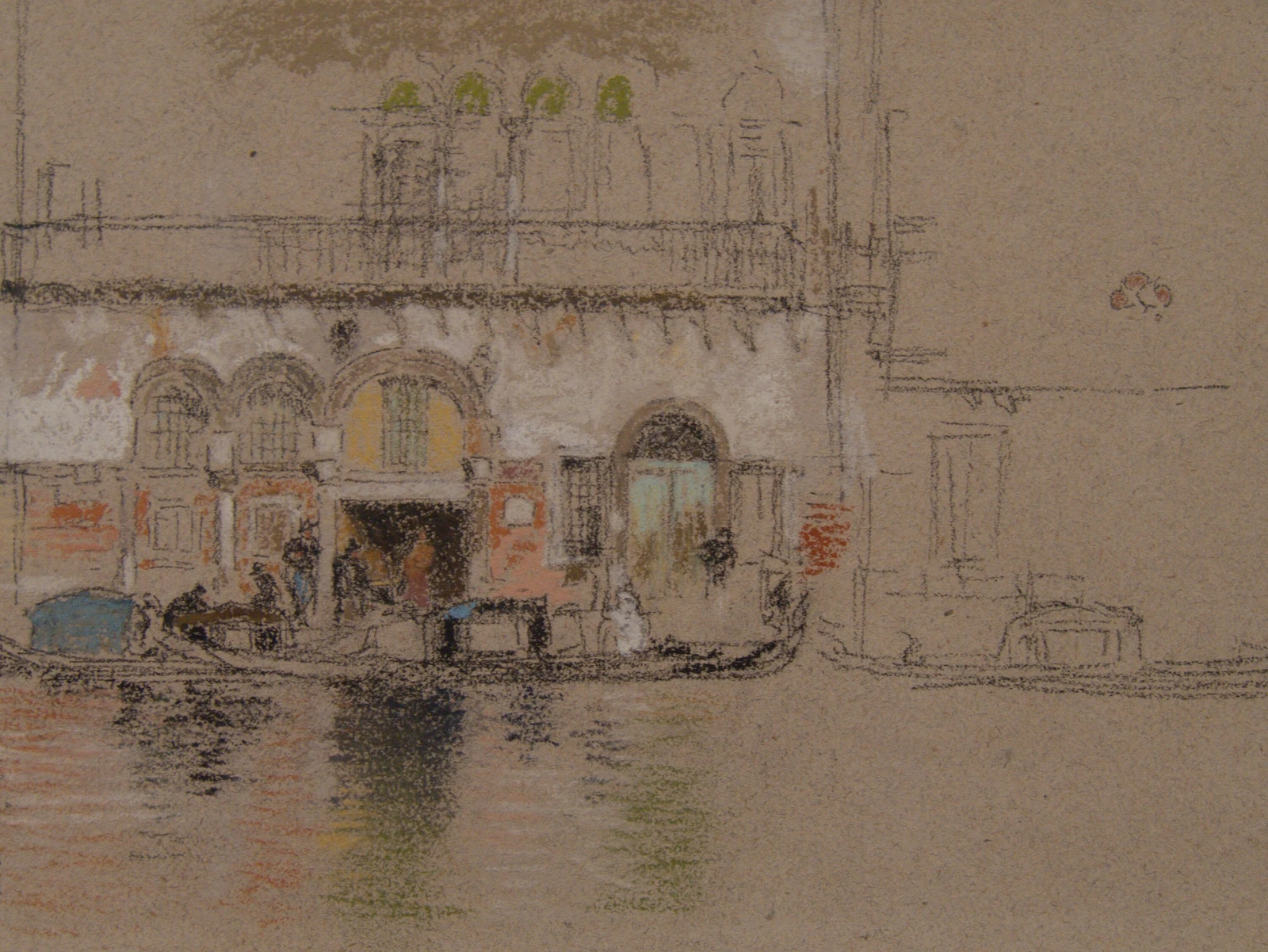
The Palace, White and Pink
The picture should have its own merit, and not depend upon dramatic, or legendary, or local interest.
Art for art’s sake, independent of morals, utility, narrative or public approval — that was Whistler’s credo. Later in life, he delivered his famous Ten O’Clock lecture at Prince’s Hall, Piccadilly and would consistently get into private and public disputes with anyone he disagreed with.
Why should not I call my works “symphonies,” “arrangements,” “harmonies,” and “nocturnes”? I know that many good people think my nomenclature funny and myself “eccentric.” Yes, “eccentric” is the adjective they find for me. The vast majority of English folk cannot and will not consider a picture as a picture, apart from any story which it may be supposed to tell.
Whistler combined his initials, J and W, into a butterfly with a sting tail, signing both letters and paintings. Were I an entomologist, I’d have a rather difficult time in classifying him.
As music is the poetry of sound, so is painting the poetry of sight.
My favourite room of the exhibition contains the Nocturnes. Frederick Leyland suggested the name after Chopin’s Nocturnes, so I plug in my headphones to accompany the paintings.
Chopin — Nocturne No. 1
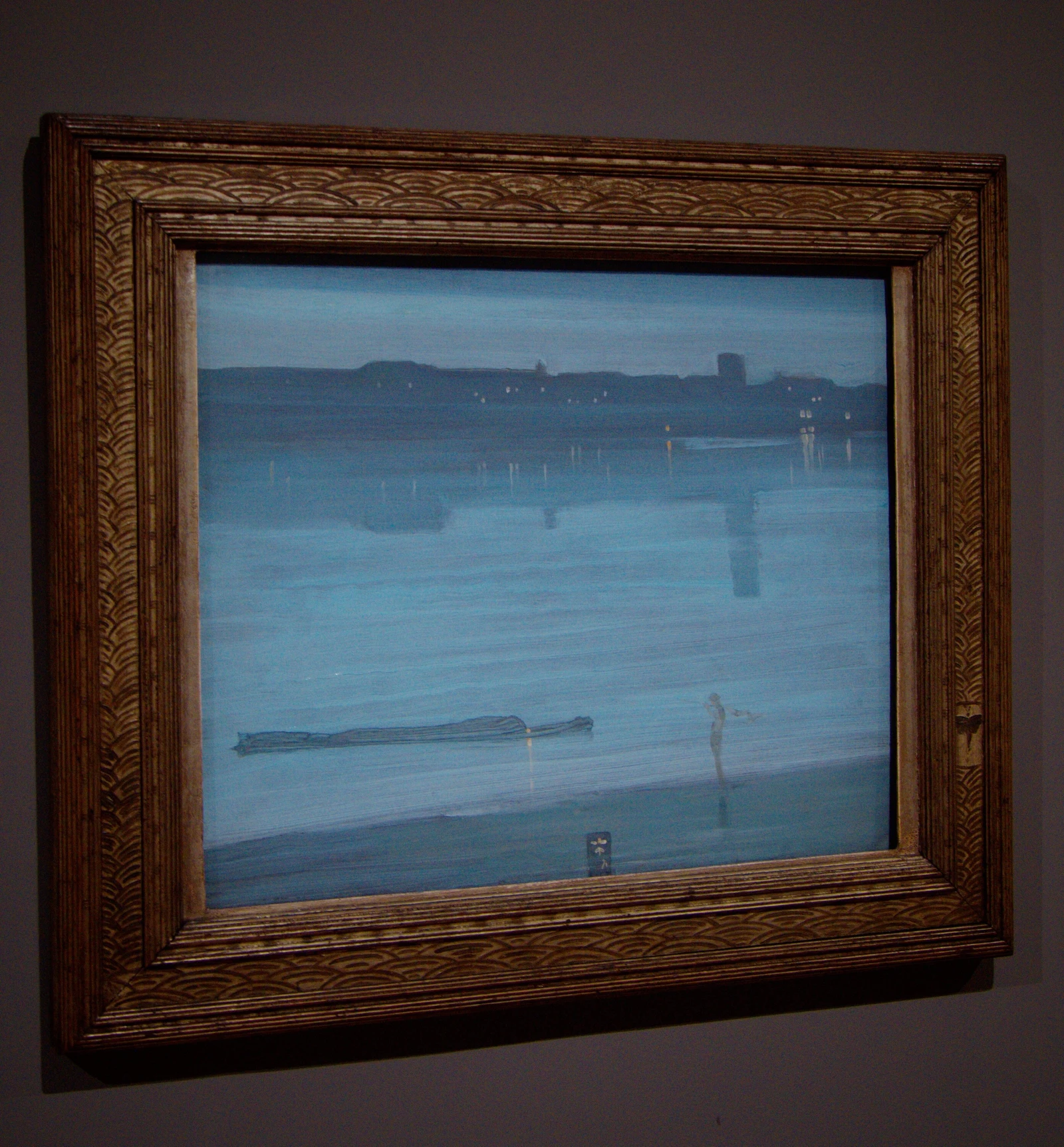
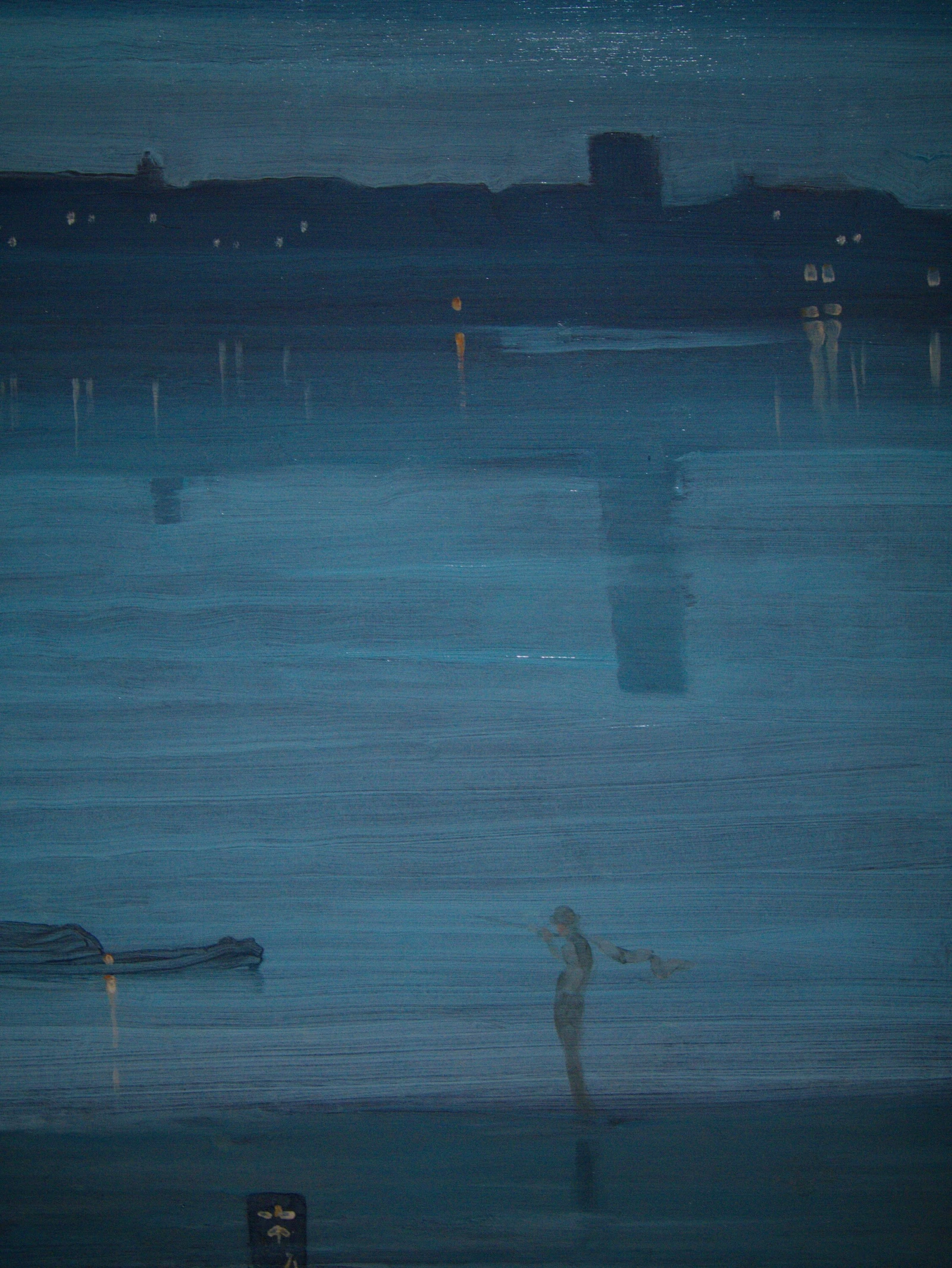
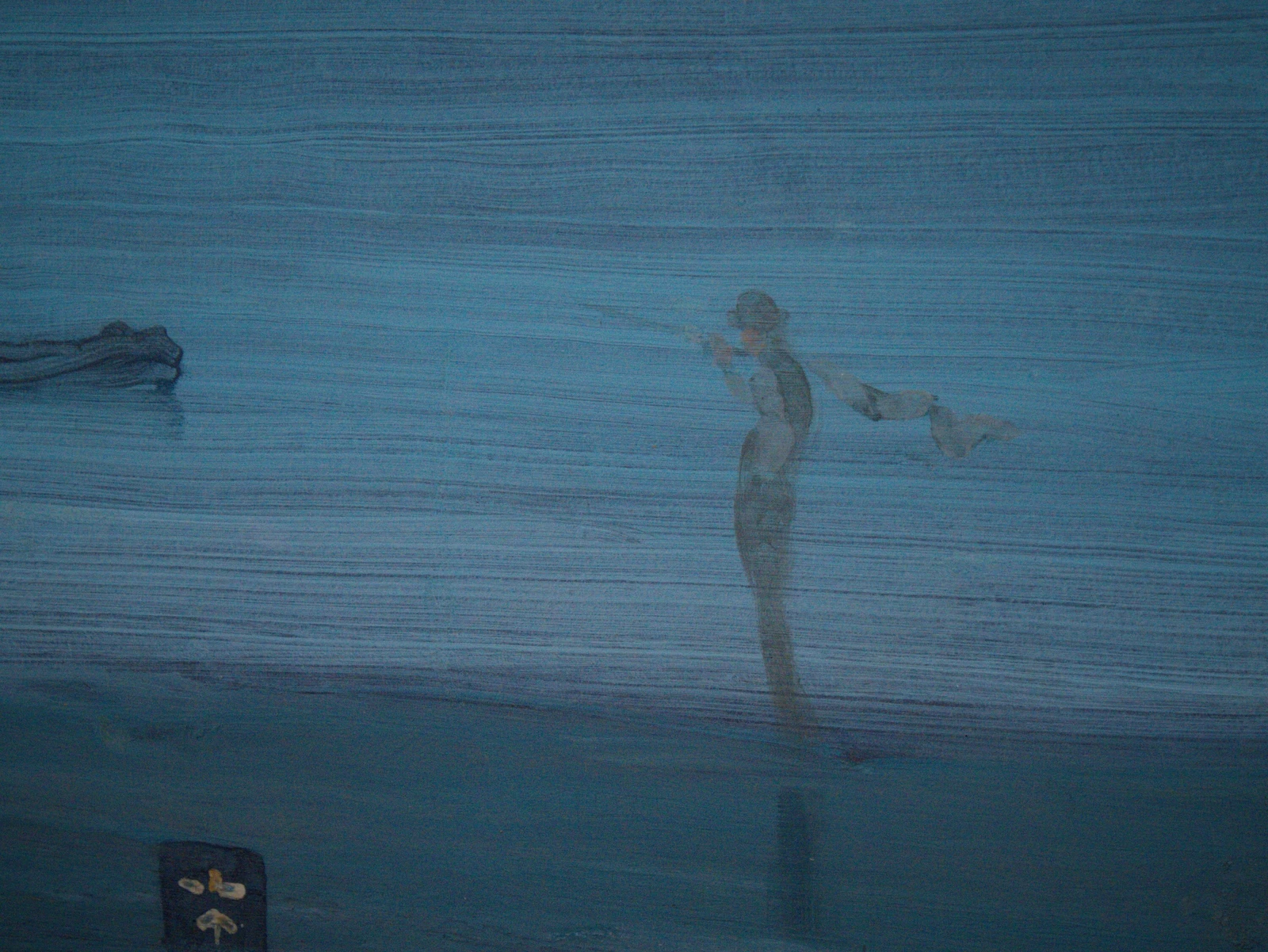
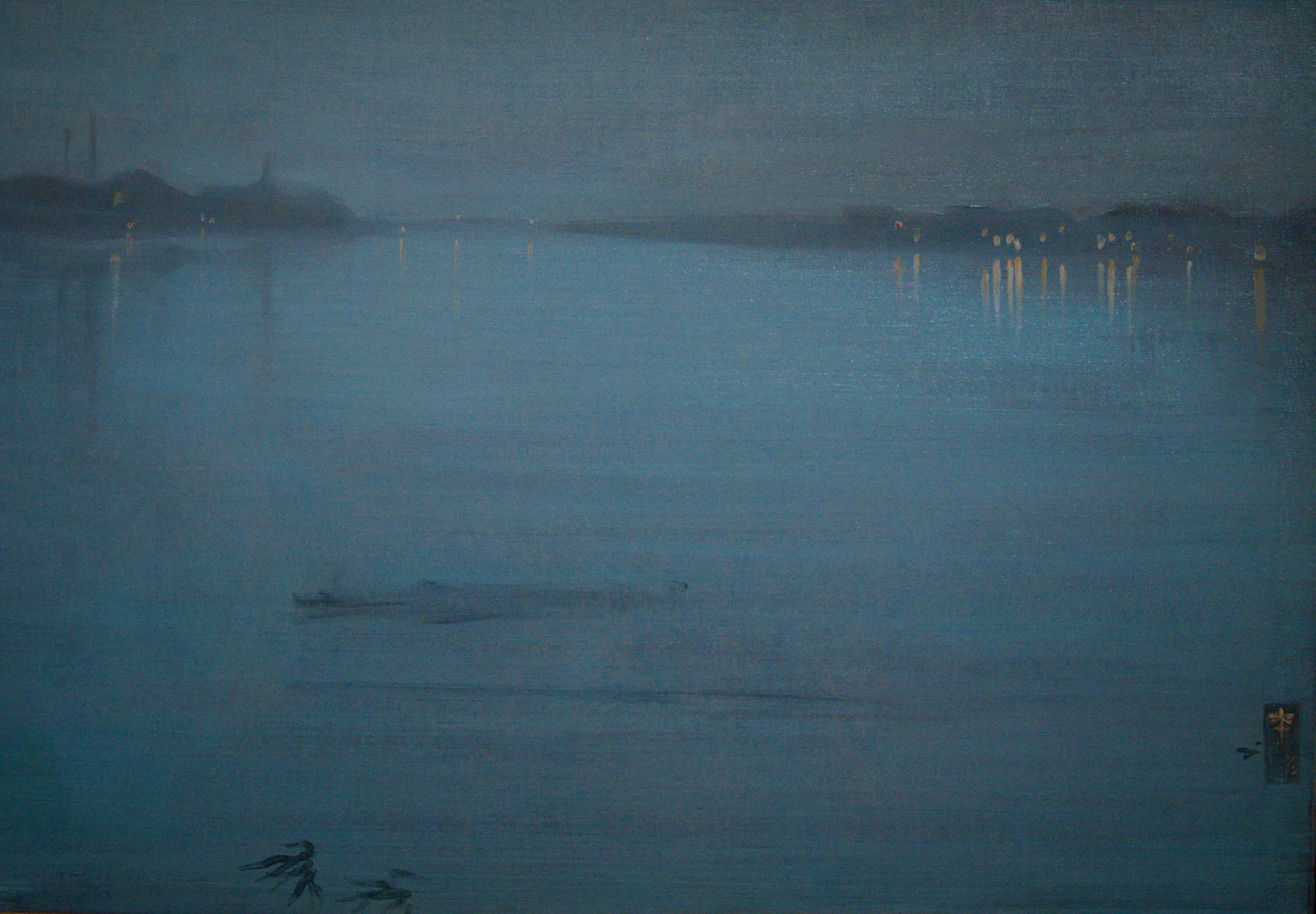
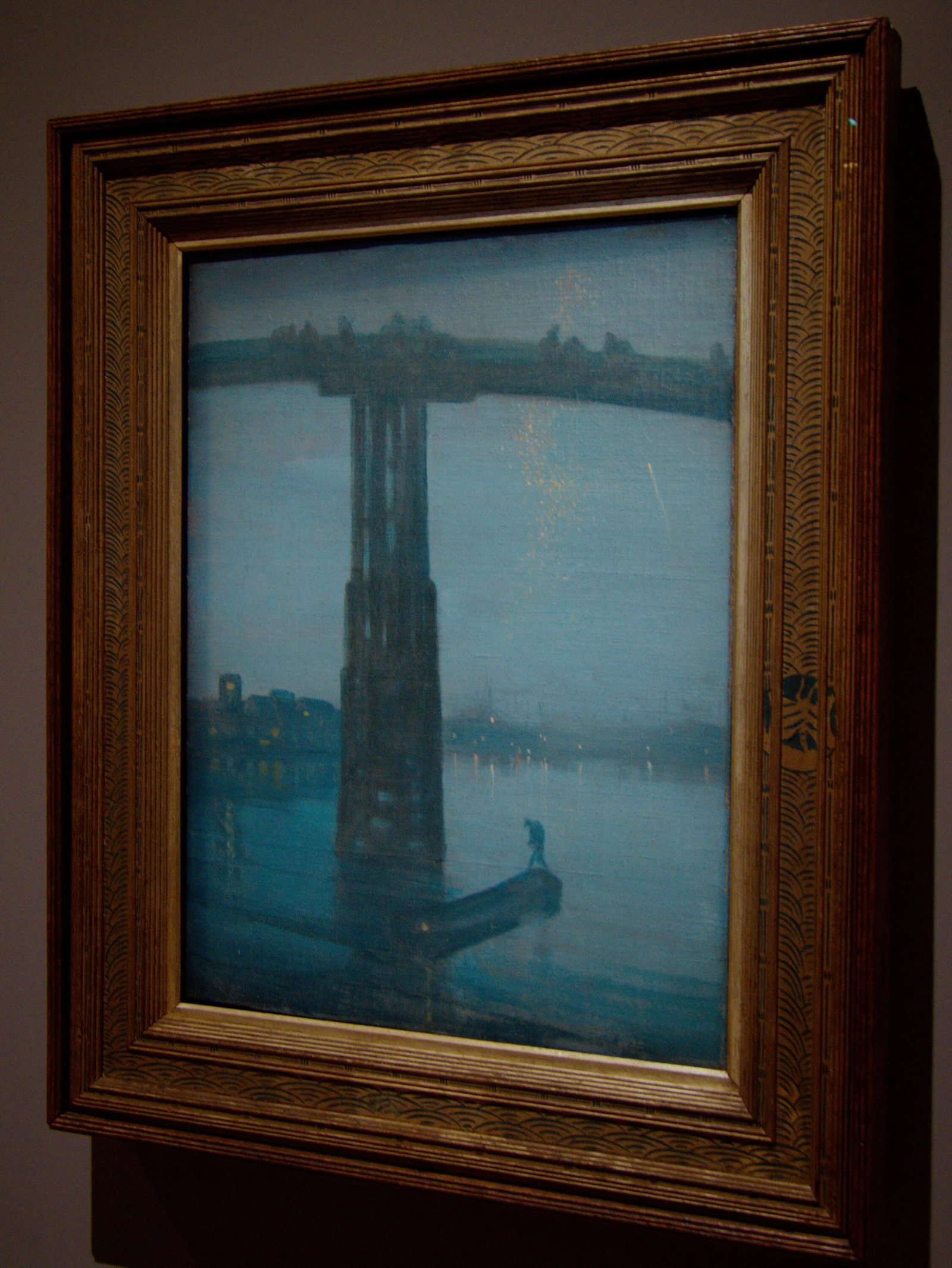
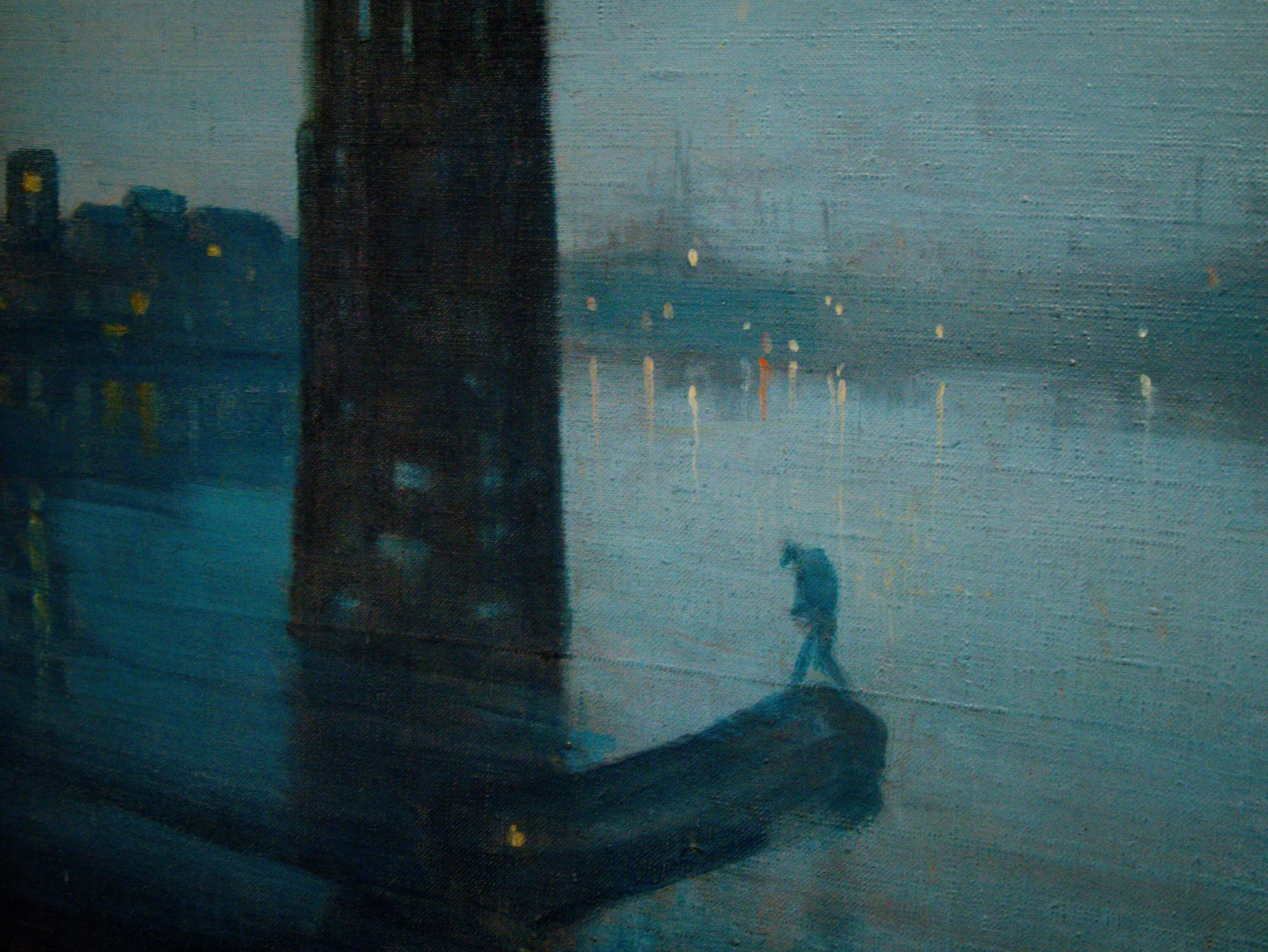
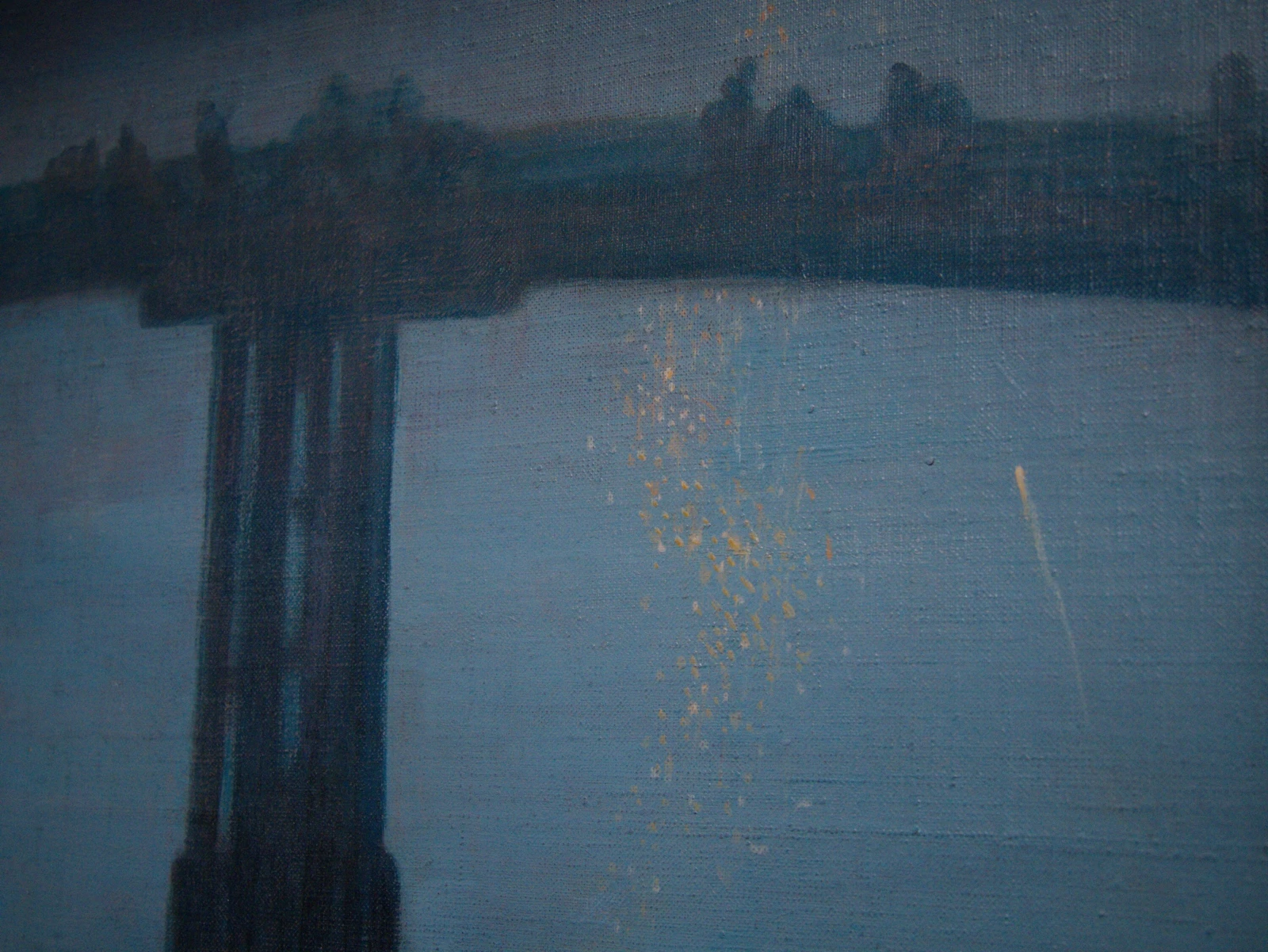
Nocturne, Blue and Silver, 1871
The Nocturnes perfectly illustrate Whistler’s idea of harmony. I can try to endlessly analyse, theorise and shmeorise why I think they’re good, but Whistler would’ve probably slapped me for that.
By the end of the exhibition, the range of his work dazzled me: etchings, portraits of old men smoking and old ladies selling flowers, chalk, charcoal and pastel, the sea, the Thames, seascapes and landscapes from Algeria, Holland, Venice and Brittany, watercolours, Japanese-inspired ghostly scenes and nocturnes. Whistler helped me, if only a little, craft a feeling of the 19th century. Had I asked him, what to do with art seemingly so remote from us, I think he might have said:
“Just enjoy it, mon cher. Enjoy it for what it is.”
On my way home, as the Bakerloo line goes above ground, I spot a butterfly dancing around, I kid you not. I watch it erratically getting off through the sliding doors. How did you get in here, mon cher?
Why, the butterfly keeps eluding.
James McNeill Whistler is on at the Tate Britain until Sep 27th 2026. Whistler’s letter excerpts and quotes come from The Correspondence of James McNeill Whistler, University of Glasgow.
This is the second issue of Up Close — a series of stories based on London’s art exhibitions. Subscribe below to get the next one.
Interested in more stories?