Richard Dadd
A Midsummer Night’s Madness
I have had a dream past the wit of man to say
A Midsummer Night’s Dream, William Shakespeare
what dream it was.
He has realized at last that imaginary guitar notes and imaginary vocals exist only in the imagination of The Imaginer.
Watermelon in Easter Hay, Frank Zappa
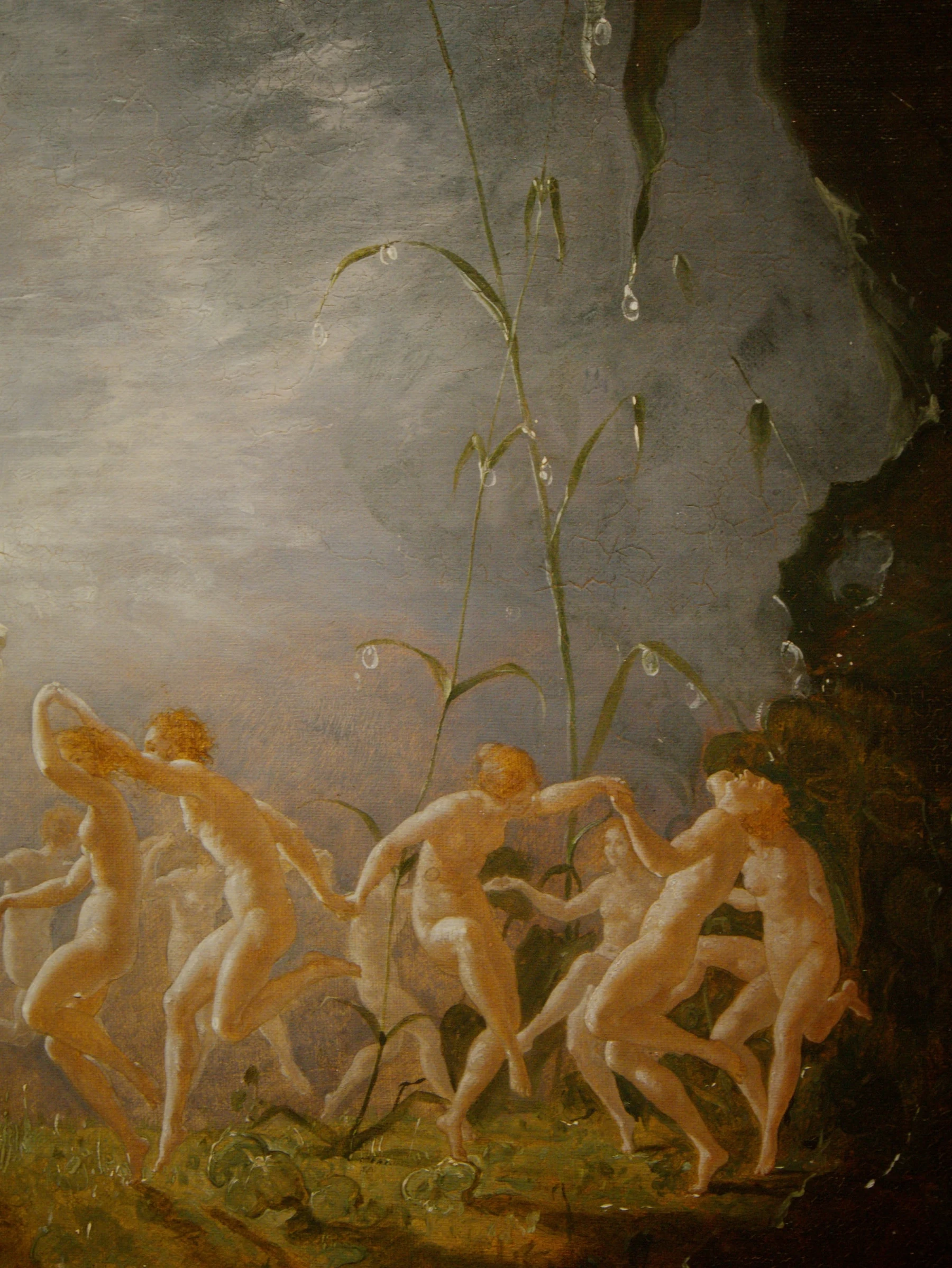
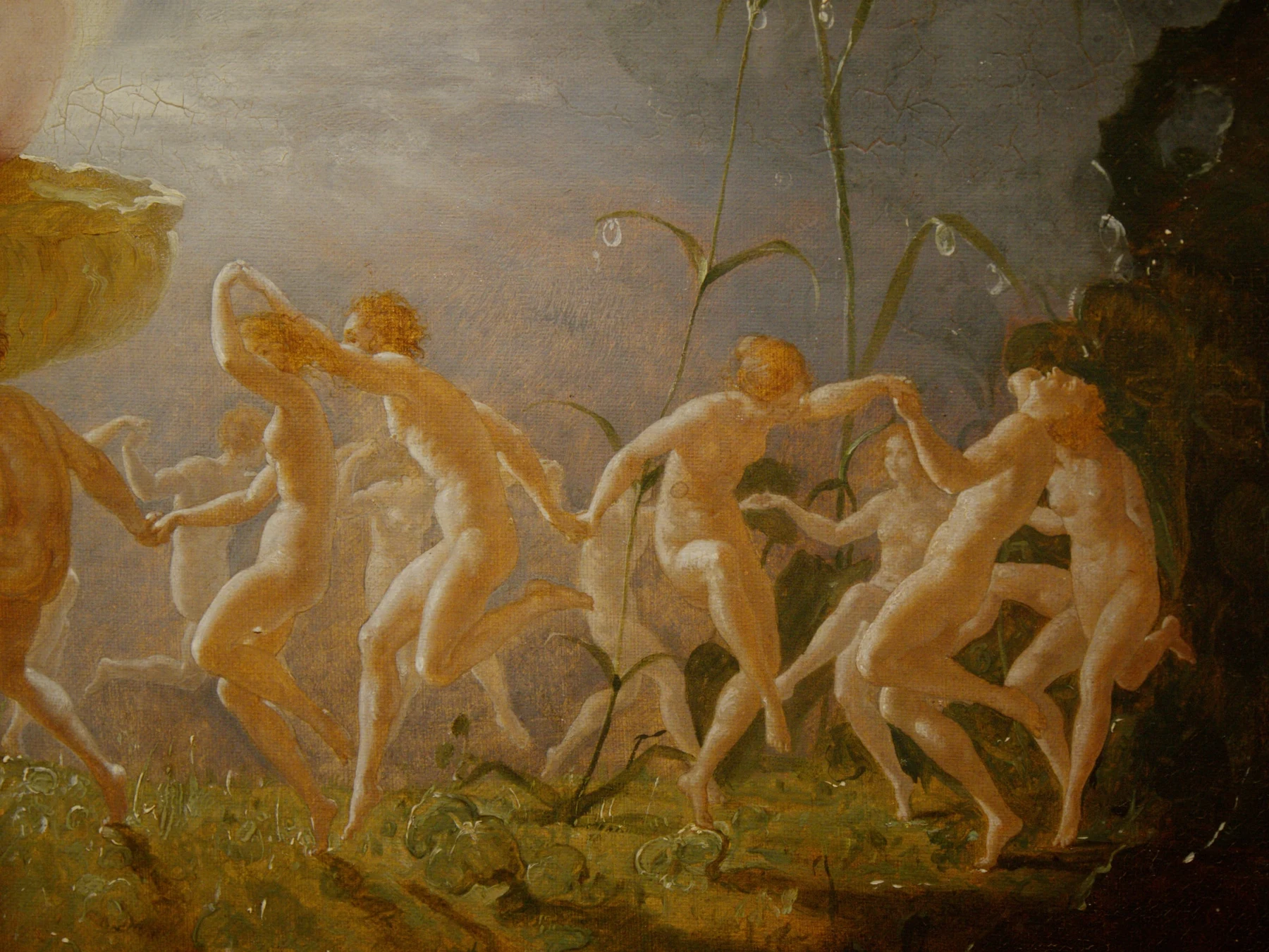
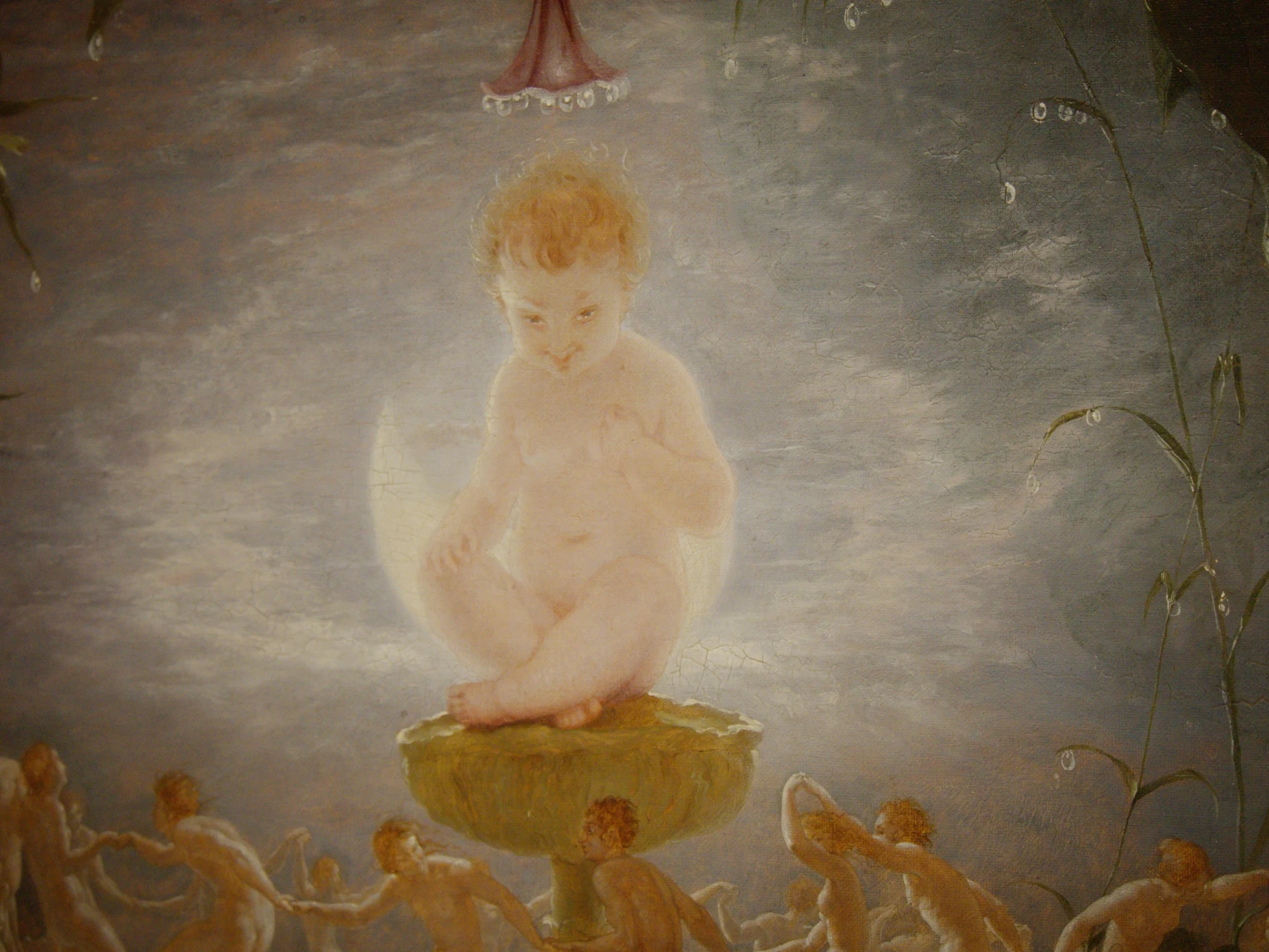
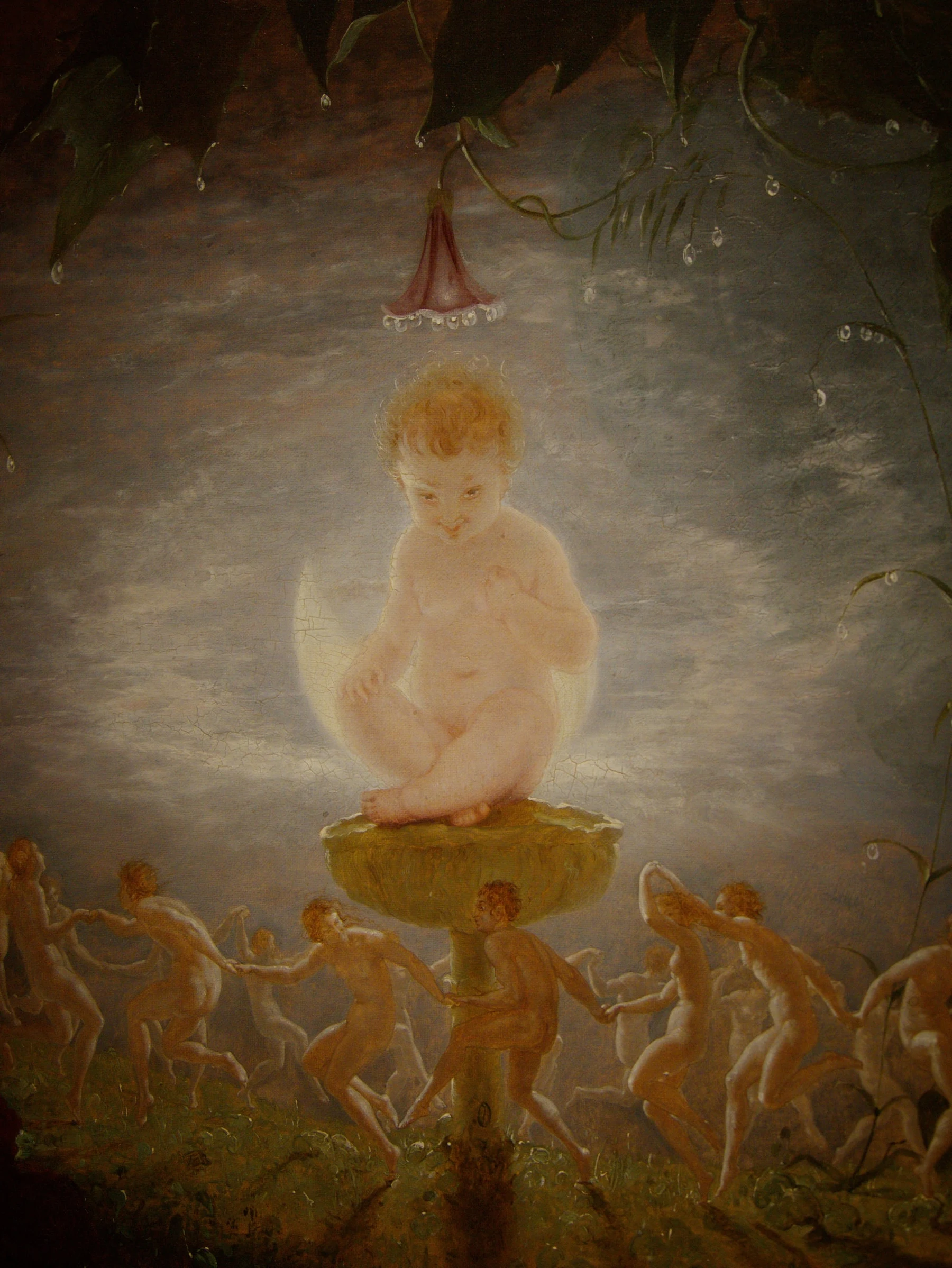
Over hill, over dale, Thorough bush, thorough brier, Over park, over pale, Thorough flood, thorough fire; I do wander everywhere, Swifter than the moon’s sphere.
A Midsummer Night’s DreamThe moon, methinks, looks with a watery eye, And when she weeps, weeps every little flower.
Either I mistake your shape and making quite, Or else you are that shrewd and knavish sprite Called Robin Goodfellow. Are not you he That frights the maidens of the villagery,
And sometime make the drink to bear no barm, Mislead night wanderers, laughing at their harm?
Those that “Hobgoblin” call you and “sweet Puck,” You do their work, and they shall have good luck. Are not you he?
Thou speakest aright. I am that merry wanderer of the night. I jest to Oberon and make him smile When I a fat and bean-fed horse beguile, Neighing in likeness of a filly foal.
And sometime lurk I in a gossip’s bowl In very likeness of a roasted crab, And, when she drinks, against her lips I bob And on her withered dewlap pour the ale.
As a young lad I’d struggle to fall asleep. I would twist and turn while waiting for the Tooth Fairy and wondered if I'd get more for my canine than my incisor. Aside from speculation on the Tooth Market, I’d ponder other questions. What do fairies eat? Where do they sleep? How do they, you know, use the loo? What about fawns and elves? Sure, it’s all mischief and sorcery and all that, but what does their world look like?
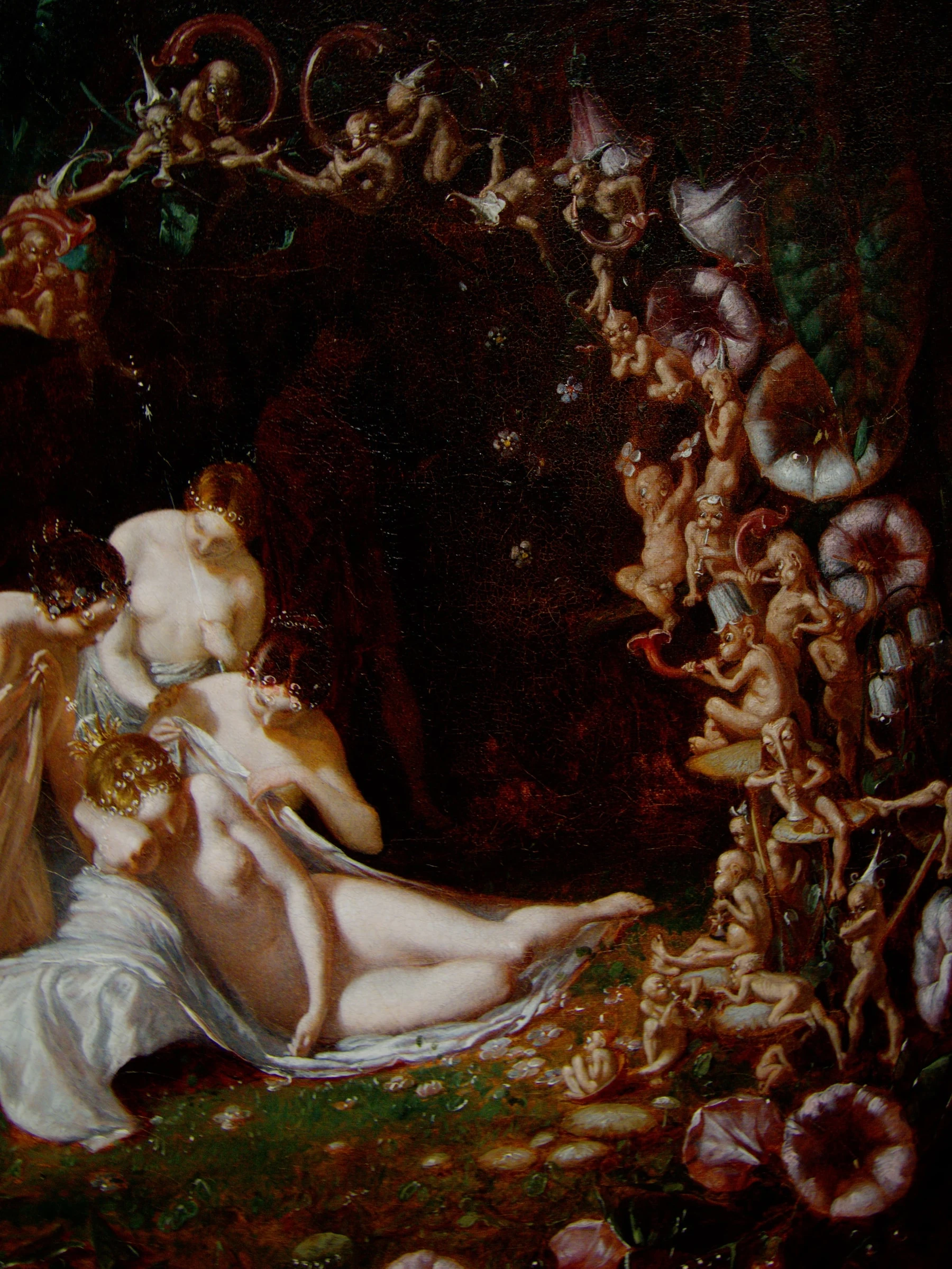
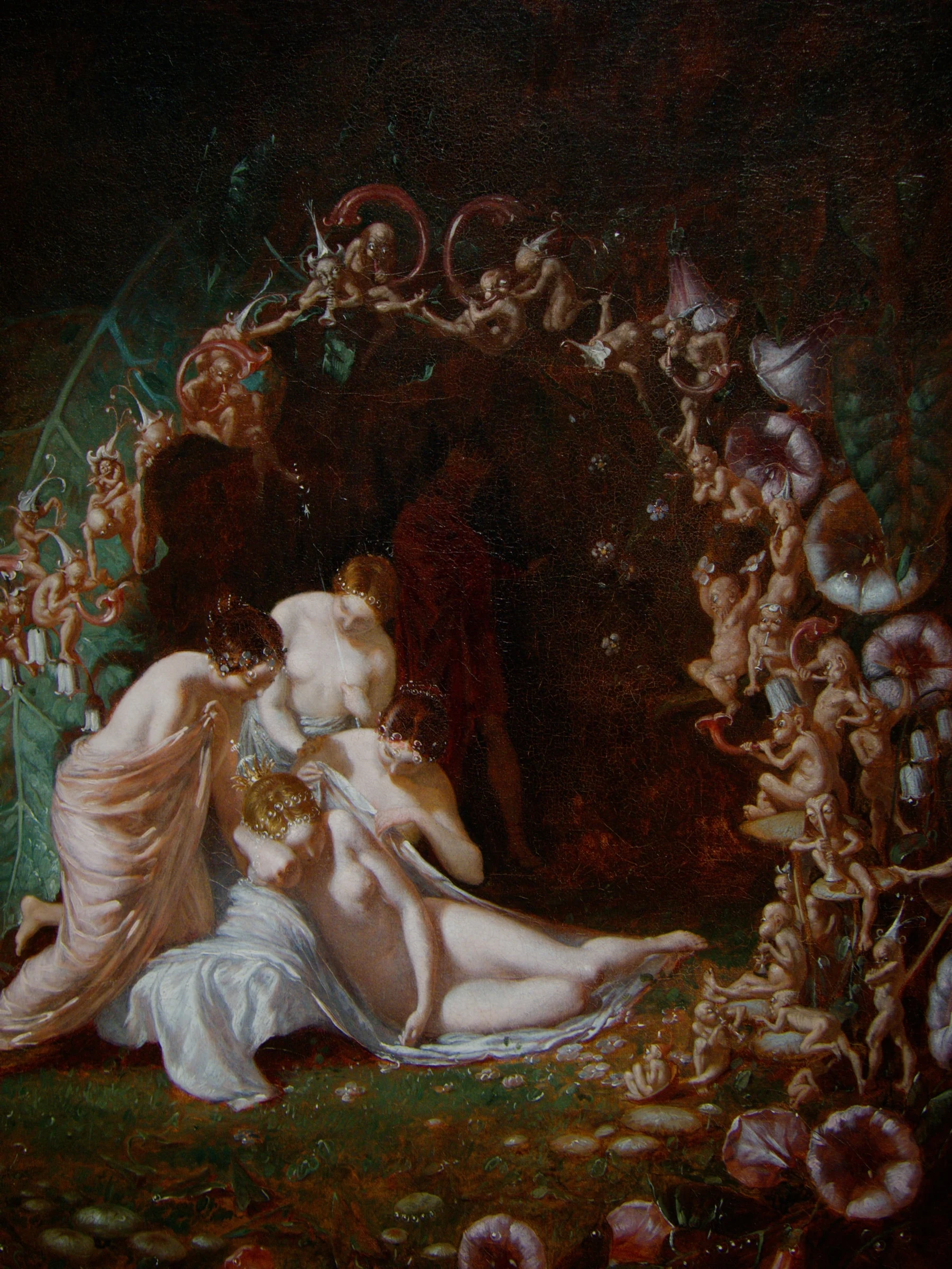
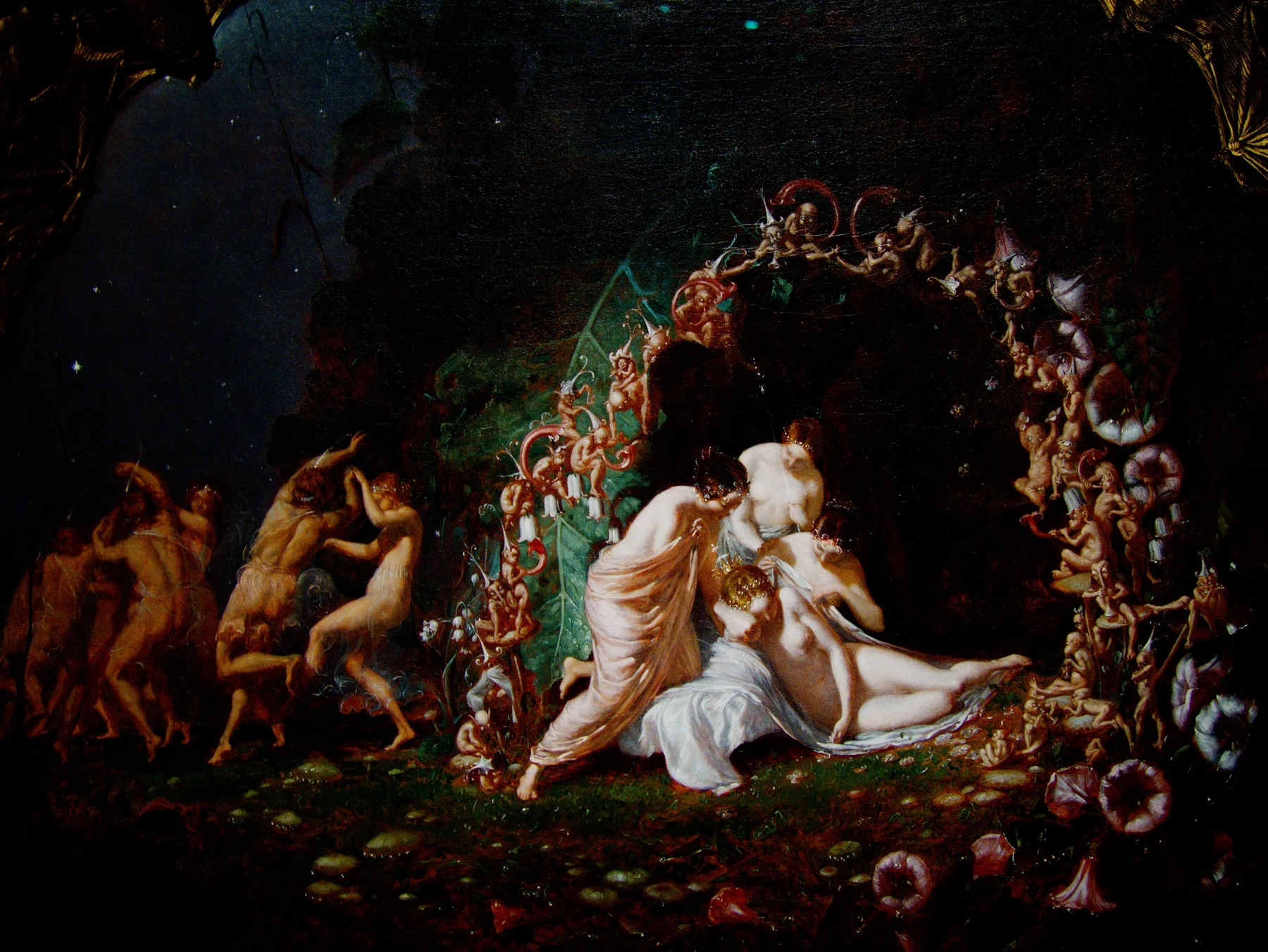
Richard Dadd had some ideas. He painted the world of fairies in the late 1830s. Entering the exhibition at the Royal Academy feels a bit like a dark labyrinth. The small rooms with terracotta walls echo a corner of the painter’s mind. I go in, at my own risk, summoning Shakespeare's verses to mind.
My gentle Puck, come hither.
Fetch me that flower; the herb I showed thee once. The juice of it on sleeping eyelids laid Will make or man or woman madly dote Upon the next live creature that it sees.
What, jealous Oberon? Fairies, skip hence. I have forsworn his bed and company.
Come, now a roundel and a fairy song; Then, for the third part of a minute, hence— Some to kill cankers in the muskrose buds, Some war with reremice for their leathern wings To make my small elves coats, and some keep back The clamorous owl that nightly hoots and wonders At our quaint spirits. Sing me now asleep. Then to your offices and let me rest.
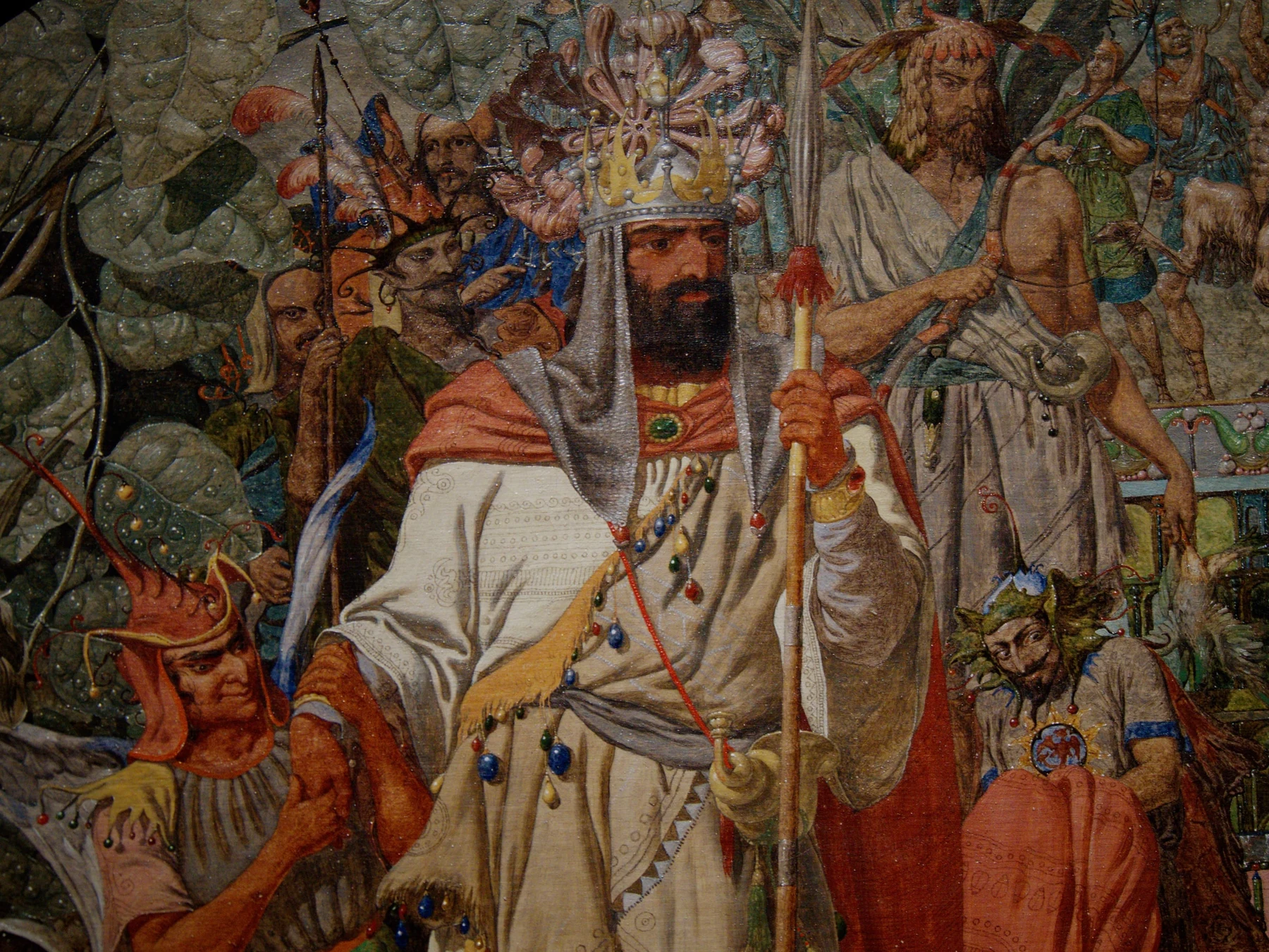
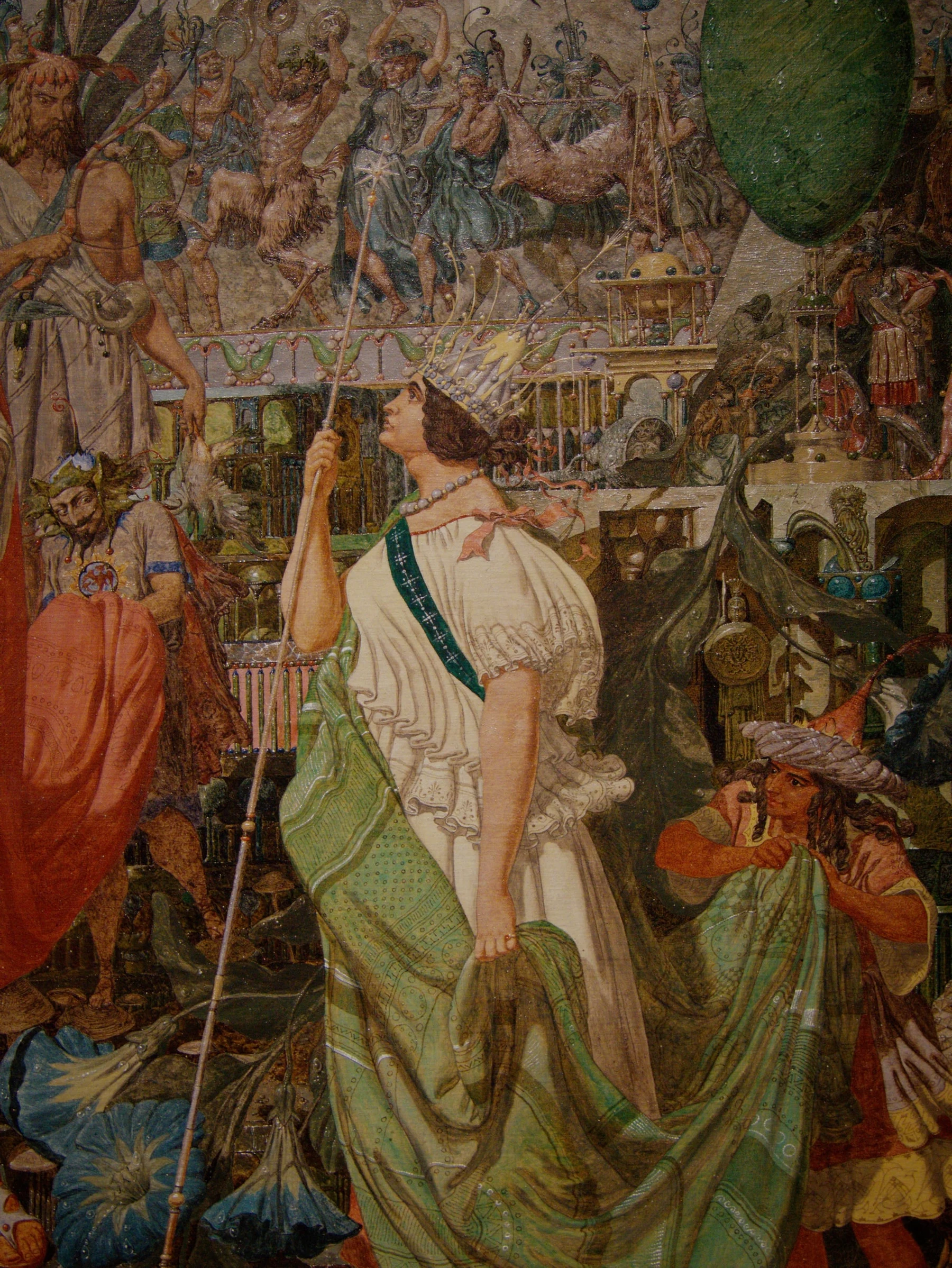
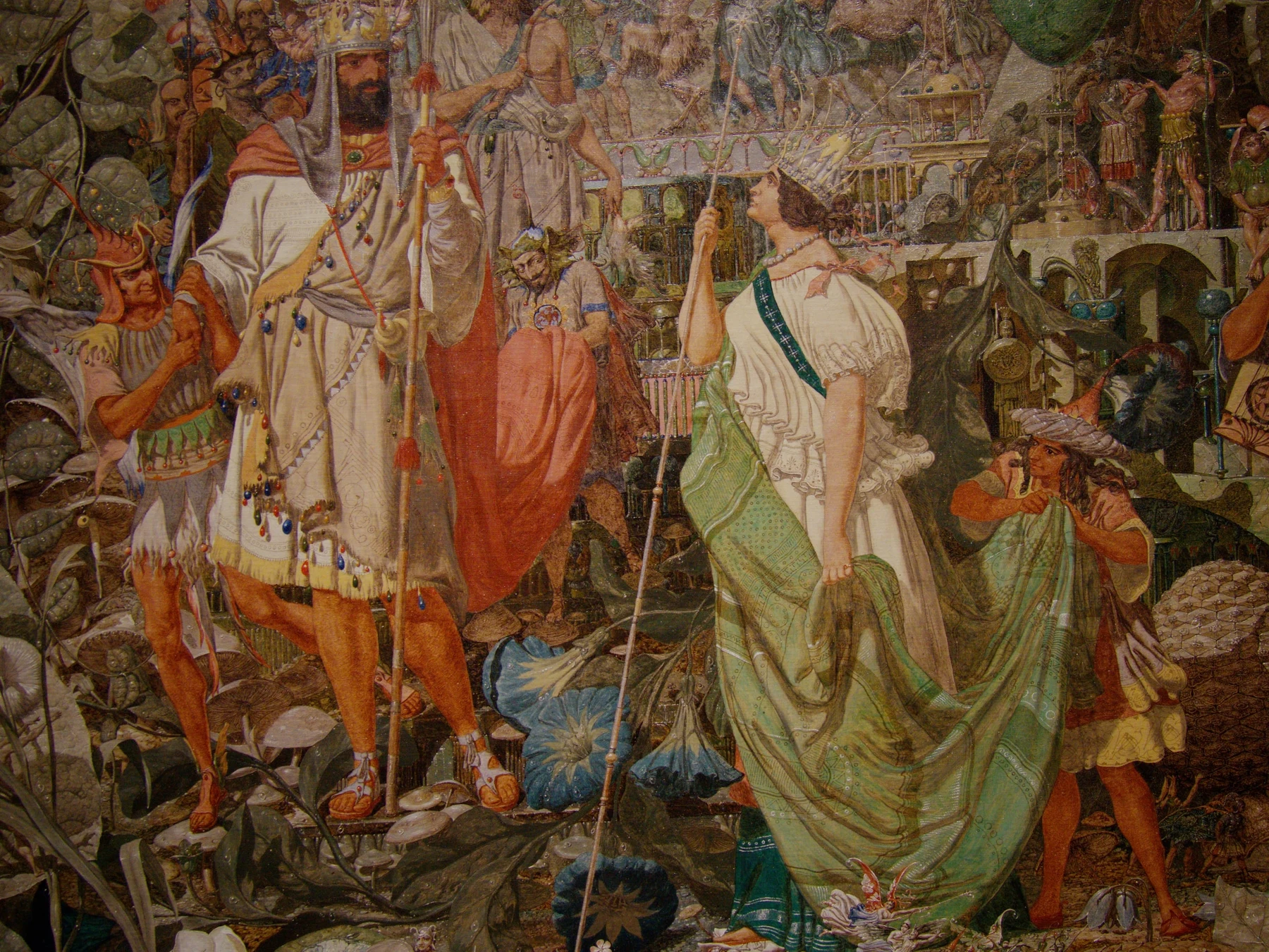
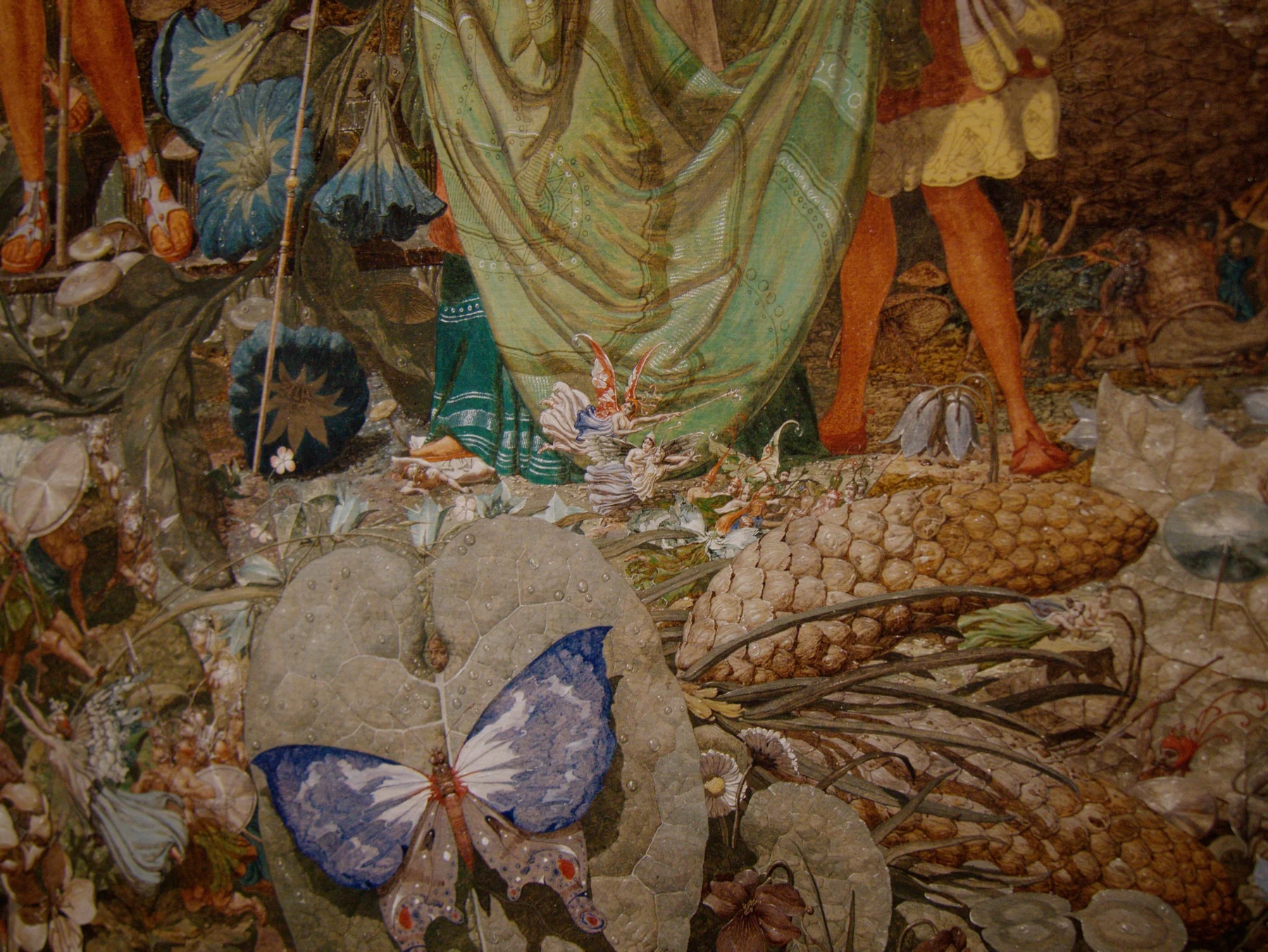
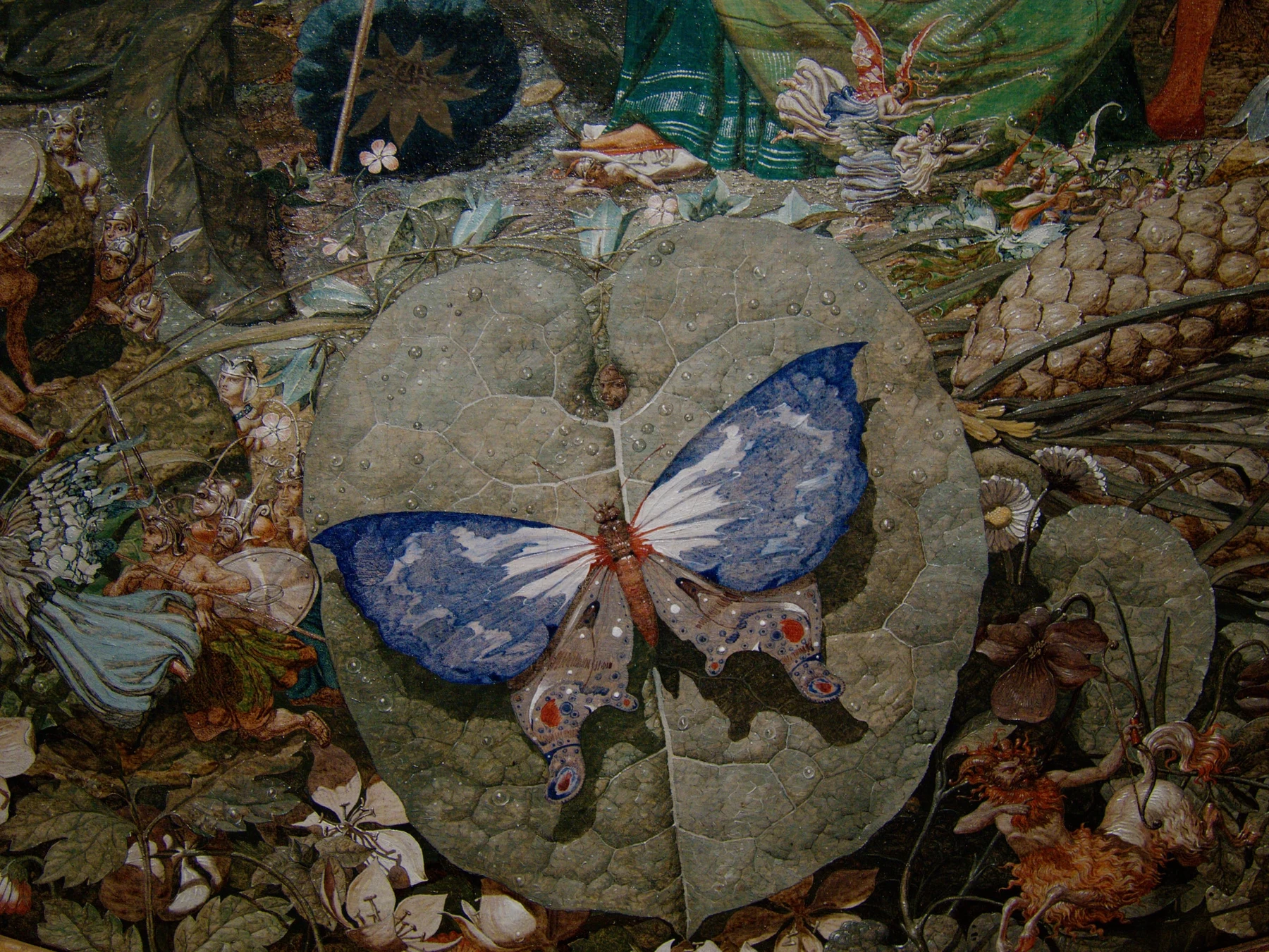
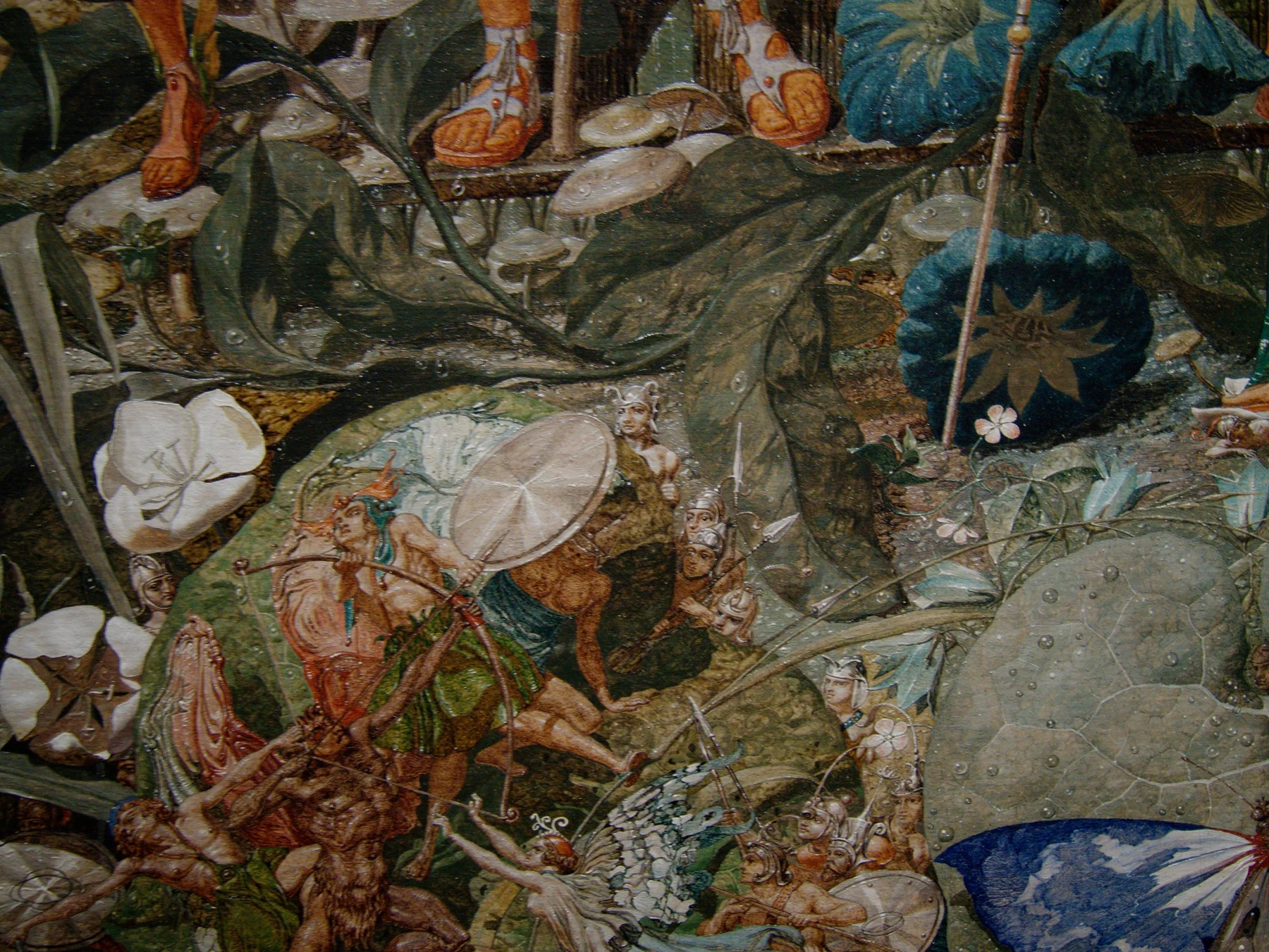
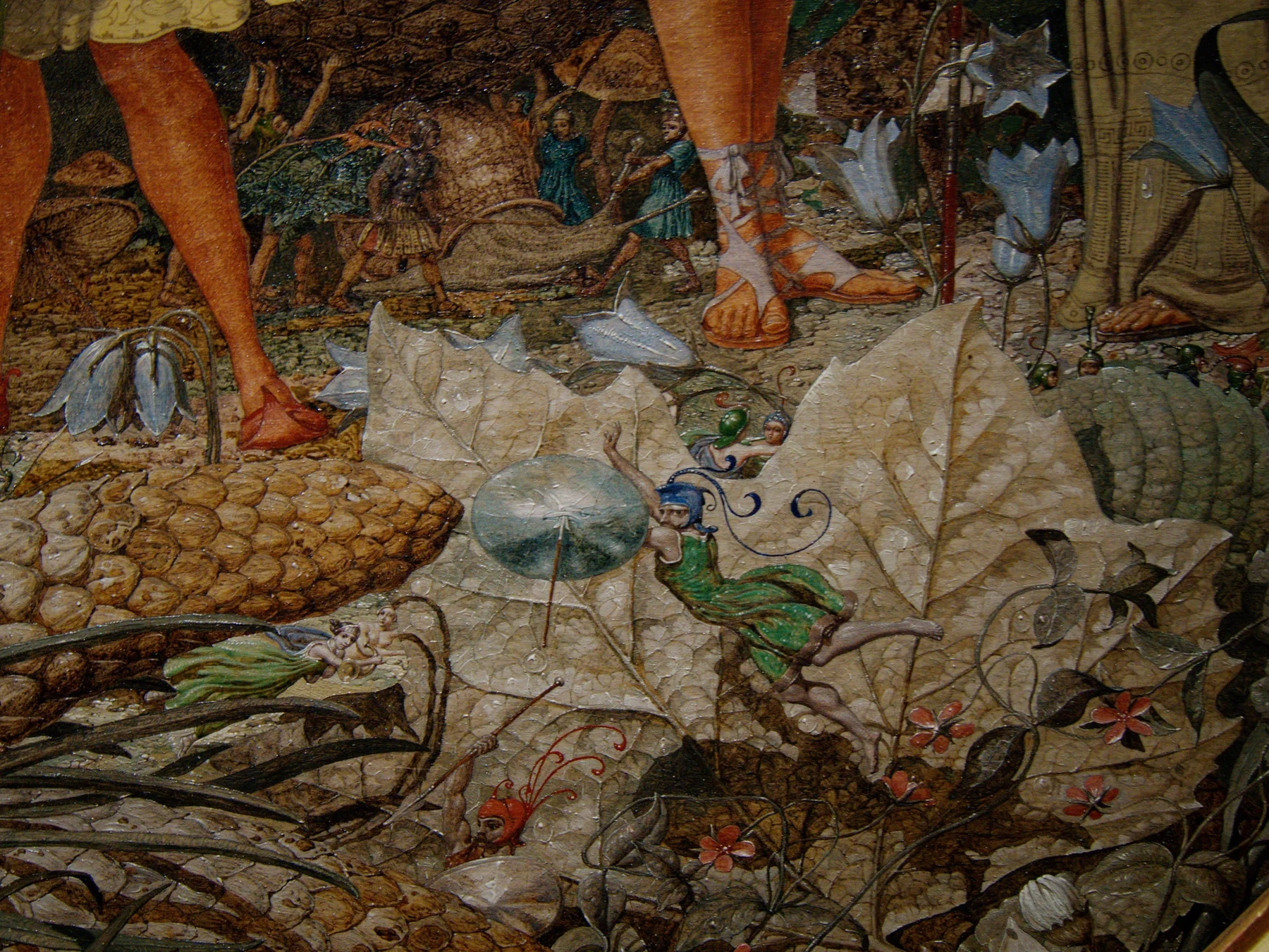
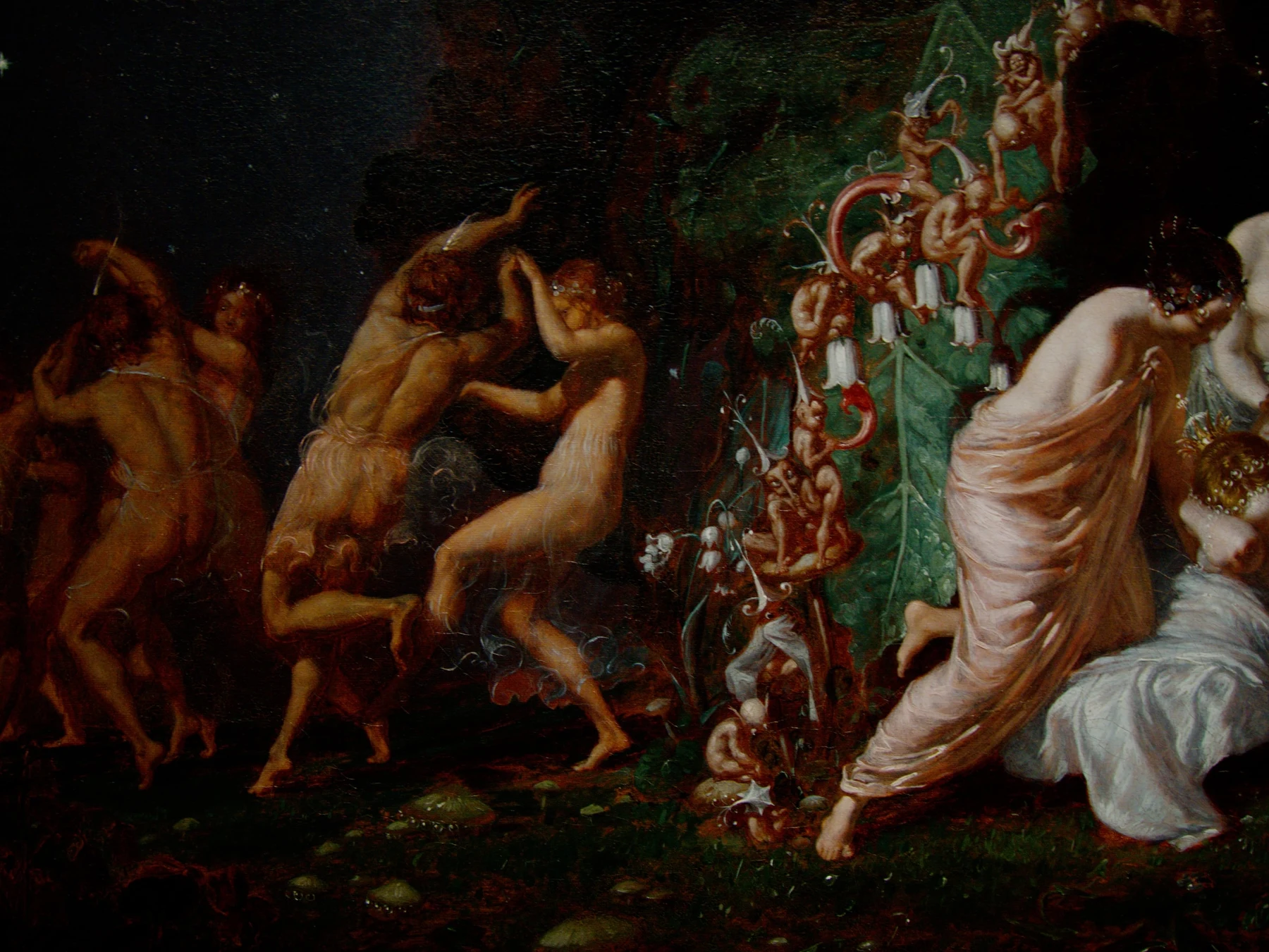
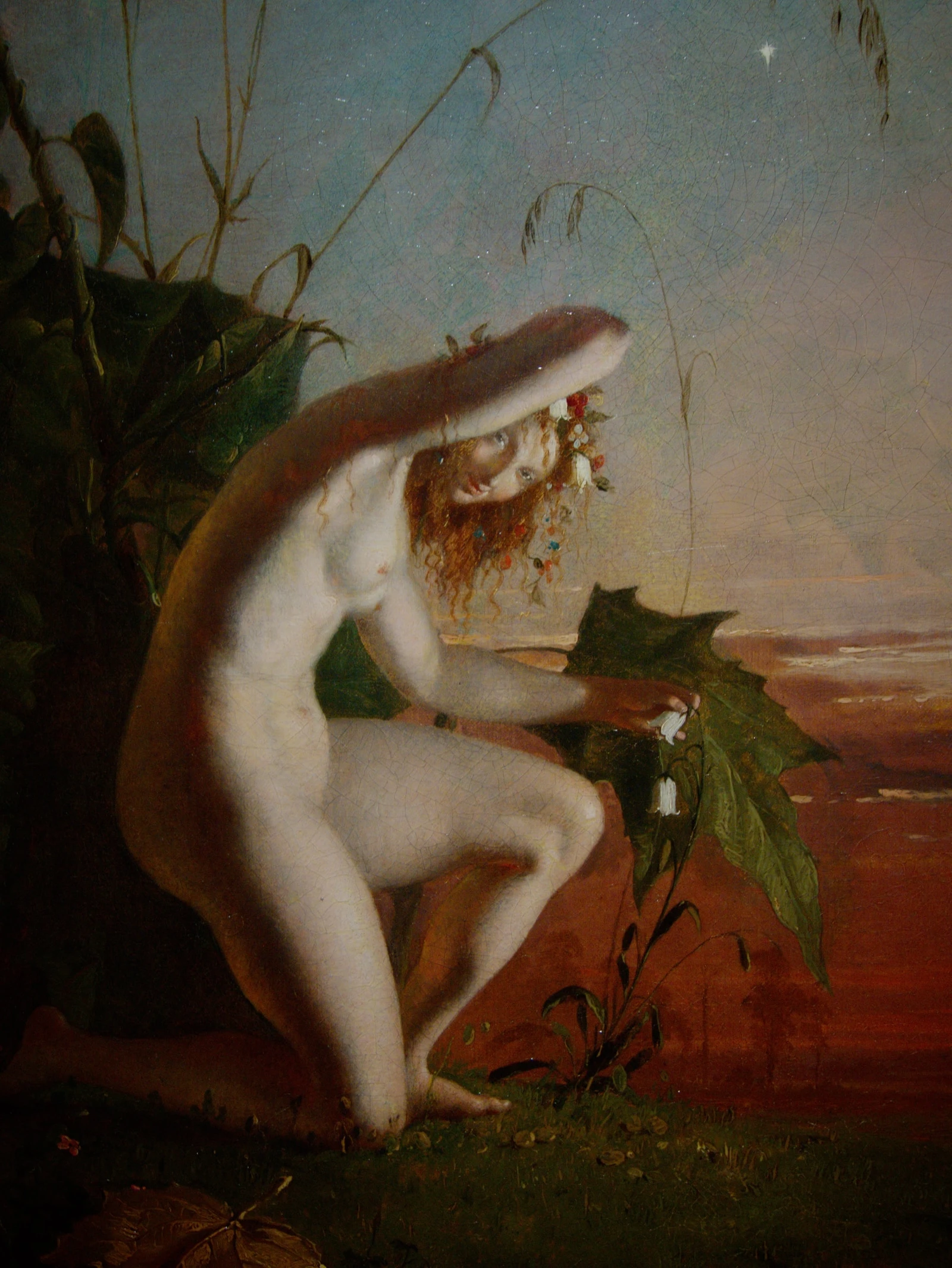
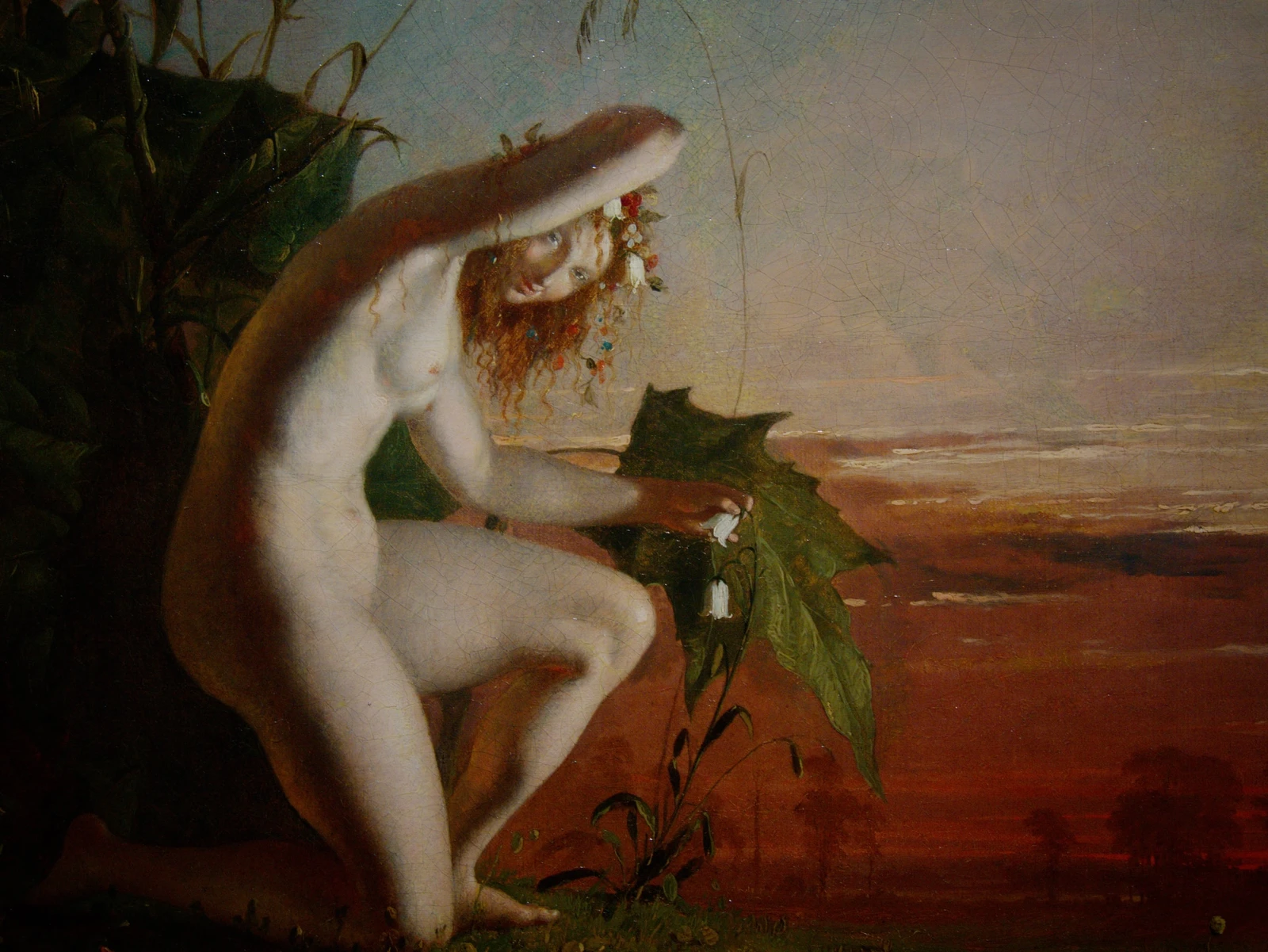
Like a Hyeronymous Bosch, Dadd’s paintings come to life when you scan every inch of the canvas.
“Every detail is given with a marvellous minuteness and finish which could have been attained only by the use of the magnifying glass he hands to enable his visitor to inspect this work of art.”
Wrote a journalist visiting Dadd in 1877.Even without a magnifying glass, I spot a centaur shooting arrows, satyrs dancing, mushrooms, pine cones and fairies in pointy helmets fighting what seems to be a tentacled jellyfish.
The fairy contemplating fairy life makes uncomfortable eye contact from behind the lily pad.
Oh and there’s more. Some fairies are pulling a snail by its horns, while others are preparing to roast a wolf on a spit (!?!?), amongst morning glory flowers, giant butterflies, sculptures of Zeus, struggles for power and dew, lots of dew.
It’s unhinged.
Insane.
But lovely?
I know a bank where the wild thyme blows, Where oxlips and the nodding violet grows, Quite overcanopied with luscious woodbine, With sweet muskroses, and with eglantine.
There sleeps Titania sometime of the night, Lulled in these flowers with dances and delight. And there the snake throws her enameled skin, Weed wide enough to wrap a fairy in.
And with the juice of this I’ll streak her eyes And make her full of hateful fantasies.
Never harm Nor spell nor charm Come our lovely lady nigh. So good night, with lullaby.
By 1841, the 26-year old Dadd was a rising star in London’s art scene. A student at the Royal Academy, he gathered with ambitious fellow artists in Soho rooms. They called themselves ‘the Clique’ and on evenings fuelled by cheese and beer, they came up with compositions based on literary texts. Byron and Shakespeare, mostly.
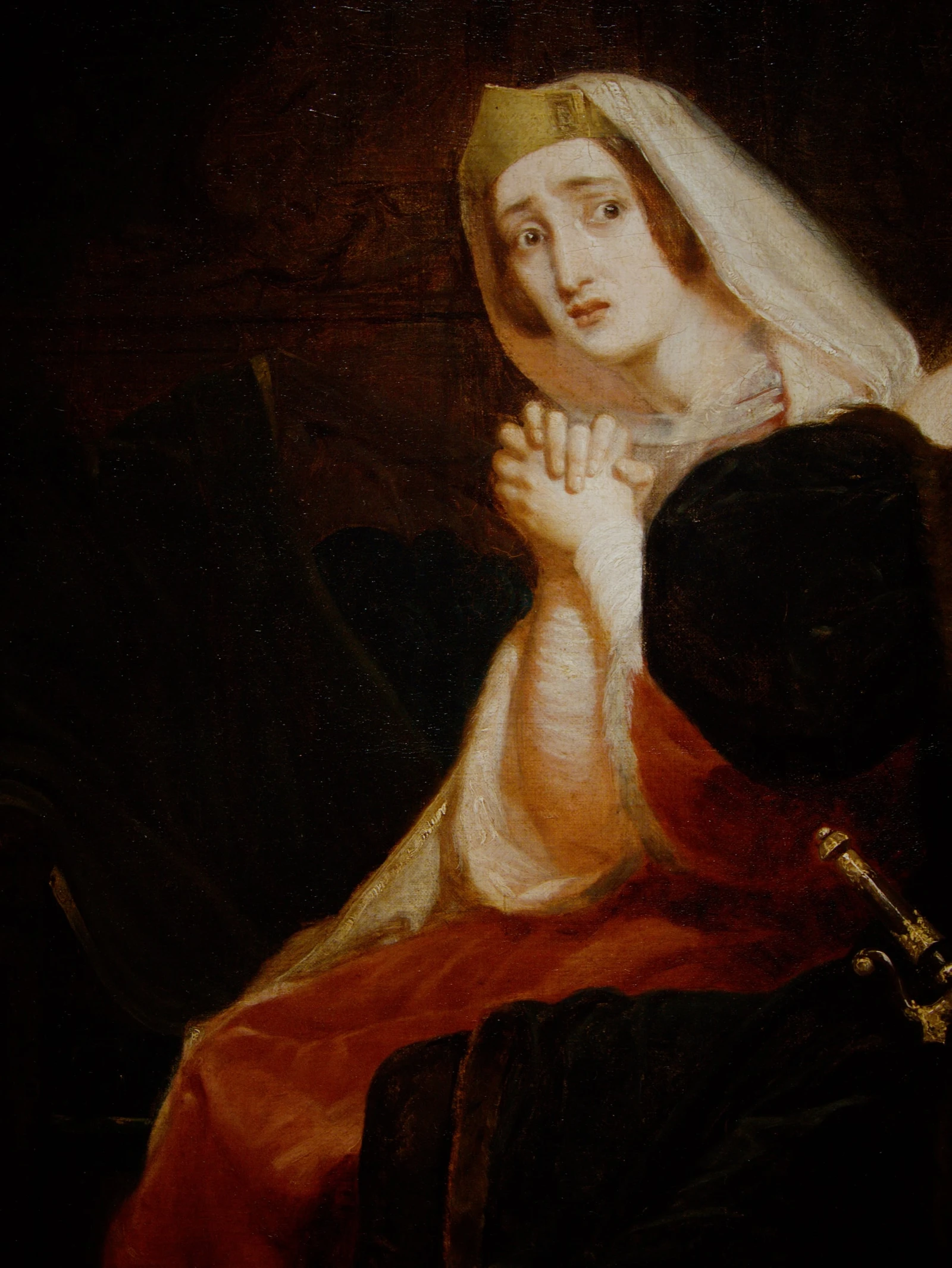
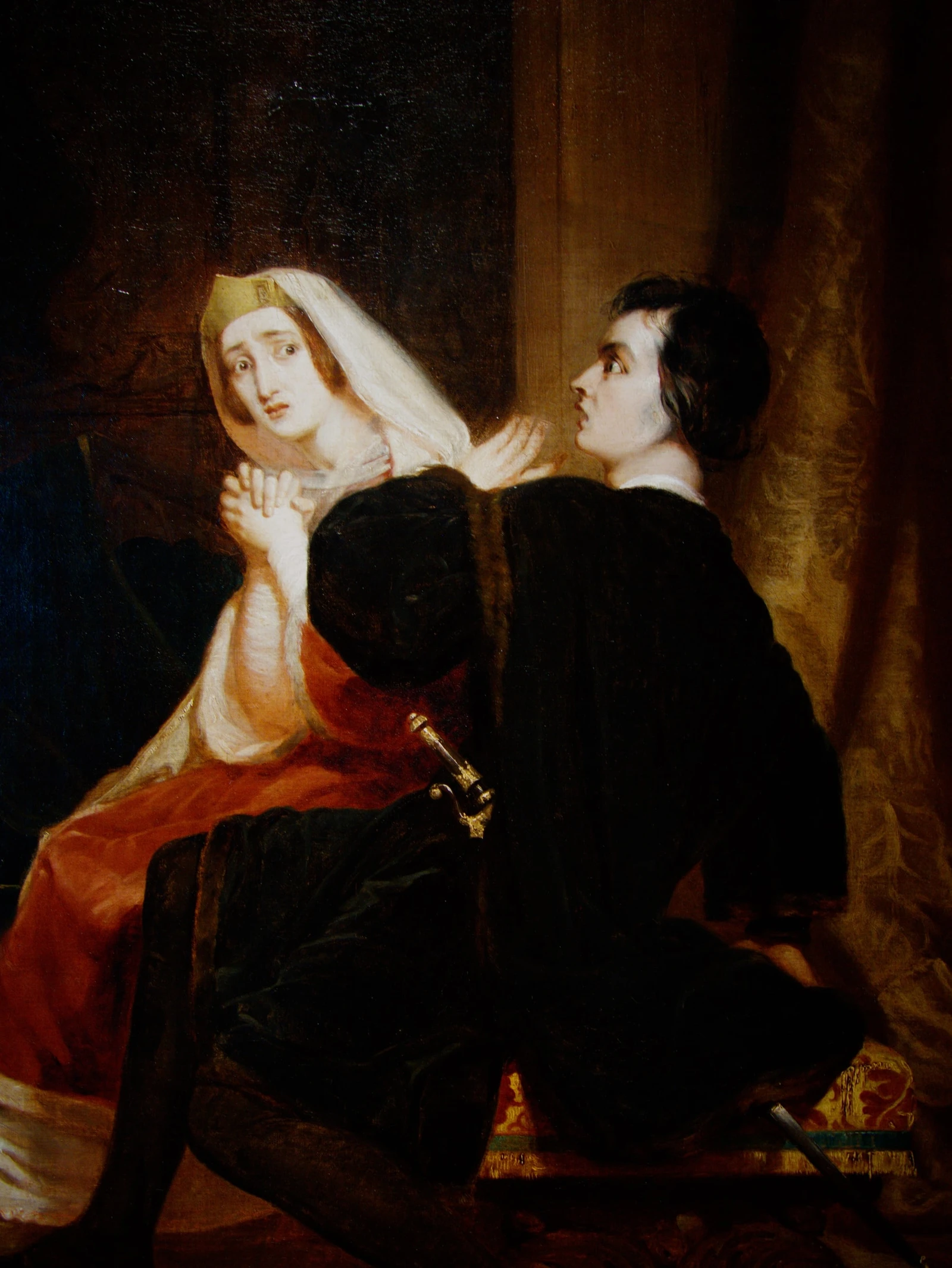
In search of a style, the fledgling painters declared themselves dedicated to themes of ordinary life, gossip of the famous or illustrations of notable works. Whatever would bring them renown.
Mr Dadd is on the right road to fame; he must, however, beware; and stop short of the boundaries which divide the imagination from the absurd.
— Art Union
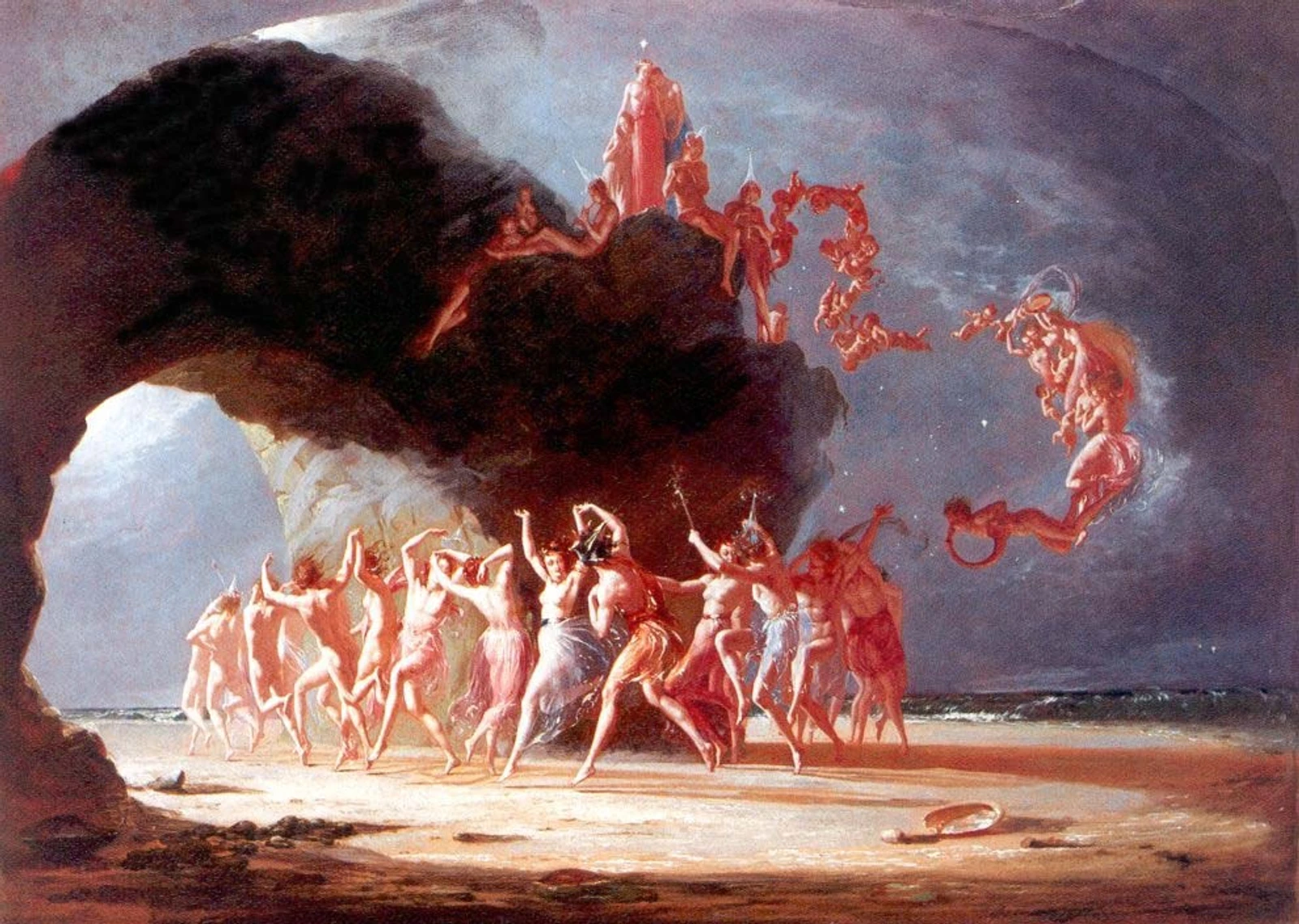
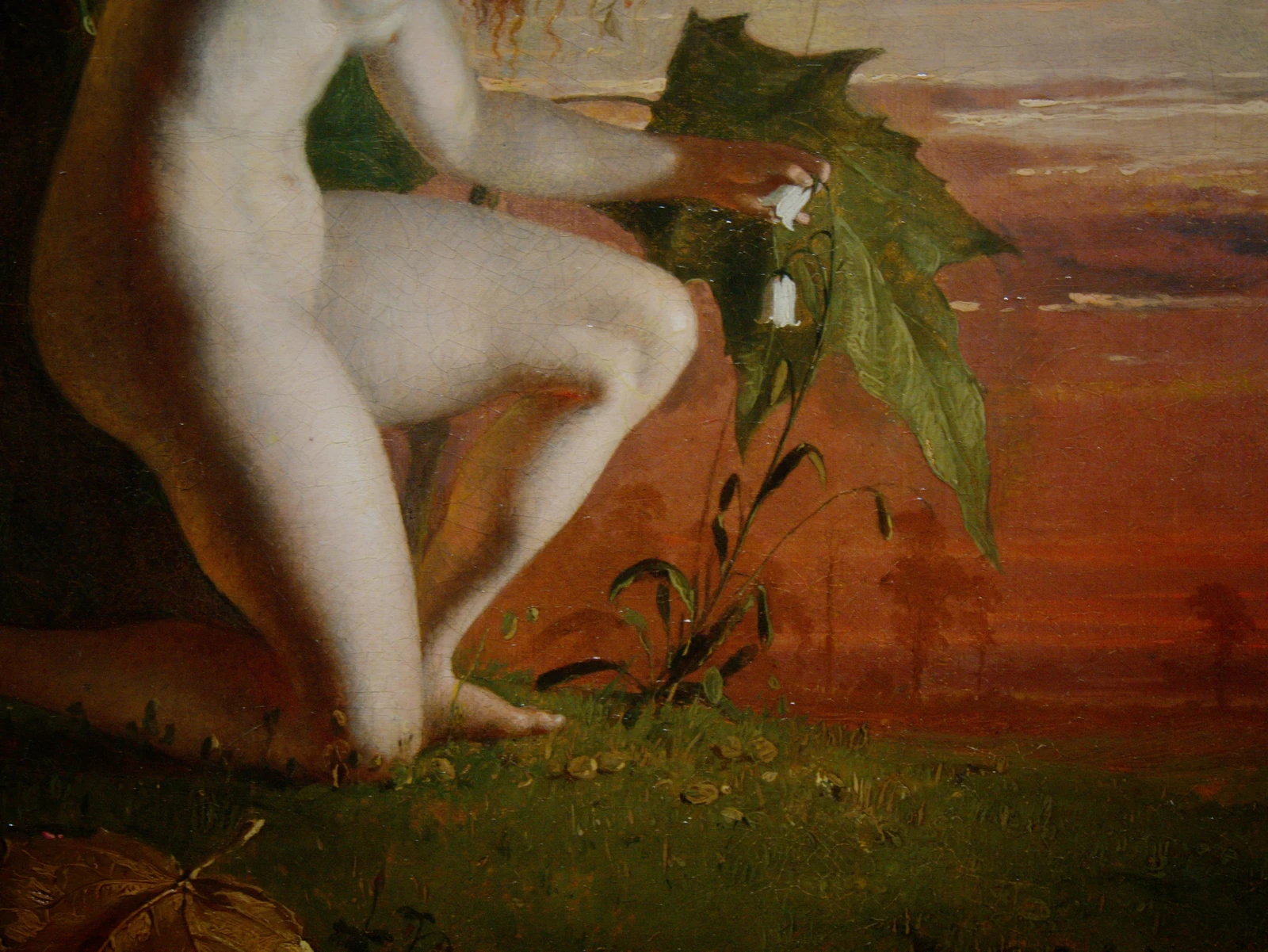
Come unto these Yellow Sands, 1842
Richard said he will dedicate himself completely to works of the imagination.
That he did. Maybe a bit too much.
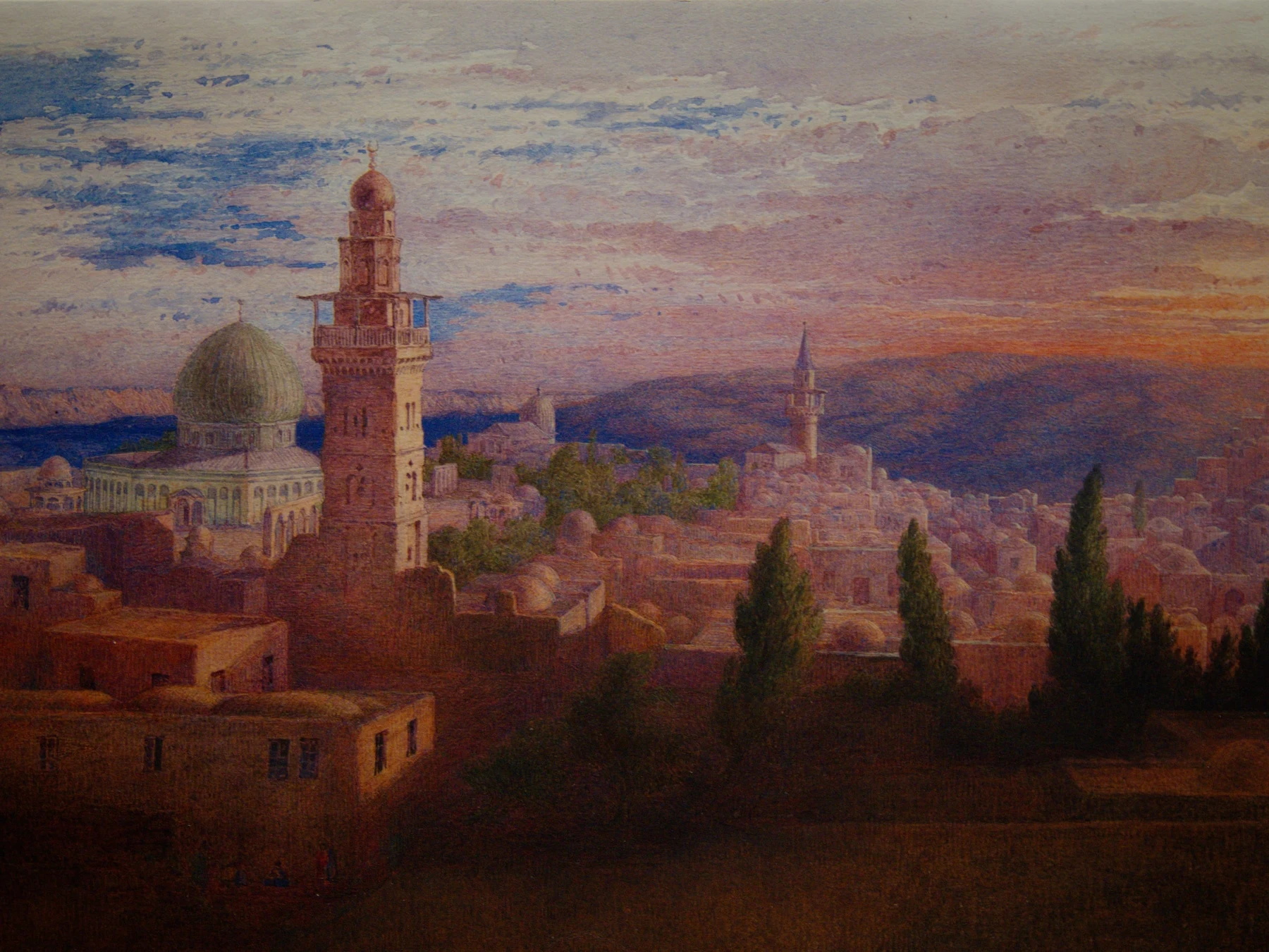
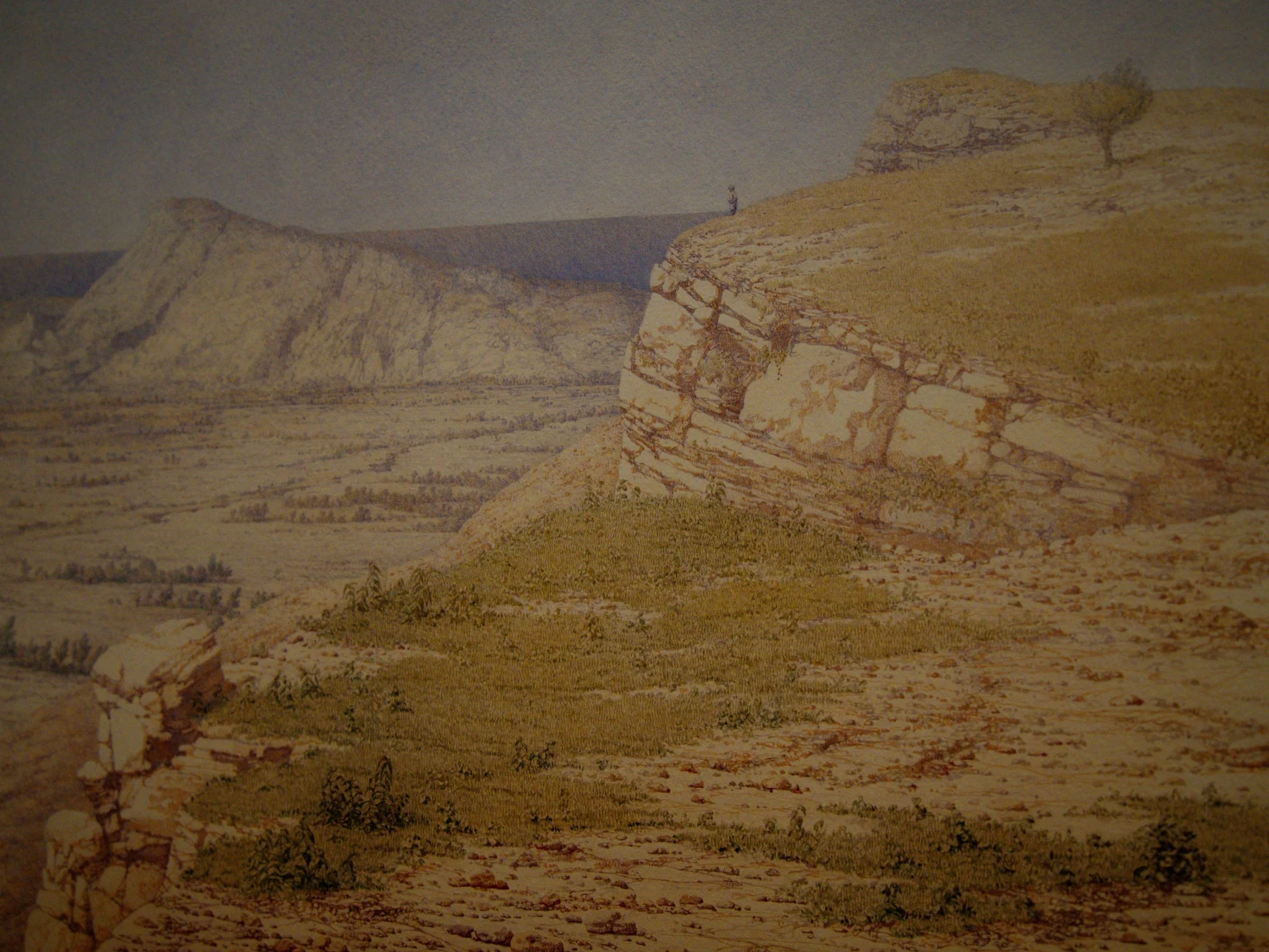
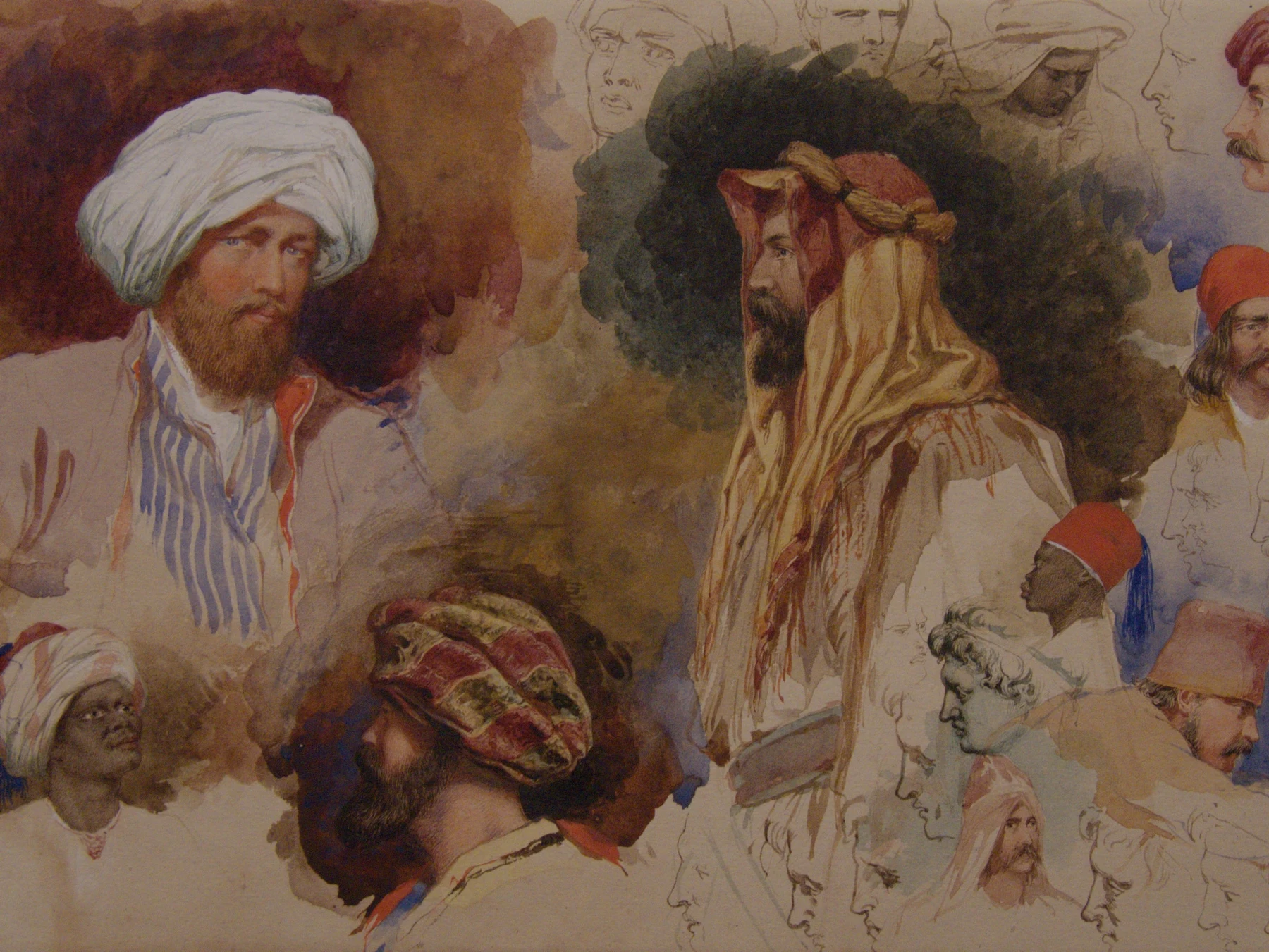
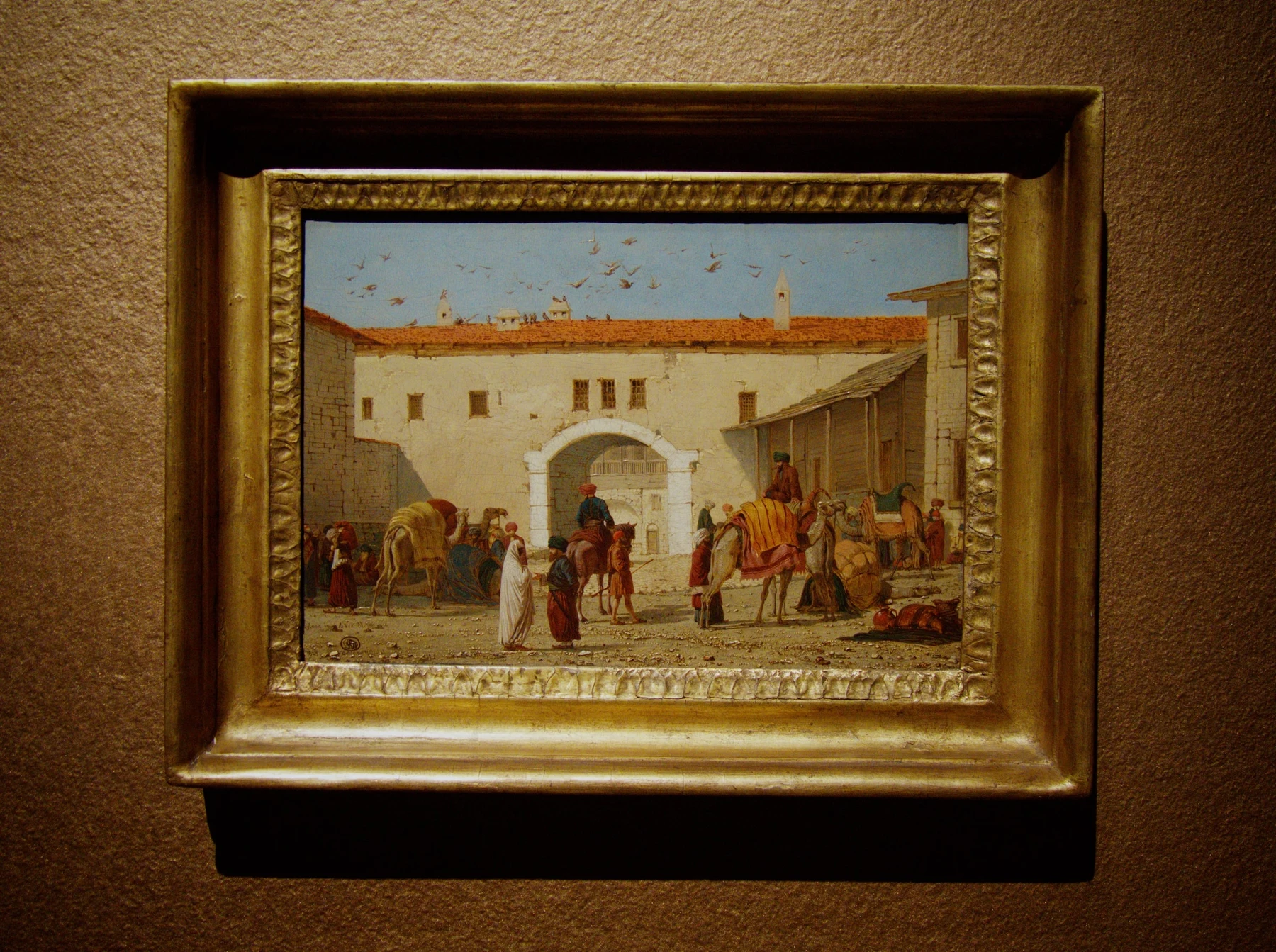
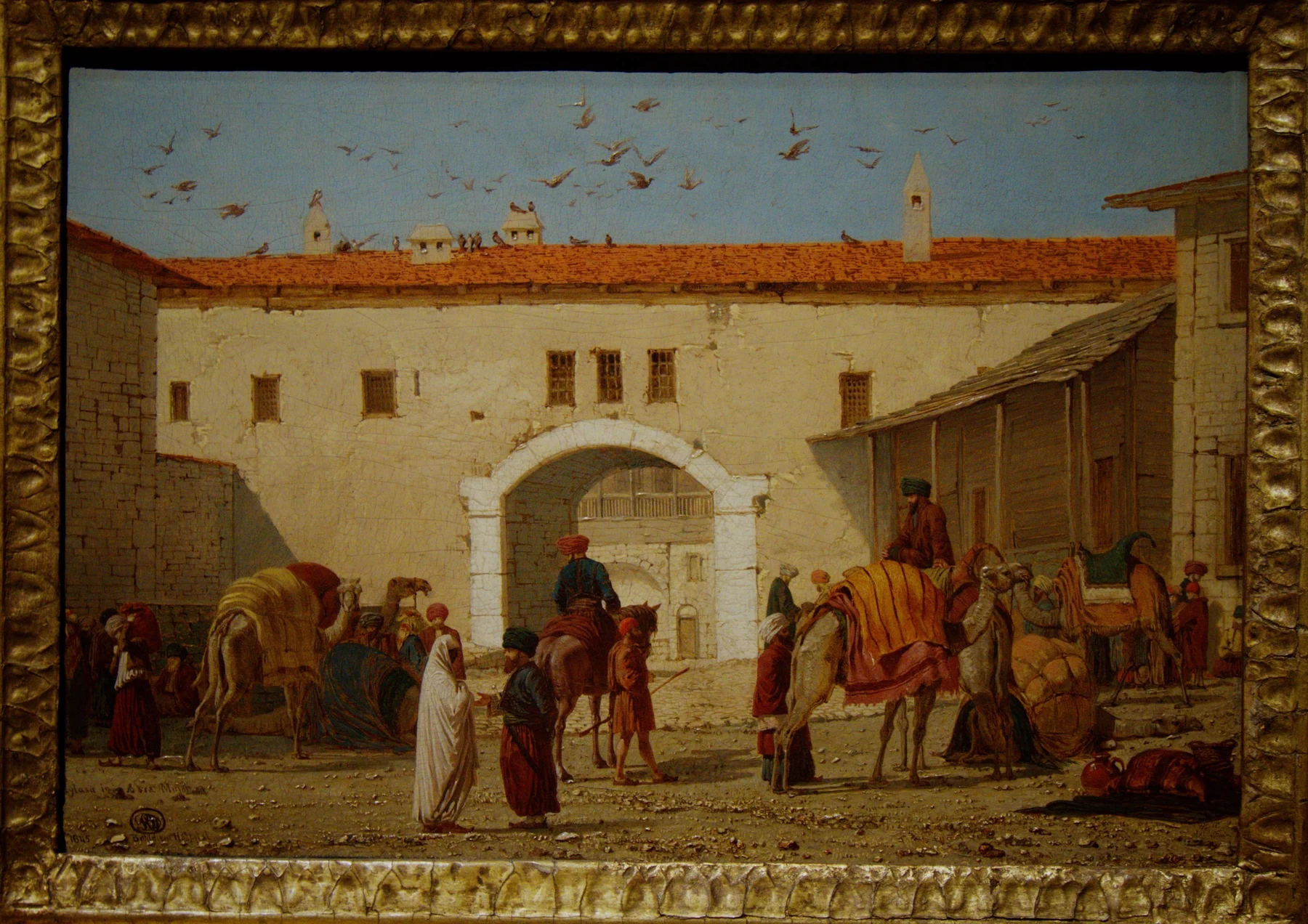
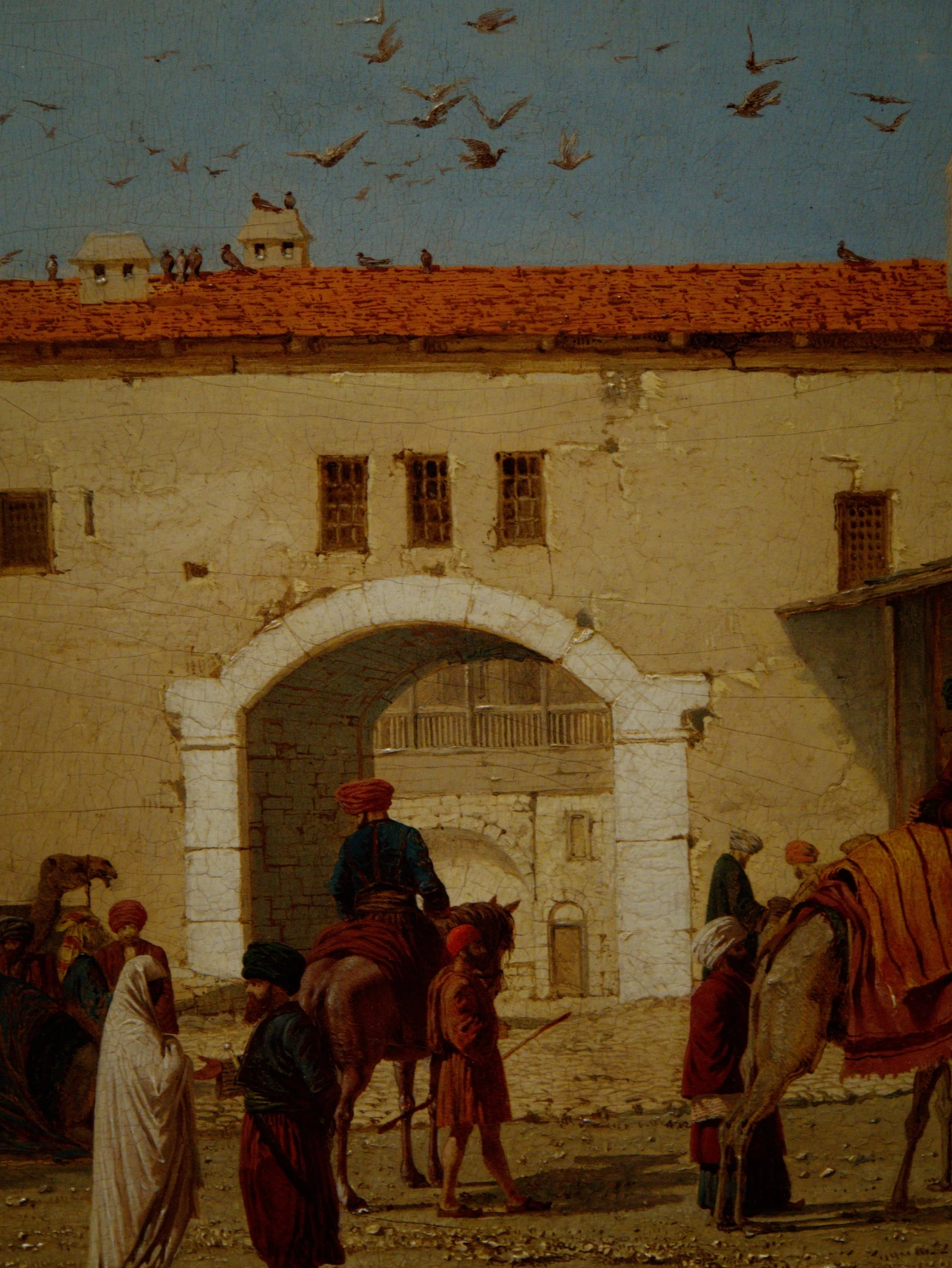
I walked about the streets of Alexandria with my eyes and mouth wide open, swallowing, with insatiable appetite the everlasting succession of picturesque characters. I had the most unaccountable impulses, that would not let me stop to sketch, but were constantly prompting me on, to drink in with greedy enjoyment, the stream of new sensations.
Dadd’s letter to friends back homeThe plain and mountains... are exquisitely beautiful; and the Masicyths range of snow mountains, when first we caught sight of it, was enough to make one leap out of one's skin.
for no man is an artist without a strong feeling of enthusiasm for his profession.
It would puzzle you to recognise your old neighbour under the strange guise I have assumed. Ordinarily my dress has consisted of a cap of the country, called a fez, with two handkerchiefs, one white and one red, tied round it. I've beard and moustachioes.
I wish I had the gigantic powers of a Shakespeare, an Otway, or any other way, to tell you of the big feelings that the sight of these things generates in me.
Listen to wild sounds of the tabor, and see the strange dresses of these street musicians; see bubbling water, see bright green trees, dazzling dresses, stately camels, all shook up in such inextricable confusion that you lay down your reason and implore the passengers to hold you tight, lest you should indulge in any rabid feelings towards your linen.
At Damascus especially this was the case, and I have had a crowd of some hundred people gaping about me - those close to me turning over the leaves of one side of my book, I drawing on the opposite side of it; and those further off staring at me as if I was a curiosity.
One day the crowd became unusually obstreperous, and I was followed by a mob, hooting; and some even proceeded to pelt me with the husks of corn and some such missiles. I got away, however, quite safe from any personal injury; and I beg leave to assure you that the like of this affair is anything but flattering or comfortable to one's feelings.
The bazaars confused me by their wonderful character; and, if I stopped to sketch, I soon had a crowd round me, some of whom were very pointed in their remarks, and seemed to gaze at me as if I was some strange wild beast; and some of them told me, with a laugh, that I was El Madne Achmet, and jested with each other in a way that to me was and is perfectly incomprehensible.
In July 1842 Richard joined Sir Thomas Phillips, a Welsh lawyer and politician, on a tour through Europe and across the Eastern Mediterranean. From Italy and Greece, they went to Turkey and Syria, then down the Nile to visit Ancient Egyptian ruins. The bargain was simple. In exchange for the trip, Dadd would illustrate their adventures.
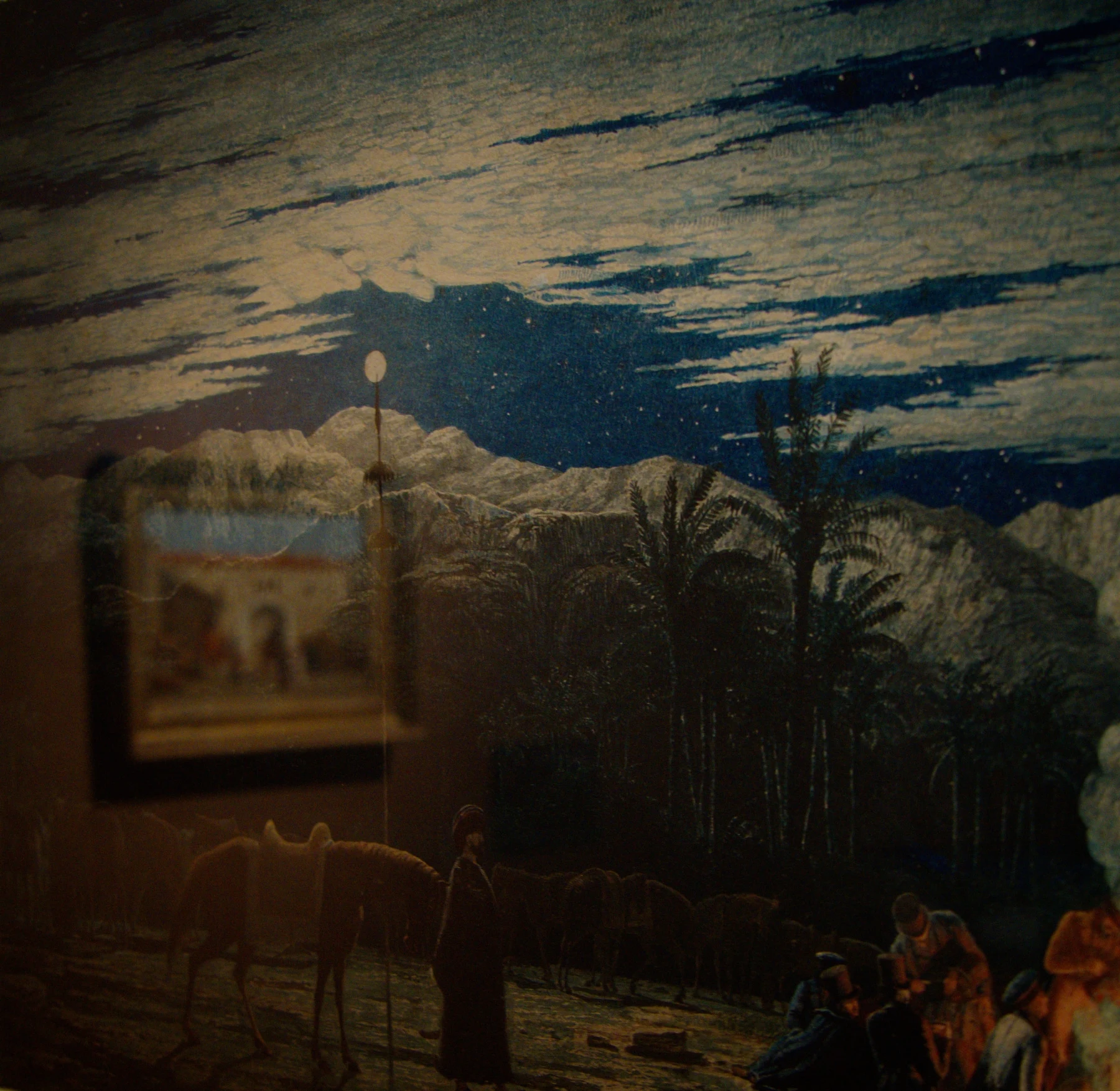
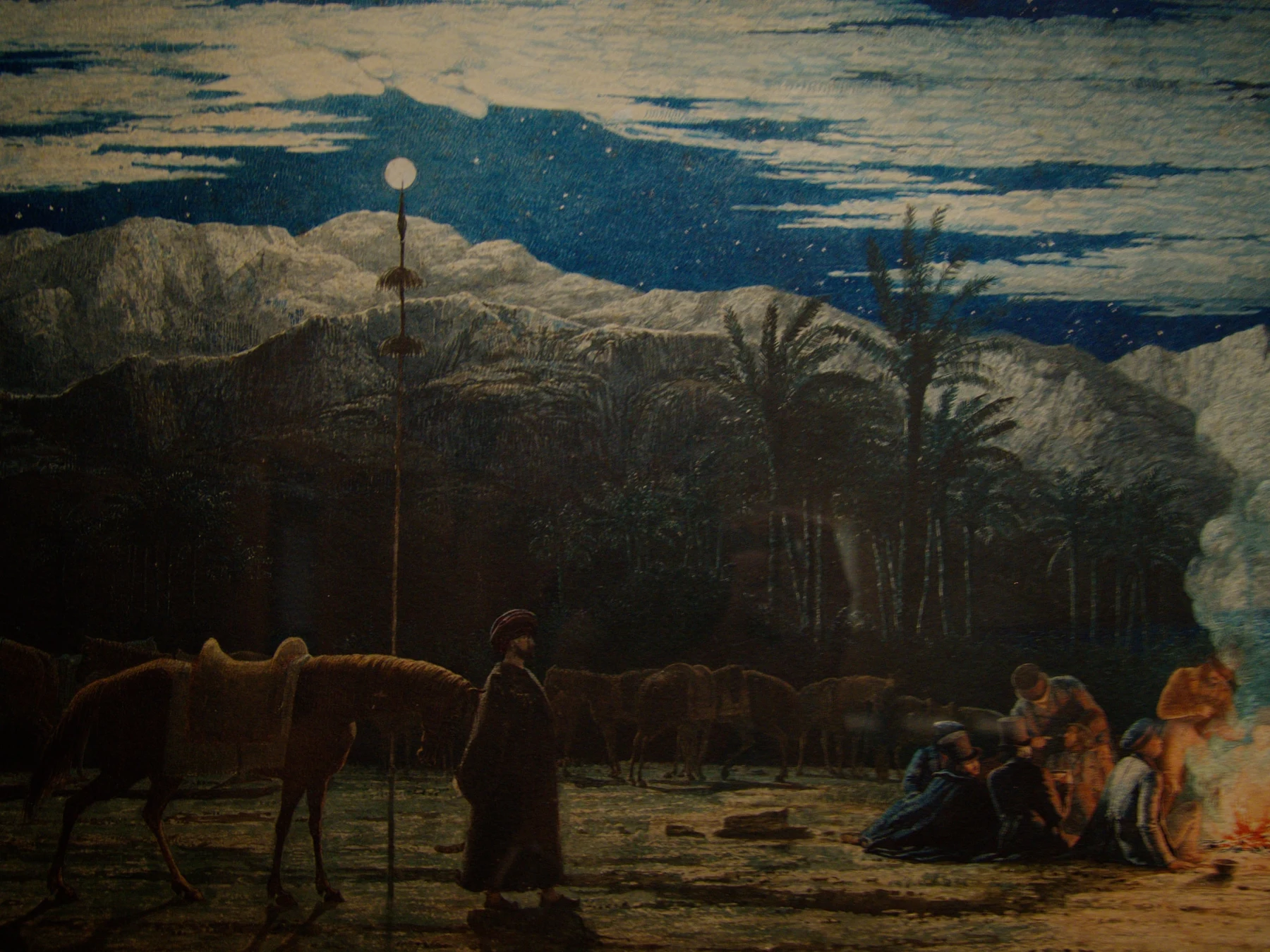
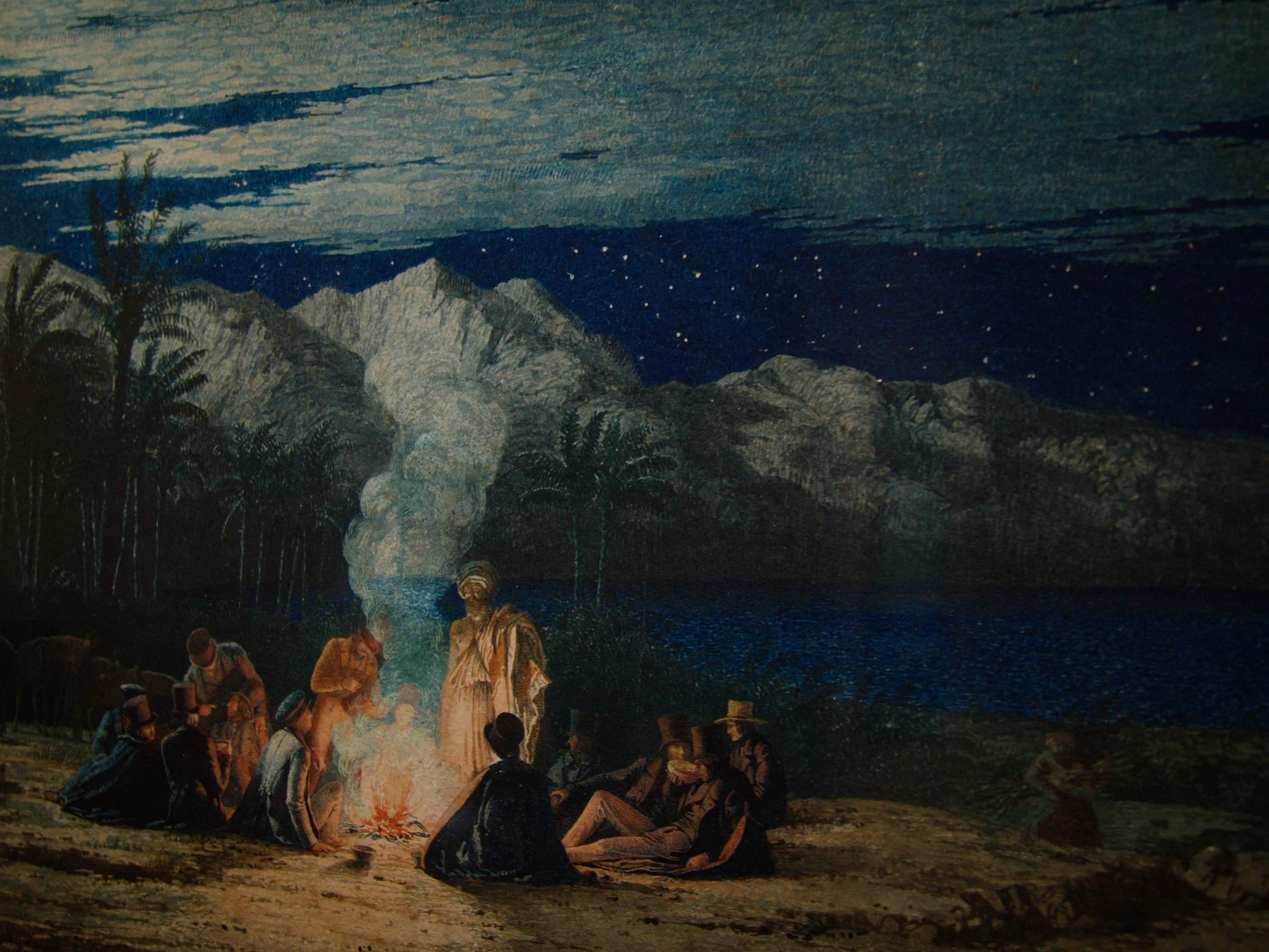
The mode of journeying here is on the backs of horses or mules, and they are of a very sorry description, having the habit of tripping and lying down in a remarkably developed state. I am now a decent horseman for these parts, and have acquired the art of riding, by dint of sundry falls and bruises, and one or two plunges into rivers and streams.
We met some hundred and fifty camels on their way to Smyrna, with their bells all tinkling, and the drivers as gay as bright colours could make them.
You would, my dear Powell, indeed you would, have become perfectly rabid at the sight of their groups round the wells on the sea-shore, with, perhaps, a string of camels grunting and growling,
the whole recommended to you by the overture of the sea roaring in, gently as any sucking dove, and covering the golden beach, which glitters dazzlingly bright, with long lines of whitish foam.
There is much pleasure in store for us yet at Naples, Rome, Florence, Genoa, Lyons, Paris. I hope I shall reap all the advantages I ought to do from this journey.
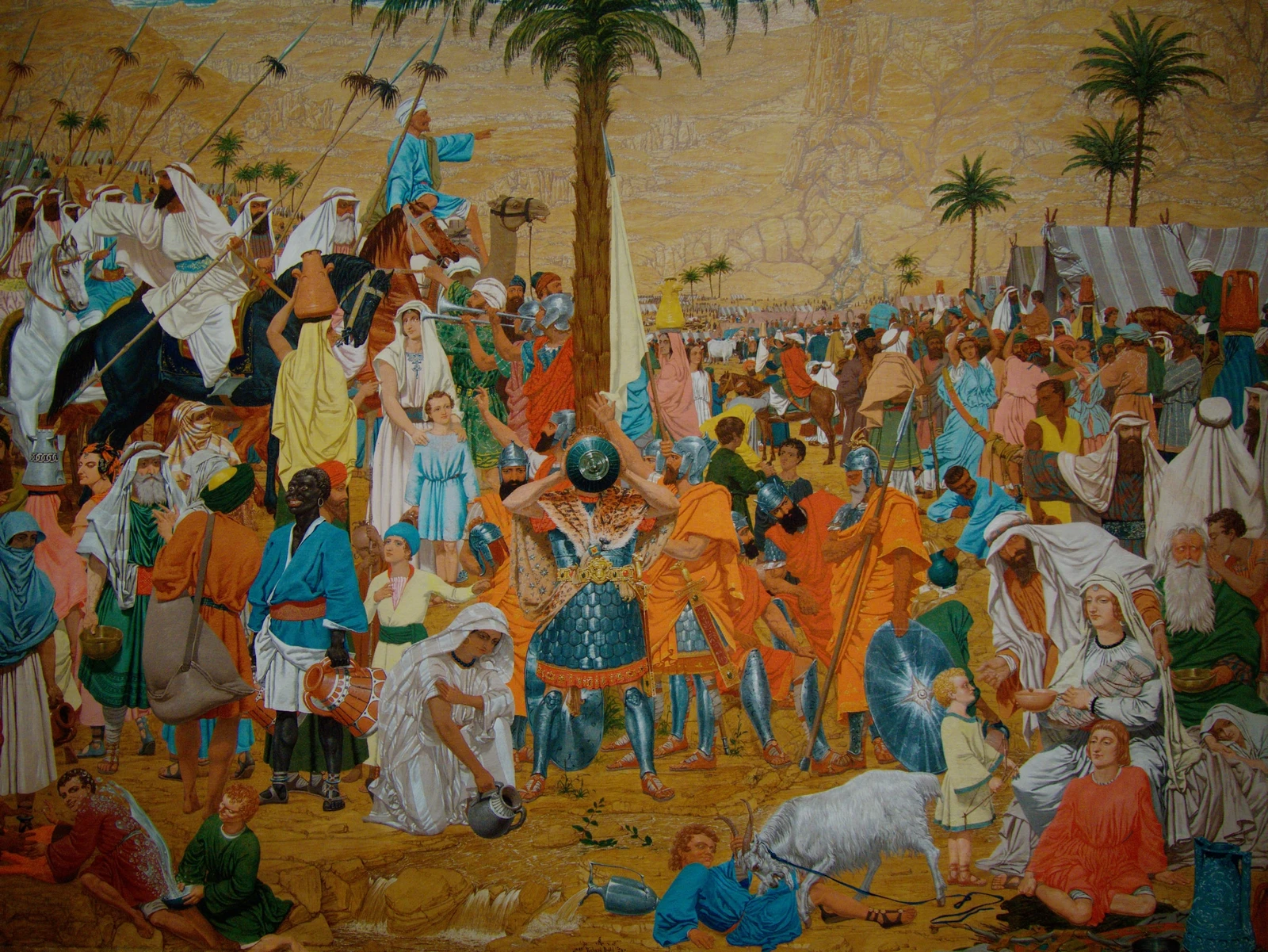
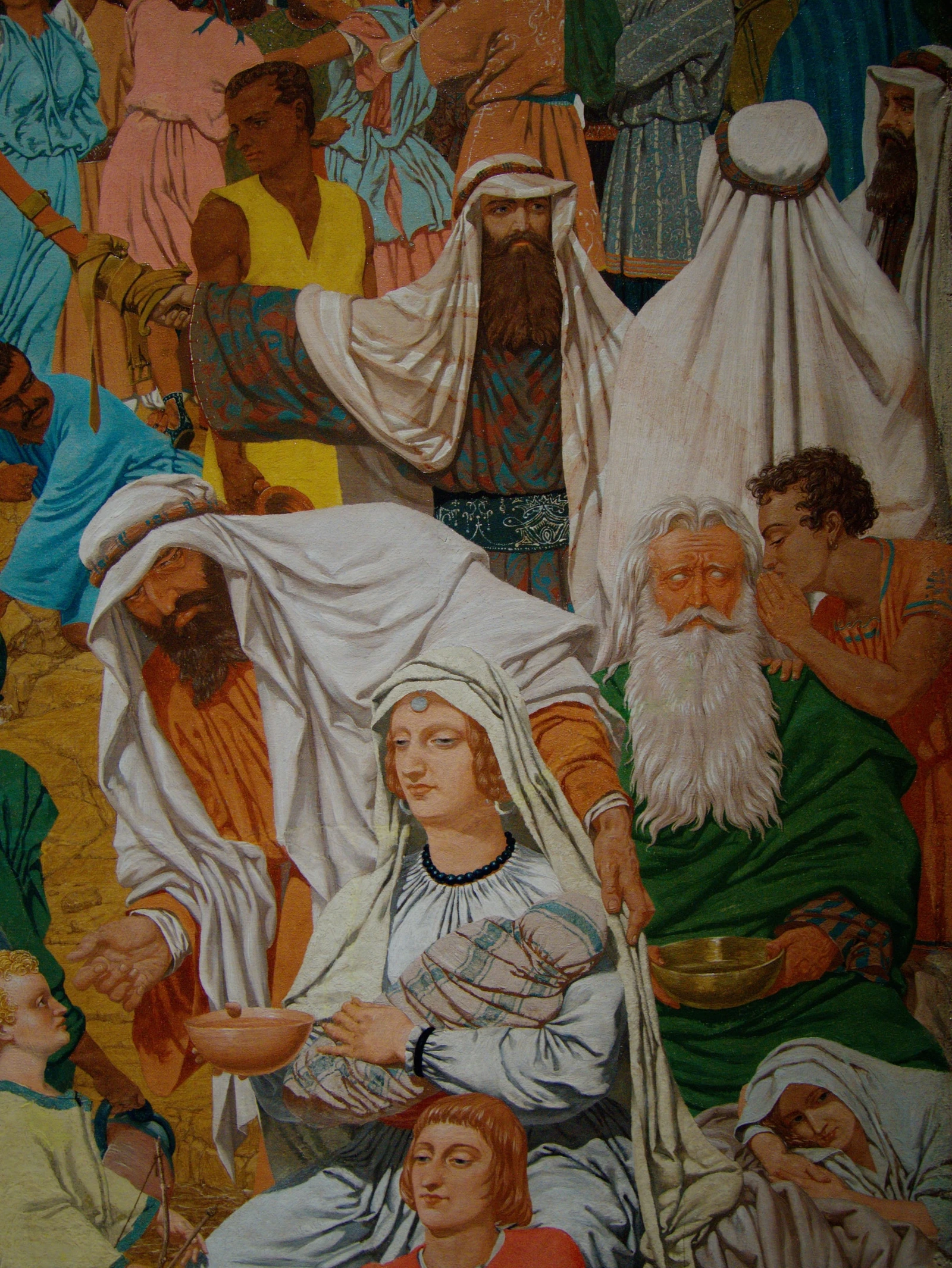
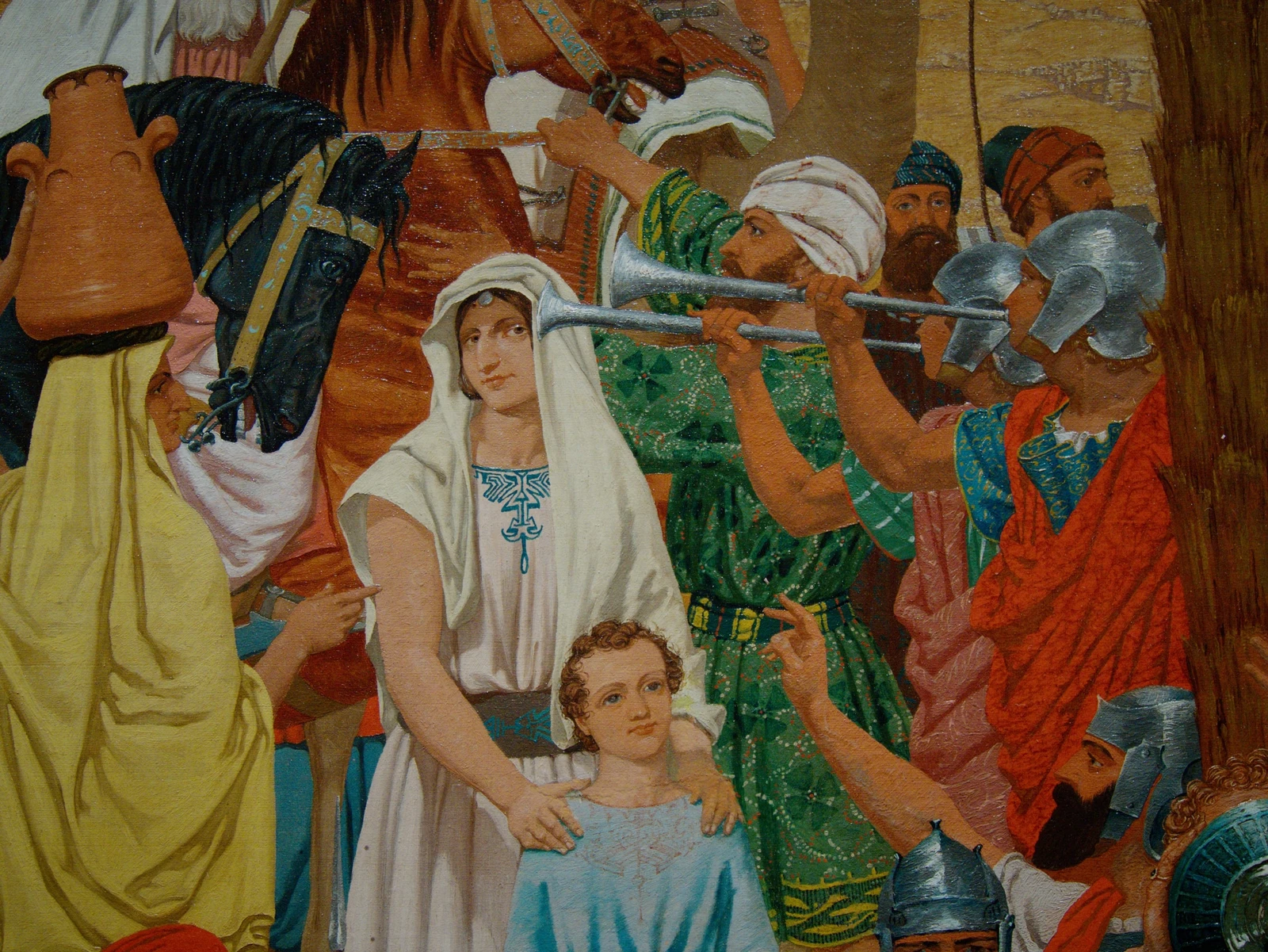
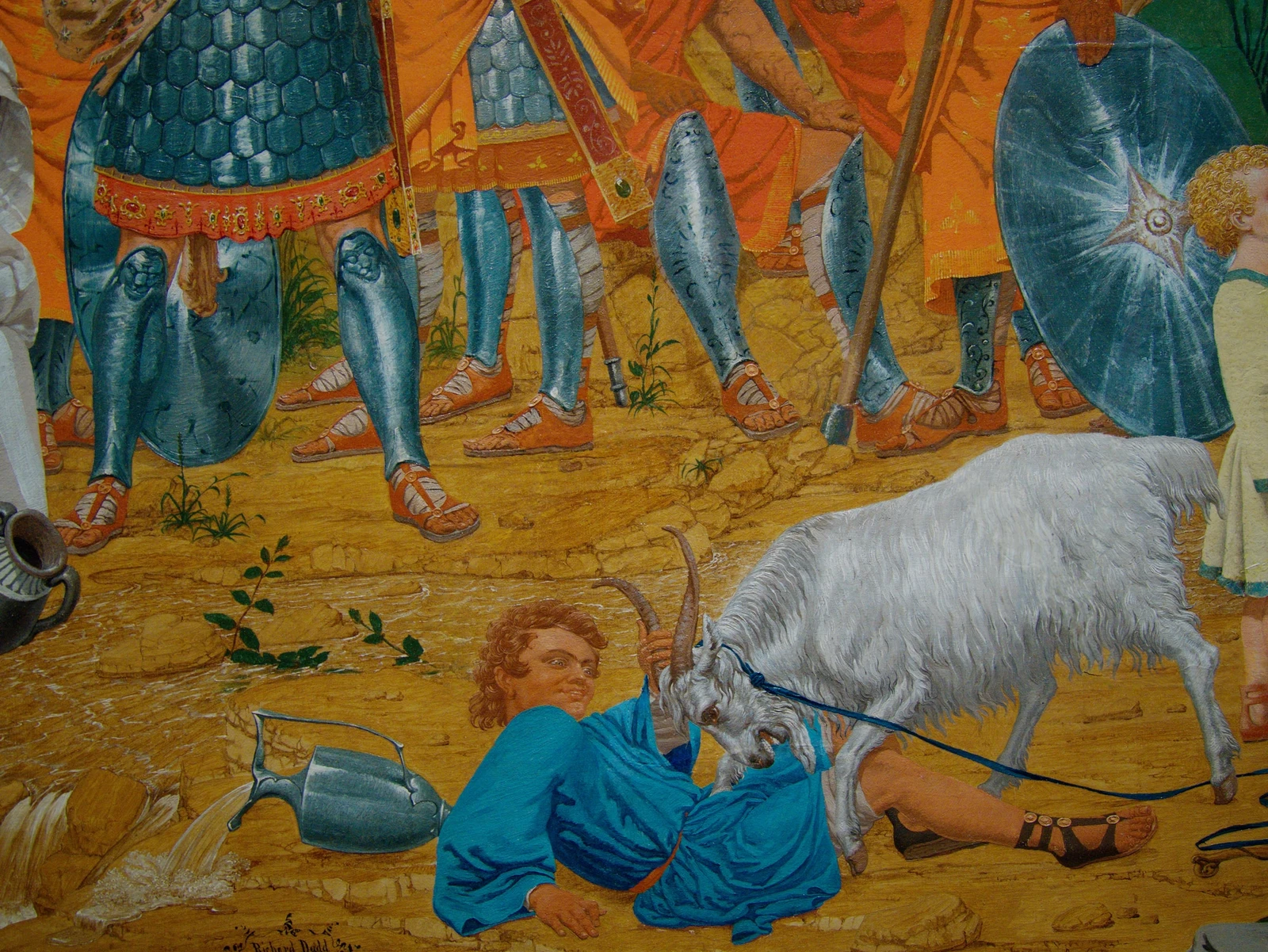
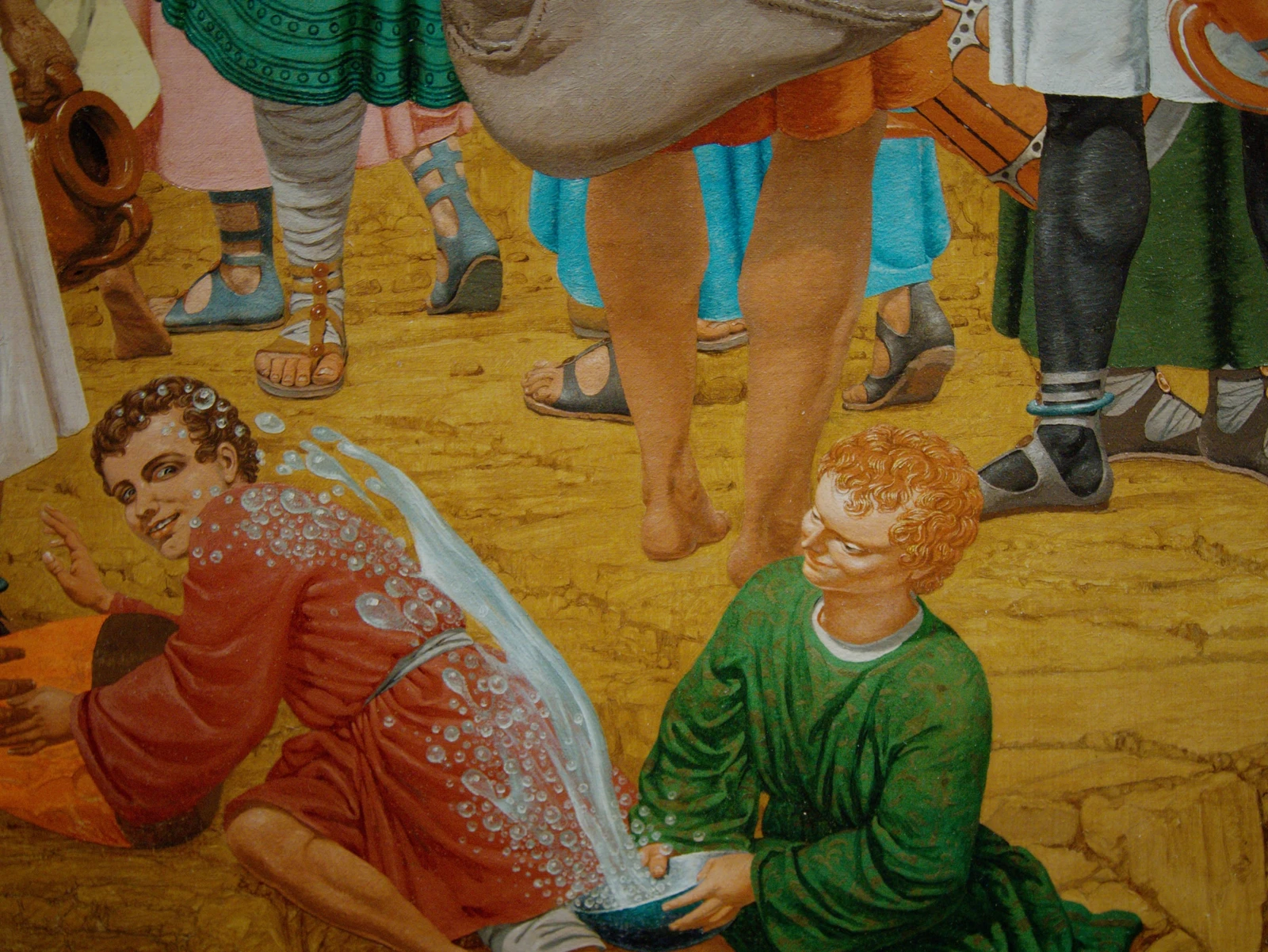
The Flight out of Egypt, 1849 - 1850
On the way back, Richard’s enthusiasm turned to woe. He saw things. Ominous figures, some shape-shifting devils, the young man claimed. Philips, puzzled, suggested they see a doctor in Paris. Richard fled.
He withdrew to his studio in London, stocking up on ale and eggs. Excusable, as he had to submit some cartoons to the Royal Academy. The few who saw him noted his face, ‘pale as death’ and a certain unease. This was unlike the usual Richard, known for his “rich voice, as full of music as a joy-bell, and his sportive humour, exciting innocent mirth”.
Serious worries emerged when one friend walked in on Dadd smeared in red. The explanation was simple, if not obvious: he used his palette knife to cut out a birth mark, etched on him by the Great Fiend.
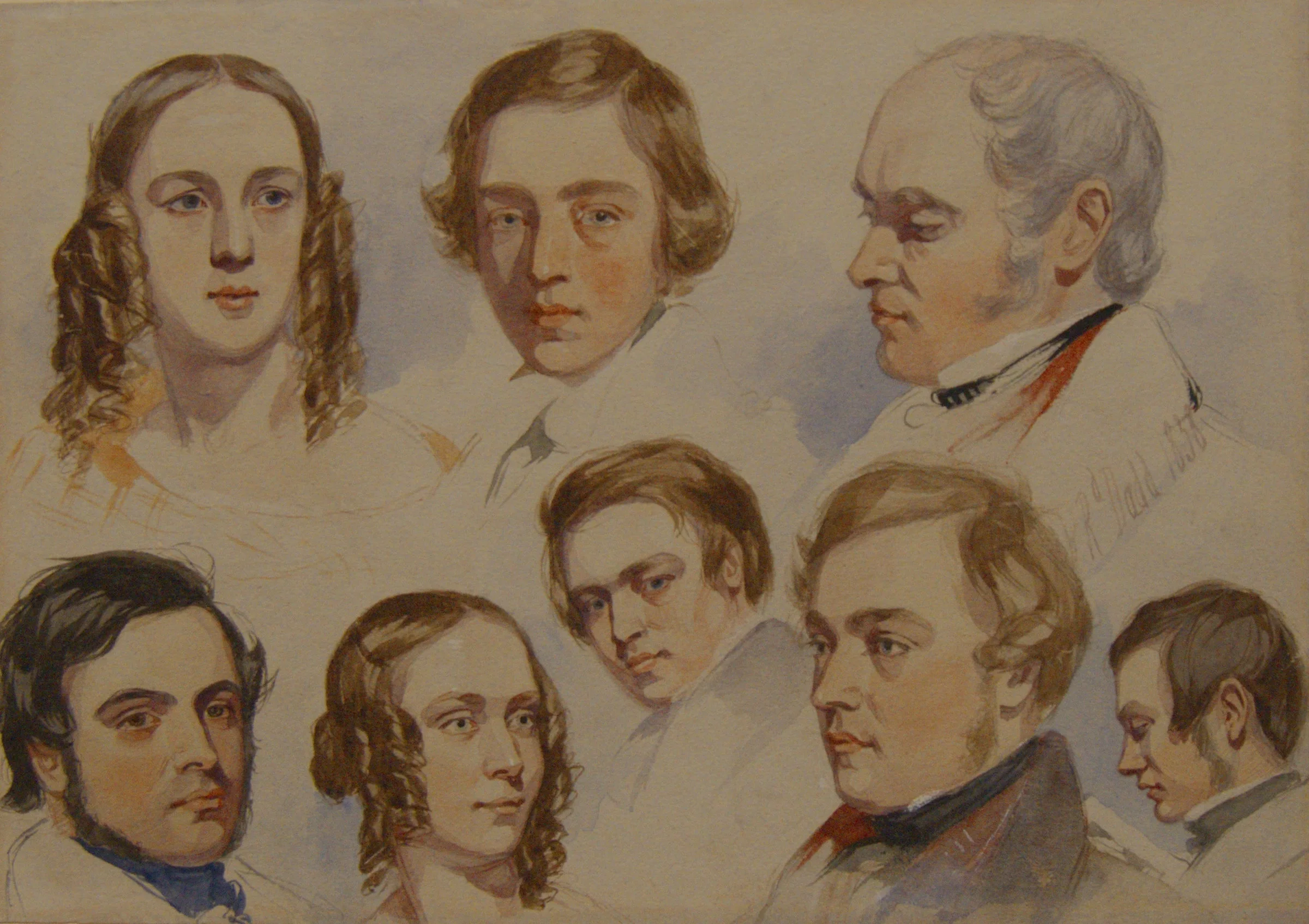
His father dismissed the concerns: “He's no more mad than you are: only you fellows get talking to him, and it excites him; he's sensible enough when he's with me. I can always manage him without difficulty.”
Robert suggested they go together to Gravesend to relax. London was taking a toll on him.
“No,” Richard said, “we will go to Cobham.”
To Cobham they went, Richard assuring his father that he will “disburden his mind” to him. There, they paused at The Ship Inn, had some tea and arranged for lodging in the village. John Adams, the waiter, recalled Robert’s order: cheese and biscuits for his son and boiled ham and a pint of porter for himself. Richard invited his father for a walk.
“I am very tired, I don't care about going out any more,” Robert replied.
Adams left to run some errands and when back in the parlour at 9 p.m., the two were gone. Mrs Gardener saw them going that way, towards the park. Adams was worried. He waited for them until midnight, but sleep got the better of him.
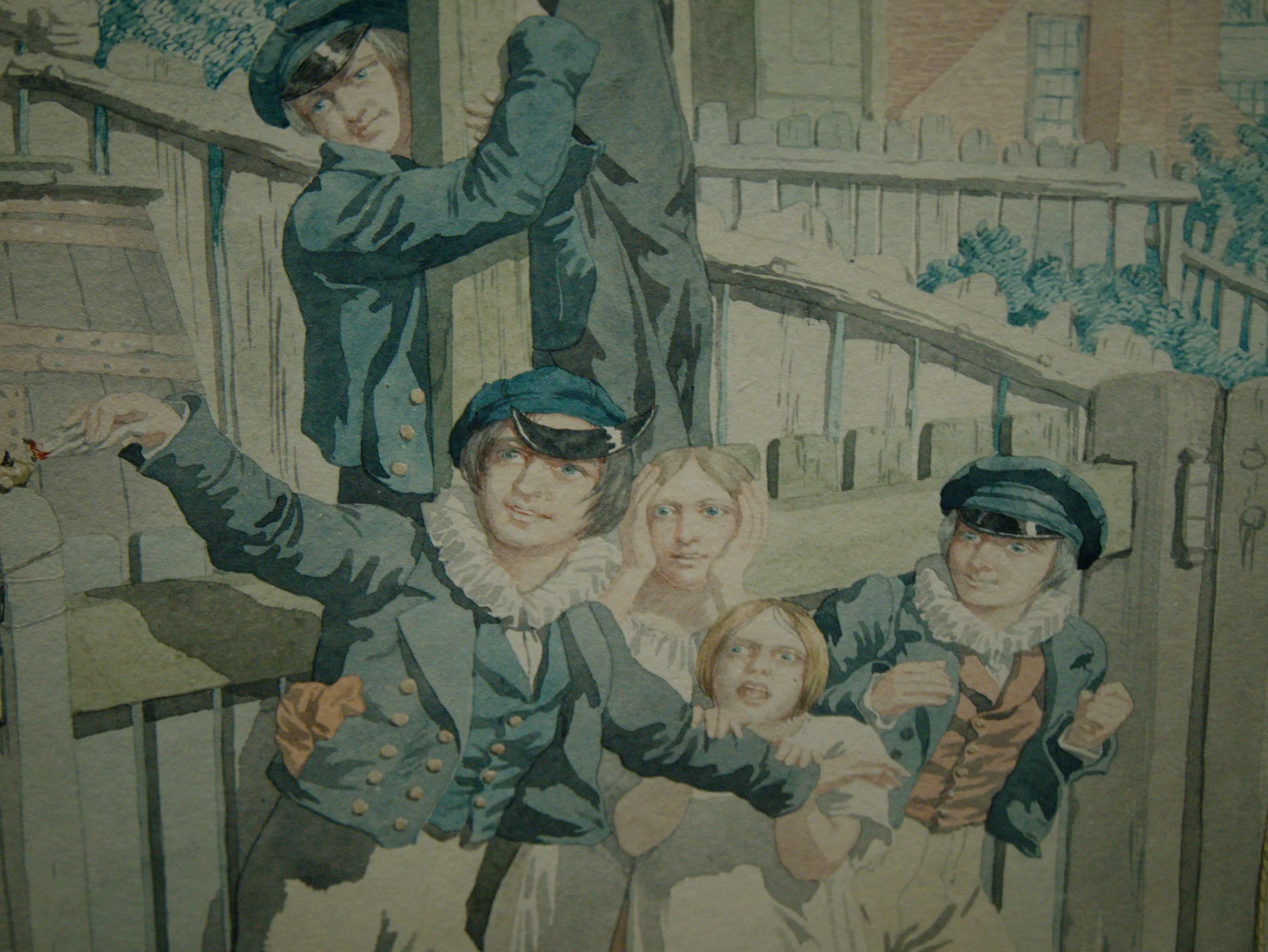
The next day, a butcher by the name of Abraham Lyster spotted Robert lying on the grass. Trying to help the well-dressed drunkard, he shook the unresponsive body. Nothing. Turning him revealed several wounds and a pool of blood. The razor was underneath and the murderer on his way to France.
The fleeing Richard cleared customs, despite having to explain away the muddy and ruffled clothes. His papers were in order, so the officer didn’t make much of his story of falling from a coach. By the time he was buying a new suit at Callais, Richard was a wanted man, his description telegraphed throughout France.
But he was on a train to Paris. Voices told him that his loquacious fellow traveller was the Devil himself. Wait for a sign from the heavens and then strike. Should the sun set with no cloud on the horizon, the Frenchman’s life ought to be spared. Otherwise, see to your duty. His companion was lucky, as the sun disappeared below without a cloud in sight.
Yet, the voices grew stronger, now bidding on a hint from the starry night. The movement of the stars will be a clear sign to act.
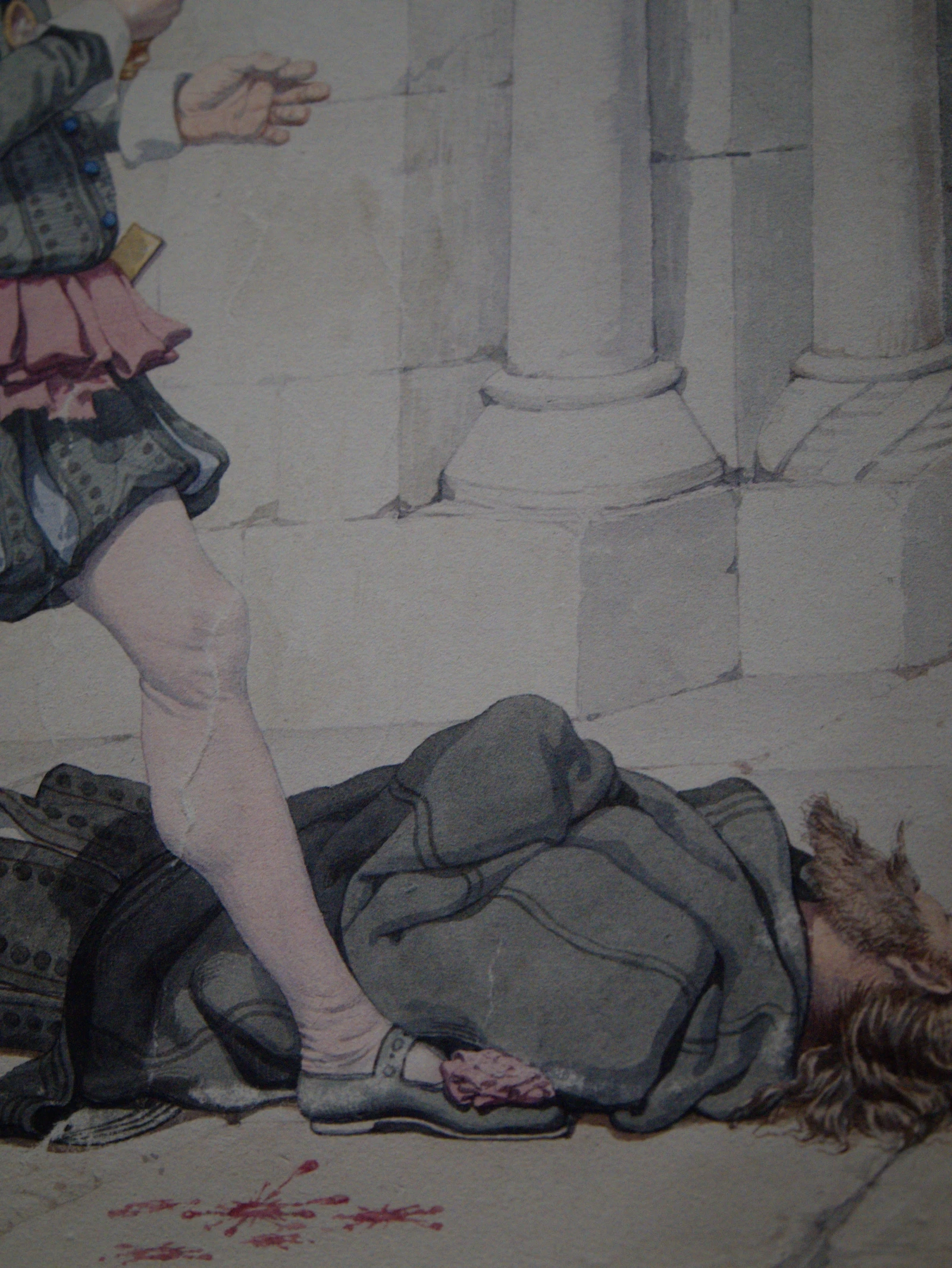
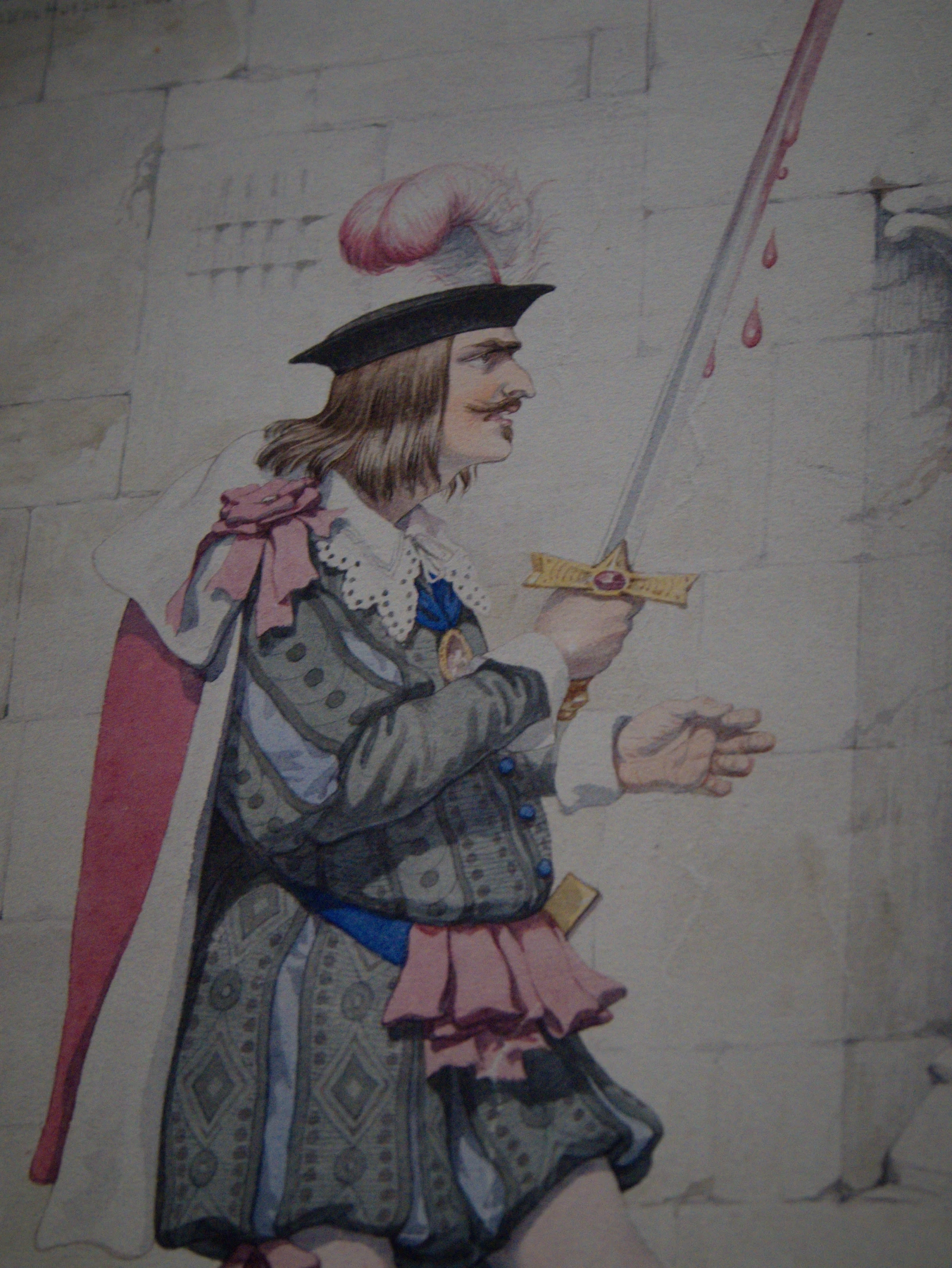
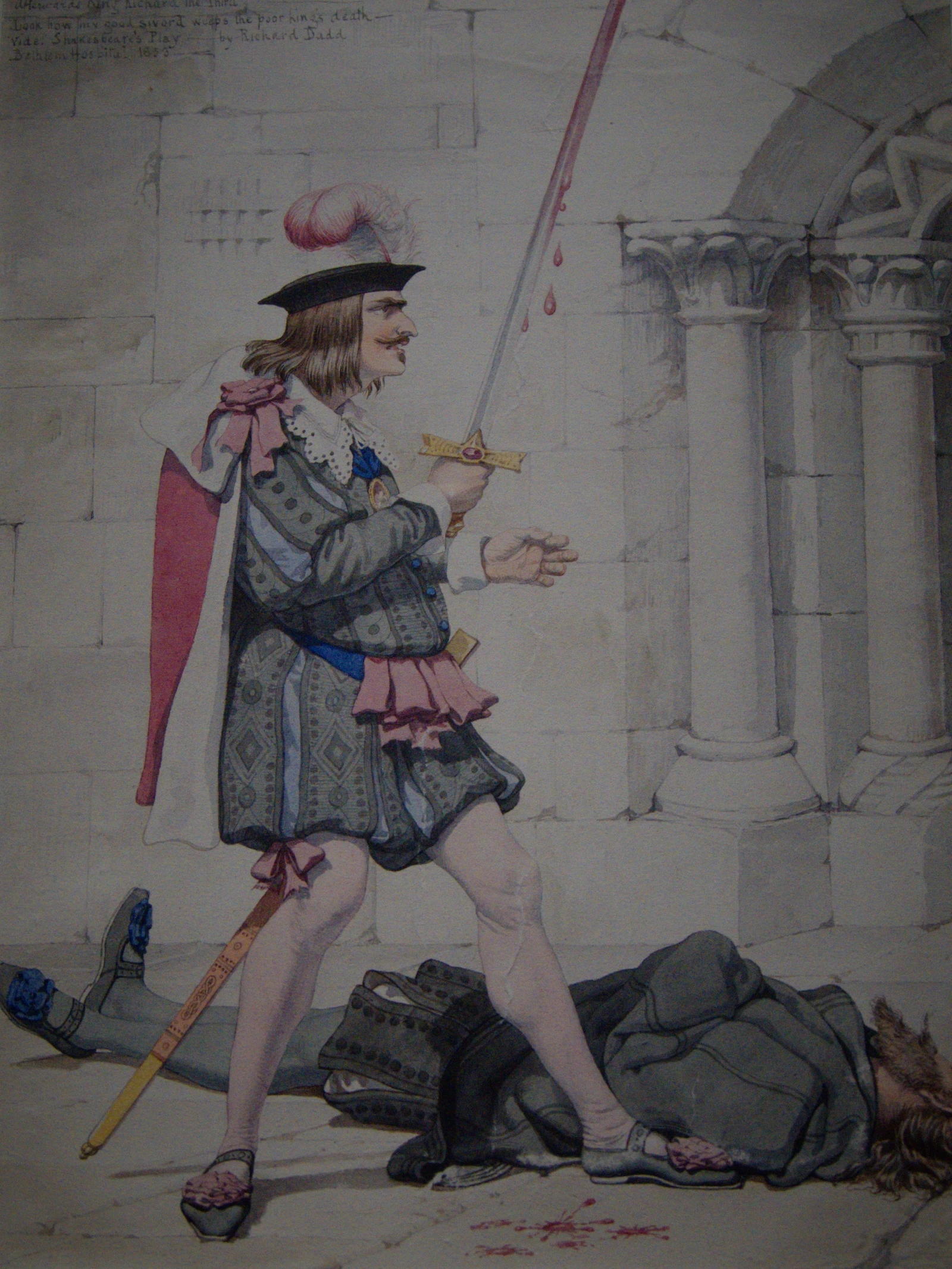
The Frenchman found it rather bizarre and at first amusing when the jovial English traveller started fiddling with his tie and collar. It was when he pulled out a razor that things got rather complicated – ça a tourné au bain de sangit turned into a blood bath, I guess they say in French? Despite several cuts, Monsieur M restrained the young man until the police came. Upon arrest, Richard was found to have a list of people to assassinate, including Ferdinand the First, the Austrian Emperor. At the top was his father’s name: Robert Dadd.
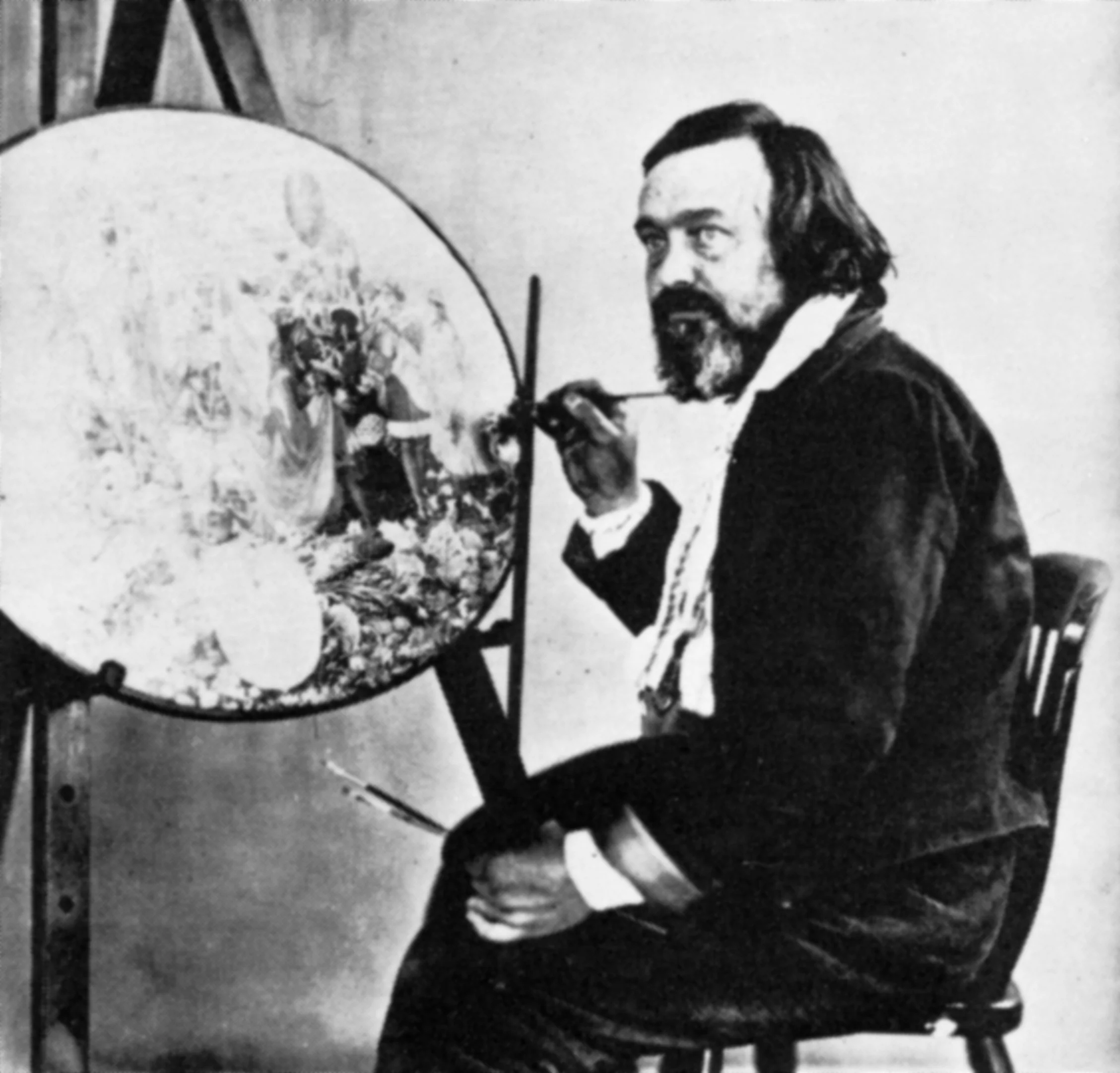
“Do you think he went mad because of his trip?” I overhear two guys talking. Today we have more nuanced words to describe Richard’s state of mind. Psychotic episode, paranoid schizophrenia or Capgras Syndromepatients often believe imposters have replaced their family members if you want to be specific. Alas, Richard was, in technical Victorian terms, a criminal lunatic.
We don’t know why he went mad, for mad he was. Spirits shepherded his actions, whether in painting or violent outbursts, he claimed. He was but the cat’s paw, not more.
There is a pattern in the Dadd family. His youngest brother, George, also wrestled with reality and was admitted to an asylum. Maria, their sister, attacked her husband and thought to be persecuted by “the Jesuits and the clergy of Kensington”.
Was it the early death of their mother? Mercury poisoning from the water-gilding on Suffolk Street where Richard lived, perhaps? Or was it, as his contemporaries were sure of, the sunstroke he suffered in the East? Dadd had a certain intimacy with the world of fairies. A cause or a symptom? We may never know.
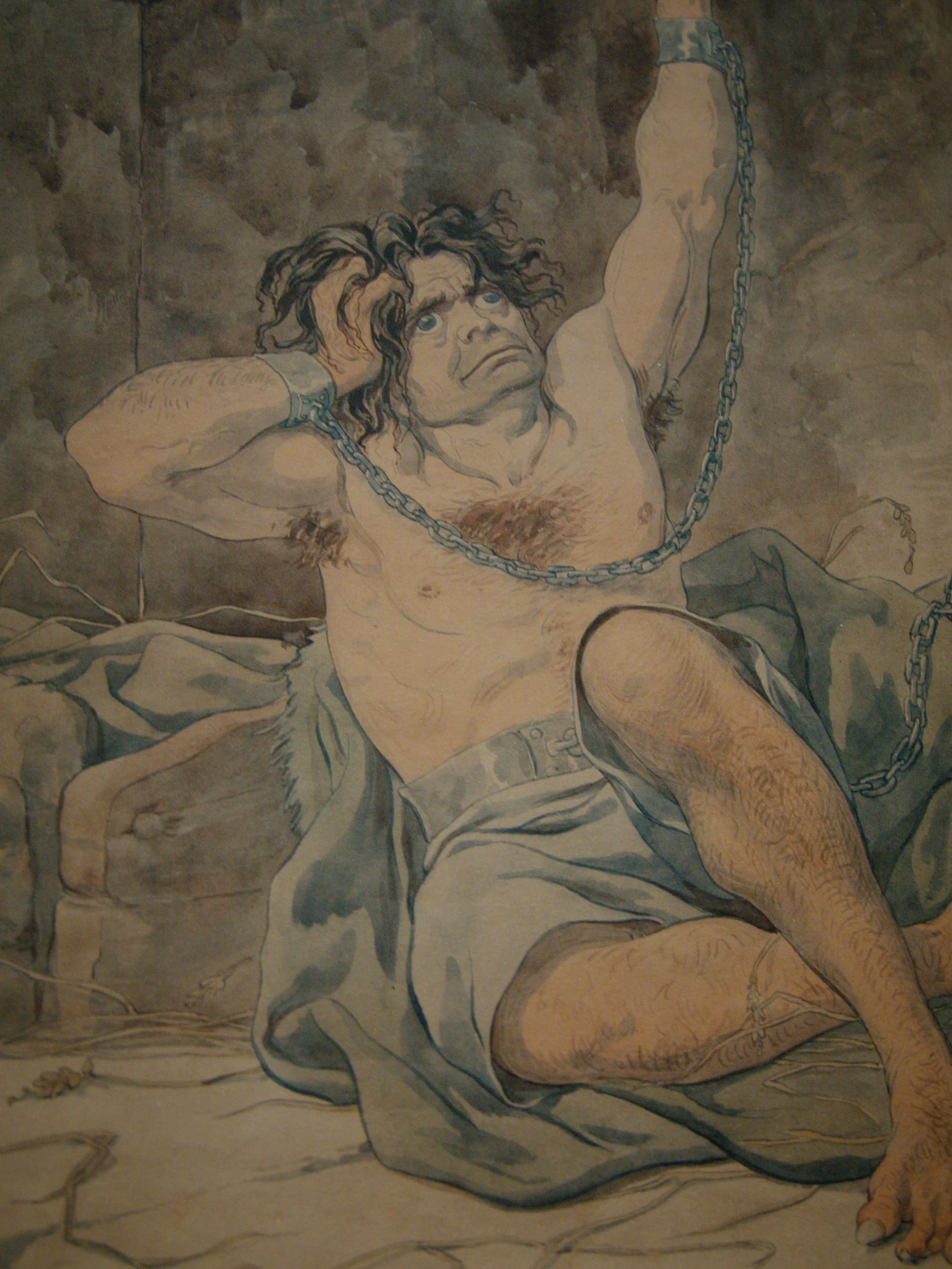
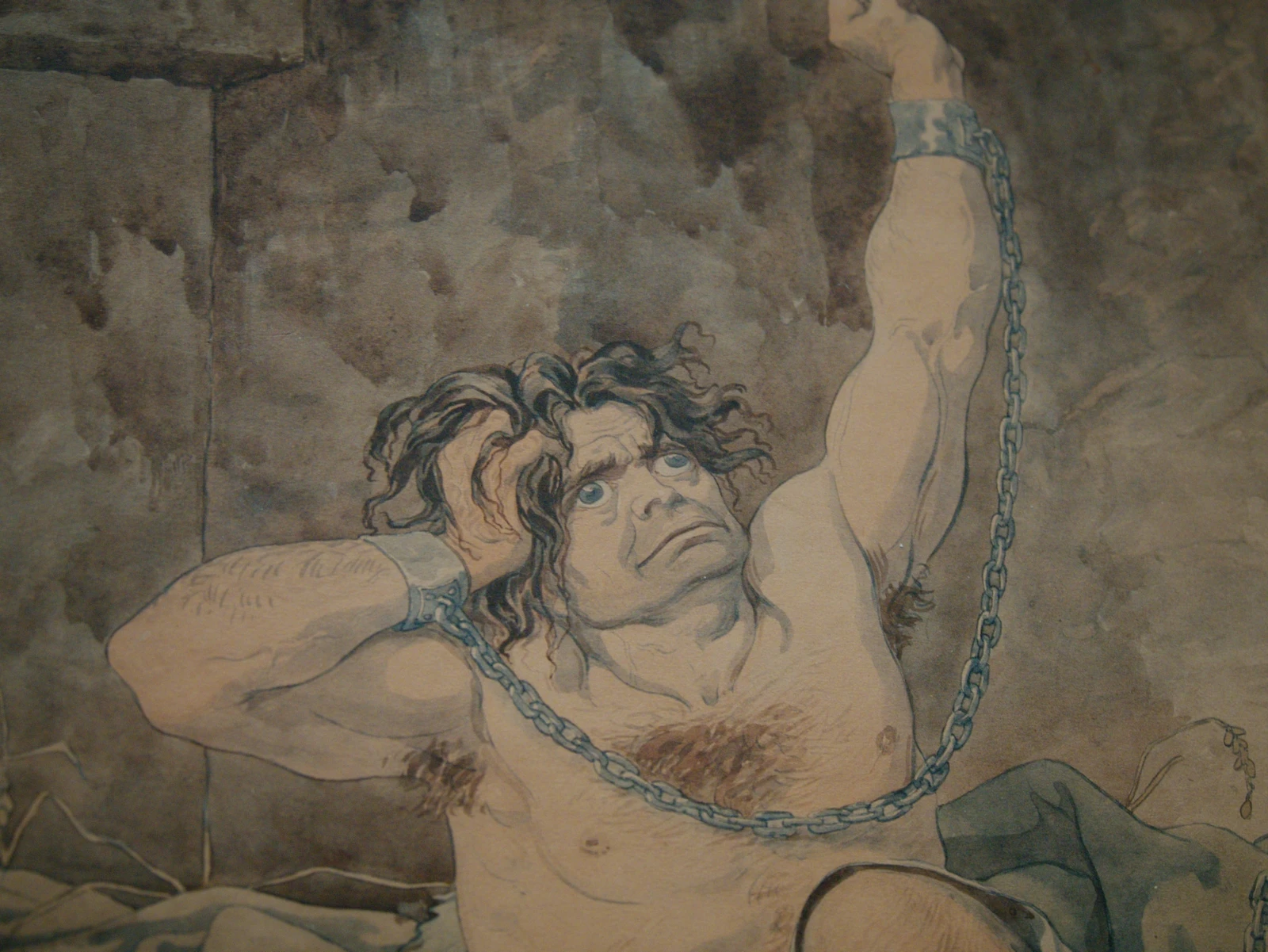
Agony - Raving Madness, 1854
A woman at a well, children playing, or a thousand things to arrest the attention, and which all seem to slip away from me as if unreal - as if they were the pageants of a dream, rather than a substantial reality.
The danger is to reduce. Van Gogh chopped his ear off. Munch’s anguish is evident in his scream. Wain’s cats confirm his going mad. Dadd killed his dad. Simple and neat, isn’t it?
We may imagine a man in a corner, speaking in tongues and we know we have nothing to do with that. We may even sound a bit like Dadd’s contemporaries writing about him.
In parts eminently beautiful, but other parts, in madness, without method. How singular these outpourings of disease and mind will be to future collectors.
Two or three of his productions indicate the state of his mind. One describes a castle, shattered by lightning: underneath is written “The Wrath of God”. Others contain brief written descriptions (on the backs) in oddly mingled French and English.
— Art-Union
Does it change the way we look at his paintings once we’re aware he, you know, went mad? The phrase even implies his going somewhere, in some place, where we dare not go. We’re far away, safe in our fortress of logic, guarded by the moat of a good grip on reality. It’s difficult, if not futile, to pinpoint madness in Dadd’s work. Yet, something uncanny, almost dangerous creeps up. Something in the eyes, in that unfiltered gaze. Call it sadness, drama, candidness or what you will. Look for too long and it’s unsettling.
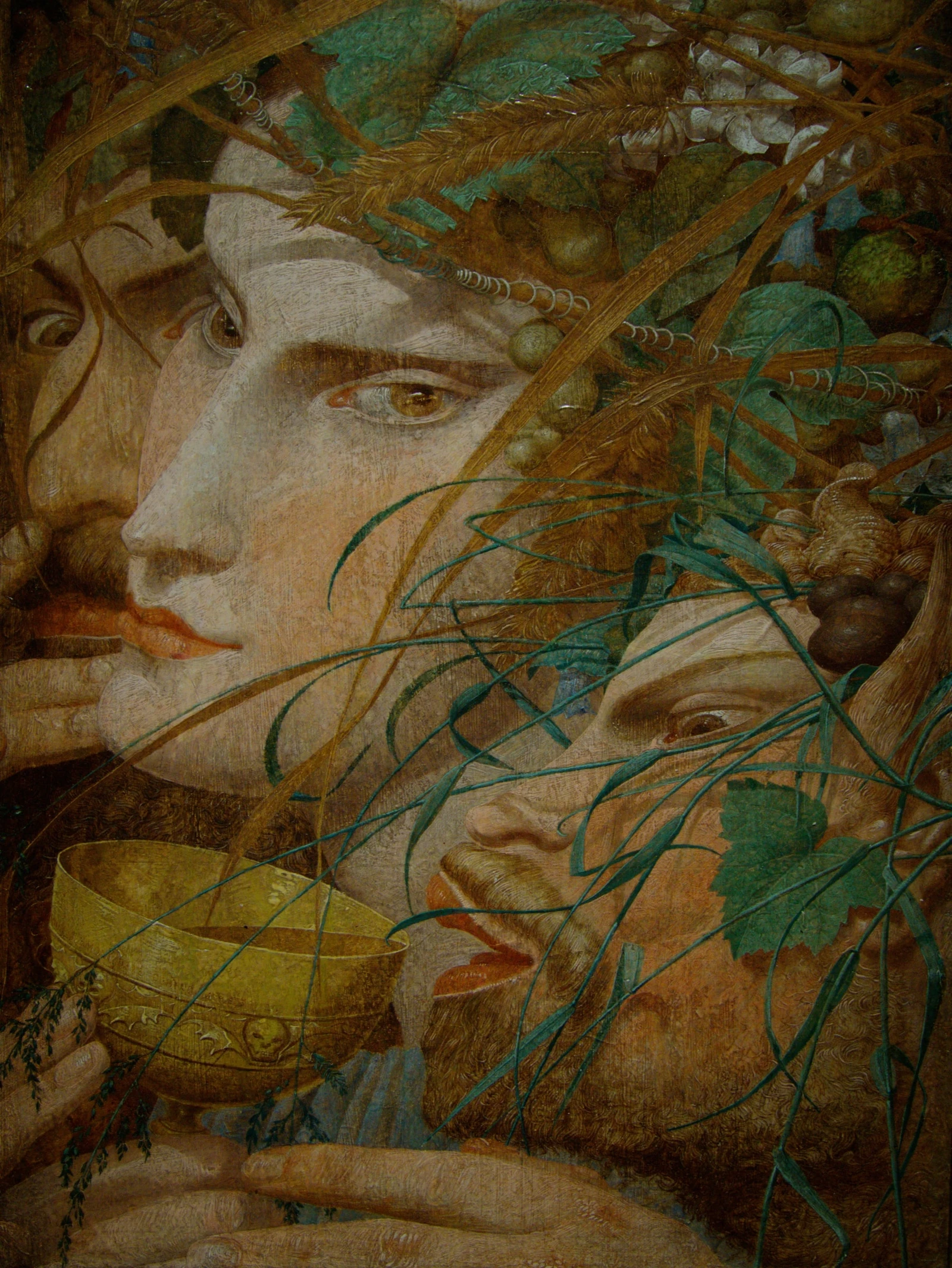
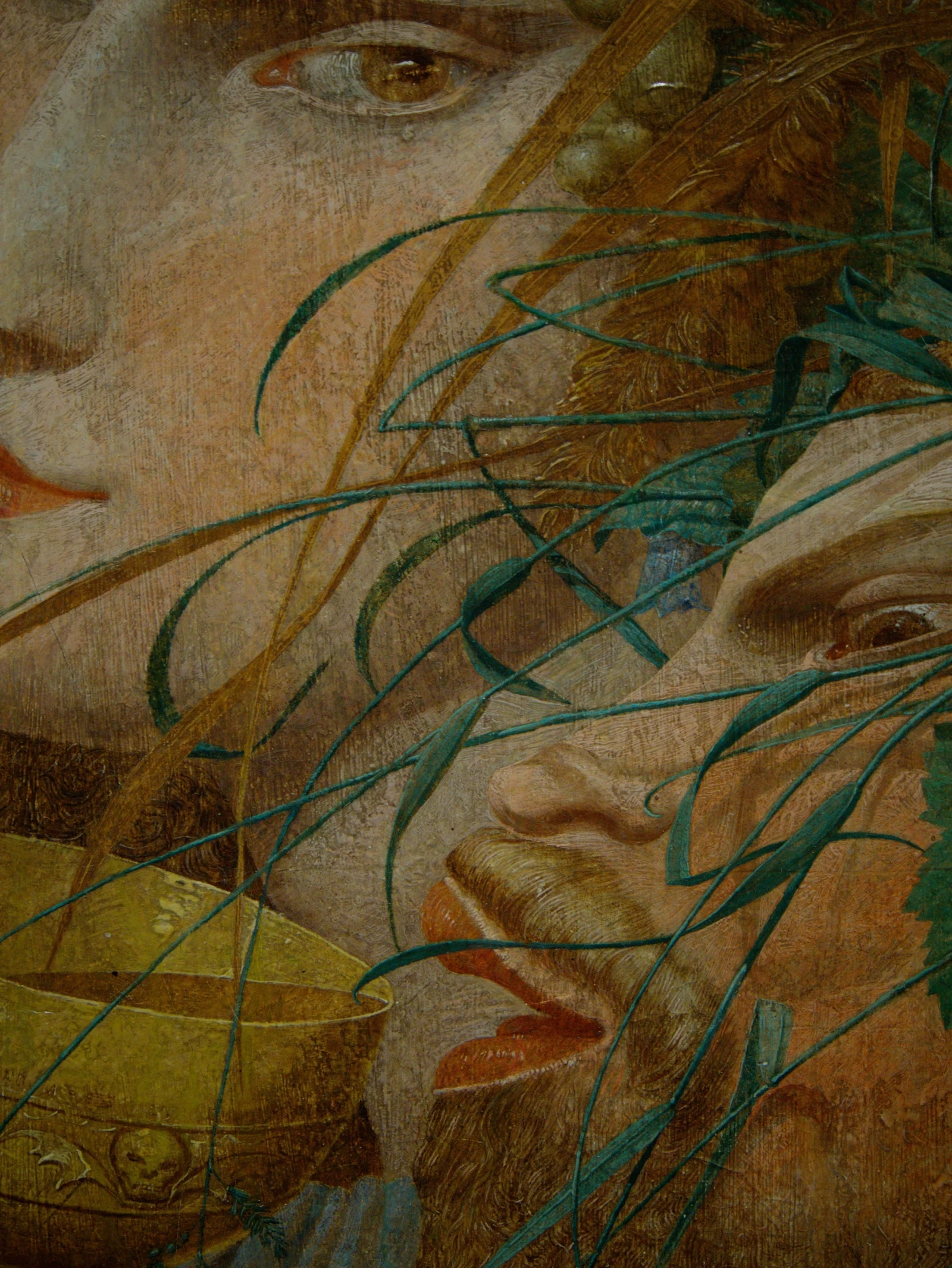
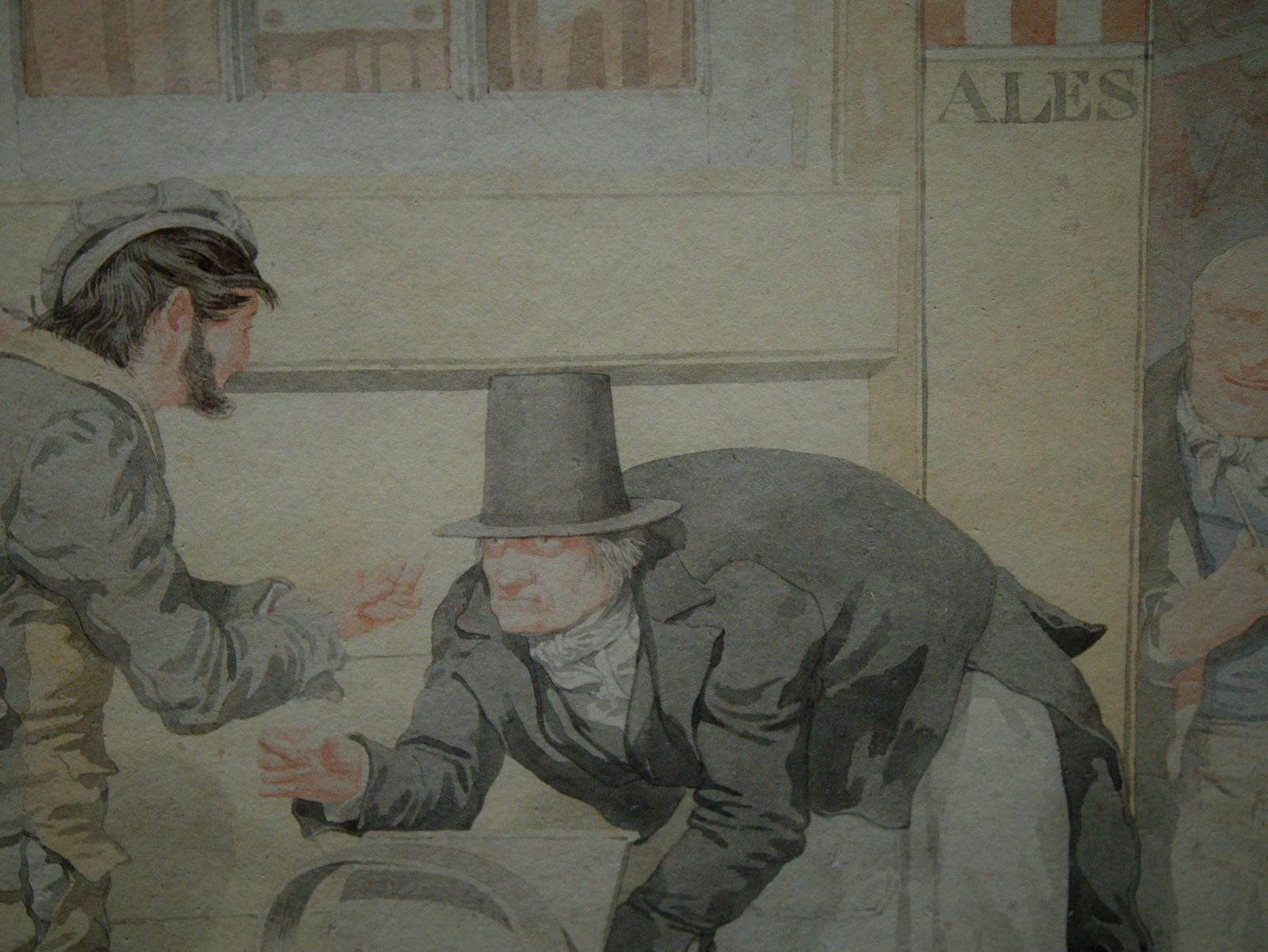
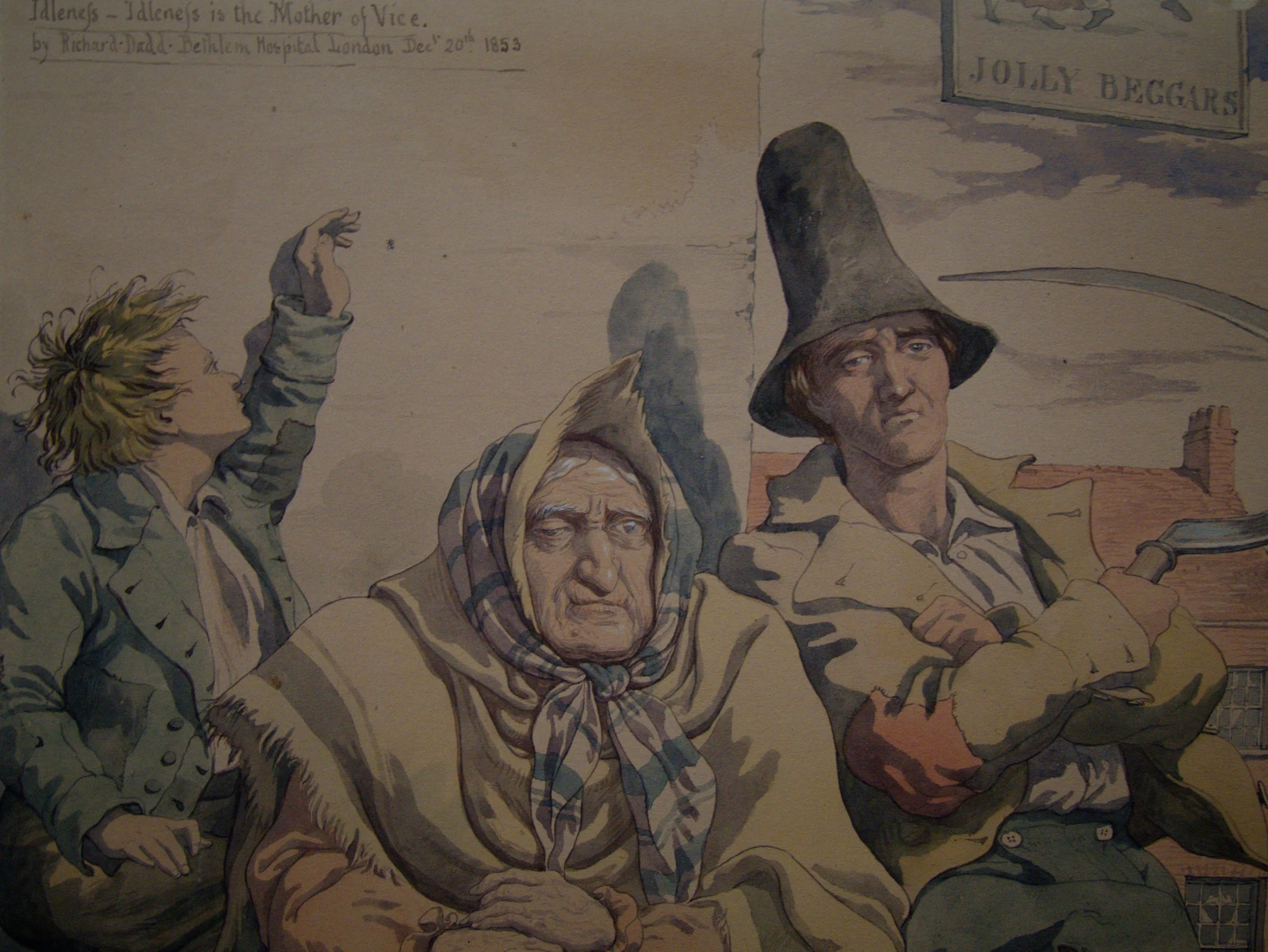
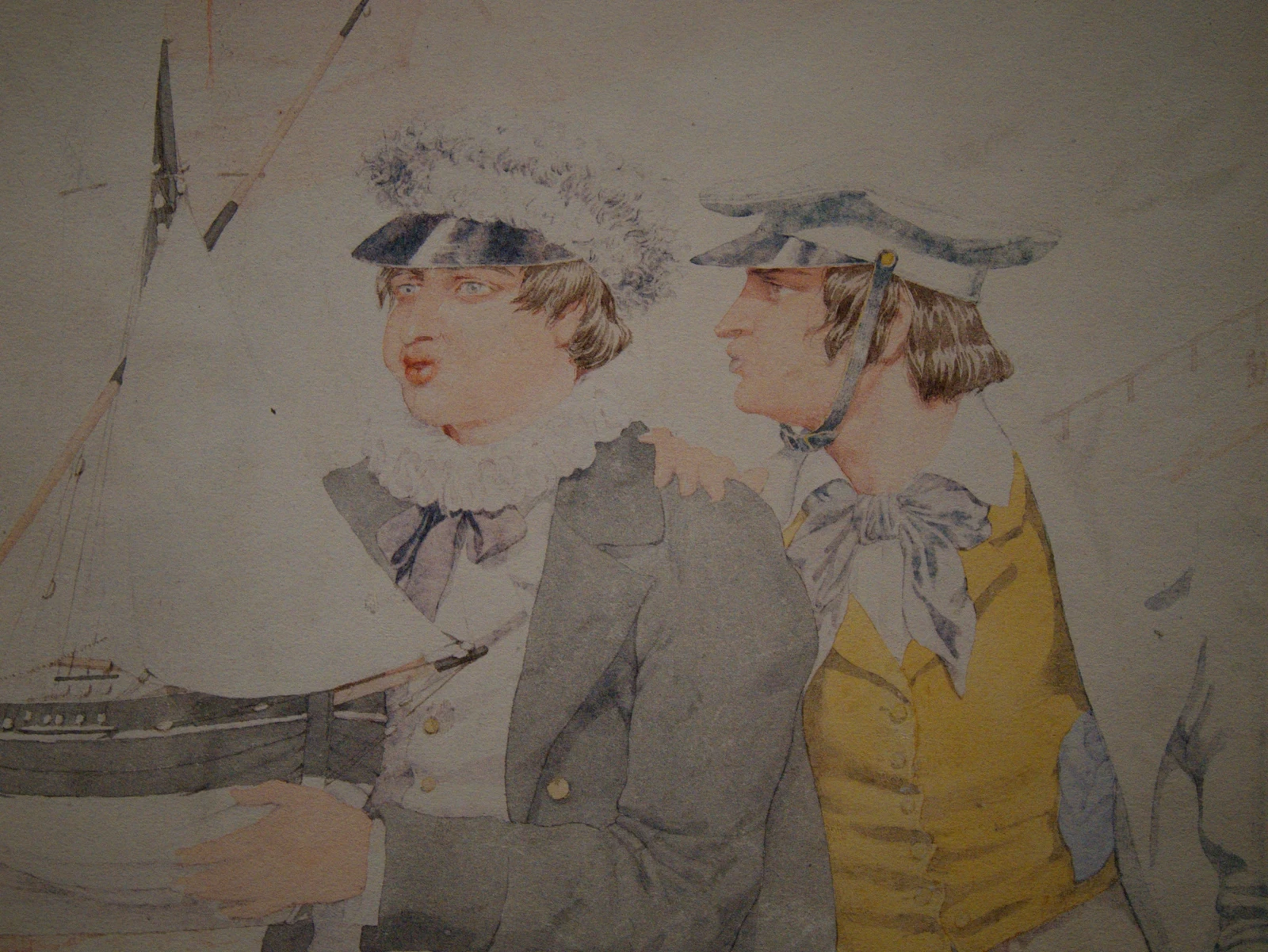
Bacchanalian Scene, 1862
Upon his extradition back to England, Richard ended up at Bedlam, formally known as Bethlem Royal Hospital. Victorians referred to it as “that dismal, dreary prison in the Lambeth marshes”.
As you may have already anticipated, mental health care was rather idiosyncratic by modern standards. After his arrest in France, the first asylum treated Richard with cold showers. Beyond tranquilisers from the Victorian doctor’s medicine cabinet, manual labour and kindness, not much else could be done for “lunatics”. E. T. Monro, Richard’s designated physician, didn’t even bother recording case notes on him for the first 8 years.
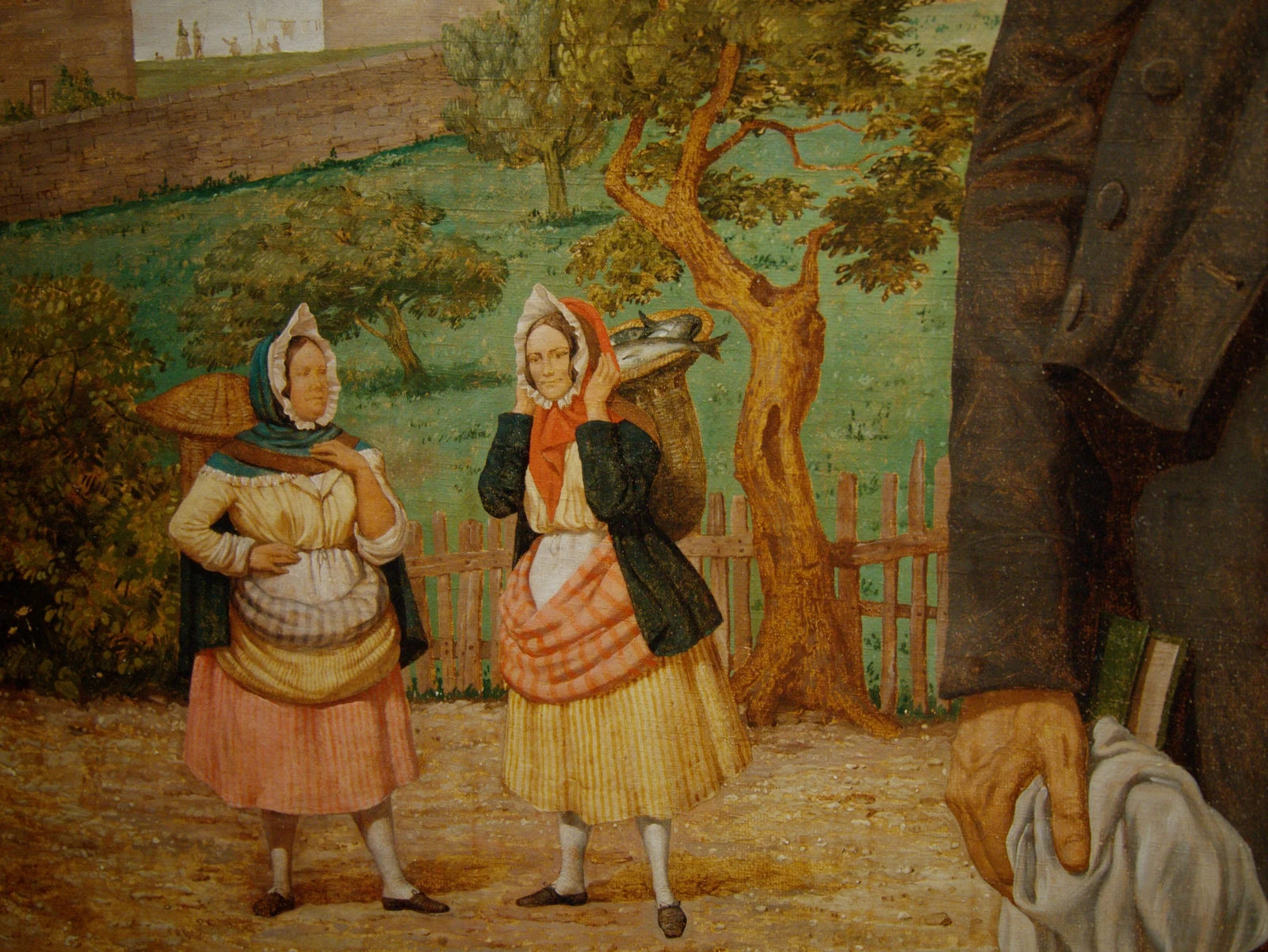
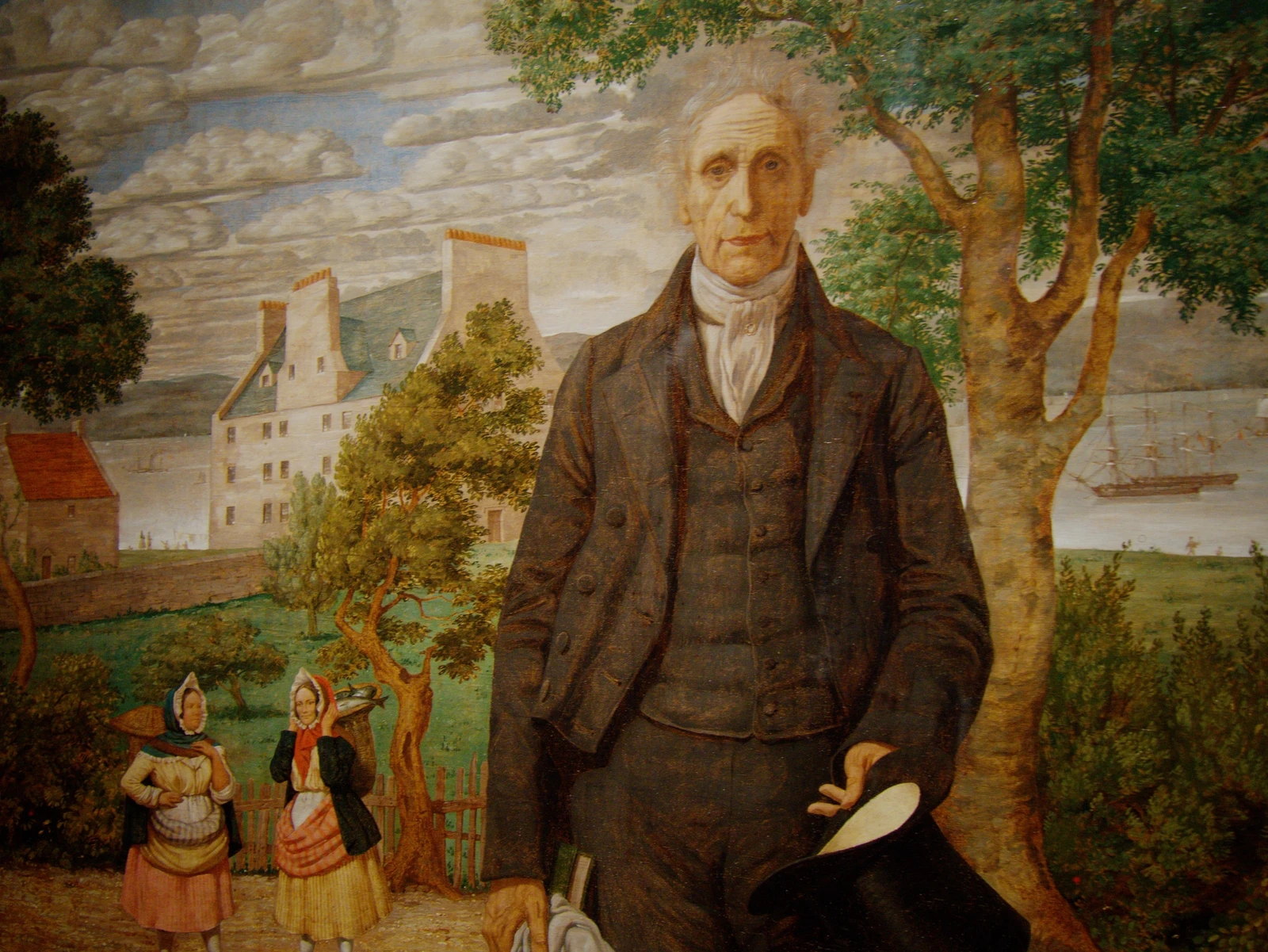
The start of the 19th century was not devoid of developments in how to treat troubled minds. Esquirol, a French psychiatrist, pioneered the so-called asylum statistics, tallying up the causes of madness to include gambling, masturbation and reading novels. Careful, out there.
The same Esquirol proposed that physiognomy could tell us much about a person’s state of mind. He had a collection of 200 facial casts of the “insane” and 60 skulls. Sir Alexander Morison, a physician at Bedlam, was an adept of such ideas and commissioned artists to draw patients for his Physiognomy of Mental Diseases, published in 1840. He was skeptical of large asylums, having developed a reputation for discretion in all matters to do with patients. Morison believed the reformist movement to do away with straightjackets and chains to be absurd. The label of “gentleman physician” says much. At Bedlam, he took notice of Richard, eventually owning several of his paintings. As for reimbursement, the only record is a note from Morison’s diary, saying he had sent for an attendant to get apples for Dadd.
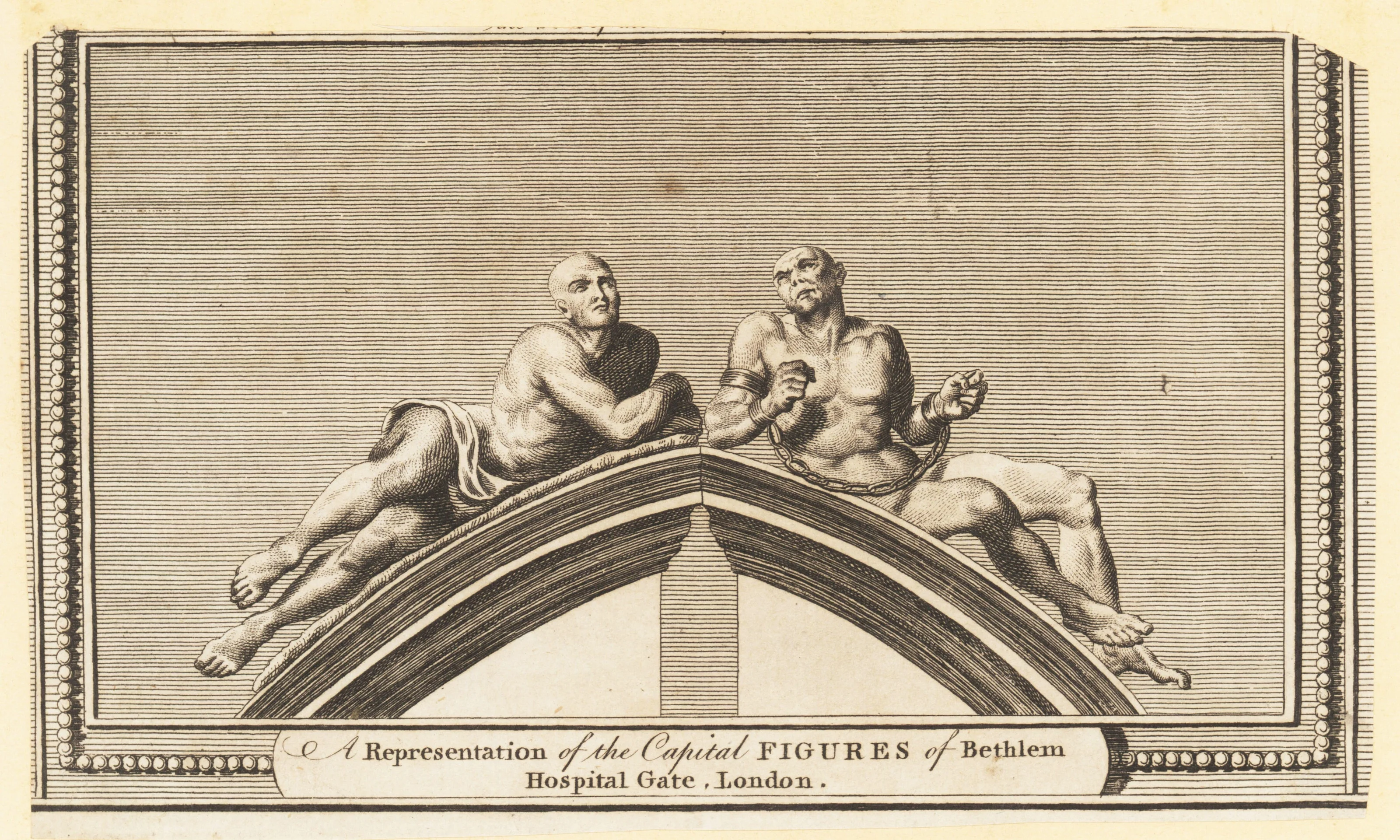
It was the passions, Victorians believed, that had to be managed. Abnormal behaviour was a problem of morals - the cause, symptom and cure for the confused intellect. Richard, of course, did not consider himself to be ill. The same muse that carried out artistic work could suddenly unleash anarchy in the mind, so what can you do?
Asylum statistics and “moral therapy” inspired Richard, who apart from his memories and a sketchbook from his trip to the East had little to turn his eyes to. Most patients stared at brick walls the whole day.
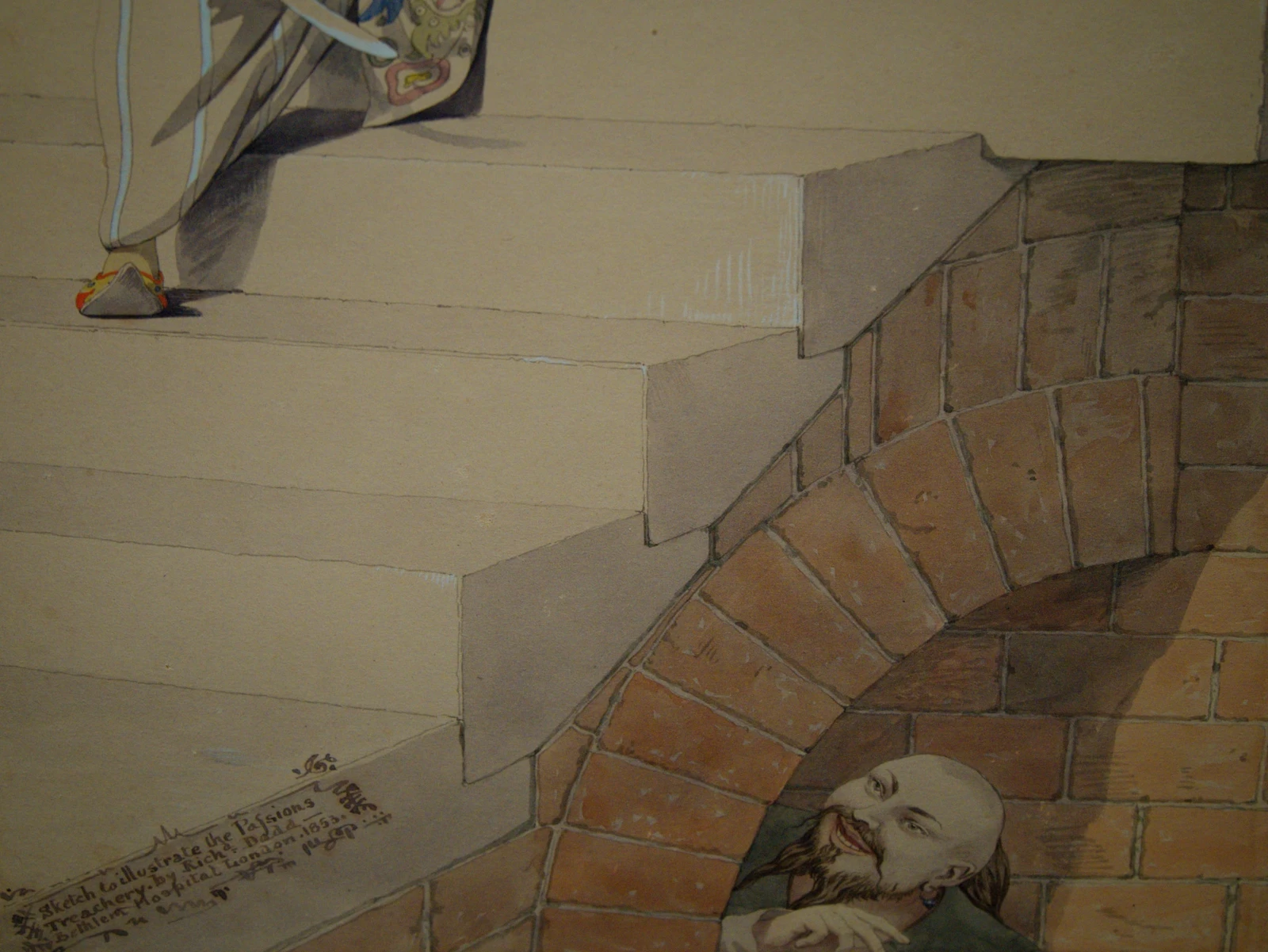
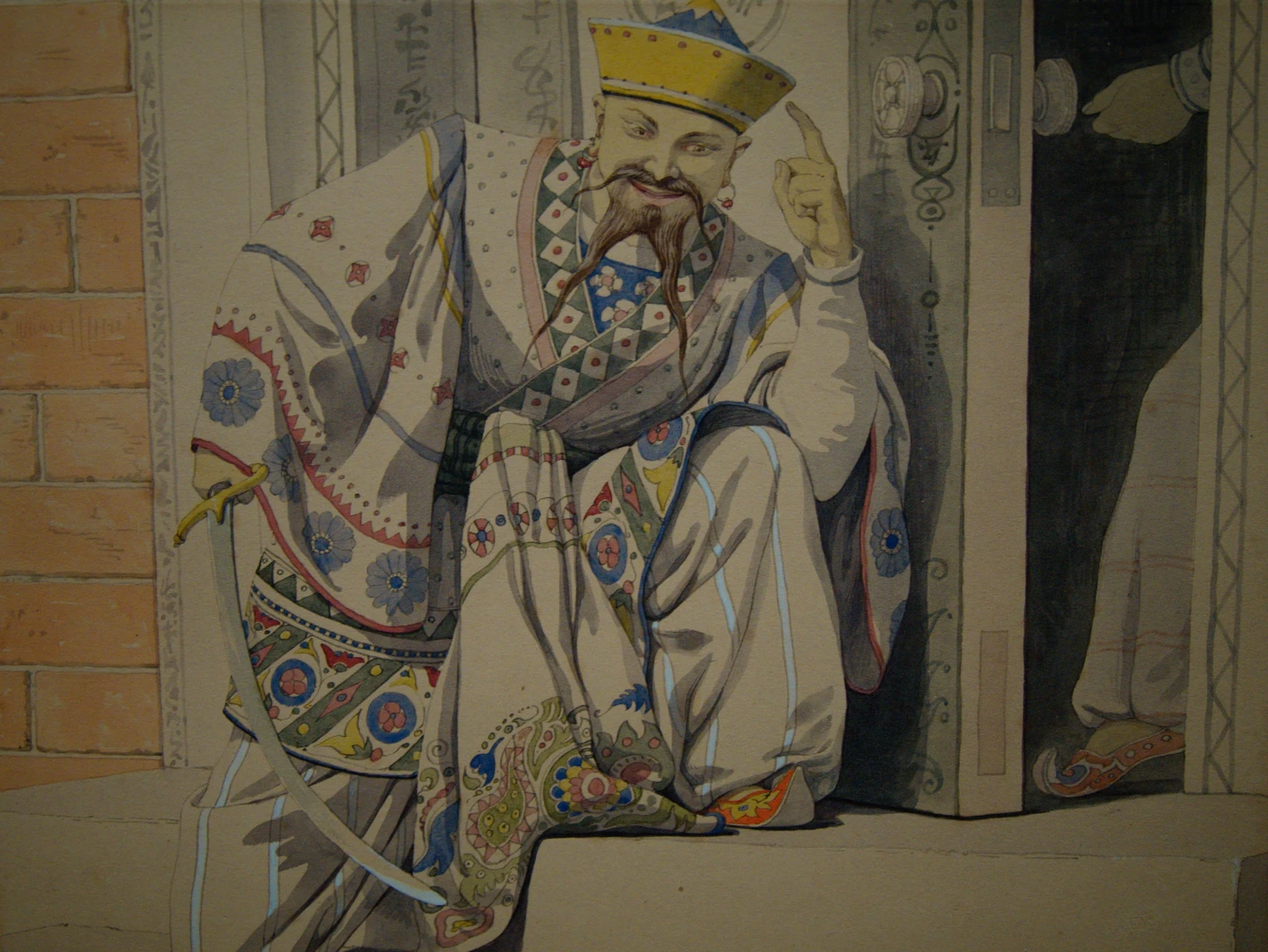
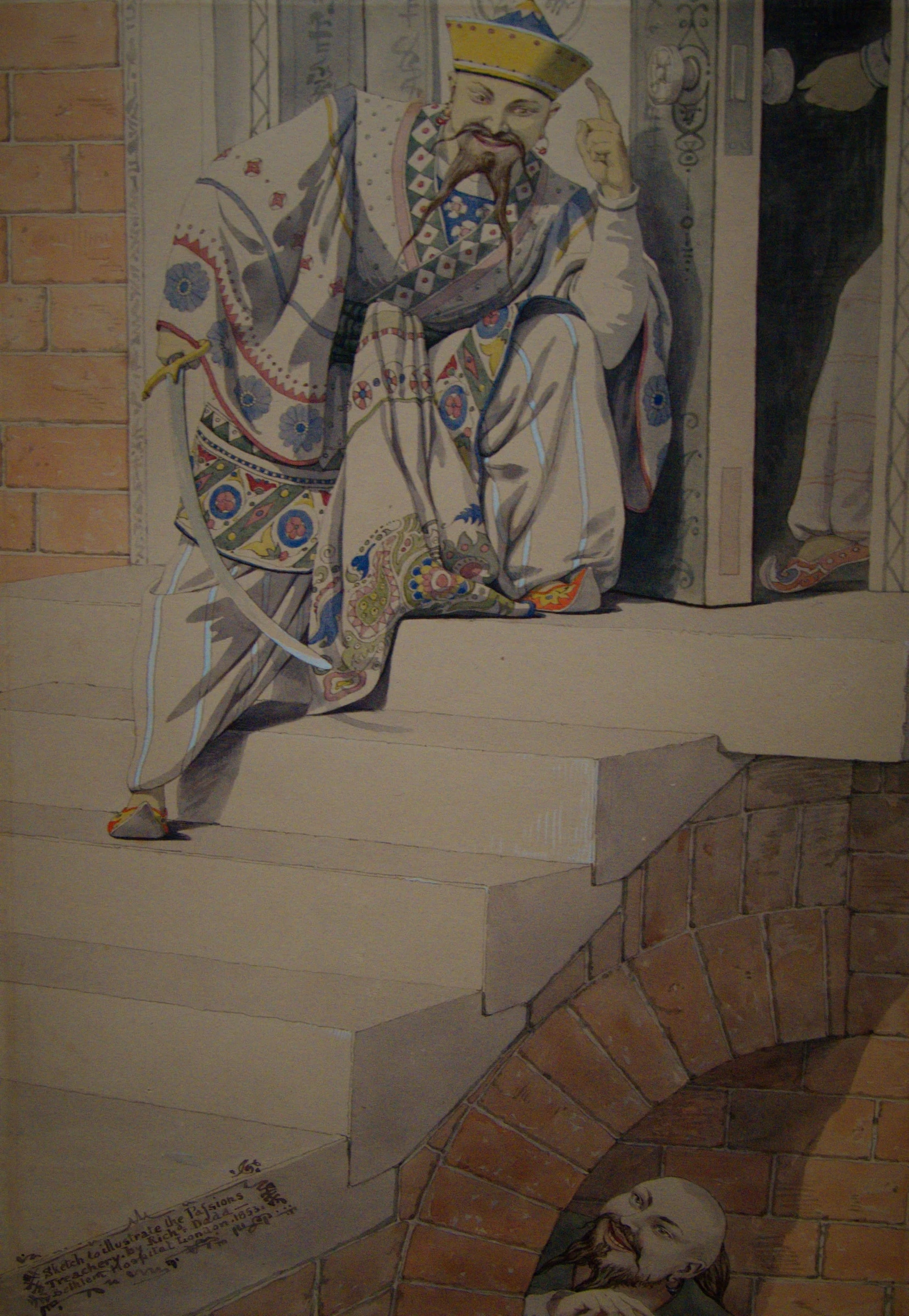
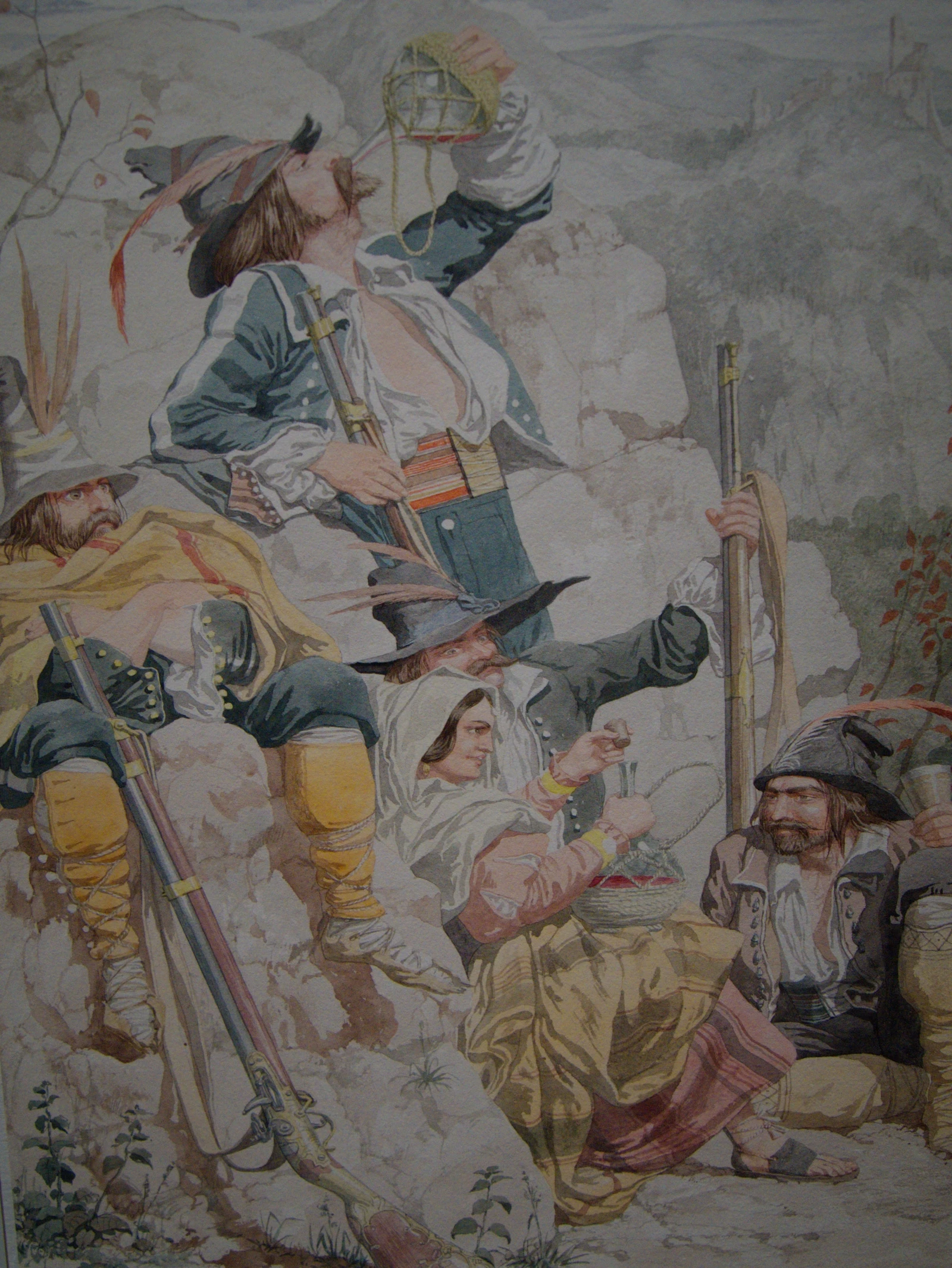
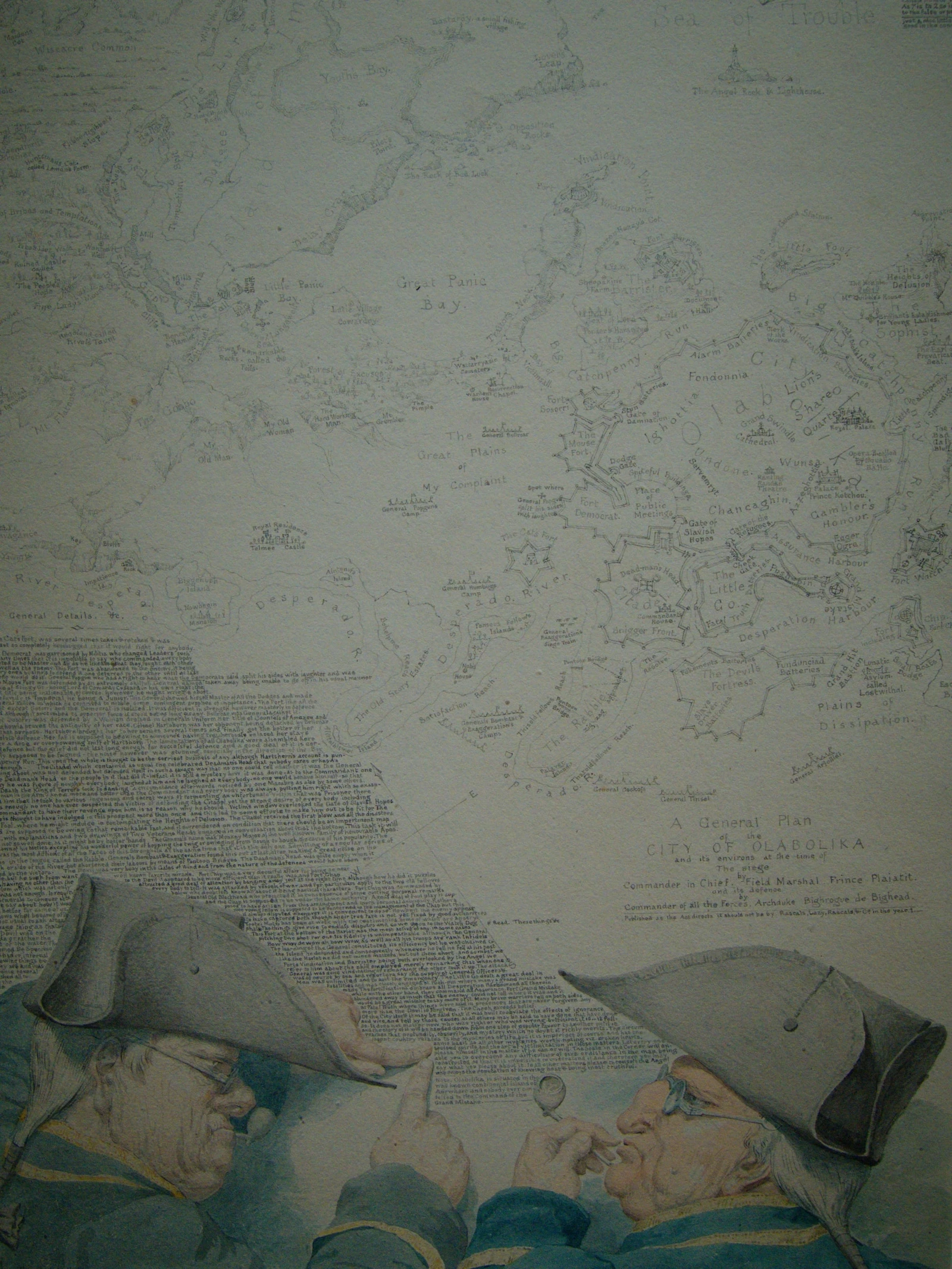
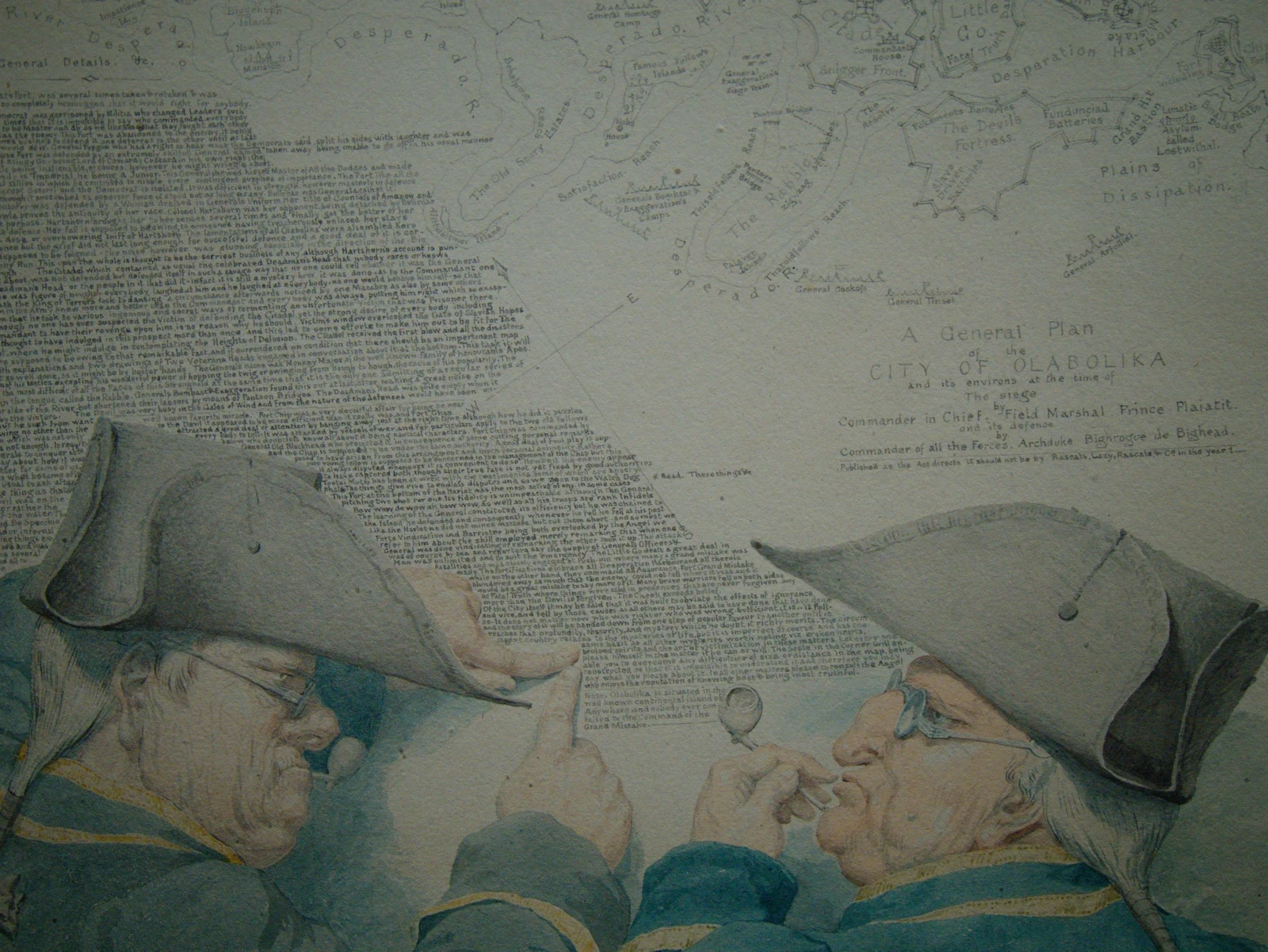
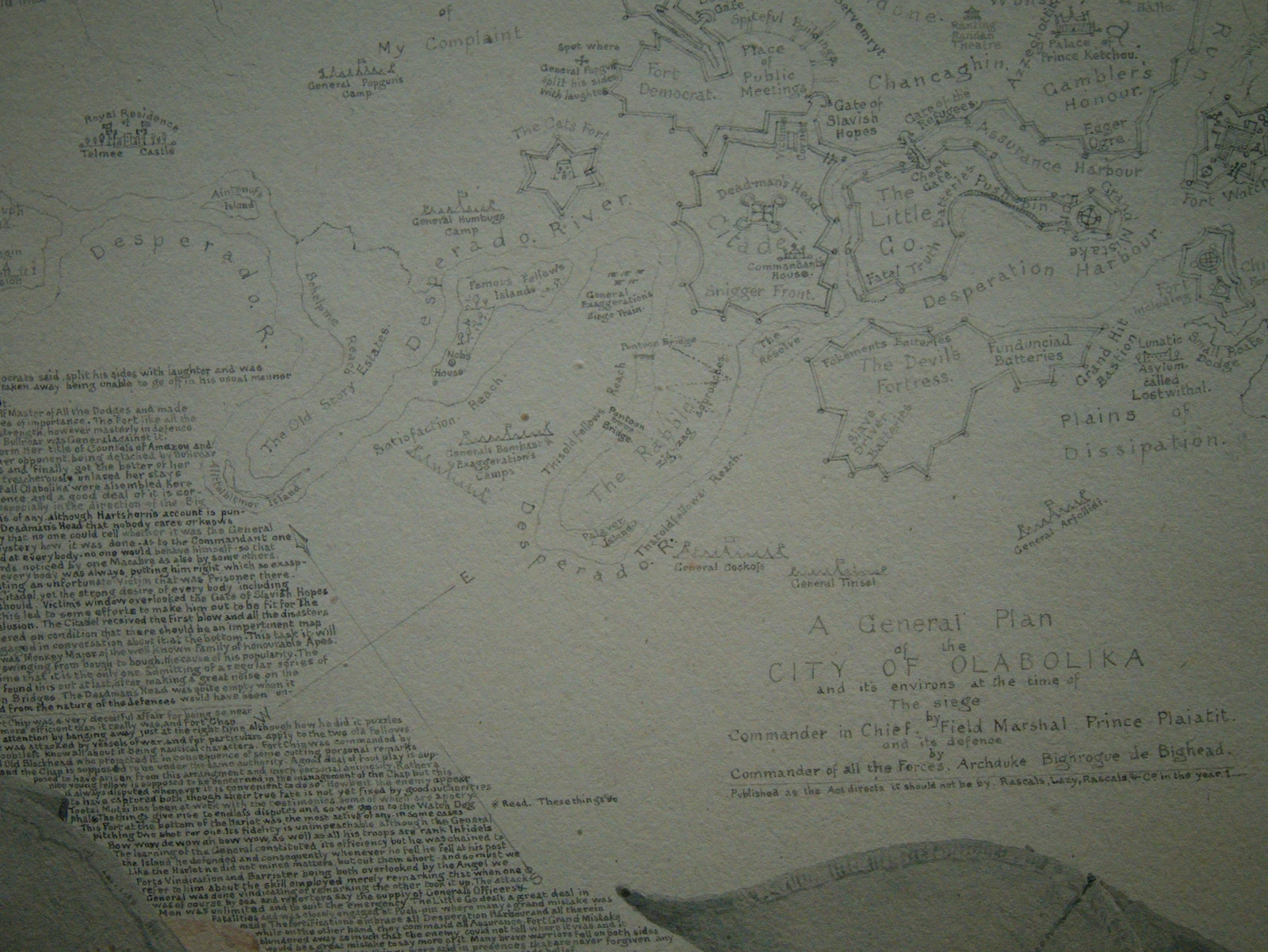
Sketches to illustrate the Passions depicted negative emotions or aspects of life. The watercolours resemble aquatints, a tonal method of etching used in scientific books - perhaps Richard’s hint as to the pseudo-scientific nature of attempts to classify mental illnesses.
Opposing forces were battling inside the minds of Bedlam’s patients, as well as outside, where society debated how they ought to be treated. John Conolly campaigned for full transparency on what goes on inside asylums and the end of physical coercion. In this climate, a young William Charles Hood became Physician-Superintendent at Bedlam in November 1852, abolishing physical restraint, refurbishing the interiors to let more light in, promoting conversation with patients and even taking some out to Kew Gardens. These reforms spurred Richard’s artistic productivity. Selfless benevolence? Maybe. Hood became another collector of his works and restricted the movement of art outside of the institution. In his case notes, we see the tension between the patient’s pleasant nature and little hope for recovery.
He associates very little with other patients but is generally civil and well-behaved to them. His mind is full of delusions.
He will gorge himself with food till he actually vomits, and then return again to the meal.
With all these disgusting points in his conduct he can be a very sensible and agreeable companion, and shew in conversation, a mind once well-educated and thoroughly informed in all the particulars of his profession in which he still shines and would it is thought have pre-eminently excelled had circumstances not opposed.
— Dr. Hood
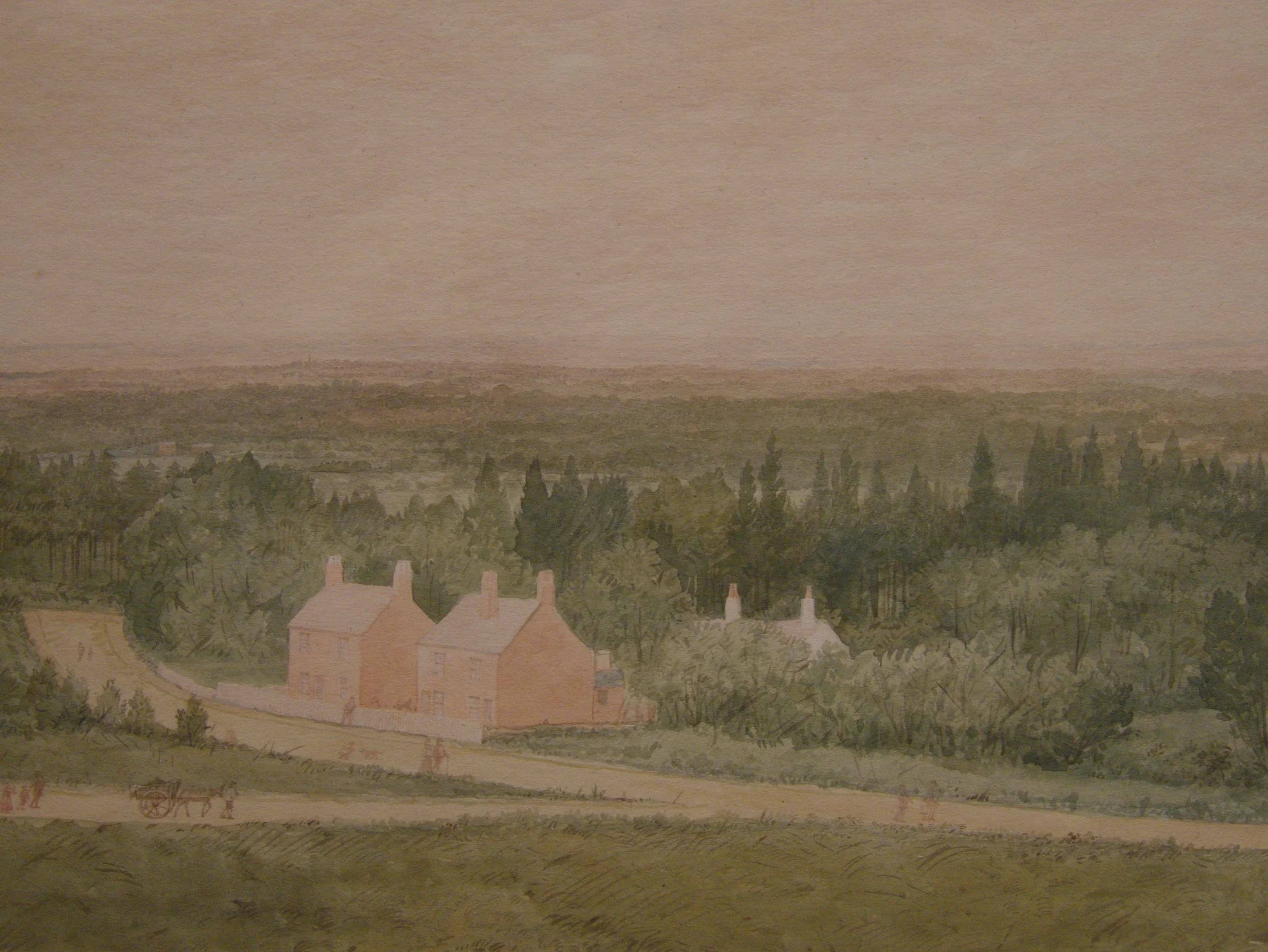
In July 1864 Dadd left Bethlem for the first time in twenty years. Broadmoor Criminal Lunatic Asylum opened near Reading, its purpose evident in the name. Registered as patient no. 130, Richard took a room in Block Two. His admission notes still said “dangerous to others”.
The rest of what we know about Richard’s life is patchy. His library included Byron’s poetry, the Qur’an and the Talmud, as well as Homer and Caesar’s military histories. Receipts give away his sweet tooth: acid dropsnot that kind, you fiend!, gingerbread, biscuits, peppermints. On this diet of classical texts and sugar, he continued painting.
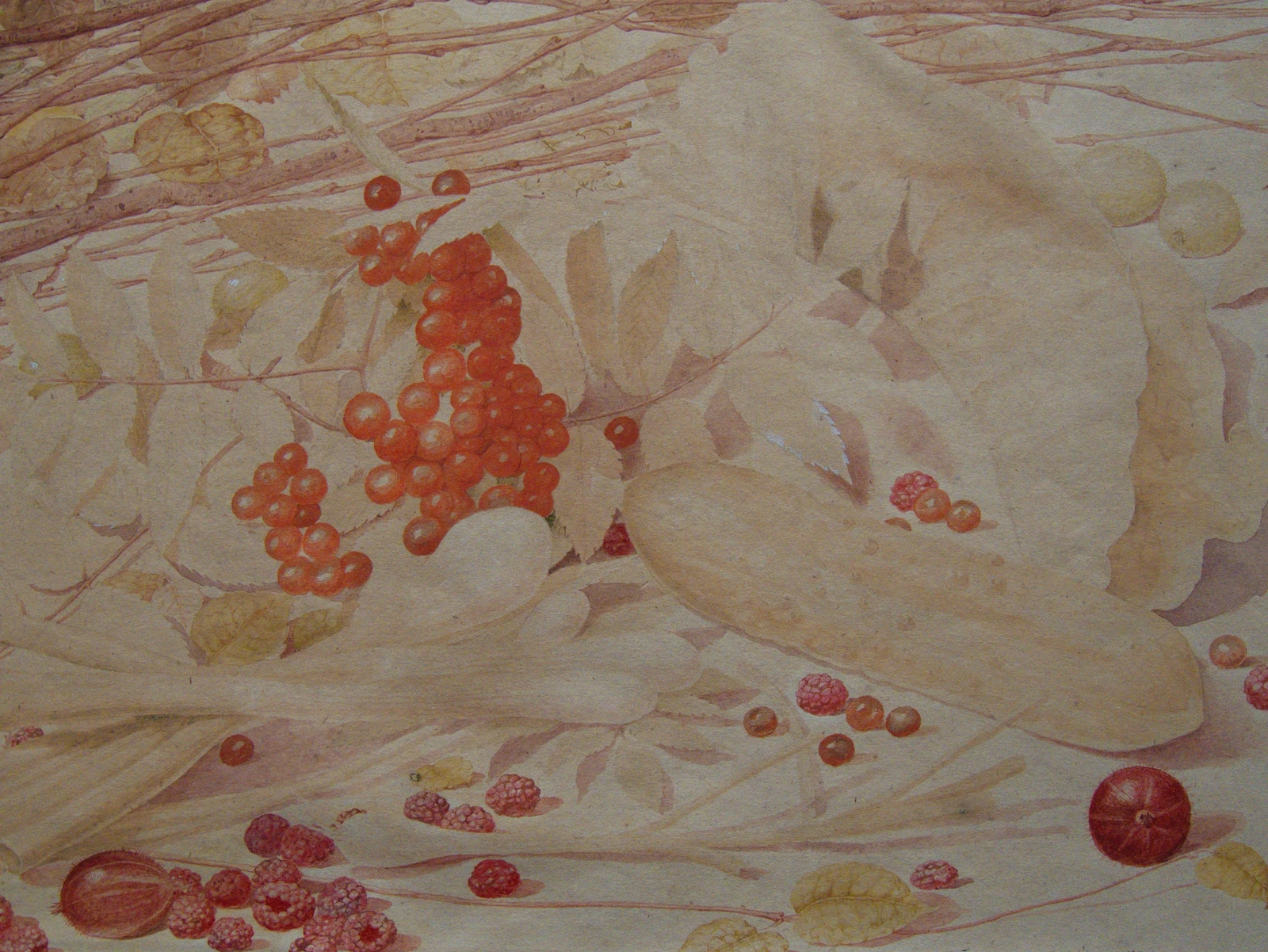
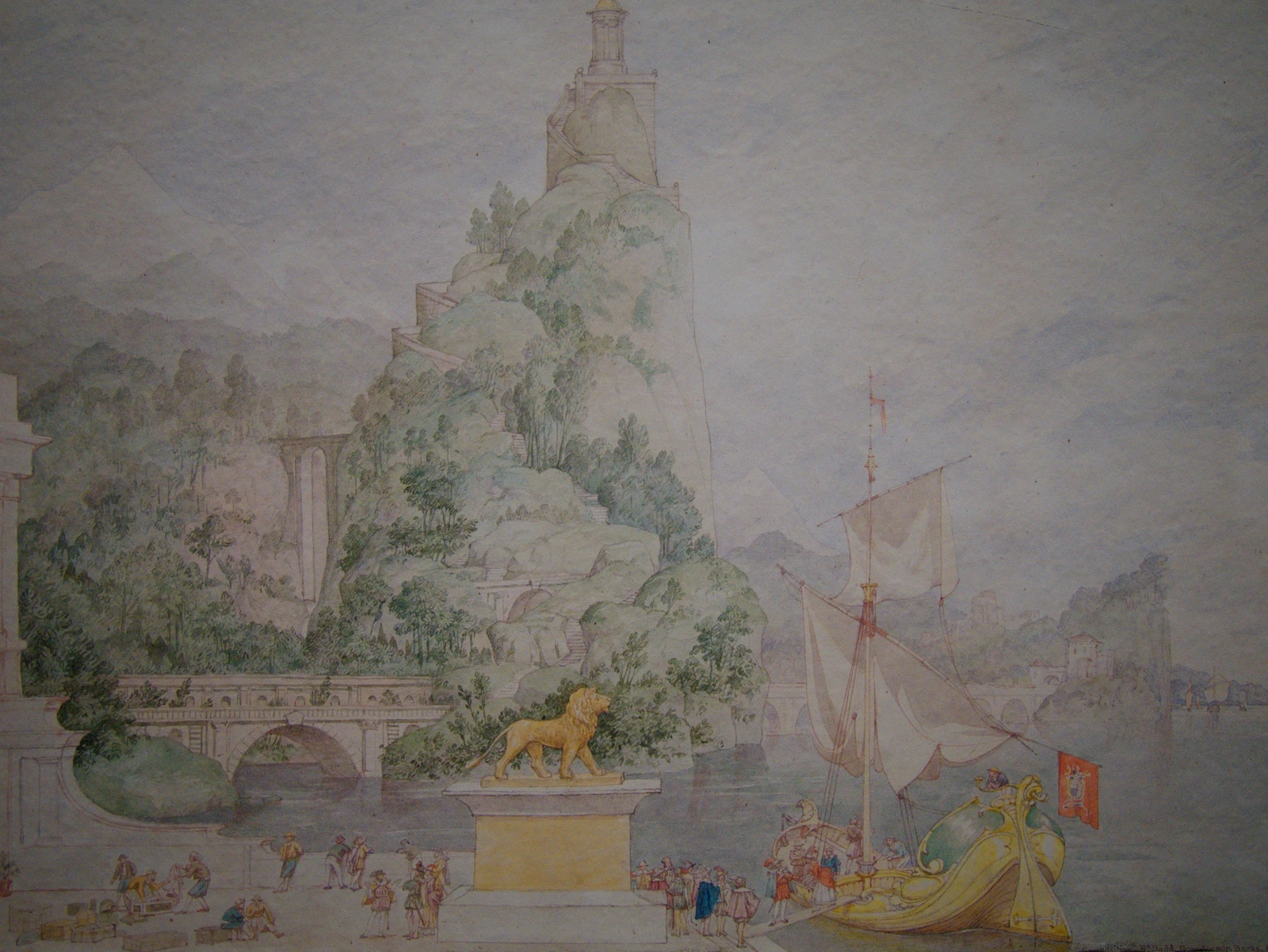
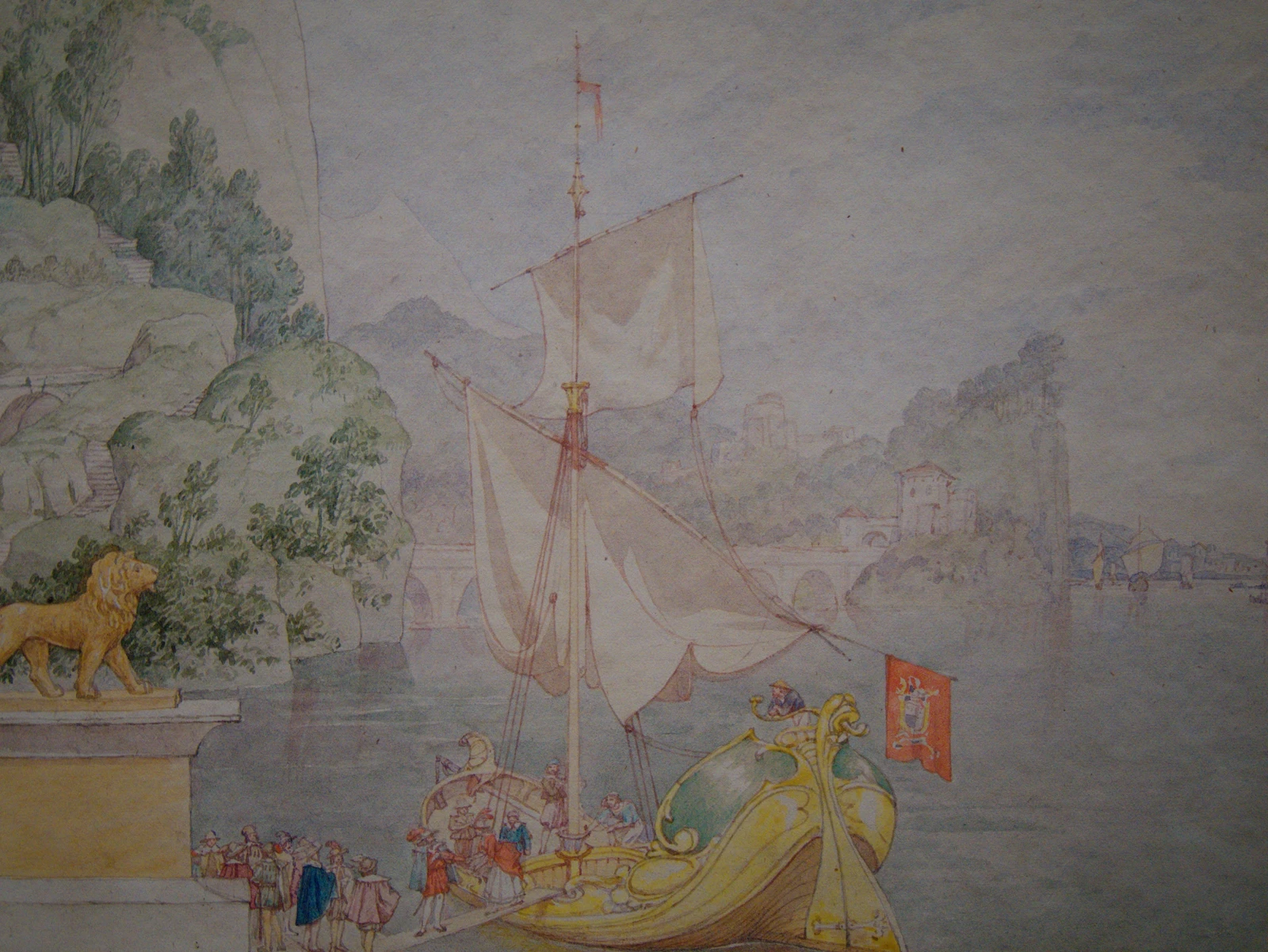
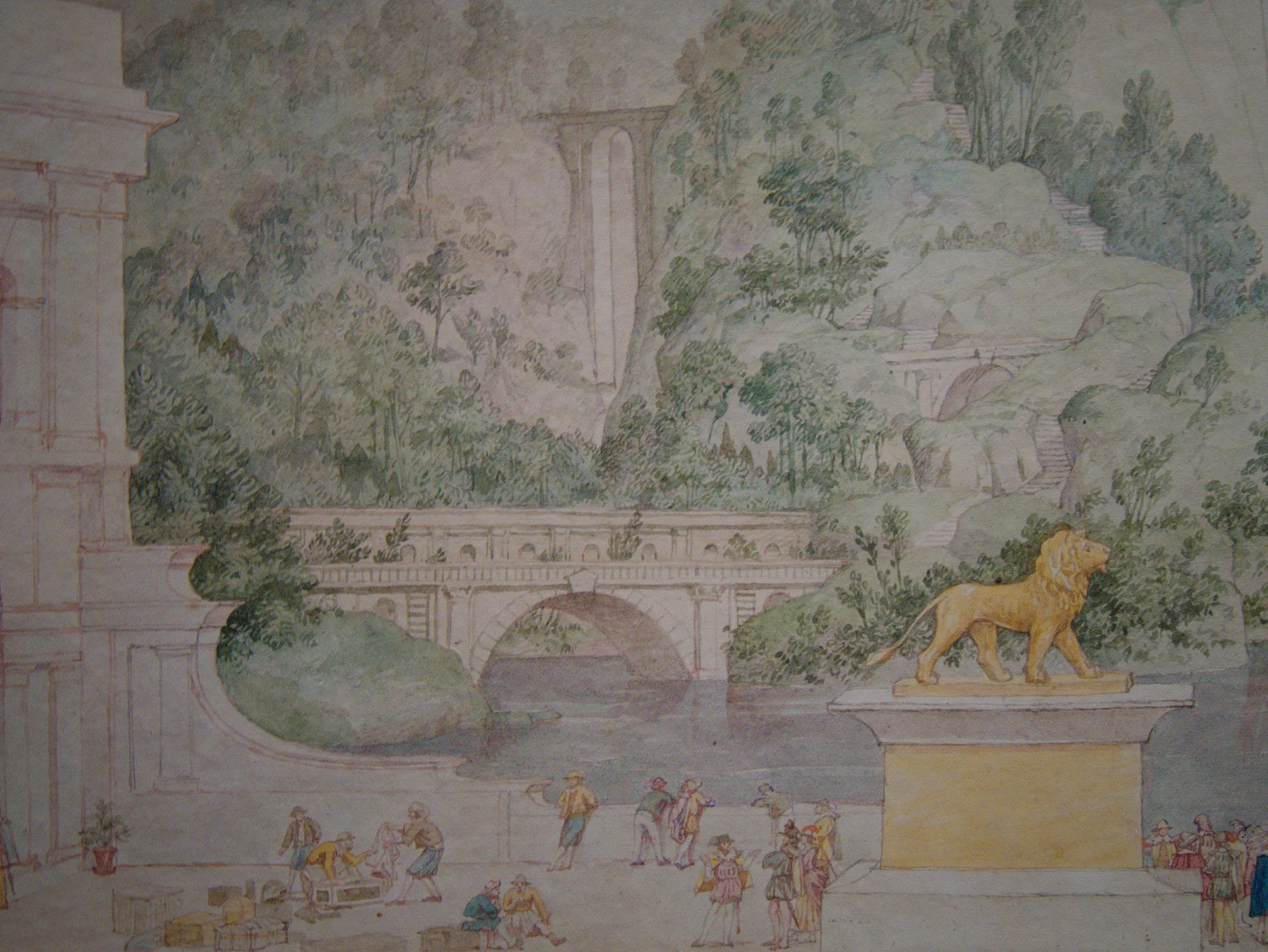
Still Life with Gooseberries, Raspberries, Red Currants, Spring Onions, a Gherkin and Foliage, 1874
Dadd had no immediate audience and saw little use for one.
Pictures are like monks, secluded from and very little noticed by the world, so that after all what matters about its quality except to the few, the initiated? The great masses if they do notice will still wonder “What is the good of such things?”
Life was banal and quiet at Broadmoor. With time on hand, another patient, William Minor, made significant contributions to the first edition of the Oxford English Dictionary. Dadd painted decorations for the asylum’s theatre and was even allowed to carve frames for his paintings with a knife. Casenotes continue to describe “fanciful ideas connected with spiritual agency”.
The press would sometimes take interest in incurable patients, morbidly known as the Queen’s pleasure men, as they served indefinite sentences awaiting Her Majesty’s Pleasureread: discretion. Visits were few and tended to coincide with the government’s interest in how Broadmoor was run.
Art is thus his mistress still. But he is also a skilled musician; his violin is a constant companion; he will play by the hour, as a relaxation, weird music - strange variations of old melodies and other pieces learnt in his youth.
— Art Union, 1877
In the same interview, with 9 years left, Dadd commented on a painting shown to him: “I prefer my own conception, but I do not withhold my admiration and respect from Mr Poynter’s. His must have been a successful picture; it gave him the rank of R.A., you tell me. There was a time when I aspired also to the rank. But that is past. Yes, some painters - the few, perhaps - achieve renown and substantial rewards; others lag behind.”
I circle the exhibition a few times, exploring every nook and cranny of Richard’s mind. The attendants look at me like I’m the mad one. Outside, the sun dazzles me as I squint and wince. A storm of ideas comes over me about Richard’s work. I rush to the RA’s cafe to scribble everything down. While writing this piece, I pause and look far into the distance: who is guiding my hand?
Damn, maybe Richard was right.
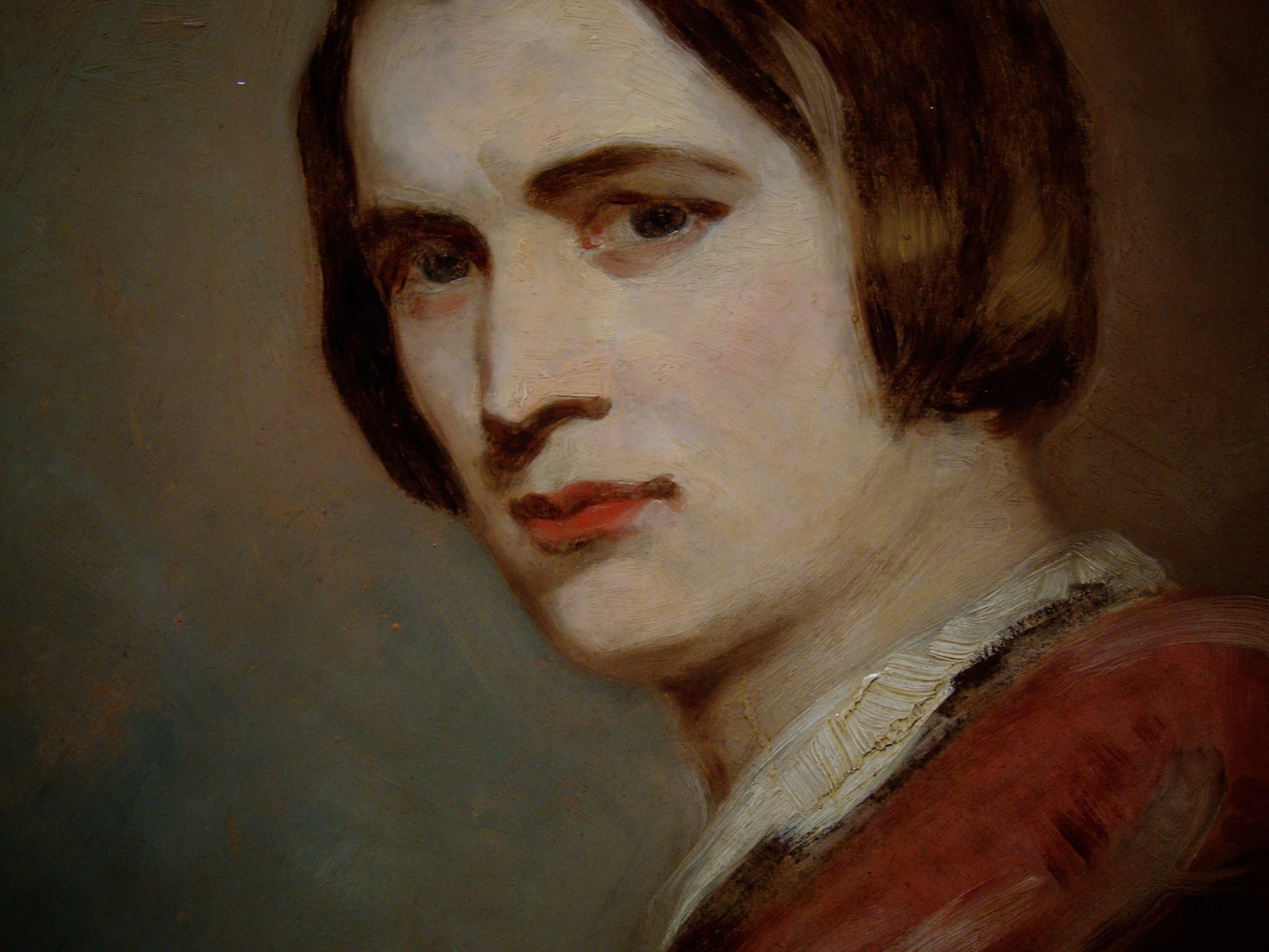
If we shadows have offended,
— Puck
Think but this and all is mended:
That you have but slumbered here
While these visions did appear.
Richard Dadd: Beyond Bedlam is on at the Royal Academy until Oct 25th 2026. Details about Dadd’s life come from the excellent Richard Dadd: The Rock and Castle of Seclusion and Richard Dadd: The Artist and the Asylum.
This is the third issue of Up Close, a series of stories based on London’s art exhibitions. You might also like Frida - the making of an icon.
Interested in more stories?