I COVET BIG FAMILY TREES THAT GO BACK GENERATIONS – “hă-hă-hă” we say in Romanian. The phrase is incomplete without flapping your hand next to your head, pointing to a time, ancient, of lore and Romans. You’re lucky if you can backtrack hă-hă-hă, to your great great great grandparents or further. However debonair, modest or troubled your origins, they’re there to cherish.
Me? I can only go back to Scarlat, my great grandfather. All I’ve got is a stained portrait and my grandfather’s fickle fragments of nostalgia. My mother remembers two things about Scarlat: he was rarely around and when he was, he reeked of alcohol. Her only vivid memory consists of his body, recumbent on the kitchen table. “Go kiss your grandpa goodbye,” they said. Hours later, Romanian tradition followed. Dinner was served on the same table.
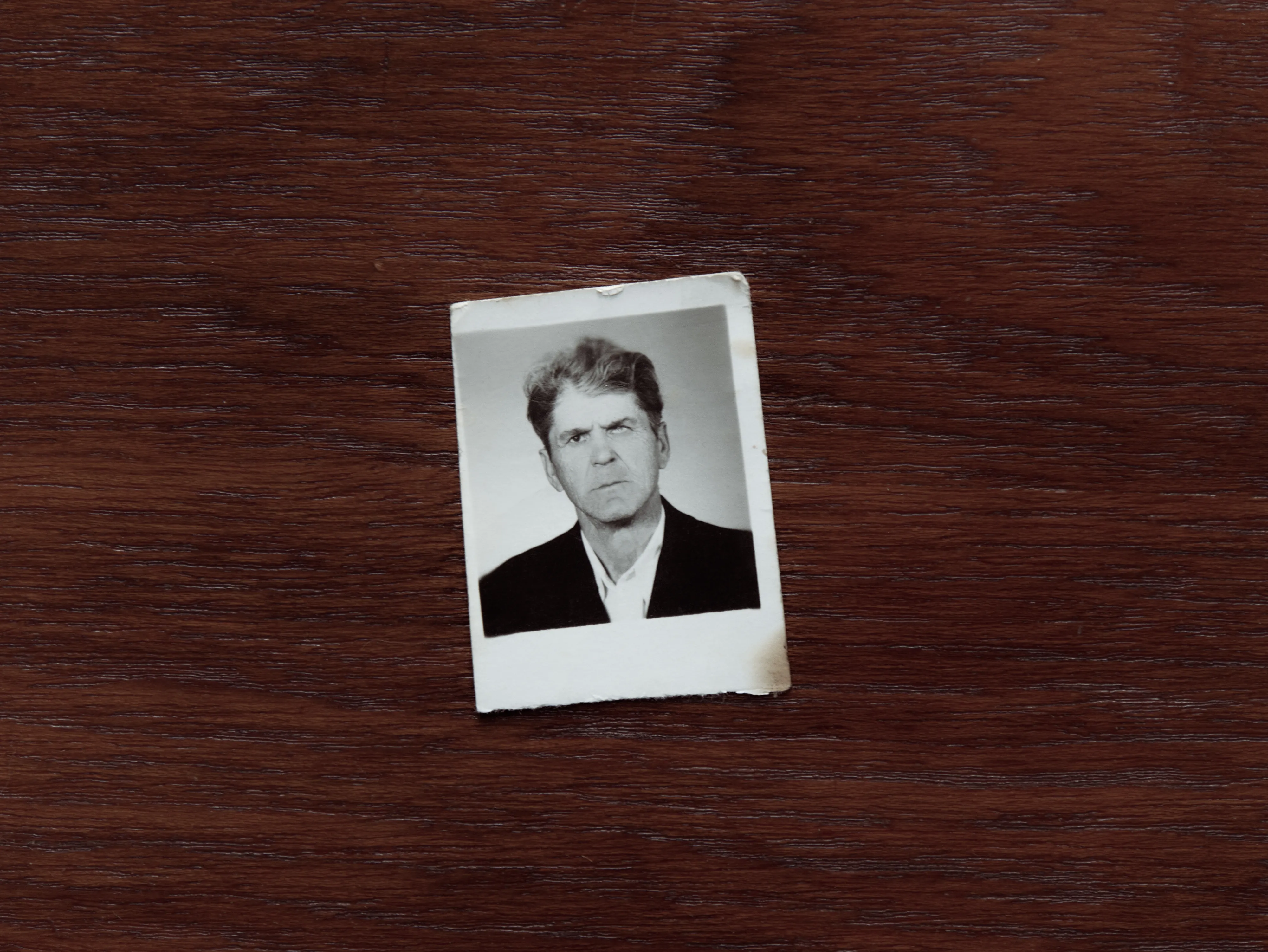
Scarlat couldn’t go back much further himself. His father never returned from the trenches of World War I and his mother sent him to an orphanage. His left eye had a scar. “It saw the future,” he said. For what followed, damn right he was.
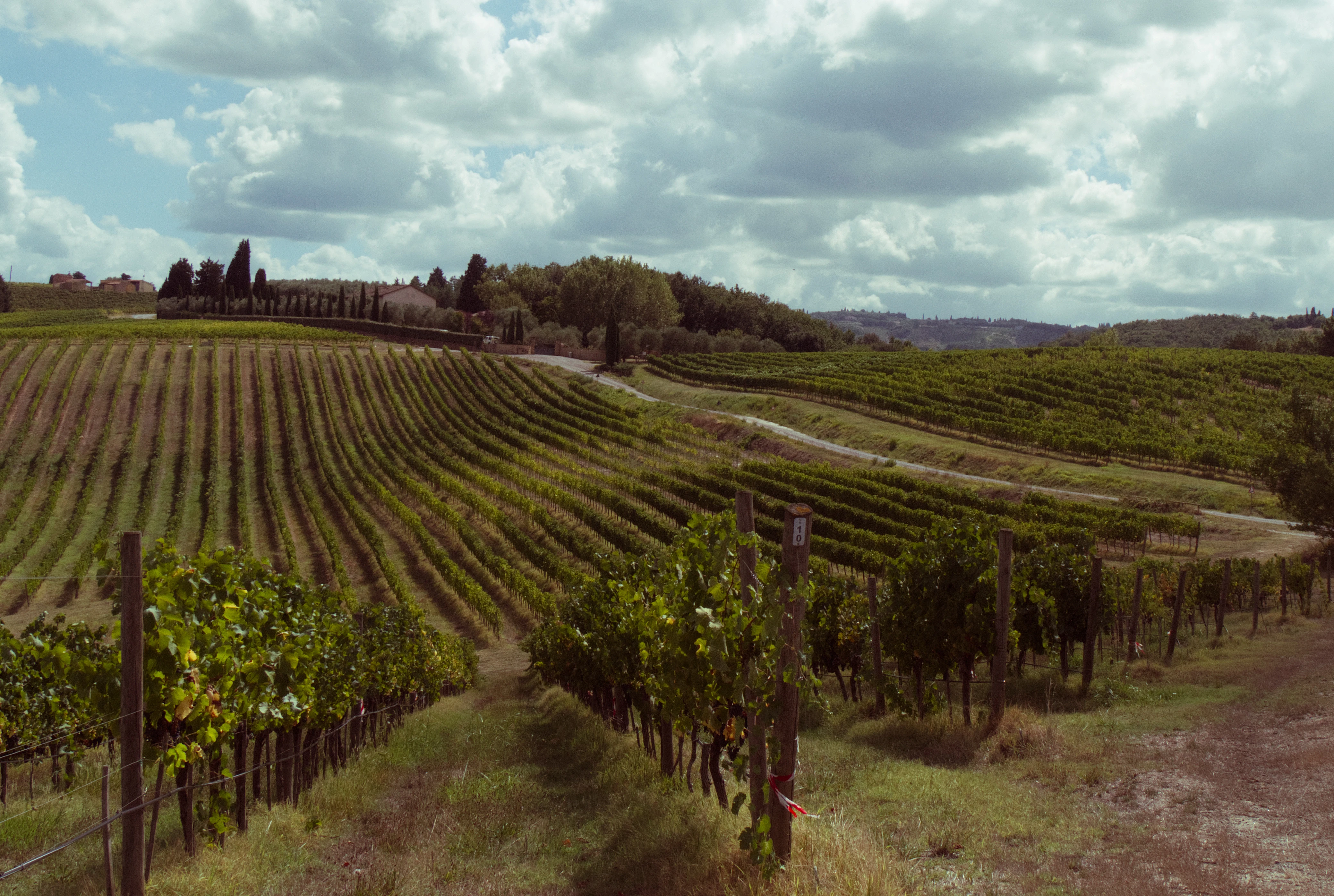
Panciu was an aspiring boyar’s town on a hill. At the beginning of the Second World War, it boasted a casino and 25 cars, including a Buick and a Chevrolet. Armenians, Jews and Romanians shared in the town’s prosperity, built on drapery, haberdashery, politics and winemaking. Cosmopolitan, dare we say. They all gathered at Scarlat’s restaurant, a provincial version of Bucharest’s The Lion and the Sausage. His knowledge of lions scant, he relied on his pet to name the establishment: The Raven and the Sausage, spelled out in curved letters above the entrance. A few tricks kept the business going – cool wine from the cellar and salty sardines on the house. The fiddler got busy on the accordion. Backgammon dice skittered and regulars never had to order.
The wine came from Scarlat’s own vineyard – his livelihood, status symbol and place of solace. He pruned the vine and checked the leaves for tiny yellow spots. Downy mildew spreads after rain. Cioroiu, his corvid friend, kept him company and pecked at his shirt’s pocket for crumbs of polenta. Bread was out of the question at the time. He plodded the labyrinthine rows with a large canister on his back to spray quicklime against pests. He managed his own patch and others’. His notebook recorded everything: who, what, when, where. The why was obvious – their fat pay after the autumn harvest.
A few questions keep bugging me: Was his handwriting as bad as mine? What would he do when he made a mistake? Cross or erase? Did the raven eat the sausage? All I can do is picture him at work: the morning sun rising red over the hills, men smoking, ember cigarette ends dotting the vineyard. The clickety-clack of the shears. Hair damp in the midst of mist. Up since 4am, woken by the trains going east. Breathing in the heady petrichor, breathing out relief. Calloused hands, picking the odd grape. The taste of vine tendrils – the sour kick that kept you going.
I’m told he was well respected for two reasons: the vineyard and his temper. The war left his arm a bit stiff with shrapnel tattooed on the forearm. Despite his small stature, God forbid you pissed Scarlat off, especially after a few drinks. Don’t bother calling for the doctor. Ring up the priest.
“His signature move was the headbutt,” my grandfather says. “BAM and you’d scuttle away with a bloody nose.”
As Scarlat’s son, nobody fucked with him. If some goon harassed my grandpa, his father would say: Point them out to me. Oh yeah? You’re the one? Come here. Retribution often involved eating a few red chillies in front of Scarlat if said goon cared about his facial integrity. Not that grandpa had it easy. Often intoxicated, kin or not, Scarlat imparted justice and punishment left and right. A drunken Zeus, who struck if you came home snivelling and hadn’t stood up for yourself.
When awake, Scarlat could be nice. My grandfather strolled alongside him through the park to the big boulevard, an alley flanked by horse chestnuts. Both would kick the conkers and watch them race ahead, a ritual eventually passed onto me.
But Scarlat’s eye had seen the future. On August 23rd 1944, Romania turned arms against the Axis powers. The Red Army occupied Bucharest on August 31st. On their way, the “liberators” went through Panciu and stopped at The Raven and the Sausage. The fiddler put down the accordion. DavaiRussian: Give me watch, davai coat. They demanded wine. Scarlat had been a prisoner of war in Russia and declined. They slammed him against the tree, rifle to his head. What saved him was his wife’s gold ring, her broken Russian and a small act of grace. They shot up the wine barrels instead and headed for bigger bounty.
On December 30th 1948, young King Michael is exiled and the Romanian People’s Republic is proclaimed in line with the Soviet blueprint. All the shops on the boulevard, now Stalin Street, are nationalised. No more private enterprise. The dictatorship of the proletariat starts with class war against chiaburi,Romanian word for kulak, used by the regime for anyone labelled as class enemy. those with unhealthy social origins (read: a bit of land or different politics). Bankers, lawyers, politicians, writers, shop owners, small or big, all end up in prisons and forced labour camps. You are either with or against us, they were told.
“This week’s forced evacuation of 200,000 citizens as ‘unproductive people’ from Bucharest, that once merry capital, serves as a reminder that within the monolithic Soviet Empire, as in George Orwell’s Animal Farm, all animals are equal but some animals are more equal than others.”
Scarlat listened to Radio Free Europe on his pre-war shortwave Telefunken. Late at night, by a kerosene lamp, he fiddled with the knobs. Five nine six. Five nine seven. Five nine eight five. Bingo, the clandestine frequency, punishable under “plotting against social order”.
“Good evening, dear listeners,” the voice travelled from Munich.
“Good evening, NeaUncle, used as a form of respect. Mihai!” he said and bowed his head.
“Here is Radio Free Europe. My name is Mihai Cismărescu and I’m bringing you the news from beyond the Iron Curtain.”
Radio waves, invisible as they are, brought Scarlat hope. General Eisenhower announced that as president, his policy would “hold out the hope of obtaining freedom for the peoples behind the Iron Curtain”. Scarlat, like many others, believed it. At the vineyard, he cocked his head, scrutinising the horizon for American planes. How long does it take to get here from New York, he wondered.
In Panciu, the socialist transformation of agriculture had begun. The “New Way” collective was set up. One had no choice but to join. Voluntarily! Collectives grew their numbers following the Soviet principle of free consent. Determined persuasion teams approached each village and small town, employing blackmail, beatings, imprisonment and magic – people disappeared at night. Those who had scrimped their whole lives for a meager plot were told to give it up. In theory, each according to his own means. In practice, few turned up to work. The sense of care and responsibility vanished, replaced by weeds and brambles everywhere. Boundary stones used to show who’s who. You knew that from here to there was Scarlat’s patch - neatly pruned and ploughed. Now, all land would be everyone’s and no one’s.
When the persuasion team came by, Scarlat was spraying the vine.
“Comrade, will you join?” the drab party suit asked. “Have you changed your mind?”
His answer was simple: drench them in white quicklime. The raven dropped his load on their heads. Later, when they came to hector him, well, he had had a few drinks.
“BAM, BAM, BAM. Headbutt, hook, jab, every move,” my grandfather recalls.
Scarlat kept looking up. Every now and then a radio broadcast rekindled his hope: the American Airlift over Berlin in ‘48, the intervention in Korea in ’50, Eisenhower’s election in ‘52, Stalin’s death in ‘53.
“The tyrant is dead. The tyranny will fall,” Nea Mihai said on the radio.
In October 1956, Hungarian students pulled down Stalin’s statue in Budapest. The next day, Soviet tanks entered the capital and a month of fighting began. Romanians hoped this was the beginning of the end. Americans would send their planes and World War III would start. The USSR stood no chance and Eastern Europe would free again. Rather, it was an abrupt end to a quixotic beginning. Eisenhower stayed out of it. Khrushchev’s fist squashed the rebellion and any glimmer of freedom.
Hope billowed. Communist regimes read it as a smoke signal to go ahead and take it all: the raven, the sausage and the grape patch. Scarlat could’ve tried for Yugoslavia or joined the guerilla groups in the mountains. But don’t forget, Comrade, in the Romanian People’s Republic you have a choice: your principles or your children’s future.
“Pui de chiabur,Chiabur child the teacher called me when they kicked me out,” my grandfather says. He could only return to school after Scarlat signed his land away.
My grandfather – Daddy-O,Tata Puiu in Romanian. The best translation that I can think of. as I christened him – told me all of these stories as a child. Every night, he enacted Greek myths, Romanian fairy tales and his own legends of mischief: stealing from orchards and breaking into cupboards with rationed food. All that travel through time and space piqued my curiosity. Why do dragons steal the sun and the moon? Why didn’t Achilles cover his heel? Fine, no more interruptions. I refused to fall asleep until the story ended.
In the mornings, we had a ritual. He lifted me on a stool high enough for the mirror. I cupped my wee hands. Shaving cream, please. My face lathered, the finger turned into a razor. I stuck my neck sideways, not to miss any spot. I even insisted on a dab of aftershave.
I was impatient to grow up. In Daddy-O’s workshop, my laboratory, cells divided faster and telomeres shortened swiftly. The vise was my favourite toy. I clamped wooden planks to saw off, watermelons to squash (which I was told off for) and my younger cousin’s hand to determine her pain endurance (which I was grounded for). She and I play-smoked, puffed invisible clouds and pretended to flick ash, reaching for imaginary sophistication. Take a toke and note the clock - it ticks faster. The drug was not tobacco, but growing up to be like Daddy-O.
Now, I have to shave and I can smoke real cigarettes, but I never anticipated the challenge of mending my relationship with my grandfather. Two decades of growing up put a chasm between us, amplified by living abroad, his illness and family reckonings.
“Mind if I smoke?” Daddy-O asks.
Of course I do, but what am I going to say? It’s been 18 years since the stroke and he refuses to stop. He ignored doctors’ warnings and pleas from loved ones. Health issues piled up to dozens of daily pills. It’s easy to get used to the smoke, not so much the silence.
Every visit was totally predictable: How’s school? How’s the job? Are you seeing anyone? Is London still covered in smog? Same script for the irregular phone calls. After ticking each box, an uncomfortable silence reigned. My adult self wanted real conversations, not routine check-ins. I wanted to talk to my grandpa, my best friend from childhood. Sitting comfortably in silence is meant to be the unique unconditional gift of family and friends. Instead, I inhaled the cigarette smoke and it went so deep inside, probably the closest thing to the soul if there is one. I sigh – another form of smoking. Life’s our cigarette. Each long breath lets out intangible particles of whatever’s on our mind. Sigh by sigh, cigarette by cigarette, we smoke our lives away.
Like with most riddles, the answer was a simple question – what did your father do? The more I asked, the more Scarlat came to life. I recorded Daddy-O furtively, not to inhibit his love of hyperbole. Every question was an act of bridge-building, the only way I managed to resuscitate his grandfatherly presence.
“Dad had a plan in the prison camp. Every day, the guards came in for roll call: ‘Odin, dva, tri, chetyre’.Russian: One, two, three, four Dad waited behind the door for the Russian soldier to come in. ‘Odin, dva, tri–.’ Dad took his rifle and choked him till his eyes bulged and his tongue drooped out,” Daddy-O laughs and I get the full enactment.
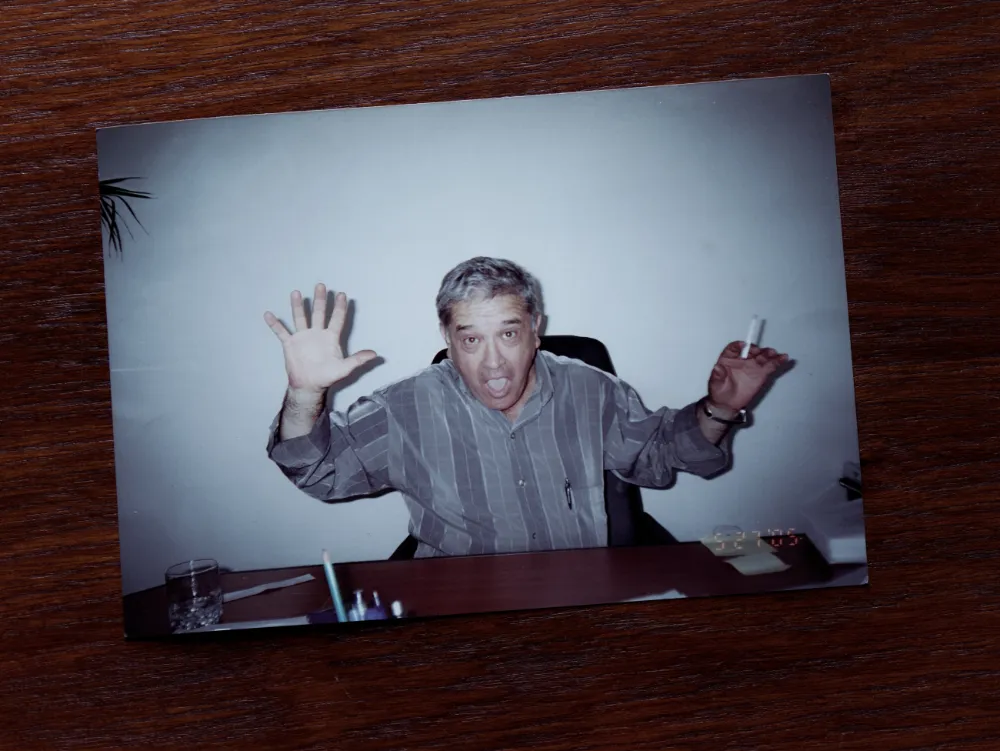
“Then, he jumped the fence and dived into the nearby river. Front crawl, he swam: one up, one down,” Daddy-O says, acting with his right hand. His left remains limp. We lock gaze, one wish in each other’s eyes: that he could move as he used to. All we can do is smile.
Scarlat’s escape is as far back as I can go, circa 1942. Beyond that, there’s barely any names or anyone alive to recall them. The recordings, the questions, writing these very words - it’s all me searching. Where do I come from? What’s baked in my genes? Scarlat left me his gangster’s truculence, now dormant. It may explain why blood seethes in my head when someone cuts the line. What are you looking at, huh?
By 1962, Romanian agricultural collectivisation was complete – three years ahead of schedule, Comrade! That September, President Kennedy announced the mission to put a man on the moon within a decade and Radio Free Europe broadcasted: not because it’s easy, but because it’s hard.
“Al dracului Americanii ăștia.Romanian: These damn Americans They’re going up there, but they’ve left us alone here with these damned pigs,” Scarlat said and threw away his Telefunken. Probably smashed it. His eye hadn’t seen that coming. When they took the vineyard, he grabbed a fist of soil and sieved it through his hand.
“That’s how it all crumbles if we don’t take care of it,” he said. It might have been the only time he ever cried.
Scarlat was right. It all falls to pieces if you don’t tend to it. The bridges built with Daddy-O after his stroke needed constant attention. Every call, every check-in was important. Otherwise, the chasm deepened.
Daddy-O is not around anymore, but he’s not entirely gone. I can find him in my grape patch. The rows of this vast vineyard are heavy with exaggerated stories and childhood memories, too many to count. Like Scarlat, I go there for peace of mind. It’s hard work, spraying, burrying, picking, sometimes fighting off the persuasion team. The grapes taste sweet or sour, many times both. But there I find Daddy-O and my origins. We saunter past the chestnut trees in Panciu. We kick some conkers. We then go up the hill and spot Scarlat’s patch. On the way, we chew on the sour tendrils and feed the raven. We sit and I demand another story. No interruptions this time, I promise.
To my grandfather, who instilled in me a love of stories.